
West Virginia Truck Crash Claims
Hurt as a Passenger in a Semi Truck Crash?
The firm represents passengers injured in car and commercial truck crashes across West Virginia, and families in wrongful death cases. Tell us what happened.
Published November 7, 2026
A passenger hurt in a semi truck crash in West Virginia may have a claim, even though they did not drive. This page covers the questions a passenger or family should ask first, and the records that help answer them.
Can a passenger in a semi truck crash have a claim in West Virginia?
Yes, a passenger may have a claim if another person’s negligence helped cause the crash. Negligence means failing to use reasonable care. A passenger does not control the truck, so passengers are often hurt badly. Serious injury alone does not show who was at fault.
Under W. Va. Code § 55-7-13a, recovery in a personal injury or wrongful death action is generally based on principles of comparative fault, with liability allocated to each person who proximately caused the damages in direct proportion to that person’s percentage of fault. Under W. Va. Code § 55-7-13c, a plaintiff’s own fault does not bar recovery unless it is greater than the combined fault of everyone else responsible. If it is not, recovery is reduced in proportion to the plaintiff’s share of fault.
Insurers may still raise fault questions, so it helps to understand this rule early. For a broader look at truck crash claims, see our truck crash claims guide.
Not sure what your next step is?
Talk it through with Big Bubba — the first case review is free, confidential, and carries no obligation.

Who may be liable when a passenger is hurt?
The truck driver is only one possible target. West Virginia law defines an “employer defendant” broadly. It can include the truck’s owner, the driver’s employer, and any entity that holds legal control over the truck or the driver, under W. Va. Code § 55-7-32.
These ask whether an employer reasonably checked a driver’s background for the job, given the risk to others. See McCormick v. W. Va. Department of Public Safety.
Other parties can matter too. A maintenance provider or a company that loaded the cargo may share fault, depending on the circumstances. Another driver may also share fault. If another driver was at fault, that driver’s insurance may be part of the picture.
Liability is also divided. Under the same statute on comparative fault, each defendant is generally liable only for its own share of fault, though some exceptions apply (W. Va. Code § 55-7-13c). Start with these questions:
- Who employed the driver?
- Who owned the truck?
- Who maintained it and loaded it?
- Was another vehicle involved?
What records should be requested about the driver and the truck?
The driver’s logs, inspection reports, and driver file are the first records to ask for. Federal rules set how long carriers must keep them, so requests should not wait.
Records of duty status, which show a driver’s hours, must be kept for at least six months under 49 CFR 395.8. Driver vehicle inspection reports generally must be kept for three months under 49 CFR 396.11, though the rule does not apply to some carriers, such as one operating only one commercial motor vehicle.
Under 49 CFR 391.51, each motor carrier must maintain a driver qualification file for each driver it employs; the alcohol testing requirement after certain serious truck crashes is a separate rule in 49 CFR 382.303. Attempts to test for alcohol end after eight hours. Drug testing has a 32-hour cutoff. See 49 CFR 382.303.
Hours of driving matter legally, too. West Virginia limits some noneconomic damages against certain commercial vehicle employers. W. Va. Code § 55-7-32 provides that the section does not apply when a civil action involving a commercial motor vehicle arises from an incident for which an operator or driver is found, at the time of the incident, to have operated a commercial motor vehicle in excess of the hours of operation established under state or federal regulations. Whether that exception applies may depend on the facts of a particular case. See W. Va. Code § 55-7-32.
For more on brakes and phone use, read our brake failure questions and driver phone records guide.
What should be gathered from the crash scene?
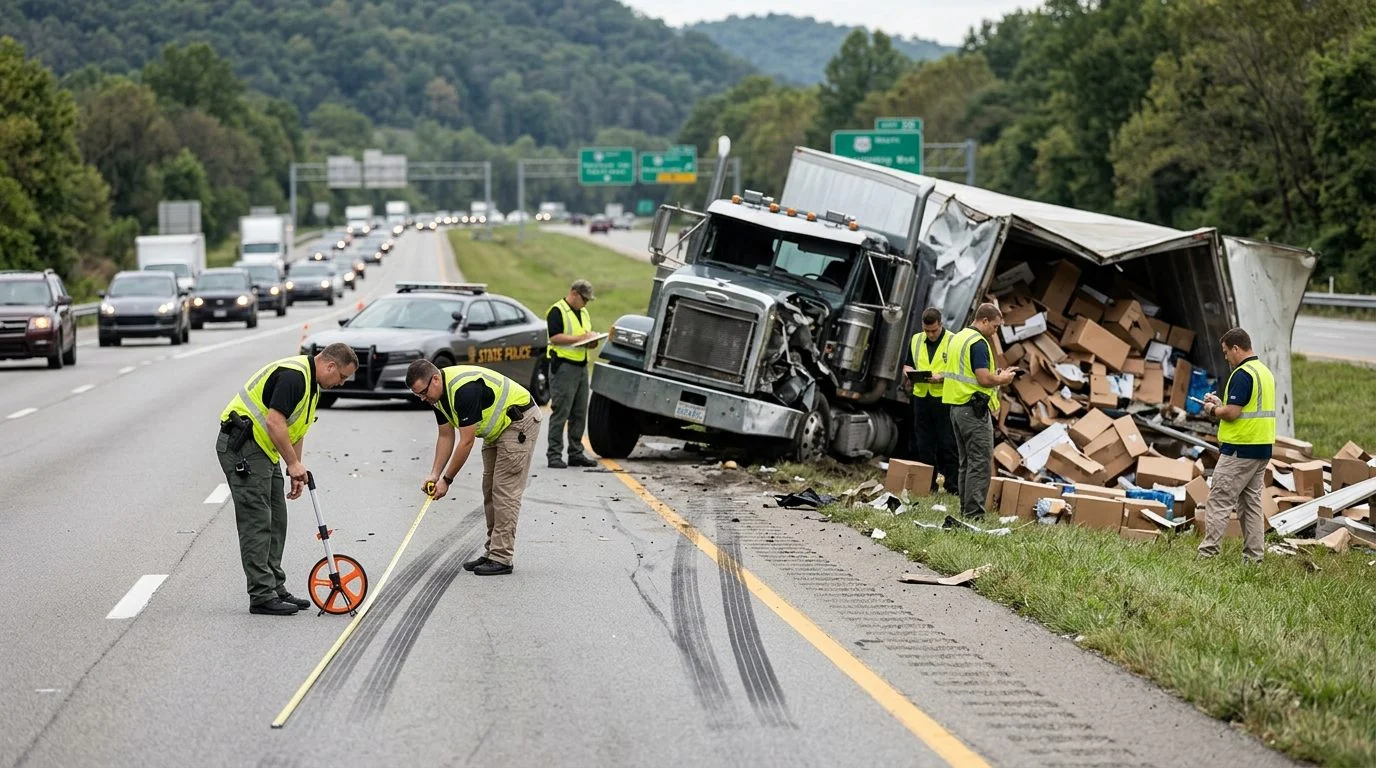
Start with the police crash report and its report number. Write down the names and contact details of any witnesses. Ask for the investigating officer’s name and badge number if you can get them.
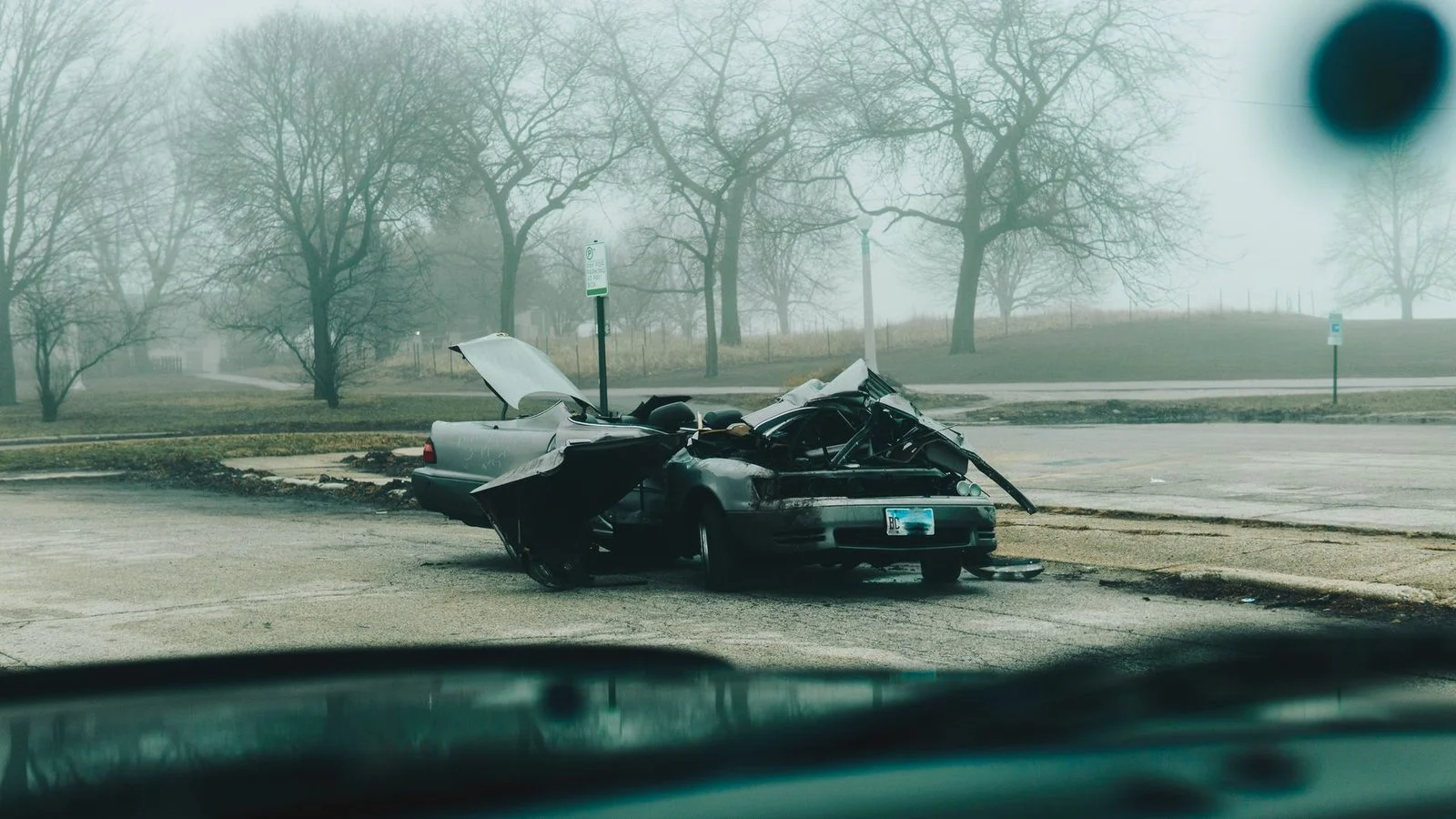
Take photos of the vehicles, the road, skid marks, and visible injuries when you are able. Someone else can help if you cannot. Keep the clothing and items you had with you. Do not repair or throw them away without advice.
Ask whether the truck had a dash camera or an onboard recorder. If it did, ask in writing that the footage be kept. Scene details fade fast. A passenger may not remember much after a serious crash, so write down what others say, and when they said it.
What medical questions should a passenger ask first?
Get a medical check soon after the crash, even if the injuries seem minor. Some brain and spinal injuries may not show symptoms right away. Follow-up visits matter for this reason.
Keep copies of every medical record, bill, prescription, and note about missed work or daily tasks. Ask providers to write down how the injury happened. Clear records support the medical side of a claim.
Catastrophic injuries, such as traumatic brain injury and spinal cord injury, may need long-term care planning. The firm handles catastrophic injury claims that arise from truck and car crashes.
Which insurance policies may apply to a passenger’s injury?
A passenger may be able to make a claim against more than one policy. The at-fault driver’s liability insurance and the trucking company’s commercial policy are the main sources to ask about.
A passenger’s own auto policy may also matter. Under W. Va. Code § 33-6-31, motor vehicle policies generally must include uninsured motorist coverage, while underinsured motorist coverage is an option the policyholder may elect for an adjusted premium. W. Va. Code § 33-6-31 reads: “unless it contains an endorsement or provisions undertaking to pay the insured all sums which he or she is legally entitled to recover as damages from the owner or operator of an uninsured motor vehicle, within limits which shall be no less than the requirements of section two, article four, chapter seventeen-d of this code, as amended from time to time: Provided, That such policy or contract shall provide an option to the insured with appropriately adjusted premiums to pay the insured all sums which he or she shall be legally entitled to recover as damages from the owner or operator of an uninsured motor vehicle up to an amount of $100,000 because of bodily injury to or death of one person.” Under W. Va. Code § 33-6-31, a motor vehicle is uninsured if its valid bodily injury or property damage liability policy is uncollectible, in whole or in part, because the insurance company that issued the policy is insolvent or has been placed in receivership.
Some insurers may dispute a claim or ask for a recorded statement. It is reasonable to ask questions before giving one. Write down the names of all insurers, claim numbers, and policy limits when they are provided.
Not sure what your next step is?
Talk it through with Big Bubba — the first case review is free, confidential, and carries no obligation.
When should a passenger or family contact the firm about a truck crash?
Time limits can end a claim, so check the deadline early. Under W. Va. Code § 55-2-12, a personal action for which no other limitation is prescribed must be brought within two years after the right to bring it has accrued if it is for personal injuries.
Families of passengers who died may have a wrongful death claim. Under W. Va. Code § 55-7-6, the action is brought by the personal representative and must generally start within two years after the death. Reaching out early also helps preserve records, witness contacts, and vehicle evidence.
Can a passenger sue the truck driver?
A passenger may be able to bring a claim against a driver whose negligence contributed to the crash. Each claim turns on its own facts.
Who brings a wrongful death claim in West Virginia?
The personal representative of the deceased person’s estate, who has been duly appointed, brings the action, under W. Va. Code § 55-7-6.
If you rode in a semi truck that crashed, or you are a family member of someone who died in one, the firm offers a free case review to talk through what happened. Reach out to us through our contact page. We serve injury victims across West Virginia, including Charleston.