
Truck Accidents | West Virginia
Hurt in a Runaway Truck Crash? Start With a Free Case Review
Big Bubba Injury Law represents people seriously injured in truck and commercial vehicle crashes across West Virginia, including runaway trucks that lost braking power or control on mountain and interstate roads.
Published October 26, 2026
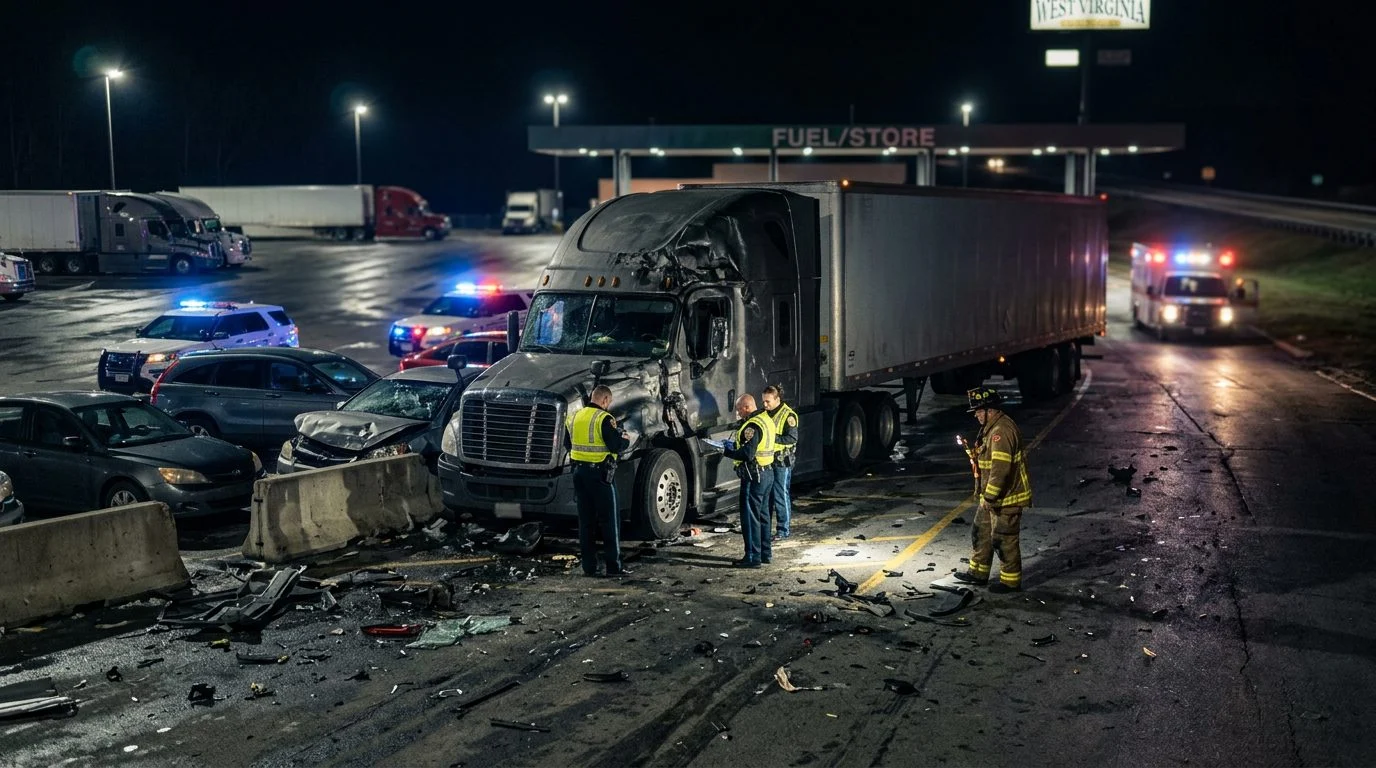
A runaway truck crash in West Virginia happens when a heavy truck cannot slow or stop as it should. The truck may leave the road, roll over, or hit cars, barriers, or bridges. If this happened to you or someone you love, the coming weeks matter. This page explains common causes, the records that often matter, who may share responsibility, and how a free case review works. Big Bubba Injury Law serves people hurt in car and commercial truck crashes across West Virginia.
What a Runaway Truck Crash Is and Who This Page Is For
A runaway truck crash is a crash where a heavy vehicle loses the ability to slow down or stop. This often happens on a steep downgrade or a curve, where the truck picks up speed and cannot hold its path.
These crashes can involve semi-trucks, tractor-trailers, box trucks, and other commercial motor vehicles. The truck may leave the roadway, strike other vehicles, or hit a barrier, embankment, or bridge.
This page is written for three kinds of readers. Some were hurt while driving or riding in a vehicle. Some were struck while on foot or on another road. Others are family members trying to understand what happened to a loved one. Many readers are doing this research in the middle of a crash they did not choose.
Every crash has its own facts, so the details of your situation will shape the answers that apply to you.
If a runaway truck left you or someone you love hurt, you do not have to sort out the next steps alone. Reach out to request a free case review. Talk it through with Big Bubba — the first case review is free, confidential, and carries no obligation.
Common Causes of Runaway Truck Crashes
Most runaway truck crashes trace back to brakes, cargo, driver hours, or maintenance. The cause of any one crash depends on what the evidence shows.
- Brake problems. Federal brake rules say all brakes on a motor vehicle must at all times be capable of operating, with listed exceptions.
- Overheated brakes on long downhills. Long descents put heavy demands on brakes. Misusing engine braking can make the problem worse.
- Unsecured or overloaded cargo. The West Virginia Division of Motor Vehicles states that unsecured cargo can cause serious or catastrophic crashes and injuries.
- Driver fatigue. A property-carrying driver may not drive after 14 consecutive hours on duty that follow 10 consecutive hours off duty. The driver may drive only 11 hours in that window. See 49 C.F.R. § 395.3 and the federal hours-of-service summary.
- See 49 C.F.R. § 396.3.
Evidence That Matters After a Runaway Truck Crash
The most useful evidence is usually the crash report, the truck’s repair records, and the driver’s trip and hours records. Early action helps, because some records are kept for limited periods.
- The crash report. Law enforcement records the scene, the vehicles, and any citations.
- Maintenance and inspection records. Carriers must keep these for each vehicle. Under 49 C.F.R. § 396.3, records are kept for one year where the vehicle is housed, and for six months after it leaves the carrier’s control.
- Vehicle maintenance records. Under 49 C.F.R. § 396.3, the records of inspection, repair, and maintenance required for each vehicle must be retained where the vehicle is housed or maintained for 1 year and for 6 months after the vehicle leaves the carrier’s control. The duty-status log rule is a separate section, 49 C.F.R. § 395.8. See 49 C.F.R. § 395.8.
- Dispatch and cargo papers. Dispatch records and the bill of lading show the route, the load, and the timing.
- Photos, dashcam video, and witnesses. Save what you have. Write down names and contact details while memories are fresh.
- Medical records. Records from the scene, transport, and follow-up care link your injuries to the crash.
Ask that any electronic data from the truck be preserved, too.
Who May Be Responsible in a Runaway Truck Crash
More than one party can share responsibility after a runaway truck crash. Possible parties include the driver, the company that operates the truck, and others tied to the truck or its load.
- The driver, when driving choices, speed, or braking contributed.
- The trucking company. Under W. Va. Code § 55-7-32, an employer defendant can include the vehicle’s owner, the operator’s employer, and anyone with legal control over the vehicle or driver.
- Repair shops and maintenance contractors, when faulty work played a role.
- People who loaded or secured the cargo, when loading affected control of the truck.
- Equipment manufacturers, when a defective part played a role.
West Virginia uses comparative fault (shared fault). Under W. Va. Code § 55-7-13a, each person’s liability follows that person’s percentage of fault. Under W. Va. Code § 55-7-13c, your fault bars recovery only if it is greater than the combined fault of all other responsible persons. W. Va. Code § 55-7-13c reads: “(c) Any fault chargeable to the plaintiff shall not bar recovery by the plaintiff unless the plaintiff’s fault is greater than the combined fault of all other persons responsible for the total amount of damages, if any, to be awarded.” How fault is divided depends on the facts.
For commercial vehicle cases, W. Va. Code § 55-7-32 provides that noneconomic damages recoverable by each person injured or killed against an employer defendant may not exceed $5 million for each occurrence, and that amount increases for inflation beginning January 1, 2026, but may not exceed 150 percent of the original figure. The limit applies only to a civil action involving a commercial motor vehicle requiring a commercial driver’s license, and only to causes of action arising after July 1, 2024. It does not apply if the operator or driver is found to have, among other things, operated a commercial motor vehicle with an alcohol concentration of .04 or more at the time of the incident. That cap is not available unless the employer carries at least $3 million in commercial motor vehicle insurance for each occurrence.
Injuries and Families Affected by Runaway Truck Crashes
Runaway truck crashes can cause catastrophic injuries, and some end in death.
- Catastrophic injuries. Severe fractures, internal injuries, and long-term disability can change daily life and work.
- Traumatic brain injury. Memory, mood, and daily tasks can be affected, and recovery can take a long time.
- Spinal cord injury. Changes in movement, feeling, and independence may require long-term care.
- Wrongful death. A personal representative brings the claim for a death. Under W. Va. Code § 55-7-6, damages can include sorrow, mental anguish, and solace, lost income and services, and funeral expenses.
- Practical concerns. Families often ask about lost income, medical bills, and in-home care.
How a Free Case Review Works, Step by Step
A free case review is a confidential first talk about your situation. You are not required to move forward after it.
- Reach out. Call the firm or use the online form. Briefly describe what happened, including the date and location.
- Share what you have. The crash report number, photos, medical provider names, and the carrier or driver’s name, if known, all help.
- Review. The firm reviews the information and explains the issues that may matter in your situation.
- Discuss next steps. The firm explains options, including written requests asking the carrier to preserve records, when appropriate.
- Decide. You choose what to do next.
Timing matters because carriers keep some records for limited periods. We serve all 55 West Virginia counties, including Charleston, Huntington, Morgantown, Wheeling, Martinsburg, Parkersburg, Beckley, Clarksburg, Fairmont, and Weirton. We also serve drivers and families along I-64 and I-79.
Not sure what your next step is?
Talk it through with Big Bubba — the first case review is free, confidential, and carries no obligation.

Common Questions About Runaway Truck Crashes in West Virginia
Exceptions can apply, so early action matters.
How long do I have to bring a claim?
West Virginia generally allows two years for personal injury claims. W. Va. Code § 55-2-12 sets that period.
Under W. Va. Code § 55-2-12(c), a claim of a type that could not have been brought at common law by or against a personal representative when a party dies must be brought within one year after the right to bring it accrued.
What if I was partly at fault?
Your recovery is reduced by your share of fault. It is barred only if your fault is greater than the combined fault of everyone else responsible, under W. Va. Code § 55-7-13c.
Do I need the police report before I reach out?
No. You can start with what you remember and gather the report later.
If you are sorting through a crash, an injury, or a loss right now, you do not have to work out the next steps alone. Tell us what happened and request a free case review through our online form.