
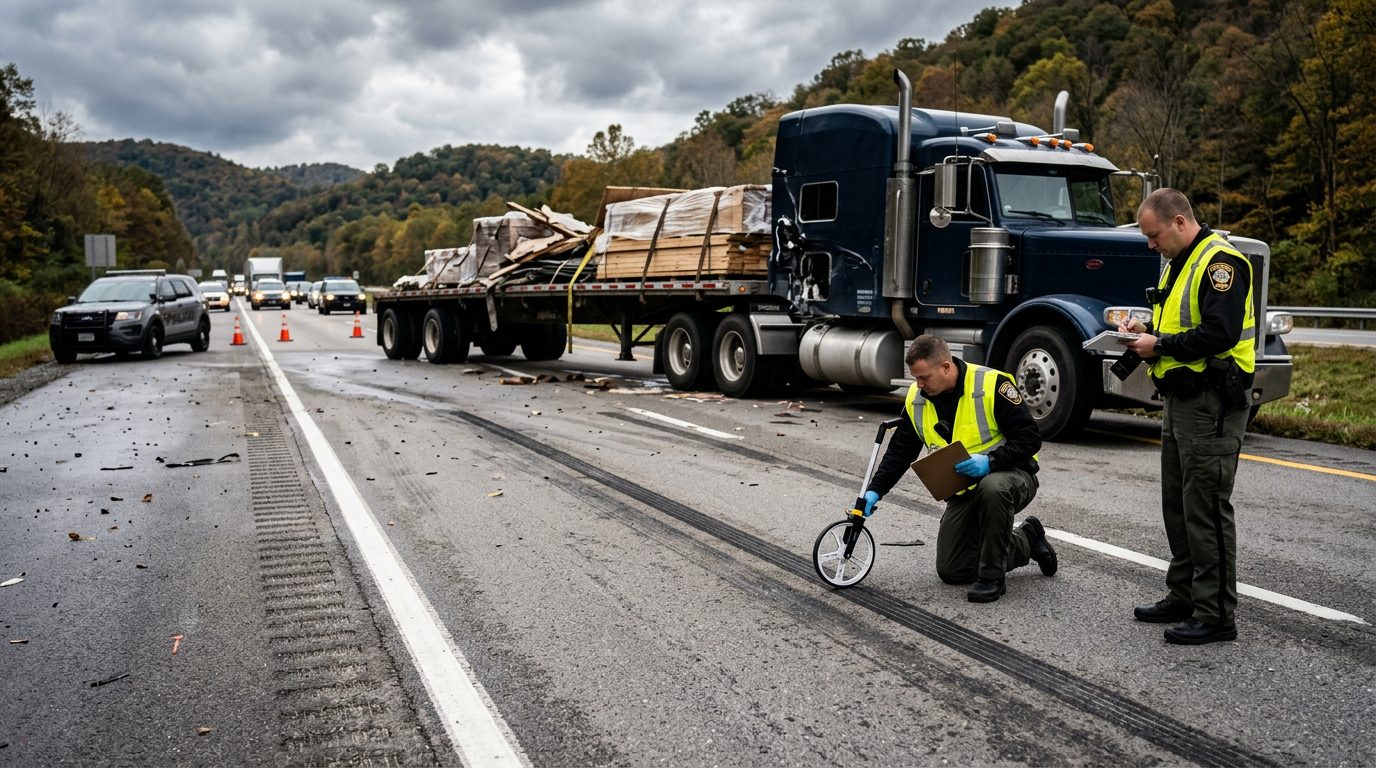
Truck Accidents | Serving West Virginia
Settle or Go to Trial? Weighing Your Options After a Truck Accident
Every truck crash claim is different. Here is how settlement and trial generally compare, and what to think about for your case.
Published October 09, 2026
Some truck accident cases resolve through settlement before trial, while others proceed to trial, and the path your case takes depends on facts unique to your situation. Understanding how settlement and trial work—and what affects the timeline and process—helps you make informed decisions with your attorney.
Settlement and Trial: Two Paths Forward After a Truck Accident
Settlement is a negotiated agreement between you and the at-fault party’s insurance company; trial is a court proceeding where a judge or jury decides liability and damages. Both paths are valid ways to resolve your claim in West Virginia. The choice between them generally depends on liability clarity, injury severity, insurance coverage, and available evidence, among other facts of each case.
Some truck accident cases settle before trial, while others go to trial; how your case is resolved generally depends on the facts involved. But settlement isn’t always the right choice. Generally, whether trial may make sense depends on the facts of your case, including whether a settlement offer reflects your actual losses.

If your damages exceed available coverage, the options for your case depend on the facts and may need careful review. Talk it through with our team — the first case review is free, confidential, and carries no obligation.
How Truck Accident Settlements Work in West Virginia
A settlement begins when your attorney exchanges evidence, medical records, and damage documentation with the insurance company. The insurer reviews this material and makes an offer. Your attorney advises whether the offer reflects your actual losses—medical bills, lost wages, pain and suffering, and long-term care needs. You retain the right to accept or reject any offer. If you accept, you generally sign a settlement agreement that resolves the claim, and any compensation is paid under the terms of that agreement. If you reject it, your attorney may continue negotiating or prepare for trial.
In catastrophic-injury cases, settlement negotiations may focus on lifetime medical care, lost earning capacity, and non-economic damages (pain, suffering, loss of enjoyment of life). Depending on the facts of each case, these elements generally require detailed medical documentation and testimony from qualified professionals to support their value.
The Settlement Timeline: Pre-Suit and Post-Filing Windows
Settlement can happen at any stage of your case. Pre-suit settlement occurs while your case is still being investigated, often before a lawsuit is filed. The length of these negotiations varies and generally depends on how quickly medical treatment concludes and evidence is gathered.
Post-filing settlement begins after your attorney files suit in West Virginia court. Discovery—the exchange of documents and witness statements—often intensifies settlement discussions. Post-filing settlement timing varies widely and depends on the complexity of your case and court scheduling.
Settlement may move faster if liability is clear and damages are straightforward, though timing depends on the facts of each case. Complex cases involving catastrophic injury or multiple defendants (driver, trucking company, cargo loader, maintenance contractor) may take longer to resolve, depending on the facts of each case.
What Happens When a Truck Accident Case Goes to Trial
Trial occurs when settlement negotiations fail and the case proceeds to court. A judge or jury hears evidence from both sides, evaluates credibility, and decides liability and damages. Your attorney presents your case; the defendant’s attorney presents theirs. Witnesses testify. Medical experts explain injury and prognosis. After closing arguments, the judge or jury renders a verdict.
A trial takes place in court, where your case is presented and decided. After a trial, there may be additional steps that affect how long the overall process takes. Generally, trial can take longer and be less predictable than settlement, depending on the facts of each case.
Key Factors That Determine Settlement vs. Trial in Your Case
Clarity of liability is generally an important factor in how a case may be resolved. Where fault is clear, settlement may be possible, though this generally depends on the facts of each case and exceptions may apply. Disputed liability may require trial so a jury can weigh the evidence.
Severity of injury strongly influences strategy. Catastrophic injuries—traumatic brain injury, spinal cord injury, permanent disability—may warrant trial if settlement offers seem inadequate. Cases involving these injuries may involve extended litigation, depending on the facts of each case.
Insurance policy limits can be a significant factor in what an insurer may offer, depending on the facts of each case. If your damages exceed available coverage, the options for your case depend on the facts and may need careful review.
Evidence strength affects both settlement negotiations and trial. Strong medical evidence, accident reconstruction, police reports, and credible witnesses may be relevant to your position in settlement talks or trial, depending on the facts of your case.
Witness credibility and availability matter. Reliable eyewitnesses may help support your case, while unavailable witnesses may make it harder to do so, depending on the facts.
Defendant’s willingness to negotiate varies. Whether and when a defendant's insurer is willing to settle depends on the facts of each case.
Federal trucking regulations may generate additional evidence relevant to liability in some truck accident cases, depending on the facts. Violations of hours-of-service rules (which generally limit drivers to 11 hours of driving within a 14-hour window, subject to exceptions), maintenance standards, or cargo securement rules may be relevant in some cases, depending on the facts, including in settlement discussions.
How Long Does It Take to Settle a Truck Accident Case?
Pre-suit settlement timing varies and generally depends on the facts of each case. Post-filing settlement timing varies and depends on the facts of each case. Timeline depends on investigation speed, medical treatment completion, discovery scope, court docket availability, and the insurer’s responsiveness.
Your attorney's approach to the case may also affect timing. Aggressive early negotiation may accelerate settlement. Waiting for complete medical recovery and expert reports may extend it.
If you're facing settlement or trial decisions after a truck accident in West Virginia, reach out to discuss your specific situation and options. Talk it through with our team — the first case review is free, confidential, and carries no obligation.
How Long Does a Truck Accident Trial Take?
The length of a West Virginia civil trial varies widely and depends on case complexity. Catastrophic injury cases may require extended trial time for medical testimony, life-care planning, and damages presentation, depending on the facts of each case. Court scheduling and docket availability affect when your trial date is set.
After verdict, either party may file post-trial motions or appeals, which can extend the overall timeline depending on the facts of the case. Trial outcomes and timing may be less predictable than settlement, depending on the facts of each case.
Settlement vs. Trial: Pros and Cons
Settlement advantages: may include a faster resolution, more certainty about the outcome, and greater privacy (generally no public record of your injuries or damages, depending on the case).
Settlement drawback: the agreed amount may differ from what a jury might award, depending on the facts of the case, including how strong liability is and how severe the injuries are.
Trial advantages: in some cases, a jury may award more, depending on whether the evidence supports your case; public accountability; jury’s perspective on your suffering.
Trial drawbacks: the outcome may be uncertain, the timeline may be longer, costs may be higher, proceedings are generally public, appeals may be possible, and testifying may take an emotional toll.
Your attorney weighs these factors against the specific facts of your truck accident and advises accordingly.
What Affects Settlement Offers in Truck Accident Cases?
Medical documentation may be an important part of a truck accident claim, depending on the facts of each case. Detailed records of injury, treatment, hospitalization, surgery, rehabilitation, and prognosis may be relevant to your claim, depending on the facts of your case. Expert medical testimony explaining long-term effects may be relevant in some cases, depending on the facts.
Lost wages and earning capacity may be important in some catastrophic injury cases, depending on the facts of each case. Documentation of your income before the accident and projected lost future earnings may be relevant to your claim, depending on the facts of your case.
Liability evidence includes police reports, accident reconstruction, witness statements, vehicle damage photos, and traffic camera footage. Strong liability evidence may be relevant to settlement discussions, depending on the facts of each case.
Insurance policy limits generally set the maximum amount payable under the policy, though other factors may apply depending on the facts of each case. Available policy limits can affect what an insurer may be able to offer, depending on the facts of each case.
Your attorney may investigate the facts of the crash to evaluate how comparative fault could apply in your case (W. Va. Code § 55-7-13c).
How your attorney approaches settlement negotiations may affect discussions with the insurer, although outcomes depend on the facts of each case.
Can I Still Recover Compensation If I Was Partly at Fault?
Yes. West Virginia generally follows comparative negligence law, under which recovery may be possible even if you are partially at fault, though the outcome depends on the facts of your case and exceptions may apply. Generally, your recovery may be reduced by your percentage of fault, and this principle can apply in both settlement and trial, though exceptions may apply depending on the facts of your case.
Under W. Va. Code § 55-7-13c, each defendant is generally liable only for the share of compensatory damages that matches that defendant’s percentage of fault, with a separate judgment entered against each defendant for that amount, though joint liability can apply when two or more defendants consciously conspire and deliberately pursue a common plan to commit a tortious act.
Your attorney can investigate the facts of the crash—such as road conditions, vehicle maintenance, driver behavior and weather—as part of building your case.
Why Truck Accidents Often Differ from Car Accidents
Insurance coverage on commercial trucks may vary, and available limits depend on the policies involved in each case. Truck accidents can involve serious injuries, and the size and weight difference between vehicles may be a factor in some cases. Federal trucking regulations create additional liability evidence. Multiple defendants may be involved—driver, trucking company, cargo loader, maintenance contractor—which increases complexity.
This complexity often makes settlement negotiations more involved and trials more substantial than typical car accident cases.
What You Should Know About Court Costs and Case Expenses
Court filing fees, expert witness fees, investigation costs, and other case expenses are your responsibility. If your attorney works on contingency (no fee unless you recover), you are still responsible for these costs.
Settlement or trial award may be used to cover case expenses before you receive your net recovery. Your attorney should explain all potential costs upfront and keep you informed as expenses accrue.
Not sure what your next step is?
Talk it through with our team — the first case review is free, confidential, and carries no obligation.
Frequently Asked Questions
Is it better to settle or go to trial?
Neither is universally “better”—it depends on your case’s facts, evidence strength, injury severity, and your comfort level with risk and uncertainty.
How much will I receive in settlement or trial?
We cannot predict or guarantee any amount; recovery depends on liability, injury severity, damages documentation, insurance limits, and comparative fault findings.
What if the insurer refuses to negotiate?
Your attorney can file suit and prepare for trial, which may prompt settlement discussions as trial approaches, depending on the facts of the case.
Can I change my mind after accepting a settlement?
Once you sign a settlement agreement, the case generally closes and you generally cannot reopen it, although exceptions may apply depending on the facts. Careful review with your attorney before signing is essential.
How does catastrophic injury affect settlement value?
Catastrophic injuries (traumatic brain injury, spinal cord injury) may involve substantial costs for lifetime medical care, lost earning capacity, and pain and suffering, which can be factors in settlement discussions depending on the facts of each case.
Next Steps: Understanding Your Options
Every truck accident case is unique. An attorney reviews evidence, liability, injury severity, insurance coverage, and comparable cases to advise on the path forward. Your input matters—you decide whether to accept a settlement or proceed to trial.
If you’re facing settlement or trial decisions after a truck accident in West Virginia, reach out to discuss your specific situation and options. People in your position can contact us to understand what comes next and to ensure their rights are protected.
Big Bubba
Contact us for a case review
Related practice areas
- Truck Accident Claims in West Virginia | Big Bubba Legal