
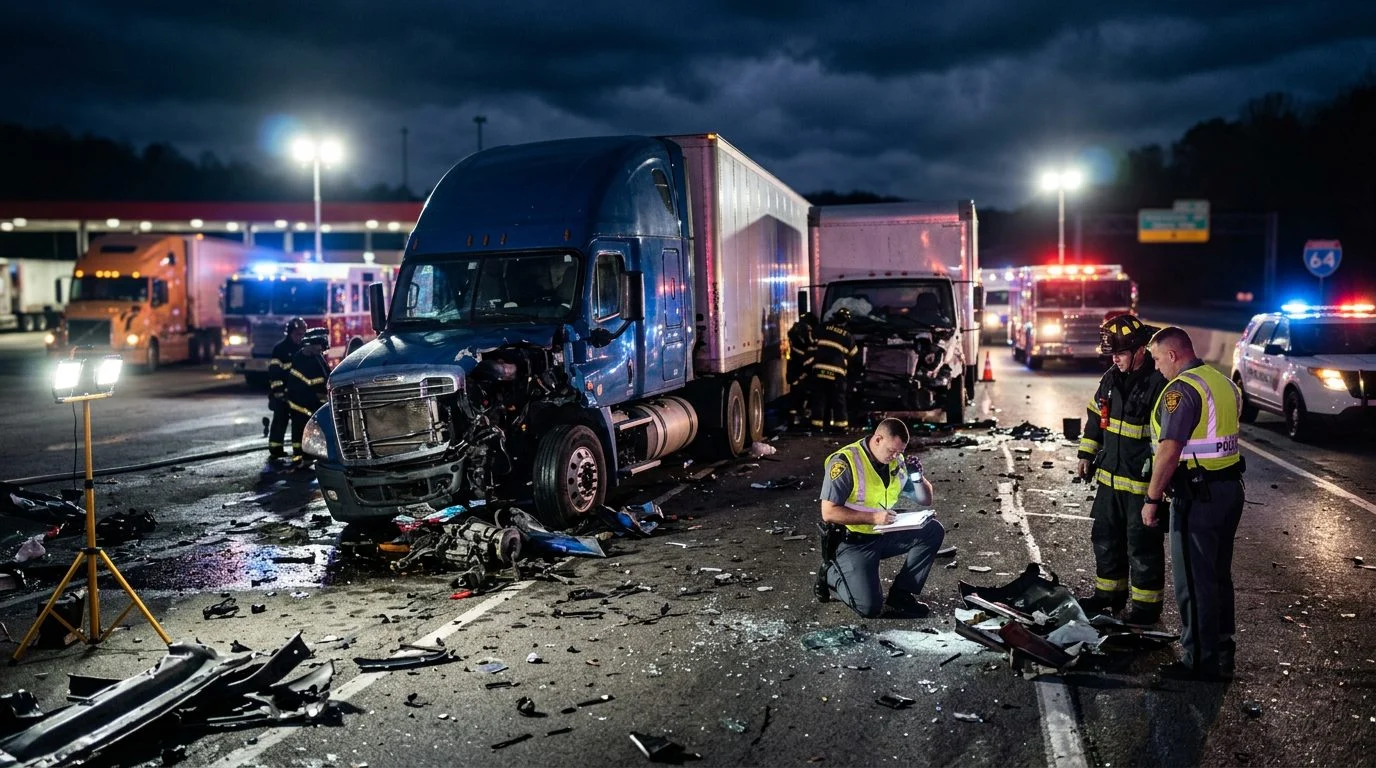
Truck Crash Help Across West Virginia
Hurt in a Truck Crash? Find Out Who May Be Responsible
The firm represents people seriously injured in car and commercial truck crashes, and families in wrongful death cases, across West Virginia. Reach out to talk about what happened.
Published November 3, 2026
Trucking company liability West Virginia claims often reach beyond the driver. A crash with a commercial truck may involve the company that employs the driver, the company that owns the truck, and sometimes a freight broker. This page explains who may be responsible, which legal theories often come up, which records matter, and which deadlines apply.
Who Can Be Held Responsible After a Truck Crash in West Virginia
Several parties may share responsibility after a truck crash, not just the driver. A claim may involve the driver, the motor carrier that runs the truck, the truck’s owner, a freight broker, a shipper or loader, or a maintenance contractor.
The name on the truck doesn’t always show the employer. A truck may be leased, borrowed, or run under a contract. West Virginia law defines an “employer defendant” in commercial vehicle cases to include the vehicle’s owner, the driver’s employer, and any entity that holds legal control over the truck or driver (W. Va. Code § 55-7-32). That definition doesn’t decide fault by itself. Whether a company is liable can depend on the employment relationship and the facts.
The firm handles claims against trucking companies and freight brokers arising from crashes. It can help sort out who controlled the truck, who hired the driver, and who arranged the load.
If a commercial truck hurt you or someone you love, you may have a claim, and the firm can review the details with you in a free case review. Talk it through with Big Bubba — the first case review is free, confidential, and carries no obligation.
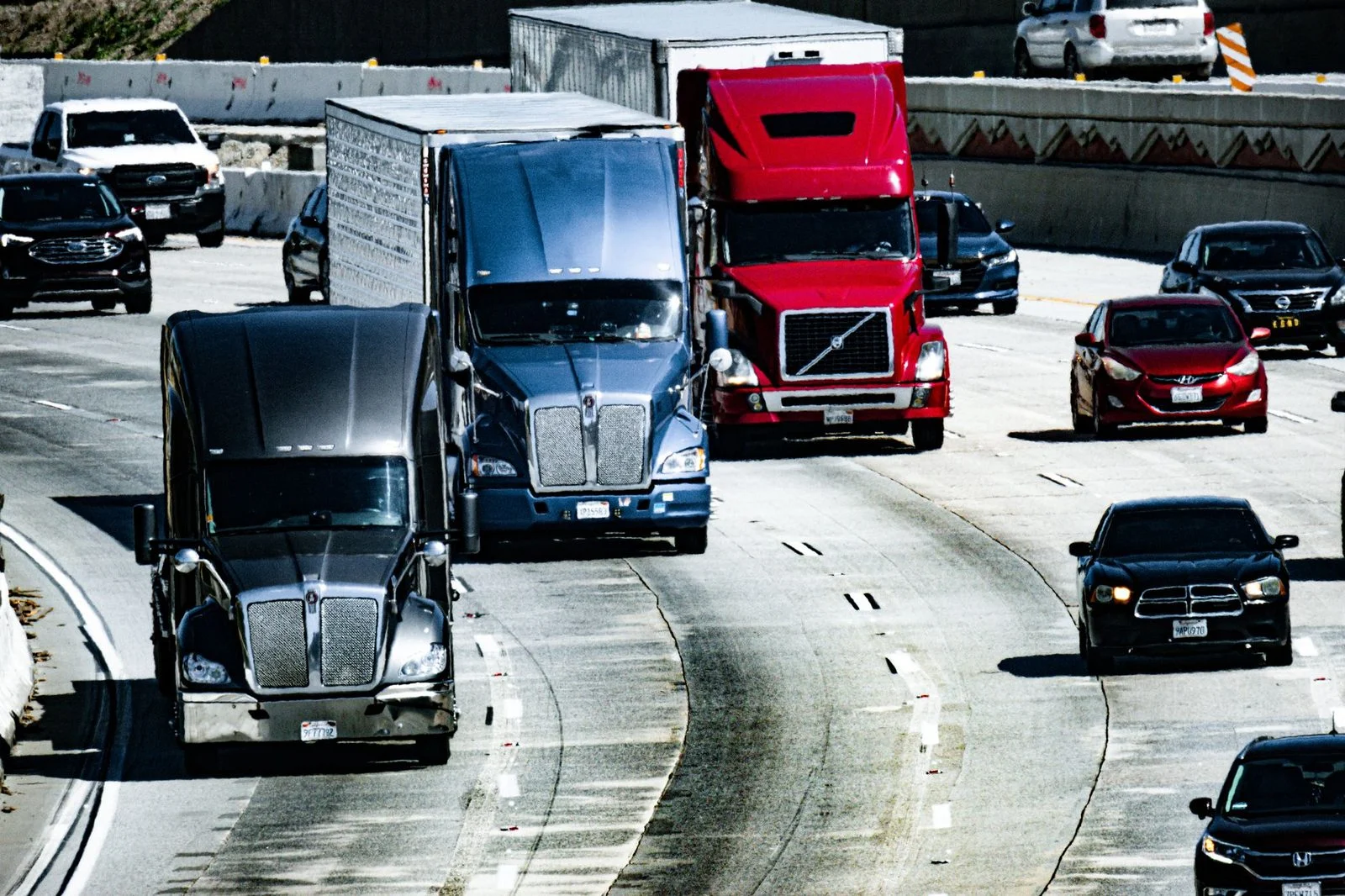
How a Freight Broker’s Role Can Affect Liability
A freight broker arranges a trip between a shipper and a carrier. A broker usually doesn’t run the truck itself. Because the broker chooses the carrier, its choices can become part of a claim.
One common theory is negligent selection. It argues the broker picked an unsafe carrier or failed to check its safety. In Montgomery v. Caribe Transport II, LLC (2026), the U.S. Supreme Court held that a state-law claim that a broker negligently hired an unsafe motor carrier falls within a federal safety exception, so it was not preempted (Montgomery v. Caribe Transport opinion).
That ruling doesn’t mean every broker claim will succeed. Other rules may also apply to a truck crash claim, depending on the facts of the crash.
Paper records can show who arranged the trip. Keep the bill of lading, the load confirmation, and any papers from the carrier. These documents may show which company arranged the haul and when.
Common Theories Used Against Trucking Companies
Trucking company claims often rely on a few common legal theories. Each one needs its own proof, and none applies automatically.
- Negligent hiring. A company may be examined for whether it reasonably checked a driver’s background for the job.
- Negligent supervision, training, and entrustment. These claims ask whether a company monitored its drivers, trained them, or let an unfit driver use a vehicle it knew or should have known was unsafe for that driver.
- Respondeat superior. This general rule may make an employer responsible for an employee’s negligence done within the scope of the job.
- Hours-of-service violations. Federal rules limit driving time. Trip records may show whether these limits were followed.
- Inspection and maintenance failures. Carriers must systematically inspect, repair, and maintain their trucks, including suspension, wheels and rims, and steering systems (49 C.F.R. § 396.3). Brake or tire problems may matter when they connect to the crash.
- Overloads and rushed trips. Overloaded or rushed trips may be examined as possible contributing factors in some cases.
Evidence That Often Matters in a Trucking Claim
The most useful evidence is often the trucking company’s own paperwork. Federal rules require some of it to be kept only for limited periods.
- It can include the driver’s application, motor vehicle record, and medical certificate.
- Records of duty status. Carriers must keep these logs and supporting documents for at least six months from receipt (49 C.F.R. § 395.8).
- Inspection and repair records. These must be kept for one year where the vehicle is either housed or maintained, and for six months after the truck leaves the carrier’s control (49 C.F.R. § 396.3).
- Electronic data. Federal rules allow records to be kept by any technology that accurately reflects all of the information in the record and remains accessible in a form that can be accurately reproduced later for reference (49 C.F.R. § 379.7). Electronic data can still be lost over time.
- Your own records. Photos, witness names, the police crash report, and medical records can all help.
Once a retention period ends, a record may no longer be available. That’s why early requests to preserve records are common. Some insurers may dispute a claim or how fault is assigned, so documentation often matters.
West Virginia Rules That Shape These Claims
West Virginia uses modified comparative fault, which can reduce an injured person’s recovery (W. Va. Code § 55-7-13c). In some cases, the rule can bar recovery altogether.
Under W. Va. Code § 55-7-13c, an injured person’s fault does not bar recovery unless it is greater than the combined fault of all other persons responsible for the damages. If it is less, recovery is reduced in proportion to the injured person’s fault.
Under W. Va. Code § 55-7-13a, fault is divided by percentage among the people who caused the harm. That group can include people who are not named in the lawsuit. Each defendant generally pays only its own share, though exceptions may apply.
West Virginia generally allows two years to file a personal injury claim, and exceptions may apply (W. Va. Code § 55-2-12). Wrongful death claims generally must start within two years after the death (W. Va. Code § 55-7-6). Waiting can shorten the time left to act.
How a Trucking Claim Typically Moves Forward
A trucking claim usually moves from a first review to records requests and investigation. Insurer talks come next, and court is a later step if needed.
- Free case review. You describe the crash, your injuries, and any papers you have. The firm reviews the details with you.
- Preservation letters. These letters ask the carrier, broker, and other parties to keep key records.
- Investigation. The firm can review the police report, medical records, and truck and driver documents. This helps identify responsible parties.
- Claim presentation. The claim goes to the insurers involved. They may respond with a dispute or an offer, and negotiation may follow.
- Court, if needed. If a fair resolution isn’t reached, the claim may be filed in court. How long each step takes varies with the parties and the court’s schedule.
Not sure what your next step is?
Talk it through with Big Bubba — the first case review is free, confidential, and carries no obligation.
Common Questions About Trucking Company and Broker Claims
Most questions come down to who controlled the truck, which deadline applies, and how fault is divided.
If the driver works for a different company than the truck’s owner, who can be liable?
West Virginia law names several possible employer defendants, including the owner and the driver’s employer (§ 55-7-32). Who is liable can vary with the facts.
Can a freight broker be sued after a truck crash?
Sometimes. Other rules may also apply, depending on the facts of each crash.
What if a trucking company denies responsibility?
A company may dispute a claim. The firm can review the denial alongside the evidence.
Can I still pursue a claim if I was partly at fault?
Generally, yes. Your recovery is reduced by your share of fault, and it is barred only if your fault is greater than all other fault combined (§ 55-7-13c).
What should a family do first after a fatal truck crash?
Wrongful death claims are generally brought by the estate’s personal representative, within two years of death (§ 55-7-6). Keep the crash report, medical and funeral bills, and the date of death in one place.

Truck Crash Claims the Firm Handles Across West Virginia
The firm handles claims against trucking companies and freight brokers after commercial truck crashes in West Virginia. It also handles catastrophic injury, traumatic brain injury, spinal cord injury, and wrongful death matters that arise from these crashes.
If you’re reading this after a crash, you may be dealing with injuries, a loss, or a stack of papers you didn’t expect. Some readers are researching for a parent, spouse, or other family member who can’t manage it alone right now.
The firm serves people across West Virginia, including Charleston, Huntington, Morgantown, Wheeling, Martinsburg, Parkersburg, Beckley, Clarksburg, Fairmont, and Weirton.
You don’t have to sort out the companies involved on your own. Tell Big Bubba what happened, then request a free case review.