
West Virginia Accident Law
Four Proofs of Negligence in West Virginia Accident Claims
Understanding how negligence is proven in car, truck, and catastrophic injury cases.
Published October 08, 2026
What Are the Four Proofs of Negligence in West Virginia?
To recover damages after a truck or car accident in West Virginia, you must prove four specific elements: duty of care, breach of duty, causation, and damages. All four must be present for a negligence claim to succeed. Missing even one means your claim may fail. Understanding these four proofs helps you see what your case needs to show and whether you may have a path to recovery.
Not sure what your next step is?
Talk it through with our team — the first case review is free, confidential, and carries no obligation.
Why the Four Proofs of Negligence Matter in Your Case
When someone is hurt in a truck or car accident, the injured person often needs to prove that the other driver or vehicle operator was negligent. Negligence is not just about an accident happening—it’s about showing that someone failed in a legal duty and that failure caused real harm.
In West Virginia, comparative fault rules allow you to recover damages even if you share some responsibility for the accident. However, you still must prove all four elements of negligence. Understanding these proofs helps you evaluate your situation and know what evidence matters most.
The Four Proofs of Negligence Explained
Proof 1: Duty of Care
Every driver on a West Virginia road has a legal duty to operate their vehicle safely and follow traffic laws. This duty exists toward everyone who could be harmed by negligent driving—other drivers, passengers, pedestrians, and cyclists.
The duty is not about being perfect; it’s about acting as a reasonably careful driver would in the same situation. In truck accidents, commercial drivers and trucking companies have additional duties tied to federal and state regulations. For example, motor carriers must systematically inspect, repair, and maintain all vehicles subject to their control, and drivers must report defects discovered during daily vehicle inspections.
Proof 2: Breach of Duty
Breach means the driver or operator failed to meet that standard of care. Examples include speeding, running a red light, distracted driving, failing to maintain brakes, or violating hours-of-service rules.
Breach can be a single reckless act or a pattern of negligent behavior. You must show that the defendant’s conduct fell below what a reasonably careful driver would have done. In commercial vehicle cases, breach often involves mechanical failure, driver error, or company negligence in maintenance, hiring, or supervision.
Proof 3: Causation
Causation means the breach directly caused the accident and your injuries. There are two parts: “but-for” causation (the accident would not have happened but for the breach) and proximate cause (the injury was a foreseeable result of the breach).
You cannot recover if the accident would have happened anyway, or if the injuries resulted from an unrelated event. In truck accidents, causation often involves showing how poor maintenance, driver fatigue, or inadequate training led to the crash and your harm.
Proof 4: Damages
Damages are the real, measurable harm you suffered—physical injury, medical bills, lost wages, pain and suffering, or loss of life in a wrongful death case. You must prove the extent and cost of your injuries with medical records, bills, wage statements, and testimony.
Damages can include past and future medical care, rehabilitation, lost earning capacity, and non-economic losses like pain and suffering. Without provable damages, there is no negligence claim, even if the other three proofs are clear.
What Are the Four Types of Negligence?
Ordinary negligence is the most common—failure to use reasonable care.
Gross negligence involves reckless conduct that shows extreme disregard for safety.
Comparative negligence applies when both parties share fault (W. Va. Code § 55-7-13c). West Virginia allows recovery even if you are partially at fault, as long as your fault is not greater than the combined fault of all other parties. Fault can affect whether and how much you are able to recover, so it is worth understanding how your own actions in the incident may be viewed.
Vicarious negligence holds an employer or company liable for the negligent acts of an employee or agent. In truck accidents, a trucking company may be vicariously liable for a driver’s negligence, even if the company itself did nothing wrong.
How Do You Prove the Four Proofs of Negligence?
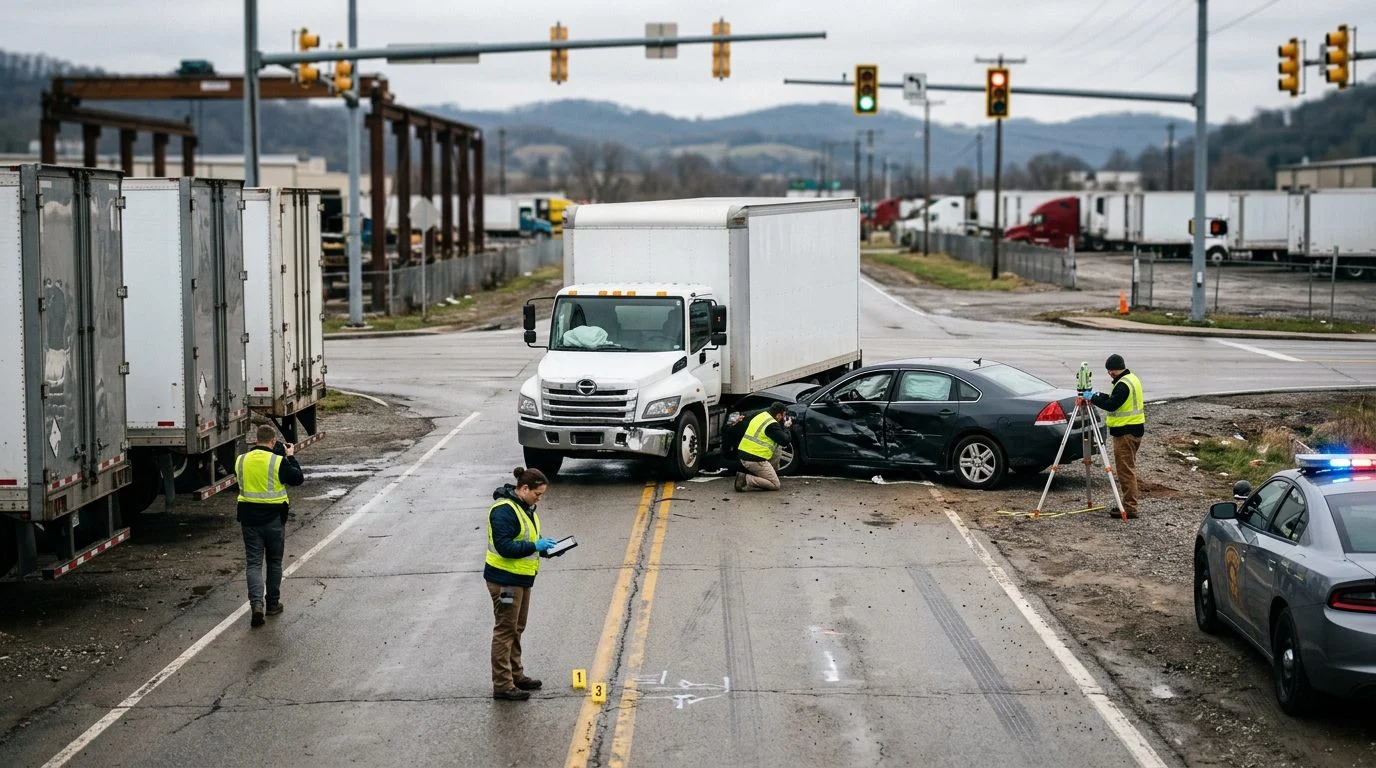
Evidence includes accident scene photos, police reports, witness statements, medical records, and expert testimony. In truck accidents, evidence often includes logbooks, maintenance records, driver training files, and black box data from the vehicle.
Your own testimony about what happened and how the injuries have affected your life is also important. An attorney can help gather and organize evidence to build a clear picture of each element.
Burden of Proof: How Strong Does Your Case Need to Be?
Building a personal injury case involves gathering evidence that shows how the injury happened and who was responsible. This is a lower standard than the “beyond a reasonable doubt” used in criminal cases.
Strong documentation, records and witness accounts all help support your account of what happened. A jury or judge will weigh all the evidence and decide whether each element has been proven.
Have questions about what happened?
Ask our team directly. The first conversation is free, confidential, and there is no obligation to continue.
Negligence in Truck Accidents and Commercial Vehicle Cases
Truck accidents often involve multiple parties—the driver, the trucking company, the vehicle owner, and sometimes a maintenance contractor. Each party may have breached a duty; for example, a company may have failed to maintain the truck, or a driver may have violated hours-of-service rules.
Commercial vehicle operators are held to the same standard of care as other drivers, plus compliance with federal and state regulations. Catastrophic injuries from truck accidents—spinal cord damage, traumatic brain injury, or death—often result in substantial damages. Traumatic spinal cord injuries can cost millions in lifetime care, making the proof of damages critical in these cases.
What Happens If You Cannot Prove All Four Proofs?
If any one of the four proofs is missing or weak, your negligence claim may fail. For example, if the defendant owed no duty, or if the breach did not cause the accident, or if you suffered no damages, recovery is unlikely.
This is why gathering thorough evidence and understanding each element is critical to your case.
Comparative Fault in West Virginia: Partial Responsibility Does Not Bar Recovery
West Virginia’s comparative fault rule is important to understand. You can recover damages even if you were partially at fault, as long as your fault does not exceed the combined fault of all other responsible parties. Your recovery is reduced by your percentage of fault.
Under West Virginia law, the liability of each defendant for compensatory damages is generally several only, so each defendant is liable only for the amount of compensatory damages allocated to that defendant in direct proportion to that defendant’s percentage of fault, with a separate judgment rendered against each defendant for its share, though the statute provides exceptions, including joint liability for two or more defendants who consciously conspire and deliberately pursue a common plan or design to commit a tortious act or omission, as set out in W. Va. Code § 55-7-13c. The same statute provides that joint liability may be imposed on two or more defendants who consciously conspire and deliberately pursue a common plan or design to commit a tortious act or omission, and any person held jointly liable has a right of contribution from other defendants that acted in concert, under W. Va. Code § 55-7-13c.
Statute of Limitations: Time Matters
In West Virginia, you generally have two years from the date of injury to file a personal injury lawsuit. For wrongful death cases, the deadline is generally two years from the date of death, subject to other provisions of West Virginia law (W. Va. Code § 55-7-6). Missing this deadline may mean losing your right to recover, depending on the facts, so early action is essential.

Want to know where you stand?
Tell us what happened and our team will walk you through the options available to you, at no cost.
Frequently Asked Questions
What if the defendant was driving under the influence?
Under West Virginia law, each defendant is generally liable only for the share of your compensatory damages that matches that defendant’s percentage of fault, and a separate judgment is entered against each defendant for that share. Joint liability may be imposed on two or more defendants who consciously conspire and deliberately pursue a common plan to commit a tortious act, and a person held jointly liable has a right of contribution from other defendants that acted in concert (W. Va. Code § 55-7-13c).
Can I recover if the other driver was partially at fault?
Yes. In West Virginia, you can recover as long as your fault is not greater than the combined fault of all other parties (W. Va. Code § 55-7-13c). Your recovery is reduced by your percentage of fault.
What counts as damages in a negligence case?
Damages include medical bills, lost wages, future medical care, rehabilitation, pain and suffering, and in wrongful death cases, funeral expenses and loss of companionship.
How long do I have to file a claim?
Generally, a personal injury claim in West Virginia must be filed within two years after the right to sue accrues (W. Va. Code § 55-2-12), and a wrongful death claim within two years after the date of death (W. Va. Code § 55-7-6), subject to other provisions of West Virginia law.
What if I was injured in a truck accident caused by poor maintenance?
The trucking company may be liable for negligent maintenance. Federal regulations require motor carriers to inspect and maintain their vehicles, so failure to do so can support a negligence claim.
If you’ve been injured in a truck or car accident and want to understand whether negligence can be proven in your situation, reach out to discuss what happened.
Related practice areas
- Truck Accident Claims in West Virginia | Big Bubba Legal
- Truck Accident Case Review: Tell Bubba What Happened