
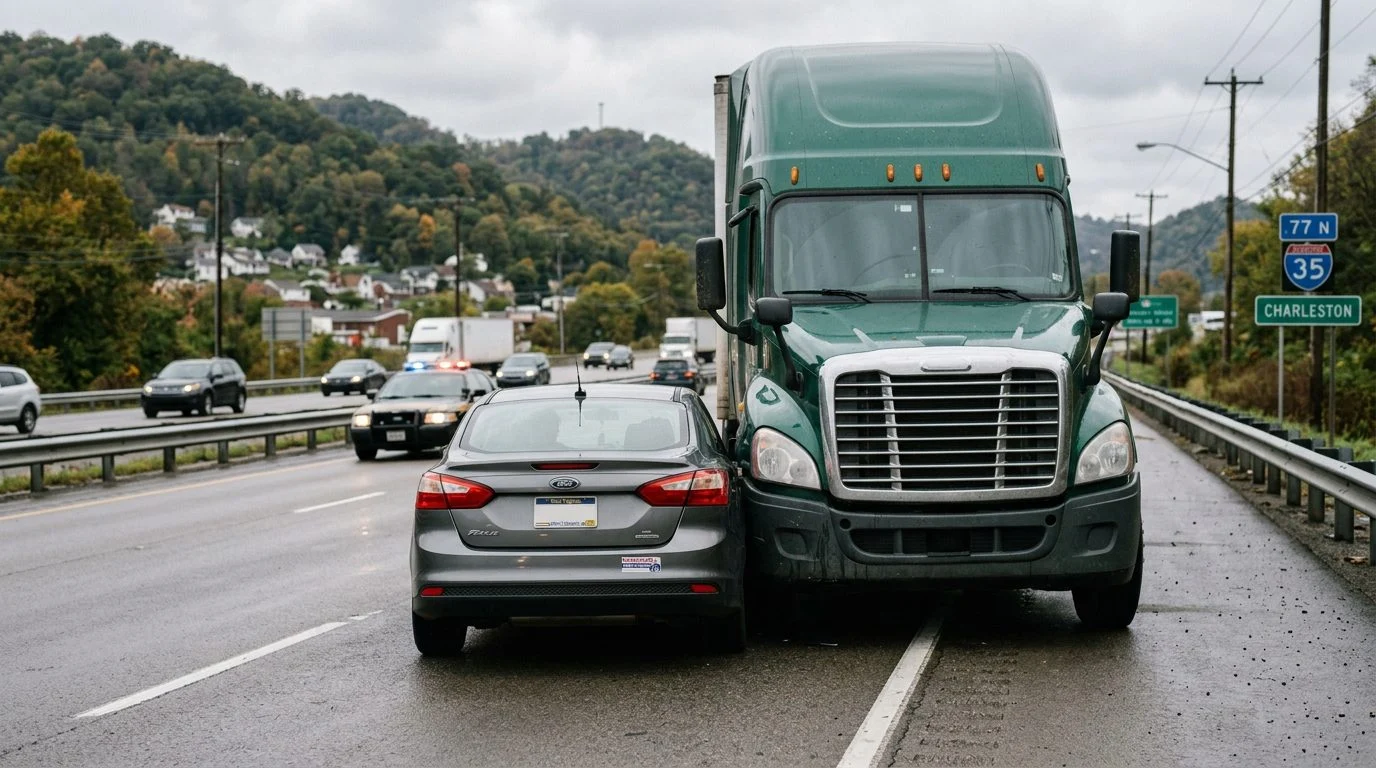
Truck Accidents | West Virginia
What Really Causes Trucking Accidents?
A large truck crash rarely has one simple explanation. Here is how the causes are usually sorted out, and why the details matter.
Published November 16, 2026
If someone you care about was hurt in a crash with a large truck, you’re probably trying to understand what happened. The most common cause depends on which records you look at. The causes most often cited are driver distraction, driver fatigue, impairment, and maneuver crashes such as rollovers, wide turns and lane drift.
This page explains each cause, the West Virginia and federal rules that may apply, and the evidence people often ask about. It is general information, not legal advice for your situation.
Why the Answer Depends on the Data
The most common cause depends on how a crash is counted, and different sources count causes differently. Some records list the cause an investigator noted at the scene. Others track the factor most often linked to serious injury. The two can point to different answers.
The Federal Motor Carrier Safety Administration (FMCSA) publishes crash data that shows its reporting categories. You can review those categories yourself instead of relying on a headline.
At the scene, the police crash report is often the first written record. West Virginia law requires an investigating officer who investigates a motor vehicle crash on the public streets or highways of this state that results in bodily injury, death, or total property damage to an apparent extent of $1,000 or more to prepare a report within 24 hours after finishing the investigation (W. Va. Code § 17C-4-7). That report is one source of information. Its conclusions can be reviewed, not accepted automatically.
If a truck crash left someone you love hurt, you don't have to sort out the causes alone. You can ask us for a free case review. Talk it through with Big Bubba — the first case review is free, confidential, and carries no obligation.
Driver Distraction
Driver distraction is anything that pulls a driver’s eyes, hands or mind away from the road. In a truck, that can include a phone, a dispatch or navigation screen, eating, or adjusting equipment.
West Virginia law restricts phone use while driving. A driver may not write, send or read a text-based message, or make any communication on a wireless telecommunications device, including a phone call, voice message, or one-way voice communication, except through voice-operated or hands-free features (W. Va. Code § 17C-14-15). Federal rules also apply to commercial drivers. No driver may text while driving, and no motor carrier may allow or require it, except that a commercial motor vehicle driver may text when necessary to communicate with law enforcement officials or other emergency services (49 C.F.R. § 392.80).
Proving distraction often takes more than a driver’s word. People ask about phone records, in-cab data and witness accounts. Distraction may be relevant to a crash, based on what those records show.
Driver Fatigue and Hours of Service
Fatigue slows reaction time and can lead to drifting, late braking and missed exits. Federal hours-of-service rules aim to limit that risk.
A driver of a property-carrying truck may drive up to 11 hours within a 14-hour period that starts after 10 consecutive hours off duty. Federal rules also bar driving when impairment through fatigue, illness, or any other cause makes it unsafe (49 C.F.R. § 392.3).
When fatigue is suspected, logs and electronic logging data may be reviewed. Those records are one kind of evidence. They can show whether the driving schedule matches the timeline of the crash.
Impairment From Drugs and Alcohol
Alcohol and drug impairment is a recognized crash cause. Federal rules set when a commercial driver must be tested.
After certain commercial vehicle crashes, the employer must test as soon as practicable each surviving driver who was performing safety-sensitive functions with respect to the vehicle if the accident involved the loss of human life, and each surviving driver who receives a citation as set out in the post-accident testing table. Testing applies to surviving drivers performing safety-sensitive functions in crashes involving loss of life, and to surviving drivers who receive a citation for a moving traffic violation arising from crashes involving bodily injury that needs immediate medical treatment away from the scene or disabling damage requiring a tow-away (alcohol testing: citation within 8 hours; controlled substance testing: citation within 32 hours) (49 C.F.R. § 382.303). The rule sets time limits. Alcohol testing stops after 8 hours, and controlled substance testing stops after 32 hours.
Test results are one piece of the picture. They should be read alongside the other facts of the crash. West Virginia’s cap on noneconomic damages in commercial vehicle lawsuits does not apply when the civil action arises from an incident for which the driver is found to have, at the time of the incident, operated a commercial motor vehicle with an alcohol concentration of .04 or more (W. Va. Code § 55-7-32).
Rollovers, Wide Turns and Lane Drift
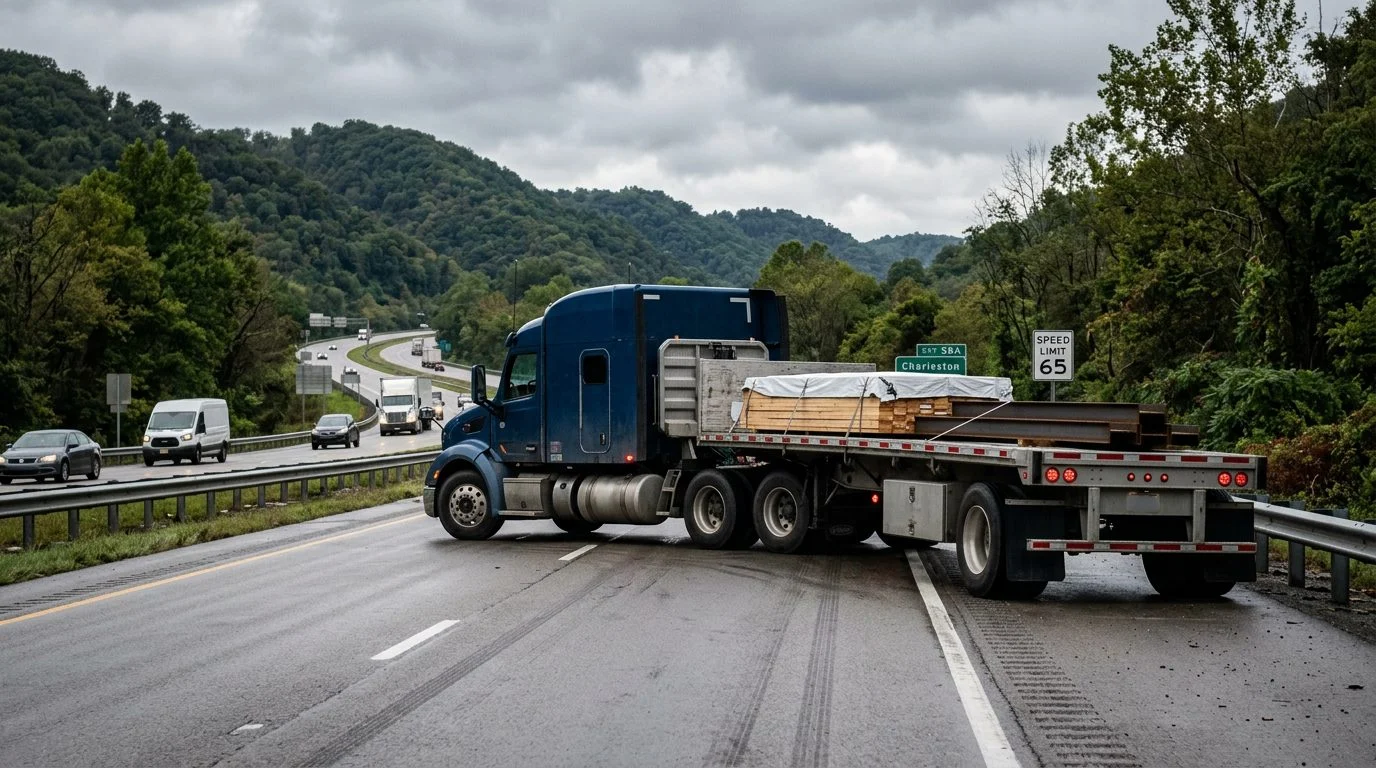
Maneuver crashes happen when a heavy truck tips over, swings wide or drifts across lanes.
A rollover happens when a heavy vehicle tips onto its side or roof. It often involves curves, ramps or speed, and shifting loads can add to the risk.
Wide turns, sometimes called off-tracking, happen when the trailer swings out during a turn. The trailer can move into another lane or the shoulder and strike a car beside or behind the truck.
Lane drift and unsafe lane changes can cause sideswipes. Evidence people often ask about includes scene photos, skid or path marks, and the crash report. These patterns may be relevant to a claim, based on the specific facts.
Who May Be Responsible When a Truck Causes a Crash
Responsibility can reach beyond the driver. The answer generally depends on who controlled the driving, the equipment or the records.
West Virginia law defines an “employer defendant.” It can include the vehicle’s owner, the operator’s employer, and any other entity that owns, leases or holds legal control over the vehicle or operator (W. Va. Code § 55-7-32).
If another driver was at fault, West Virginia uses modified comparative fault. A plaintiff’s fault does not bar recovery unless it is greater than the combined fault of all others responsible. If it is less, recovery is reduced in proportion to the plaintiff’s fault (W. Va. Code § 55-7-13c).
Deadlines come from statute. West Virginia generally allows two years to bring a personal injury action (W. Va. Code § 55-2-12). A wrongful death action generally must be brought by the personal representative within two years after the death (W. Va. Code § 55-7-6). Timing matters, so it helps to act early.
Not sure what your next step is?
Talk it through with Big Bubba — the first case review is free, confidential, and carries no obligation.
If You Are Looking Into a Crash for Someone You Care About
If you’re researching this for an injured family member or friend, you’re likely in a hard stretch you didn’t choose. A serious truck crash can bring medical care, insurance calls, records requests and questions about the police report all at once. You don’t have to sort them out in one day.
Brain injuries are a common concern after serious crashes. The West Virginia Department of Health describes what a traumatic brain injury is and the events that can cause one. The Brain Injury Association of America compares brain injuries from vehicle crashes with those from other causes.
Is distraction the most common cause?
Distraction is one of the causes most often cited. Which cause ranks highest depends on the data set used.
Does a crash report decide who was at fault?
A crash report is one source of information. Its conclusions can be reviewed rather than accepted automatically.
For the broader picture, read our guide to truck accident claims in West Virginia. If a truck crash has hurt someone you love, you don’t have to work through the causes alone. You can reach out to us for a free case review. We serve Charleston, Huntington and Morgantown injury victims across West Virginia.