
Truck Accident Recovery
What to Do After a Truck Accident in West Virginia
Immediate steps to protect your safety, health, and legal rights after a commercial truck crash.
Published October 04, 2026
If you’ve just been in a truck accident, your immediate priority is safety—then documentation, medical care, and legal protection. Truck accidents differ from car crashes because they involve federal regulations, commercial liability, and often multiple responsible parties. Here’s what you need to do right now.
Your First Priority: Safety and Emergency Response
Check for injuries to yourself, passengers, and anyone else involved immediately. If anyone is hurt or the scene feels unsafe, call 911 without delay. Emergency responders will handle injuries and secure the area.
If your vehicle is drivable and traffic is moving, move it to a safe location—a shoulder, parking area, or well-lit spot away from oncoming traffic. Turn on your hazard lights. Set up warning triangles or flares if you have them. Do not approach the truck driver or other vehicles if you feel unsafe. Wait for police before moving anyone with serious injuries.

Not sure what your next step is?
Talk it through with our team — the first case review is free, confidential, and carries no obligation.
Document the Scene and Gather Information
Once you’re safe, begin gathering evidence. This information becomes critical later.
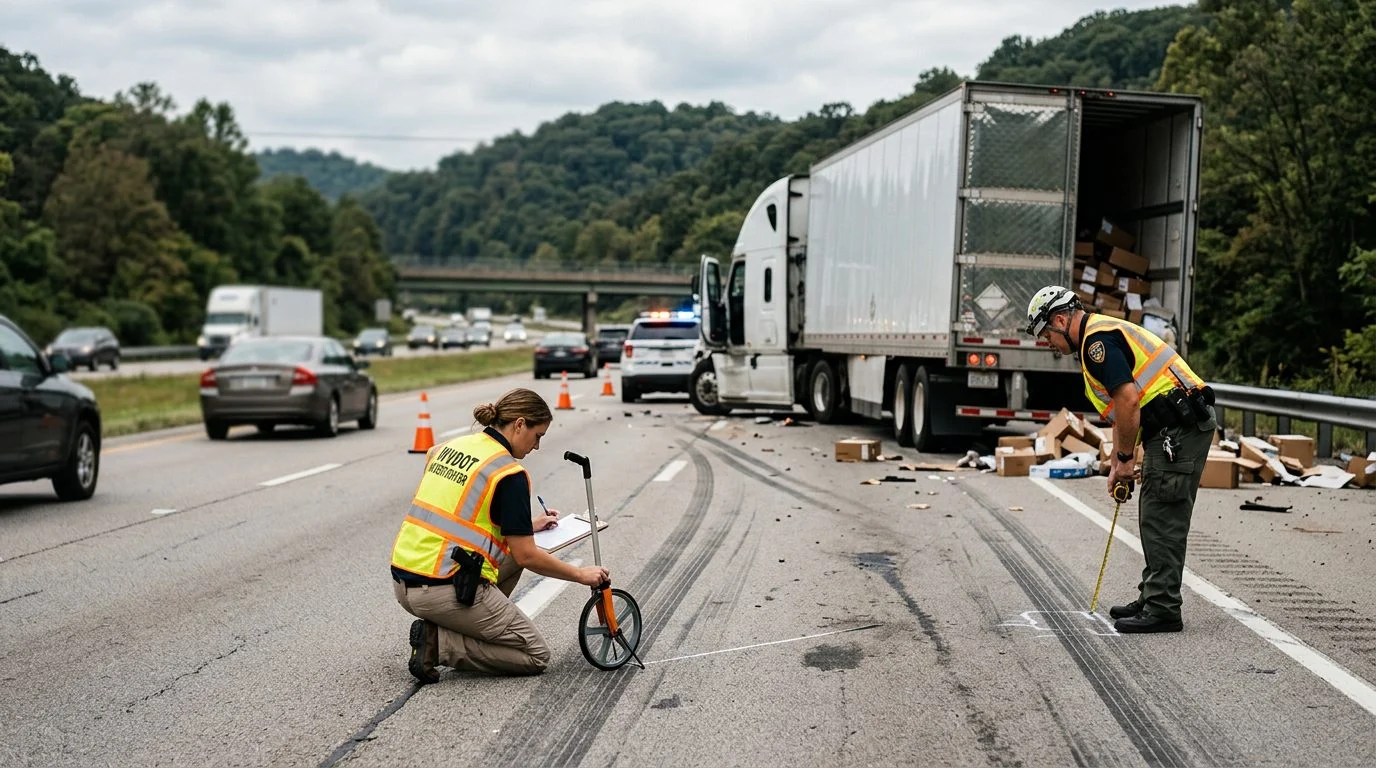
Take photos and video of all vehicle damage from multiple angles. Photograph the accident scene, road conditions, traffic signs, weather, and debris. Record the truck’s license plate, company name, and any visible markings. Note the exact date, time, and location.
Get the truck driver’s name, phone number, address, and driver’s license number. Collect the commercial vehicle’s insurance information and the trucking company’s details. Write down names and contact information for any witnesses. Note the responding police officer’s name and badge number. These details matter because commercial truck accidents often involve state and federal investigators due to interstate commerce and federal safety regulations.
What Should You Not Do After a Truck Accident?
Protect yourself by avoiding these common mistakes.
Do not admit fault or apologize to the driver, witnesses, or police. Do not sign anything except police reports or medical consent forms. Do not accept a settlement offer or agree to payment on the spot. Do not leave the scene before police arrive unless emergency responders direct you to. Do not post details about the accident on social media—insurance companies and opposing counsel monitor these posts. Do not discuss the accident with the truck driver’s insurance company without legal guidance. Do not delay seeking medical attention, even if you feel fine.
Report the Accident to Police
Call 911 or the local police non-emergency line to report the accident. Provide a factual account of what happened without speculation or emotion. Request a copy of the police report number for your records and ask when the report will be available. Commercial truck accidents may involve state police or federal investigators due to interstate commerce regulations, so don’t be surprised if multiple agencies respond.
How Long After an Accident Does It Need to Be Reported?
Report to police immediately if anyone is injured or significant damage occurred. In West Virginia, a driver involved in a crash resulting in injury, death, or apparent total property damage of $1,000 or more must immediately notify police. Notify your own insurance company as soon as possible, and check your policy for any notice requirements. Commercial truck accidents are often reported to federal authorities and may trigger additional investigations. Delaying a report can complicate your claim and may raise questions about the accident’s circumstances.
Have questions about what happened?
Ask our team directly. The first conversation is free, confidential, and there is no obligation to continue.
Seek Medical Attention
Go to an emergency room or urgent care facility even if you have no visible injuries. Some injuries are not immediately apparent. Traumatic brain injury may not produce visible symptoms at first; delayed effects can include headache, confusion, memory loss, and sensitivity to light or noise. Spinal cord injuries can result in partial or complete loss of motor and sensory function below the level of injury, and recovery varies widely depending on severity.
Keep all medical records, test results, and bills related to the accident. Follow your doctor’s treatment plan and attend all follow-up appointments. Document any pain, limitations, or symptoms you experience in the days and weeks after the accident.
How Many Days Should You Rest After a Truck Accident?
Rest requirements depend on the severity of your injuries and your doctor’s recommendations. Even minor accidents can cause delayed pain or injury; follow medical guidance rather than assuming you’re fine. Serious injuries such as spinal cord damage or traumatic brain injury may require extended recovery and rehabilitation. Return to work or normal activities only when cleared by your healthcare provider. Pushing yourself too quickly can worsen injuries and complicate your recovery.
Preserve Evidence and Keep Records
Save all photos, videos, and written notes from the accident scene. Keep the police report and any incident numbers. Retain all medical records, bills, and receipts related to treatment. Document lost wages and time away from work. Keep a journal of your recovery, pain levels, and how the injury affects your daily life. Preserve the damaged vehicle and do not repair it until an adjuster has inspected it. Evidence preservation is critical in truck accident claims because liability investigation often requires inspection of the vehicle, driver records, and maintenance logs.
Who Is Liable for a Semi Truck Accident?
Liability in truck accidents is often more complex than in car accidents because multiple parties may be involved. The truck driver may be liable if they were negligent, fatigued, or violated traffic laws. The trucking company may be liable if they failed to maintain the vehicle, hired an unqualified driver, or pressured the driver to violate safety regulations. The vehicle manufacturer may be liable if a defect contributed to the accident.
Determining liability requires investigation of the accident, driver records, maintenance logs, and company practices. In West Virginia, an injured person may generally recover damages even if they were partially at fault, as long as their fault is not greater than the combined fault of all other persons responsible for the damages, and the recovery is reduced in proportion to their fault. This is called modified comparative fault. An attorney can help identify all responsible parties and pursue appropriate claims.

Want to know where you stand?
Tell us what happened and our team will walk you through the options available to you, at no cost.
When to Contact a Truck Accident Attorney
If you or anyone else was injured in the truck accident, consider speaking with an attorney soon. Truck accident claims often involve significant medical expenses, lost income, and long-term care needs. Insurance companies and trucking companies have legal teams; having your own representation protects your interests.
An attorney can investigate the accident, identify liable parties, and handle communications with insurance companies. In West Virginia, a personal-injury lawsuit generally must be filed within two years after the right to bring the claim accrues, and exceptions may apply, so early consultation preserves evidence and protects your rights. Many people injured in truck accidents wait too long to seek legal guidance, which can complicate their claims.
If you’ve been injured in a truck accident in West Virginia, you may have significant questions about your rights and next steps. Reach out to Big Bubba Injury Law for a free case review—we work with people across West Virginia, including Charleston, Huntington, Morgantown, Wheeling, Martinsburg, Parkersburg, Beckley, Clarksburg, Fairmont, and Weirton. Tell Bubba what happened, and let us help you understand your options.
Related practice areas
- Truck Accident Claims in West Virginia | Big Bubba Legal
- Spinal Cord Injury Case Worth: What Determines Value
- Spinal Cord Injury Recovery Timeline: What to Expect