
West Virginia crash guidance
Crash Reporting in West Virginia: Who to Notify and When
A plain-language guide to the calls and reports that can matter after a collision, from a firm that represents injured people and families across the state.
Published November 26, 2026
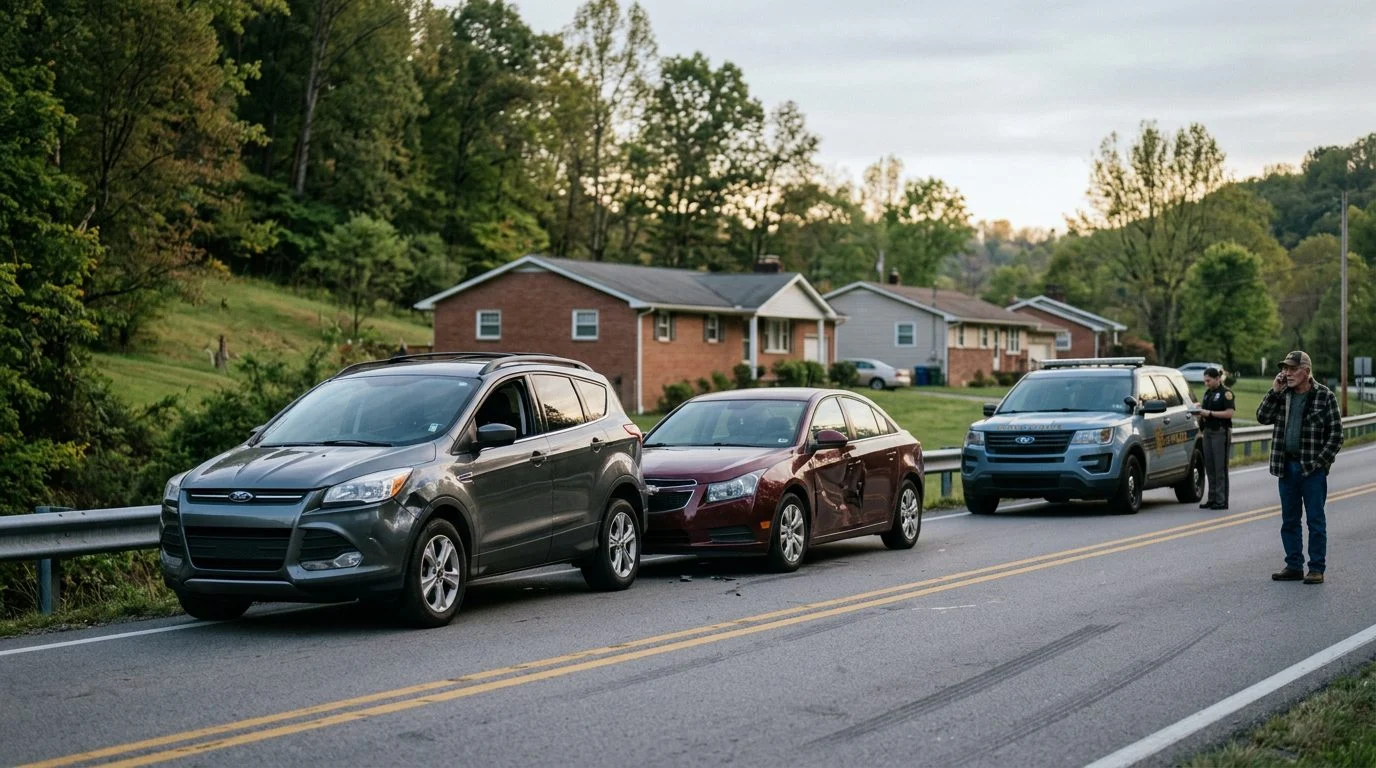
After a crash, it’s hard to think clearly. After a crash, it can be hard to know who must be told, whom to call, and how quickly to act. In West Virginia, when a crash results in injury or death to any person or total property damage to an apparent extent of $1,000 or more, the driver generally must immediately, by the quickest means of communication, give notice to the local police department if the crash occurs within a municipality, otherwise to the county sheriff or the nearest West Virginia State Police office.
The rules depend on what happened. Duties are clearest in those crashes. This page covers each step, from the scene to the written report, and what changes when a commercial truck is involved.
Who Has to Report a Crash in West Virginia
The driver involved in a crash resulting in injury or death to any person or total property damage to an apparent extent of $1,000 or more generally carries the reporting duty in West Virginia. West Virginia law generally places the duty to report a crash on the driver, but under W. Va. Code § 17c-4-8, another occupant who is capable of giving notice may have to do so if the driver is physically unable to.
Under W. Va. Code § 17C-4-6, a driver in a crash that causes injury or death, or total property damage of $1,000 or more, must notify police immediately. That duty can apply even when the driver thinks the crash was minor, because the test is the injury or the damage.
Passengers and family members can help. They can collect names, photos, and insurance details. But the statute is written for drivers, so the driver’s own duty stays in place even when someone else does the legwork. Keep notes of the time and place while they are fresh. A simple list helps you and anyone you share it with later.
If a commercial truck was involved, the truck accident overview explains the wider issues in these cases.
Not sure what your next step is?
Talk it through with Big Bubba — the first case review is free, confidential, and carries no obligation.
When to Call Police at the Scene
When a crash causes injury, death, or $1,000 or more in total damage, the driver generally must call police immediately.
In a city or town, the driver notifies the local police department. Outside a municipality, the driver notifies the county sheriff or the nearest West Virginia State Police office. The notice must go by the quickest means available, as § 17C-4-6 states.
Call 911 right away if anyone is hurt. If it’s safe, move the vehicles out of traffic. The driver of a vehicle involved in a crash with injury or death generally must stop at the scene and stay until the duties are met, as § 17C-4-1 explains. The driver may leave only as needed to help an injured person.
At the scene, the driver generally must stay until he or she has complied with the requirements of § 17C-4-3, which include giving a name, a valid telephone number, and the year, make, model, and last four digits of the vehicle identification number, if physically able to do so. The driver must also give proof of security and financial responsibility. If that proof is insurance, this means the insured’s name, the insurer’s name and contact information, and the policy number, under § 17C-4-3. A driver can give this information to an investigating officer instead. A calm, factual exchange protects everyone and keeps the record clear.
If the driver cannot make the call, another occupant who can must do it, under § 17C-4-8.
Written Crash Reports and the 24-Hour Window
For a crash on the public streets or highways of this state resulting in bodily injury, death, or total property damage of $1,000 or more, the investigating officer generally must submit the crash report electronically or in writing to the Division of Highways within 24 hours after completing the investigation; if the investigation cannot be completed within 10 days of the crash, a preliminary report is due to the Division of Highways on the 10th day after the crash.
Under § 17C-4-7, this rule covers crashes occurring on the public streets or highways of this state with bodily injury, death, or total property damage of $1,000 or more. If the investigation runs past 10 days, a preliminary report is due on the 10th day.
The officer must also provide each party’s owner, operator, and insurance information on request within 24 hours. That information is available at no cost, even before the report is finished. Ask the investigating agency how to request a copy of the report.
The report must show the cause of the crash, the conditions at the time, and the people and vehicles involved, as § 17C-4-9 requires.
Your own account is separate from the officer’s report. The two may differ, so write down what you remember soon after the crash.
Reporting deadlines are not the same as deadlines to file a lawsuit. For that question, read the how long to file a truck accident claim page.
Reporting a Commercial Truck or Bus Crash
A commercial crash carries the same state duties, plus federal record rules for motor carriers.
Under 49 C.F.R. § 390.15, a motor carrier must make crash records available to authorized investigators and give them reasonable assistance.
Carriers must keep an accident register for 3 years after each accident. Under 49 C.F.R. § 390.15, motor carriers must keep an accident register for 3 years after each accident. Carriers must also keep copies of accident reports that state agencies or insurers require.
The trucking company’s internal report is separate from the driver’s duty and the police duty. Do not assume it is the full record of what happened. Records may be incomplete, and some may be disputed, which can matter later.
If you can, note the carrier’s name, the driver’s name, and any company markings on the truck. Photos of the truck and trailer numbers can help identify the company later.
Does Minor Damage Count as a Reportable Accident?
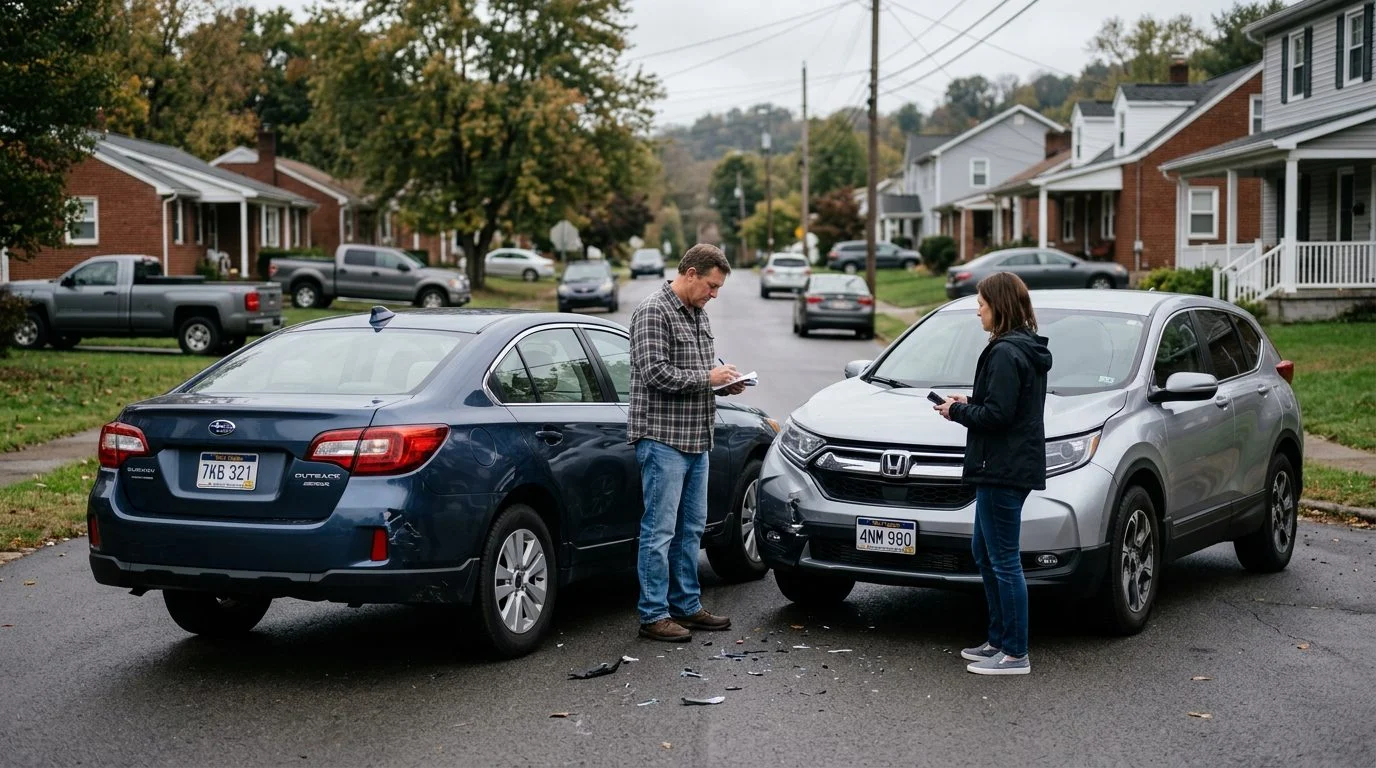
Minor damage is reportable in West Virginia when total property damage reaches an apparent $1,000 or more, or when someone is hurt or killed.
The $1,000 test appears in § 17C-4-6, and it uses the apparent extent of the damage.
Under § 17C-4-2, the driver of a vehicle involved in a crash resulting only in damage to a vehicle which is driven or attended by any person generally must immediately stop at the scene of the crash or as close to it as possible, without obstructing traffic more than is necessary, and remain there until the requirements of § 17C-4-3 are met. Failing to stop or comply under those circumstances may be charged as a misdemeanor.
Injuries can show up hours or days later. The statute defines bodily injury as injury that causes substantial physical pain, illness, or any impairment of physical condition, per § 17C-4-1. A driver who felt fine at the scene should still watch for symptoms.
A crash that looked minor can still matter later for an injury claim. Notes and records of the scene and early symptoms may be relevant.
Notifying Your Insurance Company Carefully
Tell your own insurer about the crash promptly, and keep early statements to basic facts. Your policy may require prompt notice, and the exact wording is in the policy.
Stick to the date, place, people involved, and basic facts. Avoid guesses about speed, fault, or how hurt anyone is before a medical check. Write down the claim number and the adjuster’s name when you get them.
Under § 55-7-11a, for 20 days after an injury, while the injured person is in a hospital or unable to work, the law generally bars anyone from seeking a settlement or a statement for settlement. Statements can still be obtained by a person acting for the injured person when the injured person expressly asks for them.
If the owner or operator of the vehicle that caused the injury or damage is unknown, § 33-6-31 sets conditions that may apply before the insured can recover under uninsured motorist coverage. One of them is reporting the accident to a police, peace or judicial officer within 24 hours after the insured discovers it and is physically able to report it, unless police already investigated the accident. The statute lists other conditions as well, such as notifying the insurer within sixty days, so the full list should be checked against the facts of your case. Some insurers may dispute a claim, so keep your own records.
West Virginia’s Division of Motor Vehicles explains state auto insurance requirements and proof of coverage.
Not sure what your next step is?
Talk it through with Big Bubba — the first case review is free, confidential, and carries no obligation.
If Someone Was Seriously Hurt or Killed: Next Steps
When injuries are serious, reporting and records become central to later questions. Brain and spinal cord injuries can need extended care, and those medical records can matter later.
Keep discharge papers, bills, and visit notes in one place. Note who you spoke with, when, and what was said. Medical care and paperwork often run side by side, so keeping both together helps.
If a person died, families may need to understand a survival claim. The survival claim after a fatal truck crash page explains that question.
You may be handling this for a family member, after a crash you did not choose. You do not have to sort out the reports alone. Waiting can make details harder to recall, so reach out to request a free case review and talk through what happened and which steps fit your situation.