
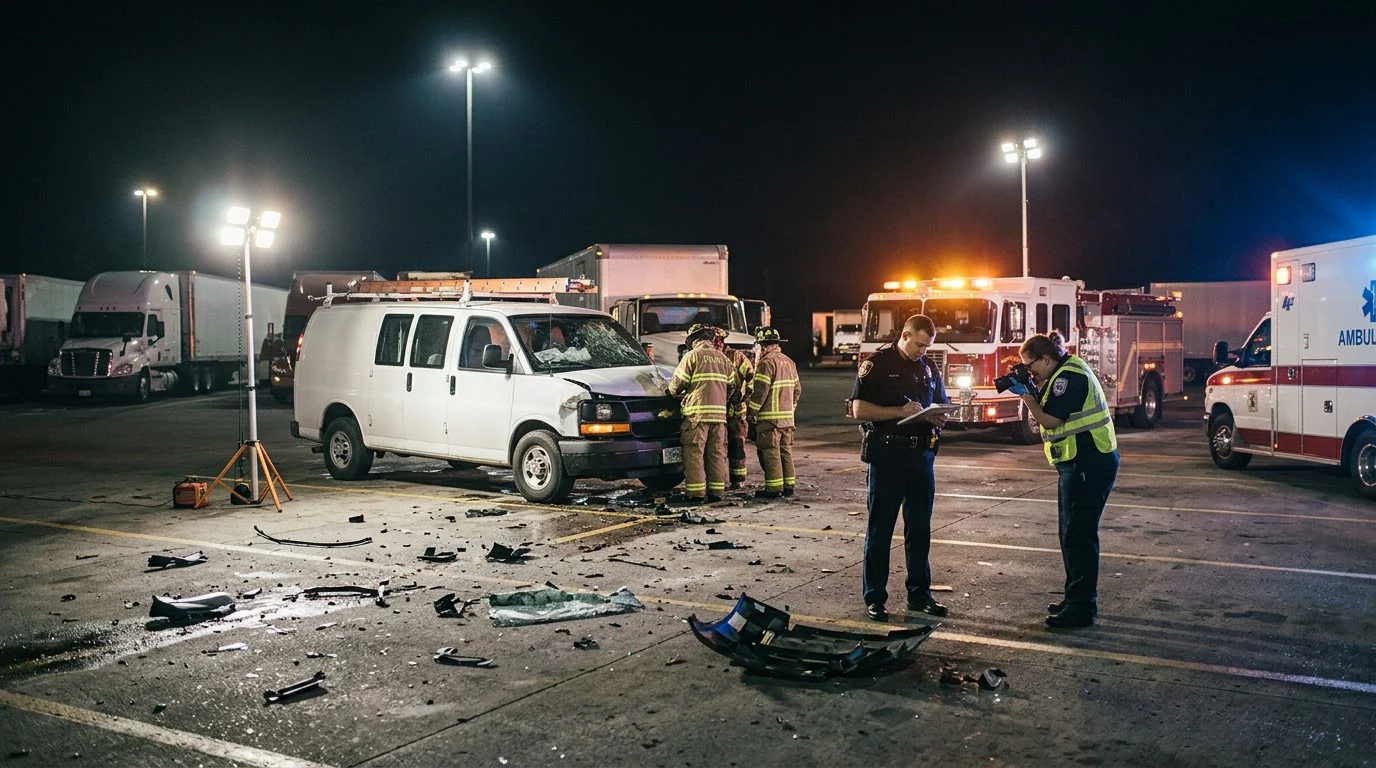
Work Van Accidents | West Virginia
Hurt in a Work Van Crash? Know the Key Facts Before You Talk to Anyone
Big Bubba Injury Law represents people hurt in car and commercial vehicle crashes across West Virginia. Learn how a work van accident claim can differ from other crash cases, then request a free case review.
Published October 26, 2026
This guide covers the basics of a work van accident claim West Virginia residents can pursue after a crash. A work van accident claim seeks compensation when a crash involving a work van, delivery van, box truck, or other commercial vehicle causes injury or death. These cases can involve more than one track, so early steps matter. Big Bubba Injury Law handles car accidents, commercial vehicle accidents, catastrophic injuries, and wrongful death cases across West Virginia.
What a Work Van Accident Claim Covers
A work van accident claim asks for payment for harm caused by someone else’s negligence in a crash involving a work vehicle. Every work van accident claim West Virginia families bring starts with the same question: who caused the crash, and what losses followed? People who may bring a claim include the injured driver, passengers, other motorists, and pedestrians. After a fatal crash, the family of the person who died may bring a claim too.
A claim can seek money for medical treatment, lost income, and pain and suffering. In a wrongful death case, West Virginia law lists the losses a jury may consider. These include sorrow, mental anguish, and solace. They also include lost income and lost services, care and hospital expenses, and reasonable funeral costs (W. Va. Code § 55-7-6).
The firm handles car accidents, truck accidents, commercial vehicle accidents, and catastrophic injuries, including traumatic brain injury and spinal cord injury. It also handles wrongful death claims. We serve injury victims across all 55 West Virginia counties, including Charleston, Huntington, Morgantown, Wheeling, Martinsburg, Parkersburg, Beckley, Clarksburg, Fairmont, and Weirton.
If a work van or commercial vehicle crash has left you or a loved one hurt, you do not have to sort out the next steps alone, so reach out and tell us what happened. Talk it through with Big Bubba — the first case review is free, confidential, and carries no obligation.
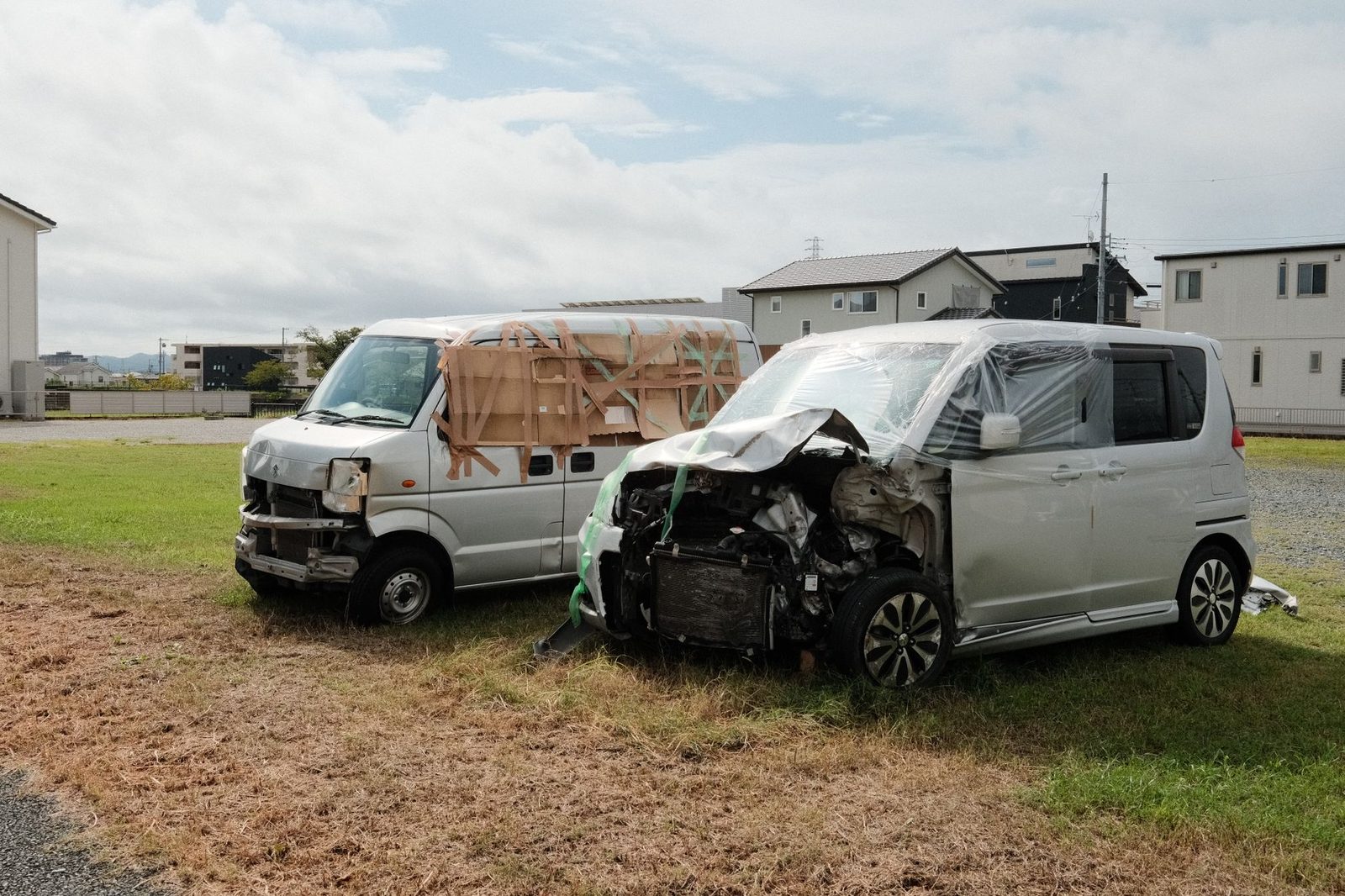
Common Causes of Work Van and Commercial Vehicle Crashes
Work vehicle crashes often trace back to fatigue, distraction, poor maintenance, unsecured cargo, or road and weather conditions. Knowing the likely cause helps show who may be responsible.
- Fatigue and long hours. Federal rules bar a driver from operating a commercial motor vehicle when fatigue or illness makes it unsafe (49 C.F.R. § 392.3). Duty-status logs record a driver’s time on the road.
- Distraction. Phone use, dispatch messages, and in-cab screens can pull attention away from driving.
- Poor maintenance. Under 49 C.F.R. § 396.11, carriers generally must repair any defect or deficiency listed on the driver vehicle inspection report that would be likely to affect the safety of operation of the vehicle before it is operated again, and the rule includes exceptions to this duty. Inspection reports need only be kept for three months, so ask for records early.
- Unsecured cargo. Federal rules require each commercial motor vehicle, when transporting cargo on public roads, to secure cargo so it does not fall, leak, spill, or blow, and so it does not shift to an extent that adversely affects the vehicle’s stability or maneuverability (49 C.F.R. § 393.100).
- Road and weather conditions. These can play a role. A company’s choices about routes and schedules may matter too.
The federal cargo-securement rules apply to trucks, truck tractors, semitrailers, full trailers, and pole trailers.
Who May Be Responsible When a Work Vehicle Is Involved
The driver, the company that owns or controls the vehicle, and sometimes other businesses may each be responsible. Responsibility is shared when more than one party contributed to the crash.
- The driver, when the driver’s own conduct caused the crash.
- The employer or vehicle owner. West Virginia law says a person can be held liable for fault assigned to an agent or servant acting for that person (W. Va. Code § 55-7-13d). A claim may also examine how a company hired, trained, scheduled, or maintained its drivers and vehicles.
- Other businesses, such as a maintenance shop or cargo loader, depending on the facts.
West Virginia applies comparative fault, and under W. Va. Code § 55-7-13a, fault is allocated proportionally. Each person’s share of fault is set as a percentage, and recovery follows those shares (W. Va. Code § 55-7-13a). Your own share of fault can therefore affect what you recover.
For crashes involving a commercial motor vehicle that requires a commercial driver’s license, West Virginia law caps the noneconomic damages recoverable against an employer defendant, and that cap applies only to causes of action arising after July 1, 2024. Under W. Va. Code § 55-7-32, in a civil action for personal injury or wrongful death involving the operation of a commercial motor vehicle requiring a commercial driver’s license, the maximum amount recoverable by each person injured or killed against the employer defendant as compensatory damages for noneconomic loss may not exceed $5 million for each occurrence, regardless of the number of claims or theories of liability. Beginning January 1, 2026, that limitation increases each year to account for inflation, based on the Consumer Price Index, but may not exceed 150 percent of the amounts specified in subsection (b). The cap does not apply if the employer lacks at least $3 million in commercial vehicle insurance per occurrence. Several exceptions apply, including impaired driving and hours-of-service violations (W. Va. Code § 55-7-32). Who is responsible depends on the facts of each crash.
Workers’ Compensation and a Separate Third-Party Claim
An employee hurt in a work vehicle crash may have workers’ compensation rights and, separately, a claim against another party. Workers’ compensation is its own system, with its own rules, forms, and timing. A claim against a negligent driver or company is a different track. The two can run at the same time, so keep both in view from the start.
Coordinating the two tracks is easier when your records are complete.
Practical steps help from day one:
- Report the injury to your employer promptly.
- Keep records of every medical visit, prescription, and missed shift.
- Save pay stubs, work schedules, and letters from doctors.
- If a family member died, keep records of the income and household help the person provided.
Each track has its own timing, so check both early.
How a Work Van Crash Claim Typically Unfolds
A claim usually moves through medical care, evidence gathering, insurance contact, investigation, and then negotiation or a lawsuit. Timing varies from case to case.
- Medical care. Get checked promptly and keep every follow-up visit. Some brain and spinal cord injuries show symptoms over time, so a full medical record matters.
- Evidence. Gather the crash report, photos of the vehicles and scene, witness names, and any dashcam or GPS data you can find.
- Insurance contact. Early contact has limits. West Virginia law bars negotiating a settlement, obtaining a release, or obtaining any written or oral statement from an injured person for use in negotiating a settlement or release within 20 days of the injury when that person is hospitalized or partially or totally unable to engage in their usual trade, profession or occupation, though a person acting, or intending to act, for and on behalf of the injured person may obtain a statement upon the express request of the injured person. If any consideration paid is repaid or returned at the time of the forwarding of the copy of the written statement of disavowal, the settlement, release or statement may not be admissible in evidence (W. Va. Code § 55-7-11a).
- Investigation. Review the driver’s logs, inspection reports, maintenance history, and company policies. This step can take weeks or months.
- Resolution. Some claims settle through negotiation. Others proceed to a lawsuit when an insurer will not treat the claim fairly. The firm cannot predict how any claim will end.
Deadlines and Early Evidence That Matter
West Virginia generally gives two years to file a personal injury claim (W. Va. Code § 55-2-12). For a wrongful death claim, the general deadline is two years after the death (W. Va. Code § 55-7-6).
- Personal injury: two years after the right to bring the claim accrues (W. Va. Code § 55-2-12).
- Wrongful death: generally two years after the death, brought by the personal representative of the deceased person (W. Va. Code § 55-7-6).
Other rules can change how these periods run, so families should act early rather than wait. Defendants also face deadlines. Fault of a nonparty may be considered if the plaintiff entered into a settlement agreement with the nonparty or if a defending party gives notice no later than one hundred eighty days after service of process upon said defendant that a nonparty was wholly or partially at fault (W. Va. Code § 55-7-13d).
Evidence can disappear quickly. Electronic logs, dispatch messages, and vehicle data can be overwritten or lost. Write down what you remember soon after the crash, while details are fresh. Keep copies of medical bills, pay records, and any letters from insurers.
Not sure what your next step is?
Talk it through with Big Bubba — the first case review is free, confidential, and carries no obligation.

Common Questions About Work Van Accident Claims
Most people want to know whether a claim is possible, who may be responsible, and which deadline applies.
Does West Virginia use comparative fault?
Yes.
Can I file a work van accident claim West Virginia after my employer’s van hit me?
Possibly. Depending on the facts of your crash, more than one type of claim may be possible.
What if the other driver was a commercial driver?
Those duties can add steps to a claim.
What is a wrongful death claim?
It is a claim brought by a personal representative for a family after a death caused by another’s wrongful act.
If a work van or commercial vehicle crash has left you, a family member, or someone you care about hurt, you may be facing a hospital stay, lost wages, and hard questions all at once. You can request a free case review with the firm and tell us what happened in your own words.