
Wrongful Death | West Virginia
Understanding How a Wrongful Death Lawsuit Works in West Virginia
Losing a loved one is devastating, and families often have questions about fault, proof and the legal process. Big Bubba Injury Law offers a plain-language overview. No lawyer can promise a result, but we can explain your options.
Published October 15, 2026
How do you win a wrongful death lawsuit? In general, a claim is built by showing who may be responsible for a death, how a wrongful act led to it, and what the surviving family lost. The result depends on the facts of each case, and no lawyer can promise an outcome. This page explains what generally matters in a West Virginia wrongful death claim. Big Bubba Injury Law is a personal injury firm that handles car and commercial vehicle crash cases, including wrongful death.
What a Wrongful Death Lawsuit Is and Who It Is For
A wrongful death lawsuit is a civil claim brought after a person dies because of another party’s negligent or wrongful act. It is separate from any criminal case, so a criminal charge generally isn’t required first. Exceptions may apply depending on the facts.
Under W. Va. Code § 55-7-5, a person or company that would have been liable had the injured person lived may generally face a damages action after the death. Whether that applies depends on the facts of each case.
Under W. Va. Code § 55-7-6, the case generally must be brought by the decedent’s duly appointed personal representative. The statute also addresses who may share in any recovery. Who qualifies depends on the facts.
This page focuses on car crashes, commercial truck and commercial vehicle crashes, and catastrophic injuries that later lead to death.

Not sure what your next step is?
Talk it through with our team — the first case review is free, confidential, and carries no obligation.
What Generally Has to Be Shown in a Wrongful Death Claim
A claim generally has to show that another party owed a duty, failed in that duty, and that the failure caused the death. Knowing these building blocks helps answer how you win a wrongful death lawsuit.
- Causation: The conduct is linked to the death, often through crash and medical records.
- Losses: The statute describes damages that may include sorrow, mental anguish and solace, lost income and services, care and hospital expenses, and reasonable funeral expenses.
The statute says its damage categories are not limited to the ones it lists. This page does not give any amounts.
West Virginia uses a comparative fault statute. Under W. Va. Code § 55-7-13a, each person’s share of fault is generally allocated in direct proportion to that share. That can affect recovery, depending on the facts.
Evidence That May Matter in a Crash-Related Wrongful Death Case
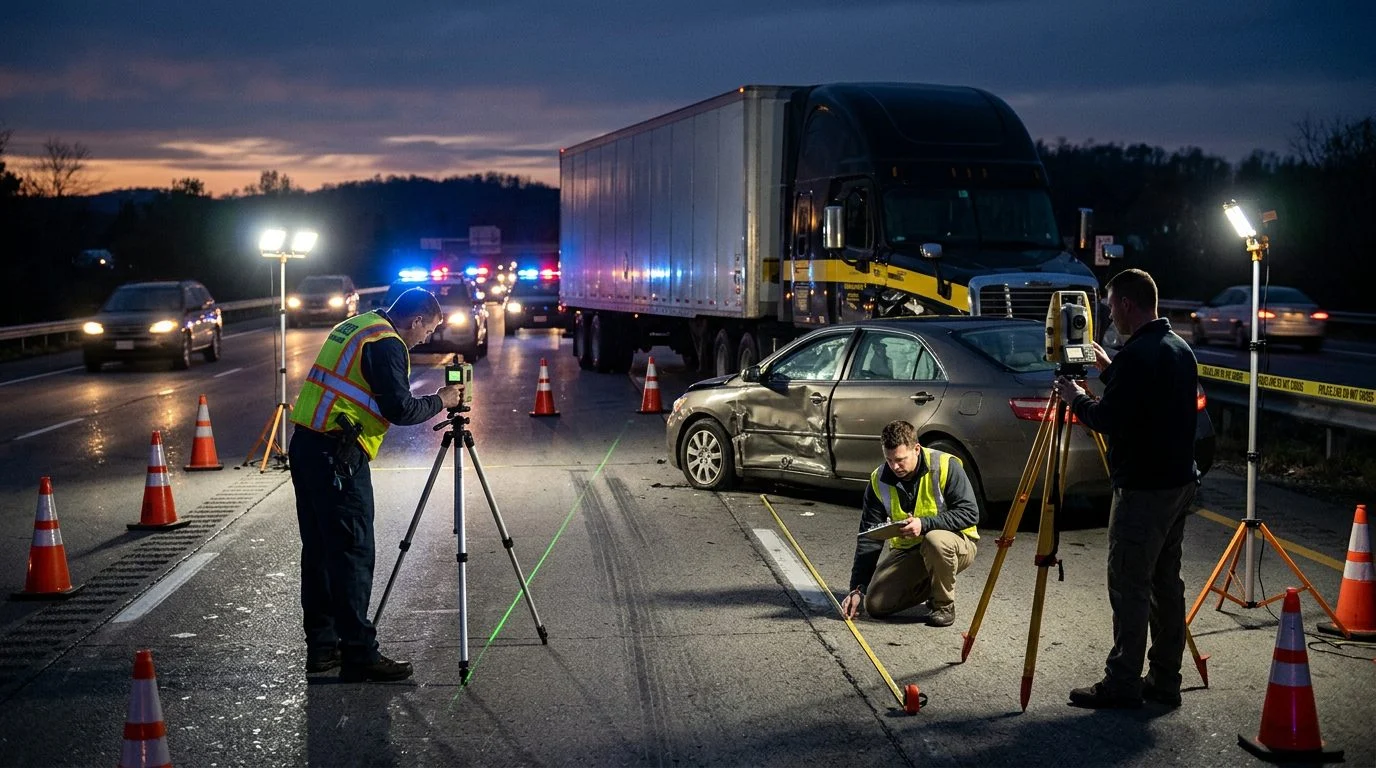
Crash records, vehicle data, and medical and death records are generally the first items reviewed. None of them ensures a result, but each may be relevant depending on the facts.
- Crash documentation: The police crash report, photos, scene measurements, and any dashcam or traffic camera footage.
- Vehicle data: Event data and, for commercial trucks, electronic logging device and maintenance records.
- Medical and death records: Emergency response, hospital, and medical examiner or coroner records.
- Witness information: Names, contact details, and any statements.
- Household and income facts: The decedent’s job, income and role in the family, when relevant to the losses.
For commercial trucks, federal rules may matter. Generally, under § 382.303, as soon as practicable following an occurrence involving a commercial motor vehicle operating on a public road in commerce, each employer shall test for alcohol each of its surviving drivers who was performing safety-sensitive functions with respect to the vehicle, if the accident involved the loss of human life. Exceptions may apply depending on the facts. How the rule applies depends on the facts of each crash. Under the federal duty-status recording rule, a motor carrier subject to it generally must require each driver it uses to record the driver’s duty status for each 24-hour period, usually with an electronic logging device (ELD), although exceptions may apply, including some situations where manual records are allowed.
Keep the crash report, photos, bills and funeral receipts. Avoid posting about the crash online.
How a Wrongful Death Claim Generally Moves Forward
A wrongful death claim generally moves from a review to investigation, a demand to any insurers, and, if needed, a lawsuit. The steps depend on the facts and can overlap.
- Free case review: You share the crash details, the family’s situation and your questions. The review is confidential and carries no obligation to continue.
- Investigation and preservation: Records are requested, evidence is preserved, and potentially responsible parties are identified.
- Who brings the claim: The personal representative is identified or appointed, and beneficiary information is gathered.
- Demand and negotiation: Where insurance applies, a demand may be made. Insurers may respond in different ways, and no outcome is assured.
- Lawsuit, if needed: If the claim can’t be resolved without court involvement, a complaint may be filed, followed by discovery and motions.
- Resolution: The claim may end by settlement, trial or another path.
This page does not predict how long any step takes.
Have questions about what happened?
Ask our team directly. The first conversation is free, confidential, and there is no obligation to continue.
Deadlines, Timing, and Why Each Case Moves Differently
Under W. Va. Code § 55-7-6, a wrongful death action generally must be brought within two years after the death. The statute says this is subject to another section of the code, so exceptions may apply. Missing a deadline may affect the ability to sue.
Don’t rely on a general rule. Talk with the firm promptly so the exact date can be reviewed from the date of death.
Timing is variable. Investigation needs, the number of parties, records and medical issues, and court schedules can each affect how long a claim takes. No specific duration can be predicted in advance. Acting early generally helps preserve evidence, but that does not mean any particular result follows.
Who May Be Liable and How Insurance May Affect a Claim
Potentially responsible parties may include a driver, a vehicle owner, or an employer, depending on the facts. Liability is never assumed. Generally, an employer may answer for an employee’s negligent act within the scope of the job, as stated in Zirkle v. Winkler. Whether that applies depends on the facts.
For certain commercial motor vehicle cases involving a commercial driver’s license, W. Va. Code § 55-7-32 limits noneconomic damages against an employer defendant. That limit depends on insurance requirements and listed exceptions, and it applies only to causes of action arising after July 1, 2024.
Available coverage depends on the policies involved, their limits and terms, and the facts. Coverage is not automatic. Some claims may also look at how a carrier hired, supervised or trained a driver, but whether that fits depends on each case. The firm can describe how responsible parties and insurance are identified. It cannot promise that every responsible party will be found.
Common Questions Families Ask About Wrongful Death Claims
Most answers depend on the facts, but short answers can help you prepare.
How do you win a wrongful death lawsuit?
No lawyer can promise a result. Generally, a claim depends on showing fault, the cause of death and the family’s losses, and exceptions may apply.
Can a claim go forward if our loved one was partly at fault?
Comparative fault rules may affect recovery (W. Va. Code § 55-7-13c). How they apply depends on the facts and the law that applies.
Do we need a criminal charge first?
A civil claim is separate from any criminal case, though exceptions may apply.
How long will this take?
Timing is variable and depends on the facts. No timeframe can be predicted in advance.
What if a commercial truck was involved?
More parties and records may be involved, such as the employer and driver logs. Whether they matter depends on the facts.
Who receives any recovery?
Under the wrongful death statute, the court or jury may direct how damages are shared among survivors. The distribution depends on the facts.
Should we talk to an insurance company first?
Speaking with the firm first may help you understand your options.
Want to know where you stand?
Tell us what happened and our team will walk you through the options available to you, at no cost.
Your Options After a West Virginia Crash
Big Bubba Injury Law handles car accidents, truck accidents, commercial vehicle accidents, catastrophic injuries, traumatic brain injury, spinal cord injury and wrongful death. We serve Charleston, Huntington, Morgantown, Wheeling, Martinsburg, Parkersburg, Beckley, Clarksburg, Fairmont and Weirton. Bring the crash report, any medical or death records you have, and your questions. The review is confidential and carries no obligation to continue.