
Wrongful Death · West Virginia
Wrongful Death Lawsuits in West Virginia: What Makes Them Hard
Losing someone in a crash or other preventable event is painful enough. Here is a plain-language look at what shapes a wrongful death case and why early attention matters.
Published October 19, 2026
How hard is it to win a wrongful death lawsuit? The answer varies from one death to the next. In West Virginia, the hardest parts are usually proof: who was at fault, whether the other party’s conduct caused the death, and whether the claim is filed on time. This page explains those parts in plain language, using West Virginia law. For a wider view, see our guide to wrongful death claims in West Virginia.
Why This Question Is Hard to Answer in General
So, how hard is it to win a wrongful death lawsuit? The honest answer is that no general article can say how any one case will turn out. Every death involves different people, different evidence, and a different chain of events.
When someone you love dies, you may be asking this while still grieving. You may also be trying to understand what your family can do next. Many families are learning the legal terms for the first time.
Crashes are a real concern in West Virginia. The Insurance Institute for Highway Safety reports 256 motor-vehicle crash deaths statewide in 2024, a rate of 14.5 per 100,000 people.
Most contested wrongful death cases turn on the same few issues. Those issues are proving fault, proving the death was caused by the other party’s conduct, dividing fault among everyone involved, meeting the filing deadline, and measuring damages. The sections below cover each one in plain terms.

If you're asking these questions after a loss, you don't have to work them out alone. Talk it through with our team — the first case review is free, confidential, and carries no obligation.
What a Wrongful Death Lawsuit Has to Prove
A West Virginia wrongful death lawsuit generally starts when someone else’s wrongful act, neglect, or default causes a death. The claim is one the person who died could have brought had they lived. Under § 55-7-5, the responsible person or company can be answerable for damages even though the injured person has died.
The lawsuit is brought by the personal representative. This is the person formally appointed to handle the deceased person’s estate. Under § 55-7-6, the recovery goes to that representative. It is then distributed to the people the statute names, such as a surviving spouse, children, parents, and others financially dependent on the person who died.
In plain terms, most cases ask a few core questions. Did the other party owe a duty of care? Did that party break the duty? Did the break cause the harm, and did the harm lead to the death? Each question needs proof.
Proving Fault in a Car or Commercial Truck Crash
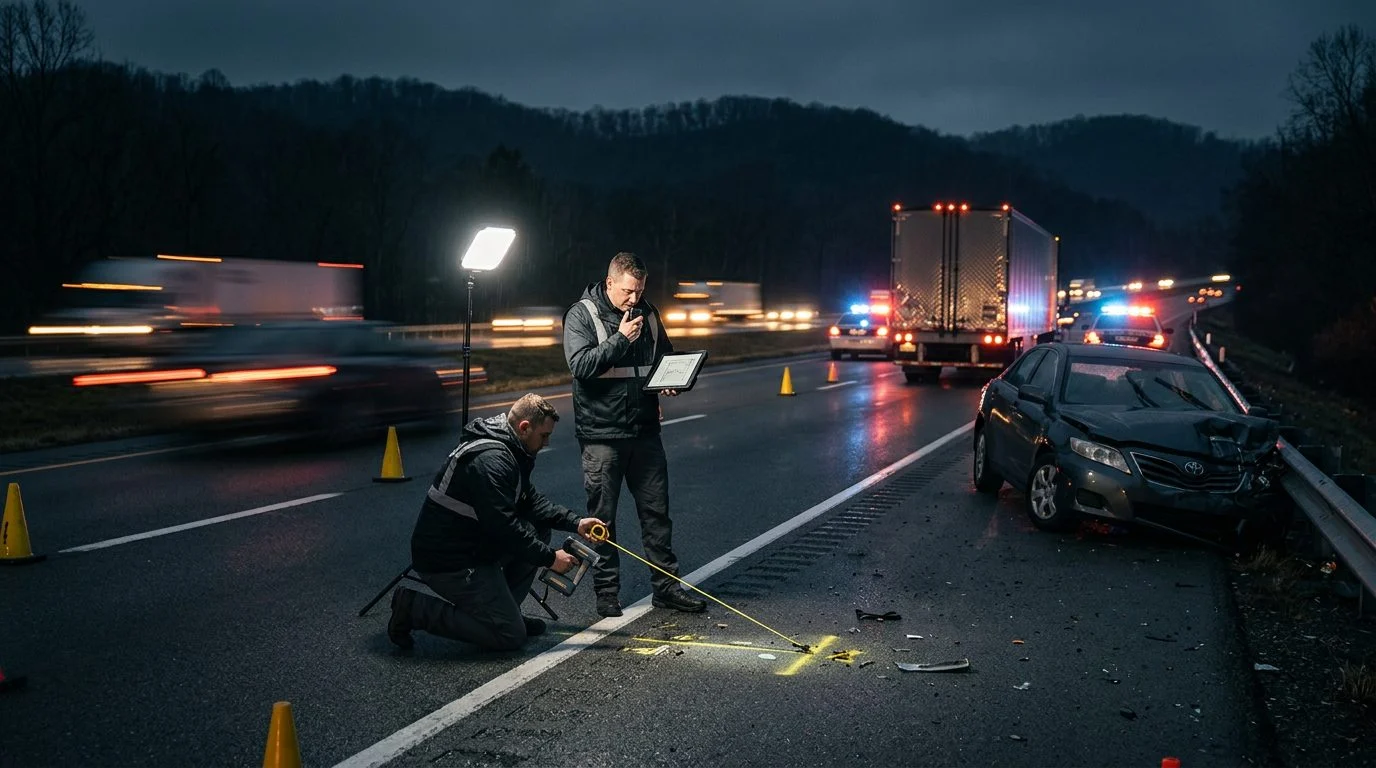
Fault is often the first major fight. This is especially true when drivers or companies disagree about what happened. Proof usually starts with the basics. Police crash reports, photographs, vehicle damage, witness statements, traffic or dash camera video, and vehicle data can all help show how the crash unfolded.
Truck cases add another layer. The records a trucking company keeps can be central. Driver logs, hours-of-service records, maintenance files, and driver qualification files are often reviewed. Federal rules set how long some of these records must be kept. A motor carrier must retain records of duty status and supporting documents for not less than 6 months from the date of receipt, under 49 C.F.R. § 395.8. A periodic inspection report must be kept for fourteen months under 49 C.F.R. § 396.21.
Because some records have set retention periods, early action matters. Accident reconstruction professionals can help explain the physical evidence to a judge or jury.
A truck case may therefore involve both the driver and the company.
Proving the Death Was Caused by the Other Party’s Conduct
Causation generally means showing that the other party’s conduct was a proximate cause of the death. Defense lawyers often argue the person died from something else. They may point to an existing medical condition, an injury from a separate event, or a delay in medical care.
Medical records, autopsy findings, and testimony from treating or reviewing medical providers are commonly used to connect the injuries to the death. The medical timeline gets close review.
Catastrophic injuries add complexity. A traumatic brain injury or spinal cord injury may lead to death weeks or months later. West Virginia law addresses this situation. Under § 55-7-8, an injury action does not end when the injured person dies. There is still only one recovery for each element of damages.
Not sure what your next step is?
Talk it through with our team — the first case review is free, confidential, and carries no obligation.
Comparative Fault and Other Defenses the Other Side May Raise
West Virginia uses modified comparative fault. Fault is split by percentage among everyone involved. Under § 55-7-13a, recovery is based on each person’s percentage of fault. That includes plaintiffs, defendants, and nonparties who proximately caused the harm. In plain words, if the person who died is found partly at fault, the total recovery can be reduced.
Under § 55-7-13c, fault chargeable to the plaintiff does not bar recovery unless it is greater than the combined fault of everyone else responsible. If it is less, recovery is reduced in proportion to the plaintiff’s fault. Each defendant is generally liable only for its own share.
Common defenses include blaming the person who died, disputing the order of events, and arguing that a vehicle defect or another factor was the real cause. Defenses can also challenge the damages claimed. Insurers and defense lawyers often evaluate these points early. That is one reason early documentation helps.
Filing Deadlines and Reasons Wrongful Death Claims Get Dismissed
The main deadline is two years after the date of death. Under § 55-7-6, a wrongful death action shall be commenced within two years after the death, subject to the provisions of section eighteen, article two, chapter fifty-five. W. Va. Code § 55-7-6 reads: “The provisions of this section shall not apply to actions brought for the death of any person occurring prior to July 1, 1988.” The clock starts on the date of death, not the date of the crash. A death that occurs weeks or months after a crash still starts the count on the date of death.
The statute also refers to another section of state law that can affect timing. The exact deadline can therefore depend on the facts of the case.
Deadlines are strict. A claim filed late can be dismissed, regardless of how strong the underlying evidence is. Judges may also end a claim for other reasons. That is one reason to look at deadlines and evidence early.
How Damages Are Measured in a Wrongful Death Case
West Virginia law lists the kinds of damages a jury may award. Under § 55-7-6, the verdict shall include, but may not be limited to, damages for sorrow, mental anguish, and solace. That can include society, companionship, comfort, guidance, and advice from the person who died. It may also include reasonably expected loss of income, and loss of services, protection, care, and assistance the person provided. Expenses for care and hospitalization tied to the injury, and reasonable funeral expenses, are listed too.
The statute also explains how awards are divided.
Proof usually includes documents, testimony about the person’s role in the family, and in some cases economic analysis. For cases involving a commercial motor vehicle that requires a commercial driver’s license, § 55-7-32 limits the noneconomic damages recoverable against an employer defendant, and that limit applies only to causes of action arising after July 1, 2024, and only where the conditions in the statute’s subsections are met. The limit does not apply in listed situations. Those include driving with an alcohol concentration of .04 or more, or driving in willful or wanton disregard for safety. The limit also does not apply to an employer without the commercial insurance the statute requires. No general article can say what any particular case is worth.
How Long a Wrongful Death Lawsuit Usually Takes
The timeline varies. The length of a case is hard to predict from general information. A crash with several parties, multiple insurers, or disputed evidence can take longer. A court’s schedule also affects timing.
Most cases move through similar stages. First comes investigation and evidence gathering. Next, the claim is filed. Then discovery begins, when both sides exchange information and records. Motions may follow. The case then ends in a resolution or goes to trial.
Some cases resolve before trial. Others go to trial. Neither outcome can be predicted in advance. Early steps, such as preserving records, often happen before a case is filed.

Have questions about what happened?
Ask our team directly. The first conversation is free, confidential, and there is no obligation to continue.
Understanding Your Family’s Situation After a Crash
If you’re asking these questions after a loss, you don’t have to work them out alone. You may be researching on behalf of someone who died. You may still be grieving while facing decisions you did not choose.
Perhaps your loved one died in a car or commercial truck crash in West Virginia. You may be wondering whether your family has a claim and when the deadlines fall. The firm serves families across West Virginia, including Charleston, Huntington, Morgantown, Wheeling, Martinsburg, Parkersburg, Beckley, Clarksburg, Fairmont, and Weirton.
Who can bring a wrongful death lawsuit in West Virginia?
The personal representative of the estate brings the action, under § 55-7-6.
How long do families have to file?
The statute generally sets two years from the date of death, under § 55-7-6. Other timing rules can apply, so the details matter.
How Responsibility for a Trucking Crash Is Examined
If your family is facing these questions now, the firm offers a confidential free case review. You can tell the firm what happened and ask what the next steps look like. To begin, contact the firm.