
Wrongful Death
When a Car Crash Takes a Life in West Virginia
Big Bubba Injury Law helps families pursue claims after fatal car accidents. We handle the legal work so you can focus on what matters most.
Published October 07, 2026
File a Wrongful Death Claim After a Fatal Car Crash in West Virginia
If another driver’s negligence caused a loved one’s death in a car crash, under West Virginia law a wrongful death claim is brought by the personal representative of the deceased’s estate, and it may seek compensation for your family’s losses. This is a civil lawsuit, separate from any criminal case, that may seek to hold the person or corporation who would have been liable for the death financially responsible for damages.
Understanding your options, the timeline, and what damages may be available is the first step toward protecting your family’s future. Below is what you need to know about wrongful death claims in West Virginia.

Not sure what your next step is?
Talk it through with our team — the first case review is free, confidential, and carries no obligation.
What Is a Wrongful Death Claim After a Fatal Car Crash?
A wrongful death claim is a civil lawsuit brought on behalf of someone killed in a car accident caused by another person’s negligence or wrongful act. It is distinct from criminal prosecution and focuses on compensating the family for their losses, not punishing the driver.
In the fatal car crash cases Big Bubba handles, wrongful death claims typically arise when the at-fault driver:
- Violated traffic laws (speeding, running a red light, reckless driving)
- Drove under the influence of alcohol or drugs
- Drove while distracted (texting, eating, or otherwise inattentive)
- Fell asleep at the wheel
- Failed to maintain their vehicle in safe condition
- Operated a commercial vehicle in violation of federal safety regulations
The claim compensates your family for financial losses (lost wages, funeral expenses) and non-financial losses (loss of companionship, guidance, and emotional support). It is not about punishment—it is about recovery.
Who Can File a Wrongful Death Claim in West Virginia?
Wrongful death law addresses who may be able to bring a claim after a loved one dies because of someone else’s actions. The law protects surviving family members and allows them to recover for their own losses.
Under W. Va. Code § 55-7-6(a), the action is brought by and in the name of the personal representative (executor or administrator) of the deceased’s estate, on behalf of the family. You do not need to be named in the will or have a formal appointment to reach out to Big Bubba—we can advise you on who should file and guide the process.
What Does a Wrongful Death Claim Cover?
Wrongful death damages in West Virginia fall into two categories: economic (financial) and non-economic (personal).
Economic damages include:
- Medical expenses incurred as a result of the crash (emergency care, hospitalization)
- Funeral and burial costs
- Lost wages and income the deceased would have earned
- Loss of financial support the family depended on
- Costs of services the deceased provided (childcare, home maintenance)
Non-economic damages include:
- Loss of companionship and guidance
- Loss of emotional support and love
- Pain and suffering of the deceased before death (if applicable)
- Mental anguish experienced by surviving family members
Under W. Va. Code § 55-7-29, punitive damages may be awarded only if a plaintiff establishes by clear and convincing evidence that the defendant acted with actual malice toward the plaintiff or with a conscious, reckless and outrageous indifference to the health, safety and welfare of others. These damages are meant to punish the wrongdoer and deter similar conduct.
Some statutory limits may apply to certain damages, depending on the facts of your case. Damages are calculated based on the specific facts of your case, including the deceased’s age, earning potential, and family relationships.
West Virginia Wrongful Death Law: What You Need to Know
Understanding the legal framework governing your claim is essential.
West Virginia generally allows two years from the date of death to file a wrongful death action, and exceptions may apply. This is an important deadline, so it helps to act promptly (W. Va. Code § 55-7-6(d)). A wrongful death claim is subject to a filing deadline set by West Virginia law, and missing it can affect your right to recover. Do not wait.
West Virginia Code § 55-7-5 establishes that a wrongful death action may be brought when death is caused by “wrongful act, neglect, or default.” This means the at-fault driver owed your loved one a duty of care (to drive safely), breached that duty (by driving negligently), and that breach caused the death.
Comparative negligence is one of the concepts that can come up in West Virginia injury cases. If the deceased was partially at fault for the crash, damages may be reduced proportionally. Under West Virginia law, each defendant is generally liable only for the share of compensatory damages that matches that defendant’s own percentage of fault (W. Va. Code § 55-7-13c). In general, the court looks at each defendant’s percentage of fault and enters judgment against that defendant for its proportional share of the recoverable compensatory damages (W. Va. Code § 55-7-13c). Under W. Va. Code § 55-7-13c, a plaintiff’s fault does not bar recovery unless it is greater than the combined fault of all other persons responsible for the damages; if it is less, recovery is reduced in proportion to the plaintiff’s degree of fault.
How Do You File a Wrongful Death Claim After a Fatal Car Crash?
The process involves several steps, from gathering evidence to negotiating a settlement or going to trial.
Step 1: Gather evidence. Collect the police report, witness statements, medical records, photos of the crash scene, and the deceased’s employment and financial records. These documents may help establish fault and support your damages claim.
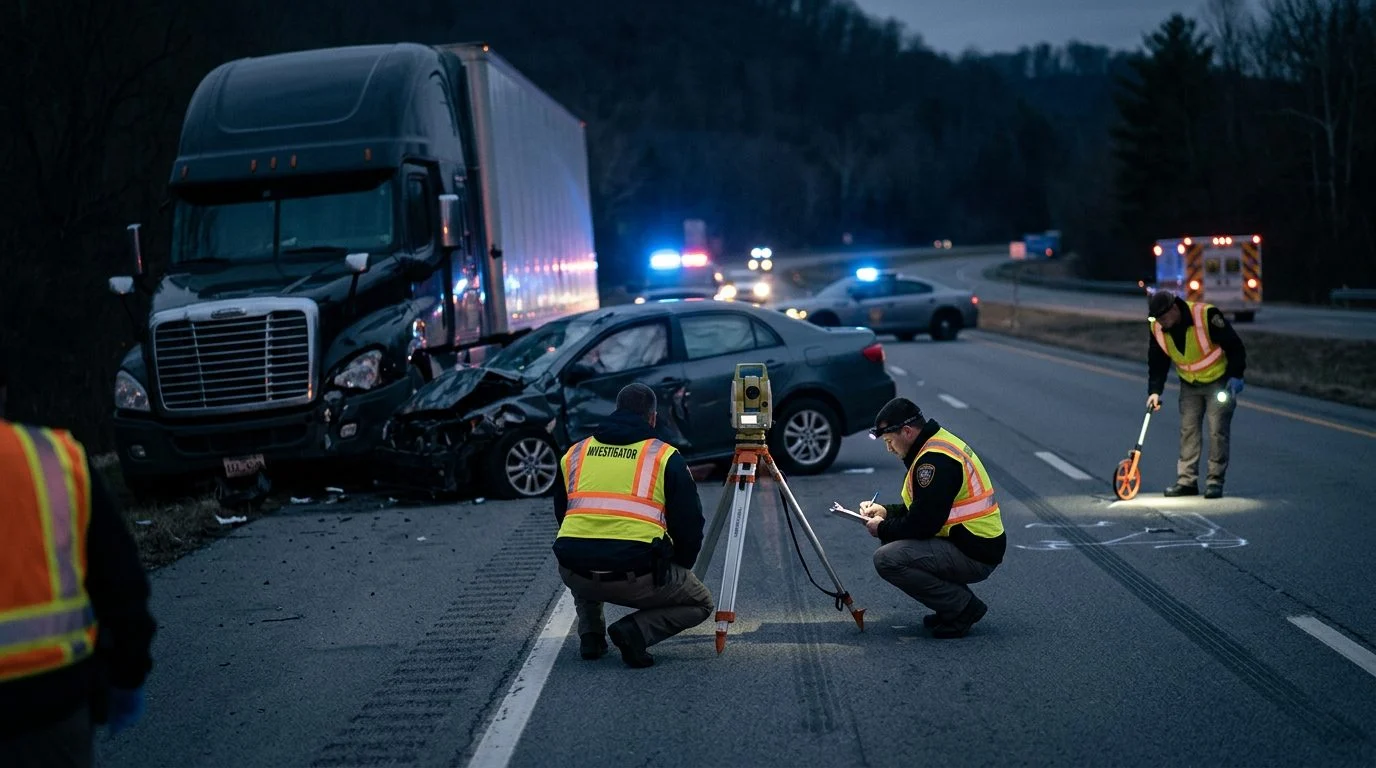
Step 2: Determine liability. Establish that the other driver was at fault. This may involve accident reconstruction, expert analysis, and review of traffic laws and vehicle maintenance records.
Step 3: Identify responsible parties. The at-fault driver is the primary defendant, but others may be liable too. If the driver was working for a commercial company, the employer may be liable under the doctrine of respondeat superior. If a vehicle defect contributed to the crash, the manufacturer may be liable. If the driver was operating a commercial truck, violations of federal hours-of-service regulations may help show fault, but the violation would also need to have caused the harm.
Step 4: File a claim with the insurance company. Submit a demand letter and supporting documentation to the at-fault driver’s liability insurance company. Most claims are resolved at this stage.
Step 5: File a lawsuit if necessary. If the insurance company denies the claim or offers inadequate compensation, file a wrongful death lawsuit in West Virginia civil court. This initiates the formal legal process.
Step 6: Discovery, negotiation, and resolution. Both sides exchange evidence, take depositions, and negotiate. Many cases settle before trial. If settlement is not reached, the case proceeds to trial, where a jury decides liability and damages.
An attorney handles the investigation, legal filings, negotiations, and trial work. Your family focuses on healing.
Have questions about what happened?
Ask our team directly. The first conversation is free, confidential, and there is no obligation to continue.
What Is the Timeline for a Wrongful Death Case?
Timelines vary, but here is what to expect:
- Initial case evaluation and case review: 1–2 weeks
- Investigation and evidence gathering: 1–3 months
- Filing the claim or lawsuit: completing this step within the time the law allows
- Settlement negotiations: 3–12 months (many cases settle before trial)
- Trial (if necessary): 1–2 years or more from filing
Every case is different. Complexity, the cooperation of the other party, and court schedules affect how long your case takes. West Virginia generally allows two years to file a wrongful death claim, and exceptions may apply—do not wait to reach out (W. Va. Code § 55-7-6(d)).
What Happens If the At-Fault Driver Dies?
If the driver who caused the crash dies, your wrongful death claim does not disappear. You can still recover.
The claim can proceed against the at-fault driver’s estate (their property and assets). Additionally, the claim can be filed against the at-fault driver’s liability insurance company, which is required to cover crashes caused by the driver regardless of the driver’s death.
If the at-fault driver was working for a commercial entity or delivery service at the time of the crash, that employer may also be liable under respondeat superior. Big Bubba investigates all potential sources of recovery to maximize compensation for your family.
Why Big Bubba Handles Wrongful Death Claims
We represent families in fatal car crash cases across West Virginia. We understand the law, the courts, and what it takes to recover fair compensation.
What we bring to your case:
- A thorough understanding of West Virginia wrongful death law
- Thorough investigation to identify all liable parties and insurance coverage
- Direct relationships with accident reconstruction experts, medical professionals, and investigators
- Compassionate, straightforward communication—we explain the process and your options clearly
- No fee unless we recover compensation for your family. You are responsible for court costs and case expenses.
- We handle the legal and investigative work so your family can grieve and heal.
Frequently Asked Questions
How long do I have to file a wrongful death claim?
West Virginia generally allows two years from the date of death to file a wrongful death action (W. Va. Code § 55-7-6), and exceptions may apply. Acting promptly protects your options, so it helps not to delay.
Will my case go to trial?
Many wrongful death cases settle before trial. We pursue the best outcome for your family, whether that is settlement or trial.
What if the deceased was partially at fault for the crash?
Under West Virginia law, each defendant is generally responsible only for the portion of compensatory damages that corresponds to that defendant’s own percentage of fault (W. Va. Code § 55-7-13c).
Do I need to hire an attorney?
You are not required to, but wrongful death claims are complex. Insurance companies have lawyers; your family deserves one too.
How much will my case be worth?
Damages depend on the deceased’s age, earning potential, family relationships, and other factors. We evaluate your case individually and cannot predict a specific amount.
What if the at-fault driver has no insurance?
We investigate uninsured and underinsured motorist coverage, the defendant’s personal assets, and other recovery sources.
What is the difference between a wrongful death claim and a criminal case?
Wrongful death is a civil lawsuit seeking compensation for your family. A criminal case is brought by the state and seeks to punish the driver. Both can happen in the same incident.

Want to know where you stand?
Tell us what happened and our team will walk you through the options available to you, at no cost.
What to Do Right Now
If your loved one died in a car crash in West Virginia:
- Preserve evidence: Keep the police report, photos, witness contact information, and medical records safe.
- Do not sign anything or give a statement to the other driver’s insurance company without legal advice.
- Write down what you remember about the crash while it is fresh.
- Reach out to Big Bubba. The sooner we begin, the sooner we can investigate and protect your family’s rights.
If someone you love died in a car crash caused by another driver, you may have a right to compensation—and families in that situation can reach out to Big Bubba. Contact us for a free case review to discuss your family’s options.