
Wrongful Death | West Virginia
When a Crash Takes a Life, Your Family Deserves Answers
Big Bubba represents families in West Virginia who have lost a loved one in a fatal car, truck, or commercial vehicle accident. We help you understand your rights and pursue the claim your family may have.
Published October 01, 2026
Wrongful Death Claims After a Crash in West Virginia: What Families Need to Know
When someone dies in a car or truck crash that may have been caused by another person’s negligence, West Virginia law generally allows a wrongful death claim—a civil lawsuit brought by the deceased person’s personal representative seeking compensation for the losses the family has suffered, depending on the facts of each case. This is separate from any criminal case; it’s one way for families to seek compensation that may be available for medical expenses, funeral costs, lost income, and the immeasurable pain of losing a loved one.
Losing someone in a crash is devastating. On top of grief, families face urgent practical questions: Who was responsible? Do we have a legal claim? How much time do we have to act? What happens next? This guide walks you through what West Virginia law generally allows, who can file, what compensation may be available, and why early legal guidance may help protect your family’s rights and deadlines, depending on the facts of your case.

Not sure what your next step is?
Talk it through with our team — the first case review is free, confidential, and carries no obligation.
Understanding Wrongful Death Claims After a Crash
A wrongful death claim is generally a civil lawsuit brought by the deceased person’s personal representative, on behalf of the family, when someone dies due to another person’s negligence or wrongful conduct in a motor vehicle accident, depending on the facts. This is distinct from a criminal proceeding—the state does not prosecute; instead, the family or the deceased’s estate pursues compensation through the civil courts.
The key difference: a criminal case aims to punish the defendant; a wrongful death claim aims to compensate the family for their losses. Both can happen at the same time. The personal representative does not have to wait for a criminal conviction to file a civil claim, and the claim can proceed even if no criminal charges are filed.
Who Can File a Wrongful Death Claim in West Virginia
West Virginia law sets out who may bring a wrongful death claim, and generally focuses on the deceased person’s personal representative. Under W. Va. Code § 55-7-6, the action must be brought by and in the name of the deceased person’s personal representative, who may have been duly appointed in West Virginia, in any other state, territory or district of the United States, or in a foreign country.
Typically, the claim is filed by an estate representative or executor on behalf of the family. This person acts as the legal representative of the deceased’s estate and pursues the claim in court. If the deceased did not have a will or designated executor, a court may need to appoint one, depending on the circumstances. An attorney can help guide your family through this process and help confirm that the claim is filed by the proper party.
Time limits generally apply to these claims, and exceptions may apply depending on the facts. West Virginia law generally sets a two-year deadline from the date of death to file a wrongful death claim, though exceptions may apply depending on the facts. Missing this deadline may affect your family’s ability to pursue compensation, and exceptions may apply depending on the facts. In some cases the period may begin to run later, such as when the representative knows or should know of the death, that it resulted from a wrongful act, who is responsible, and how the act caused the death (Bradshaw v. Soulsby). Understanding who can file and when is critical to protecting your family’s rights.
What Happens to Your Family After a Loved One Dies in a Crash
The immediate aftermath of a fatal crash is chaotic and overwhelming. Police arrive and investigate the scene. The medical examiner becomes involved. Next of kin are notified. Within days or weeks, insurance companies may contact the family, and statements made early on may affect a future claim.
Insurance adjusters generally work for the insurance company, so their role differs from that of your own attorney. You have the right to decline a recorded statement and to have your attorney present for any conversation with an adjuster.
At the same time, your family faces immediate practical decisions: funeral arrangements, medical bills, lost income, and the question of whether legal action is possible. Grief and stress make clear thinking difficult. Reaching out to an attorney early may help your family with communications with insurance companies, preserving evidence, and navigating the legal process while you focus on healing.
Types of Compensation Available in Wrongful Death Cases
Wrongful death damages in West Virginia fall into two main categories: economic and non-economic.
Economic damages are measurable financial losses: – Medical expenses incurred before the death – Funeral and burial costs – Lost wages and salary the deceased would have earned – Lost earning capacity (projected future income over the deceased’s lifetime) – Loss of financial support to dependents
Non-economic damages compensate for the immeasurable losses the family has suffered: – Loss of companionship and emotional support – Emotional suffering and grief of surviving family members – Loss of parental guidance (for minor or adult children) – Loss of consortium (the spousal relationship)
Punitive damages may be available only if clear and convincing evidence shows the defendant acted with actual malice or a conscious, reckless and outrageous indifference to the health, safety and welfare of others. These damages aim to punish the defendant and deter similar conduct.
No attorney can guarantee a specific dollar amount. Each case is unique, and the value depends on the facts, the evidence, the severity of the at-fault party’s conduct, and the family’s documented losses. An attorney can discuss how the facts of your case, including the evidence and your family’s documented losses, may affect the compensation that could be available.
Establishing Fault and Negligence in Fatal Crashes
Generally, a wrongful death claim requires showing negligence: that the driver owed a duty of care, breached that duty, and caused the death as a result, depending on the facts of each case. In a fatal crash, this usually means proving the driver violated traffic laws, drove recklessly, or failed to exercise reasonable care.
Common causes of fatal crashes include speeding, impaired driving, distracted driving (texting, phone use), reckless lane changes, failure to yield, and falling asleep at the wheel. Evidence used to establish fault includes police reports, witness statements, vehicle damage patterns, traffic camera footage, cell phone records, toxicology reports, and expert reconstruction of the crash.
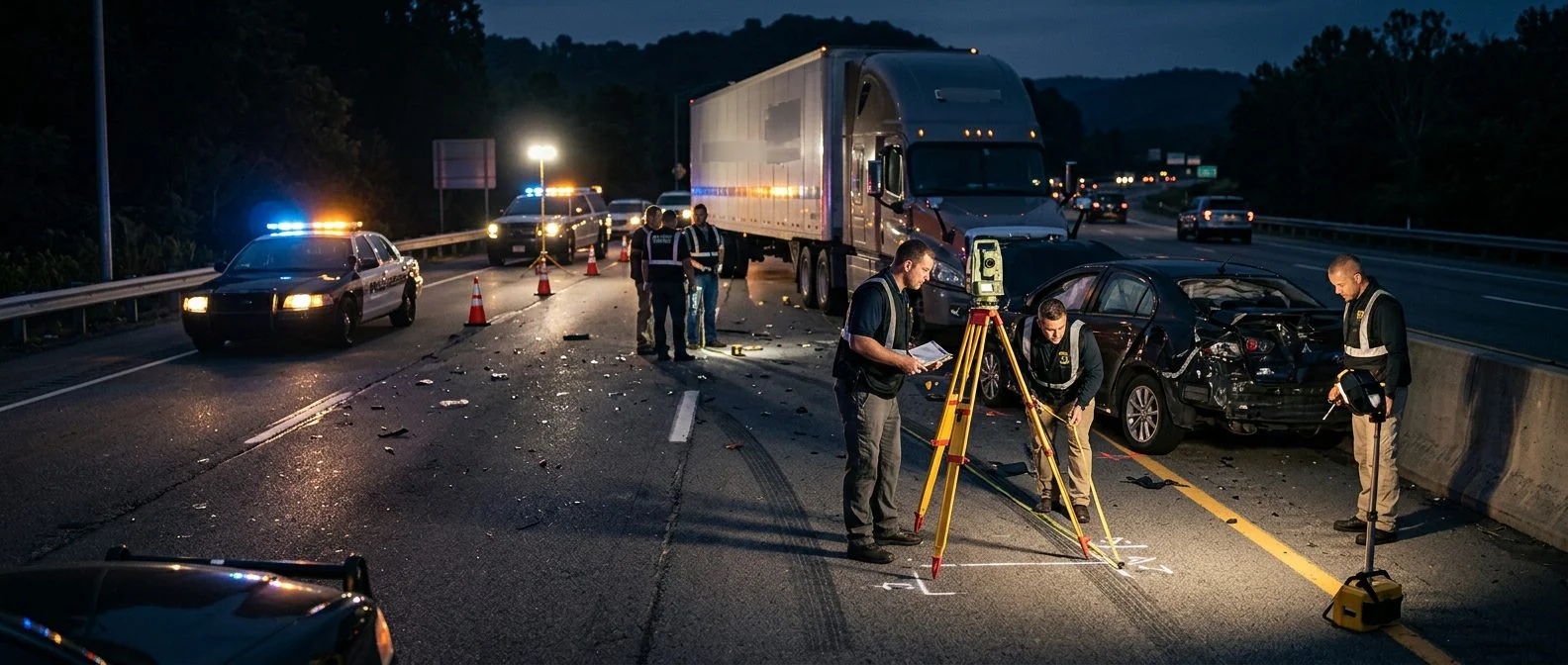
In catastrophic-injury and wrongful-death cases, a thorough investigation—interviewing witnesses, obtaining police and medical records, and working with accident reconstruction experts—helps build a clear picture of what happened. Evidence of the other driver’s negligence may be relevant to a claim, depending on the facts of each case.
West Virginia’s Modified Comparative Fault System
West Virginia applies a modified comparative fault rule, which protects families even when circumstances are complex. Under this rule, if the deceased is found to be partially at fault for the crash, the family may still recover damages—provided the deceased’s fault does not exceed 50 percent. However, the award is reduced by the deceased’s percentage of fault.
Example: If a jury determines that damages are $100,000 but the deceased was 20 percent at fault (perhaps for speeding or failing to maintain proper lookout), the family recovers $80,000—the full amount reduced by 20 percent.
This rule is important because real crashes are often not black-and-white. Both drivers may have contributed to the collision. Under West Virginia’s comparative fault system, families are not barred from recovery simply because the deceased bore some responsibility. An attorney can help address fault questions and pursue compensation for your family even if liability is shared (W. Va. Code § 55-7-13c).
Fatal Car Accidents vs. Truck Accidents: Key Differences
Fatal car accidents and truck accidents present different legal challenges. In a car accident, liability typically rests with the driver of the other vehicle. In a truck accident, multiple parties may be liable: the truck driver, the trucking company, the truck owner, maintenance contractors, and cargo loaders.
Commercial truck accidents are governed by federal and state regulations. Federal Motor Carrier Safety Regulations establish rules for hours of service, vehicle maintenance, cargo securement, and driver qualifications. Violations of these regulations can establish negligence and support a wrongful death claim.
Truck accident claims often involve larger insurance policies and more complex investigations. The trucking company may have substantial assets and multiple layers of insurance coverage. These cases require attorneys experienced in federal trucking regulations and the unique complexities of commercial vehicle liability.
The Statute of Limitations for Wrongful Death Claims in West Virginia
West Virginia law generally requires a wrongful death claim to be commenced within two years after the death, subject to exceptions in W. Va. Code § 55-2-18. This is a legal deadline, subject to exceptions that may apply. Missing it may mean losing the right to pursue compensation, unless an exception applies.
The period generally runs from the date of death, not the date you hire an attorney, subject to exceptions. If your loved one died on January 15, the two-year period generally ends on January 15 two years later, subject to exceptions. After that date, the claim may be barred unless an exception applies.
Exceptions to this rule are rare and should not be relied upon. The best protection is to consult with an attorney as soon as possible after a fatal crash. Early consultation preserves evidence, protects your deadline, and allows time for thorough investigation before the statute of limitations expires.
Have questions about what happened?
Ask our team directly. The first conversation is free, confidential, and there is no obligation to continue.
Criminal Case vs. Wrongful Death Claim: What’s the Difference
Many families are confused about the relationship between criminal and civil cases. Here’s the key distinction:
Criminal case: Prosecuted by the state through a county prosecuting attorney, aims to punish the defendant, requires proof “beyond a reasonable doubt” (a high standard), and can result in jail time or prison.
Wrongful death claim: A civil lawsuit brought by the personal representative on behalf of the family seeks compensation for damages, requires proof by “preponderance of the evidence” (a lower standard—more likely than not), and results in money damages.
A criminal conviction can support a wrongful death claim, but a wrongful death claim can proceed independently. The personal representative does not have to wait for a criminal outcome to pursue a civil claim for compensation. In fact, criminal cases often take years, and families should not delay their civil claim waiting for a criminal resolution. Both can happen simultaneously without interfering with each other.
What Not to Tell the Attorney (and Why Honesty Matters)
Your attorney is your advocate and your confidant. Attorney-client privilege protects your conversations—what you tell your lawyer stays between you and your lawyer. This protection exists so you can be completely honest without fear of your words being used against you.
Do not exaggerate or fabricate details about the crash or the deceased’s character. Do not hide information about the deceased’s prior accidents, traffic violations, or medical conditions. Your attorney needs the full picture—the good and the difficult—to build the strongest possible case and prepare for challenges the other side will raise.
Do not discuss your case on social media or with anyone other than your attorney. Do not accept settlement offers or sign documents without consulting your attorney first. Insurance companies may contact family members directly and offer quick settlements; these offers are almost always far below what a case is worth.
Full transparency with your attorney allows them to evaluate your case honestly, anticipate obstacles, and develop a strategy that protects your family’s interests. Your lawyer is there to help, not judge. The more your attorney knows, the better they can represent you.
What Are Examples of Wrongful Death from Crashes
Wrongful death can result from many types of crashes. A driver running a red light and striking a family’s vehicle, killing a passenger. A truck driver falling asleep at the wheel and crossing the center line, causing a head-on collision. A commercial vehicle with failed brakes causing a multi-vehicle pileup. A speeding driver losing control and hitting a vehicle stopped at a traffic light. A distracted driver texting and drifting into oncoming traffic.
Each case is fact-specific. Liability depends on the circumstances, the evidence, and what the investigation reveals. Some cases involve clear-cut negligence; others involve multiple contributing factors. An experienced attorney can evaluate the facts of your crash and explain whether a wrongful death claim is viable.
What Happens If the Person at Fault Dies in the Crash
If the at-fault driver dies in the crash, the wrongful death claim does not disappear. The claim can still proceed against the at-fault driver’s estate. The at-fault driver’s insurance policy may still provide coverage for the wrongful death claim. Uninsured or underinsured motorist coverage on the deceased’s own policy may also apply.
The process becomes more complex when the at-fault party is deceased, but families still have legal options. An attorney can help pursue claims against estates and multiple insurance sources to seek the compensation available to your family.
The Wrongful Death Case Timeline in West Virginia
Wrongful death cases typically unfold in phases, though timelines vary based on the complexity of the case and the cooperation of the parties involved.
Immediate phase (weeks 1–4): Investigation begins, evidence is preserved, and the family consults with an attorney.
Pre-litigation phase (months 1–6): The attorney sends a demand letter to the at-fault party’s insurance company, negotiates, and reviews medical records and police reports.
Litigation phase (if settlement fails): The lawsuit is filed, discovery begins (both sides exchange documents and information), depositions are taken, and expert reports are prepared.
Trial or settlement (months 6–24+): The case may resolve through settlement negotiations, or it may proceed to trial before a judge or jury.
Early legal representation helps protect your deadline and preserve evidence while the facts are fresh and witnesses are available.
How Hard Is It to Win a Wrongful Death Lawsuit
Success in a wrongful death case depends on evidence, liability, damages, and the specific facts of the crash. Strong cases have clear negligence, eyewitness testimony, police findings of fault, and minimal comparative fault issues (W. Va. Code § 55-7-13c). Challenging cases involve disputed liability, multiple vehicles, unclear fault, or significant comparative fault.
No attorney can guarantee an outcome or predict the result before a thorough investigation. Anyone who promises a specific result is misleading you. What an experienced attorney can do is evaluate the strength of your case based on the evidence, explain realistic options, and prepare your family for what to expect.
Many wrongful death cases resolve through settlement before trial. Others proceed to judgment. The strength of your evidence, the clarity of liability, and the skill of your attorney all influence whether a case settles favorably or requires trial.
Before Giving a Statement to an Insurance Adjuster
Insurance companies are not on your side. They work to minimize payouts, and anything you say can be used against your claim. Do not give a recorded statement to an insurance adjuster without consulting an attorney first.
Adjusters may ask leading questions designed to shift blame to the deceased or to minimize the at-fault party’s responsibility. You have the right to decline a recorded statement. You have the right to have your attorney present for any conversation with the adjuster. You have the right to let your attorney handle all communications.
Let your attorney manage these interactions. Your role is to grieve and heal, not to navigate the insurance company’s tactics.
Recoverable Damages: Securing the Full Value of Your Claim
To maximize the value of your wrongful death claim, economic damages must be documented with receipts, invoices, and expert calculations. Funeral bills, medical expenses before death, tax returns showing lost income, and expert testimony about lost earning capacity all support the economic portion of your claim.
Non-economic damages require testimony about the relationship, the impact of the loss, and the family’s suffering. A spouse may testify about the loss of companionship and emotional support. Children may describe the loss of parental guidance. These testimonies, combined with expert evidence about the value of the relationship, establish the non-economic damages.
Thorough documentation and credible expert testimony strengthen the value of your claim and give a jury a clear picture of what your family has lost.
Want to know where you stand?
Tell us what happened and our team will walk you through the options available to you, at no cost.
Why You Need an Experienced Wrongful Death Attorney
Insurance companies have teams of adjusters and lawyers working to minimize payouts. Your family needs equal representation. An experienced wrongful death attorney investigates the crash, identifies all liable parties, preserves evidence, and navigates West Virginia’s comparative fault rules and damage calculations (W. Va. Code § 55-7-13c).
An attorney negotiates with insurance companies from a position of strength, backed by evidence and legal experience. If settlement negotiations fail, an attorney is prepared to take your case to trial. Most importantly, an experienced attorney provides emotional support and guidance during an overwhelming time.
No attorney fee unless we win; clients remain responsible for case costs.
Your Next Step: Getting Help After Losing a Loved One in a Crash
The two-year period generally limits the time to file, subject to exceptions, but you do not have to face this alone (W. Va. Code § 55-2-12). A free case review can help you understand your rights, evaluate the strength of your claim, and learn what compensation may be available to your family.
If you’ve lost a family member in a crash caused by someone else’s negligence—whether a car accident, truck accident, or commercial vehicle collision—and you’re unsure about your legal options, contact us today for a confidential consultation. We’re here to listen, answer your questions, and help your family move forward.

Frequently Asked Questions
What is the statute of limitations for a wrongful death claim in West Virginia?
Who can file a wrongful death claim?
Damages may be distributed among the surviving spouse and children (including adopted children and stepchildren), brothers, sisters, parents and any persons who were financially dependent on the deceased at the time of death, in the proportions directed in the case (W. Va. Code § 55-7-6).
Can my family recover if the deceased was partially at fault?
What damages can we recover?
Economic damages include funeral costs, medical expenses, lost wages, and lost earning capacity; non-economic damages include loss of companionship and emotional suffering.
Do I have to wait for a criminal case to file a wrongful death claim?
No, the civil wrongful death claim can proceed independently and simultaneously with any criminal prosecution.
What should I not tell an insurance adjuster?
Do not give a recorded statement without an attorney present; do not exaggerate or fabricate details; and do not accept settlement offers without consulting your attorney.
Time Matters
West Virginia law sets a deadline for filing a wrongful death claim. The sooner you reach out, the sooner we can protect your family's rights and begin gathering the evidence your case will need.
Who Can File a Wrongful Death Claim
Surviving Spouse
The spouse of the deceased is among the family members who may share in wrongful death damages, but the claim itself is brought by the deceased person’s personal representative (W. Va. Code § 55-7-6).
Children
If there is no surviving spouse, children of the deceased may file a claim for their loss and damages.
Parents and Dependents
Parents of the deceased, and other persons who were financially dependent on the deceased, may also share in the damages, though the action itself is brought by the personal representative.
Uncertain About Your Standing?
The rules can be complex. Contact us to learn whether your family qualifies to bring a wrongful death claim.
How Big Bubba Supports Your Family
We Listen to Your Story
We take time to understand who your loved one was, how the crash happened, and the impact on your family—not just the legal facts.
We Handle the Legal Work
From investigating the crash to negotiating with insurers and defendants, we manage the claim so you can focus on your family.
We Protect Your Rights
We stand firm to ensure your family's claim is taken seriously.
We Keep You Informed
You'll know what's happening with your case. We explain the process in plain language and answer your questions.
What a Wrongful Death Claim May Address
Medical and Funeral Expenses
The costs of emergency care, hospitalization, and funeral arrangements can be substantial. A wrongful death claim may recover these expenses.
Lost Income and Support
Your loved one's income, benefits, and financial contributions to the family may be recoverable through a wrongful death claim.
Pain and Suffering
The law recognizes the emotional and psychological harm to surviving family members caused by the loss of a loved one.
Punitive Damages
Damages intended to punish the wrongdoer may be awarded only if the plaintiff establishes by clear and convincing evidence that the harm resulted from conduct carried out with actual malice or a conscious, reckless and outrageous indifference to the health, safety and welfare of others (W. Va. Code § 55-7-29).