
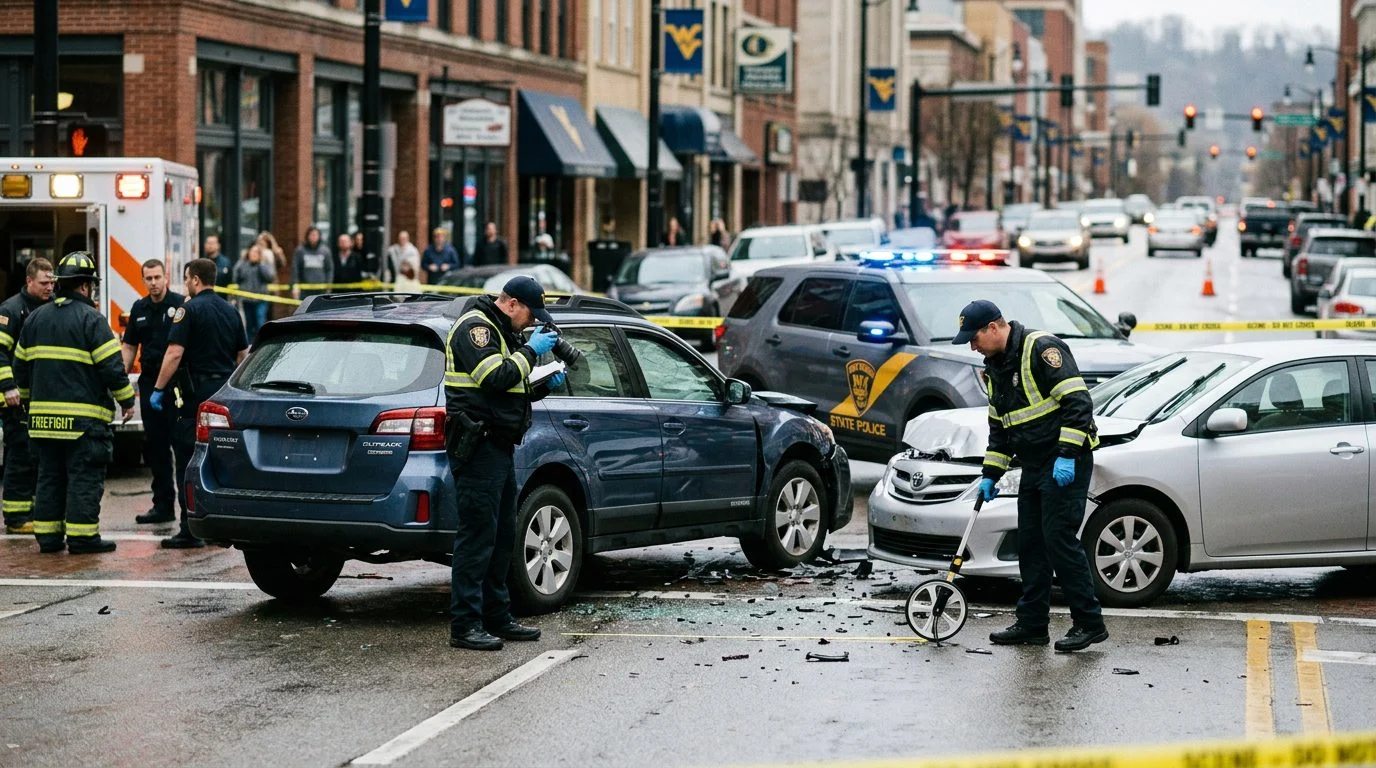
Car Accident Cases in West Virginia
What Is Your Car Accident Case Worth?
Understanding how damages are calculated when you're hurt in a crash.
Published October 01, 2026
How Much Is My Car Accident Case Worth? Understanding Damages in West Virginia
Your car accident case’s value depends on your specific injuries, losses, and the circumstances of the crash—not on a formula or online calculator. This guide explains the real factors that determine what your case might be worth and what you should know before you talk to a lawyer.

If you're trying to figure out what your injuries and losses are actually worth after a car accident in West Virginia, you don't have to guess. Talk it through with our team — the first case review is free, confidential, and carries no obligation.
What This Page Covers (and What It Doesn’t)
This page explains the types of damages you may recover and the factors that influence case value. It is not a case valuation. Only a lawyer who reviews your medical records, accident details, and insurance information can estimate what your specific case is actually worth.
Every accident is different. Your injuries, the other driver’s liability, your lost income, and the strength of your evidence all matter. This page is a framework to help you understand the conversation you’ll have with a legal professional—and to recognize when you need one.
The Two Main Categories of Damages in a Car Accident Case
West Virginia law allows you to recover two kinds of damages when someone else’s negligence causes your injury.
Economic damages are measurable, documented financial losses. These include medical bills, lost wages, vehicle repair or replacement, and the cost of future care.
Non-economic damages are real losses that don’t have a receipt but are fully compensable. These include pain and suffering, emotional distress, loss of enjoyment of life, and permanent scarring or disfigurement.
Both categories matter. Together, they form the foundation of your claim.
Economic Damages: What Gets Counted
Economic damages are straightforward because they’re documented. Your attorney will gather receipts, bills, pay stubs, and expert reports to prove them.
Medical expenses include everything from emergency room care and hospitalization to surgery, physical therapy, prescription medications, and medical equipment. If your injuries require ongoing treatment—whether that’s monthly physical therapy or lifelong care for a spinal cord injury—those future costs are included too.
Lost wages cover income you lost while recovering and time off work for medical appointments and treatment. If your injury prevents you from returning to your previous job, or if you earn less in a new role, that lost earning capacity is part of your claim.
Vehicle damage includes repair costs or the fair market value of your vehicle if it’s totaled.
Transportation and related costs cover mileage to medical appointments, home care services, vehicle or home modifications if your injuries require them, and other direct expenses caused by the accident.
In catastrophic injury cases—traumatic brain injury, spinal cord injury, or permanent disability—future care costs can be substantial. The National Spinal Cord Injury Statistical Center reports that lifetime care costs for spinal cord injuries vary significantly based on the severity and level of injury and age at injury—from about $2.1 million to $6.4 million for someone injured at age 25, and about $1.5 million to $3.5 million for someone injured at age 50 (Facts and Figures). These projections are critical to accurate damage calculation.
Non-Economic Damages: Pain, Suffering, and Life Impact
Non-economic damages are harder to quantify, but they’re real and recoverable.
Pain and suffering covers physical pain during recovery and any chronic pain that results from the accident. If you have ongoing headaches from a traumatic brain injury or chronic back pain from a spinal cord injury, that suffering has value.
Emotional distress includes anxiety, depression, post-traumatic stress, or other psychological effects of the accident and recovery.
Loss of enjoyment of life means you can no longer participate in hobbies, sports, activities, or social relationships you had before the accident. If you loved running and a leg injury ended that, that loss is compensable.
Scarring or disfigurement is permanent visible injury that affects your appearance or function.
Loss of consortium applies to the impact on your relationship with a spouse. Under W. Va. Code § 48-29-302, a married woman may sue and recover for loss of consortium to the same extent and in all cases as a married man.
Key Factors That Affect Your Case’s Value
Several factors influence how much your case is worth. Understanding them helps you see why two accidents that seem similar can have very different values.
Severity of injury is the biggest driver. Minor injuries typically result in lower valuations. Catastrophic injuries—traumatic brain injury, spinal cord injury, permanent disability, or wrongful death—significantly increase case value because they involve long-term or lifetime care, lost earning capacity, and profound life changes.
Clarity of liability matters enormously. If the other driver is clearly at fault, your case is stronger and more valuable. If fault is disputed or shared, the value drops.
Quality of medical evidence strengthens your claim. Detailed medical records, imaging, surgical reports, and expert opinions—especially from specialists in brain injury or spinal cord injury—make your damages easier to prove and harder to dispute.
Duration of recovery affects both economic and non-economic damages. Longer recovery periods mean more lost wages and more days of pain and suffering.
Age and income influence wage calculations. Younger people with longer working lives may have higher lost-wage claims. Your income level directly affects what those lost wages are worth.
Pre-existing conditions matter too. How the accident affected any prior injuries is relevant to the calculation.
Insurance policy limits can cap what you recover. If the at-fault driver’s coverage is low, that limits your recovery even if your damages are higher.
Not sure what your next step is?
Talk it through with our team — the first case review is free, confidential, and carries no obligation.
How Settlement Offers Are Calculated
Insurance companies may use their own internal methods to estimate non-economic damages, but no formula determines what your claim is worth.. Your attorney negotiates based on the strength of your evidence, the quality of your medical records, comparable cases, and the insurance company’s willingness to pay.
Settlement offers often begin low. Negotiation is standard. Your lawyer’s job is to build a strong case and push back on lowball offers.
Why Your Specific Situation Matters
No online calculator can value your case accurately. Here’s why.
Two accidents that look similar on paper can have very different values based on individual circumstances. Your medical records, the other driver’s insurance limits, witness statements, accident reconstruction findings, whether you had to miss work, whether you required surgery, and whether you have permanent effects—these specifics drive the number.
A 35-year-old construction worker with a spinal cord injury has different lost-wage potential than a 65-year-old retiree with the same injury. A person with a traumatic brain injury who can’t return to their career has a different claim than someone with a concussion who recovers fully in weeks.
This is why a professional case review is essential. Only a lawyer who knows your full situation can give you a realistic picture.
Common Questions About Car Accident Case Value
Q: Will I definitely get a settlement?
Not guaranteed. Settlement depends on liability, insurance coverage, and the other side’s willingness to negotiate. Some cases go to trial.
Q: How long does it take to get paid?
It varies. Simple cases may settle in months; complex cases with serious injuries can take longer. Your attorney will explain the timeline for your situation.
Q: What if the other driver doesn’t have insurance?
West Virginia requires uninsured motorist coverage, and insurers must offer underinsured motorist coverage as an option (W. Va. Code § 33-6-31). Your own insurance policy may cover you if the at-fault driver lacks sufficient coverage.
Q: Do I have to go to court?
Most cases settle without trial, but your attorney must be prepared to litigate if necessary to get you fair value.
Q: What if I was partially at fault?
West Virginia follows comparative negligence rules. You can still recover as long as your fault is not greater than the combined fault of everyone else responsible, but your award is reduced by your percentage of fault (W. Va. Code § 55-7-13c). For example, if your damages are $100,000 and you’re found 20% at fault, you receive $80,000.
Q: How much does it cost to hire a lawyer?
Most personal injury attorneys work on contingency. You pay nothing upfront, and the firm takes a percentage of your recovery if you win.
Why Big Bubba Focuses on Serious Injury Cases
We focus exclusively on serious car accidents, truck accidents, commercial vehicle accidents, and catastrophic injuries—not general practice. We don’t handle minor fender-benders or quick settlements.
We invest in thorough investigation and medical evidence to build strong cases, not to rush to settlement.
We explain your case value clearly and honestly, without pressure or false promises. We serve injury victims in all 55 West Virginia counties, and if a case cannot be resolved fairly through settlement, we will discuss taking it to trial.
What Happens When You Contact Big Bubba
You’ll speak with someone who listens to what happened and asks detailed questions about your injuries and losses.
We review your medical records and accident details to understand your case. We provide an honest assessment of your situation and next steps—with no obligation.
If we take your case, we handle all communication with insurance companies and manage the process from start to finish. You focus on recovery; we focus on your claim.

Have questions about what happened?
Ask our team directly. The first conversation is free, confidential, and there is no obligation to continue.
Ready to Understand Your Case Value
If you’re trying to figure out what your injuries and losses are actually worth after a car accident in West Virginia, you don’t have to guess. Contact us for a free case review. People in your situation can reach out to us to get a clear, honest assessment of what their case might be worth and what happens next.
No Upfront Fees
No attorney fee unless we win; clients remain responsible for case costs.
What Affects Your Case Value
Medical Costs & Care
Emergency treatment, ongoing therapy, future medical needs, and lost wages all factor into what your case may be worth.
Liability & Insurance
Who was at fault and the other driver's insurance coverage shape what can be recovered. Some cases require investigation or trial.
Injury Severity
The nature and extent of your injuries—from soft tissue damage to traumatic brain injury or spinal cord injury—directly impact case value.
Your Unique Situation
Age, job, family responsibilities, and long-term effects of your injuries are all part of the full picture we evaluate.
How Big Bubba Approaches Your Case
Thorough Investigation
We gather evidence, review police reports, consult medical professionals, and build a complete picture of what happened and what you've endured.
Full Damage Documentation
We account for all costs—medical bills, lost income, pain and suffering, and future care needs—to ensure nothing is overlooked.
Honest Communication
We explain the process, answer your questions, and keep you informed every step of the way. No surprises, no pressure.
Your Recovery Matters
We focus on what you need to move forward—fair compensation that reflects the real impact of your injuries on your life.
Common Questions About Case Value
Will I definitely get a settlement?
Not guaranteed. Settlement depends on liability, insurance coverage, and the other side's willingness to negotiate. Some cases go to trial.
How long does it take to get paid?
It varies. Simple cases may settle in months; complex cases with serious injuries can take longer. Your attorney will explain the timeline for your situation.
What if the other driver doesn't have insurance?
West Virginia law and your own policy may provide coverage options. We investigate all available sources of recovery.
Do I need a lawyer to settle my case?
You're not required to, but insurance companies often offer less to unrepresented claimants. We handle negotiations so you can focus on healing.
Ready to discuss your case?
Related practice areas
- Car Accident Claims in West Virginia: What You Need to Know
- Truck Accident Settlement: What to Expect in WV