
Car Accident Claims in West Virginia
What You Need to Know After a Crash
From the scene to recovery, Big Bubba walks you through your options and fights for fair compensation.
Published October 01, 2026
Car Accident Claims in West Virginia: What You Need to Know
After a car accident in West Virginia, you face immediate decisions about safety, reporting, and protecting your right to compensation. Understanding how West Virginia’s fault-based insurance system works, what damages you can recover, and when to seek legal help will guide you through the claims process and protect your interests.

Not sure what your next step is?
Talk it through with our team — the first case review is free, confidential, and carries no obligation.
What Happens After a Car Accident in West Virginia
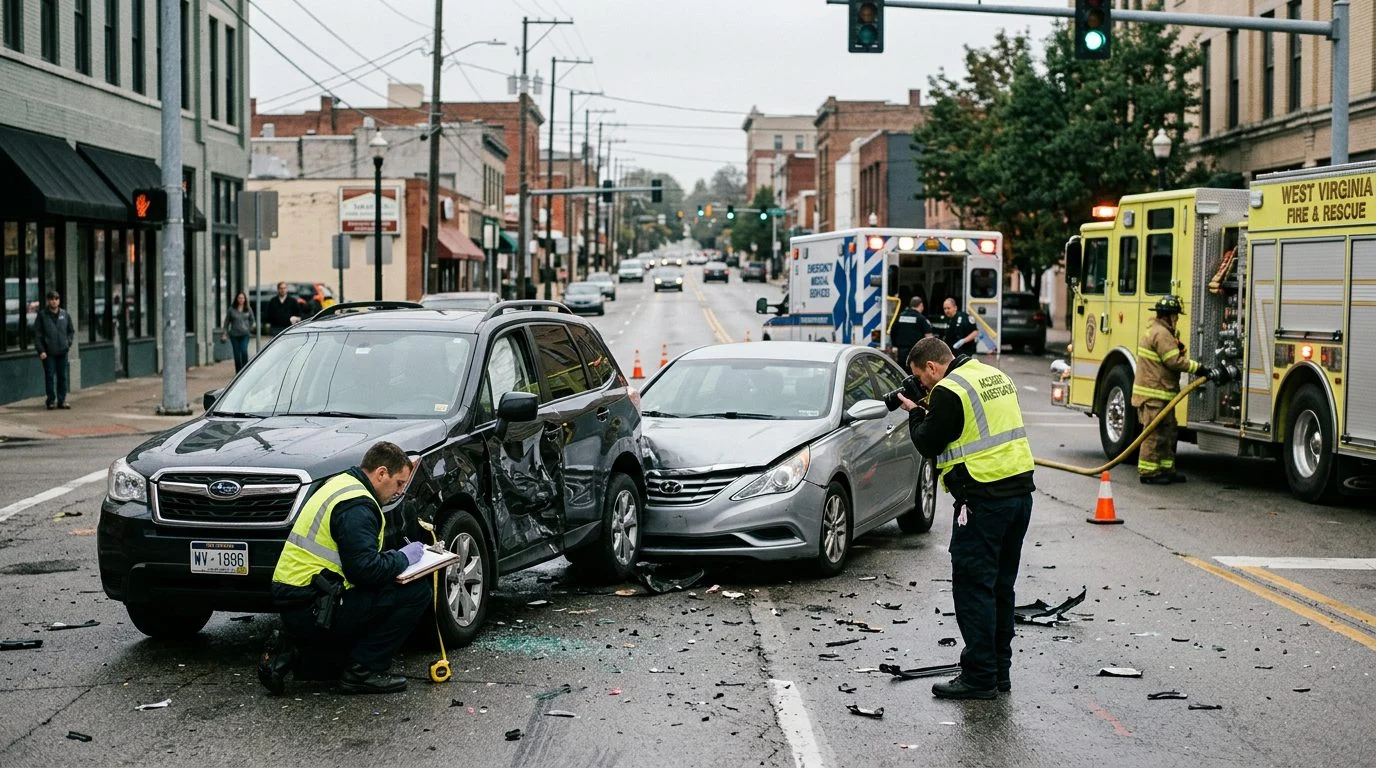
Your first actions after a crash directly affect your ability to recover damages later. Move to a safe location if possible, call 911 if anyone is injured, and document the scene with photos of vehicle damage, road conditions, and the accident location.
In West Virginia, police reports are required for accidents involving injury, death, or property damage exceeding $1,000. These reports become critical evidence in establishing fault and are often requested by insurance companies and courts. Request the report number from the responding officer and obtain a copy within days—don’t wait. The report includes the officer’s observations, witness statements, and sometimes a preliminary determination of fault, all of which strengthen your claim.
Write down the other driver’s name, phone number, address, driver’s license number, vehicle information, and insurance details at the scene. Get contact information from any witnesses. Avoid discussing fault or apologizing; stick to factual statements. Your words can be used against you later if they suggest you were responsible for the crash.
Seek medical attention promptly, even if you feel fine. Some injuries—especially head and spine injuries—develop over hours or days. A medical record created soon after the accident establishes a direct link between the crash and your injuries, which insurers and courts rely on to award damages.
Understanding Fault and Liability in West Virginia
West Virginia operates under an at-fault insurance system, meaning the driver responsible for the accident is liable for damages to the other party. The at-fault driver’s insurance pays for injuries and property damage to the other vehicle and occupants.
Fault is determined by investigating the accident. Insurance adjusters, police reports, witness statements, vehicle damage patterns, and traffic laws all play a role. In truck and commercial vehicle accidents, federal safety regulations and company maintenance records may be relevant evidence of fault, depending on the facts. The investigation typically takes weeks to months, depending on complexity.
West Virginia applies comparative negligence rules, which may reduce your recovery if you are found partially at fault for the accident. For example, if you were found 20% at fault and the other driver 80% at fault, you could recover 80% of your damages. However, if you are found more than 50% at fault, you cannot recover damages under West Virginia law. This makes establishing the other driver’s primary responsibility critical to your claim.
Establishing fault early protects your claim. Don’t delay reporting the accident to your insurer, and don’t accept blame or settle quickly without understanding the full extent of your injuries.
Types of Damages You May Recover
Car accident damages fall into three categories: economic, non-economic, and punitive.
Economic damages compensate you for quantifiable financial losses: medical bills (emergency care, surgery, rehabilitation, ongoing treatment), lost wages while you recover, property damage to your vehicle, and future care costs. In serious injury and catastrophic cases, lifetime care costs—including nursing, medical equipment, home modifications, and attendant care—can reach hundreds of thousands of dollars.
Non-economic damages compensate for pain and suffering, emotional distress, loss of enjoyment of life, and loss of companionship. These are harder to calculate but often represent the largest portion of recovery in serious injury cases. Courts and juries consider the severity and permanence of your injuries, your age, and the impact on your daily life.
Punitive damages may be awarded only when clear and convincing evidence shows the defendant acted with actual malice or a conscious, reckless and outrageous indifference to the health, safety and welfare of others (W. Va. Code § 55-7-29). Punitive damages punish the wrongdoer and deter similar conduct, but they are not available in all accident claims.
In catastrophic injury cases—traumatic brain injury, spinal cord injury, or permanent disability—damages are substantially higher because the injuries are permanent and lifelong care is required.
Car Accidents Involving Trucks and Commercial Vehicles
Truck accidents often result in more severe injuries because commercial vehicles weigh 20 to 30 times more than passenger cars. The size and weight differential means greater impact force, more catastrophic damage, and higher injury severity.
Commercial truck drivers and companies are subject to Federal Motor Carrier Safety Regulations, which set standards for hours of service, vehicle maintenance, driver qualifications, and cargo securement. Violations of these regulations—such as exceeding hours-of-service limits, operating an unsafe vehicle, or inadequate training—can be evidence of negligence when the violation is the proximate cause of the injury.
Commercial vehicles typically carry higher insurance limits than passenger cars, though available coverage does not guarantee any particular recovery. However, trucking companies and their insurers aggressively defend claims. They hire experienced investigators and lawyers immediately after a crash. Early legal representation protects your rights against these well-resourced defendants.
Catastrophic Injuries: Brain and Spinal Cord Damage
Traumatic brain injuries (TBI) occur when the force of a crash causes the brain to move inside the skull, damaging brain tissue and disrupting neural function. Even crashes at moderate speeds can cause TBI. Symptoms include loss of consciousness, confusion, memory loss, headache, dizziness, and difficulty concentrating. Long-term effects include cognitive impairment, behavioral changes, mood disorders, and increased risk of neurological disease.
Spinal cord injuries result from trauma to the spine that damages nerve fibers. According to the National Spinal Cord Injury Statistical Center, spinal cord injuries can result in permanent paralysis, loss of sensation, loss of bladder and bowel control, and lifelong care needs. The level and severity of injury determine the extent of disability. Lifetime costs of care vary significantly depending on the severity and level of injury.
Catastrophic injury claims require specialized handling. Medical experts testify about the nature and permanence of injury. Life-care planners calculate lifetime care costs. Vocational experts assess lost earning capacity. These cases are complex and time-intensive, and they call for careful legal representation.
Have questions about what happened?
Ask our team directly. The first conversation is free, confidential, and there is no obligation to continue.
Wrongful Death Claims
In West Virginia, the claim must be brought by and in the name of the deceased person’s personal representative, who may be duly appointed in West Virginia, in another U.S. state, territory or district, or in a foreign country (W. Va. Code § 55-7-6). Surviving family members may recover damages for loss of companionship, emotional distress, and loss of financial support the deceased would have provided.
Wrongful death claims are among the most serious and emotionally demanding cases. They require proof of negligence, causation, and the financial and relational value of the deceased’s life. These cases demand compassionate, skilled legal representation.
Dealing with Insurance Companies
Report your accident to your insurer promptly, as required by your policy. Provide factual information: date, time, location, vehicles involved, injuries, and police report number. Do not speculate about fault, apologize, or exaggerate injuries.
When the other driver’s insurer contacts you, you are not required to give a recorded statement. Anything you say can be used to minimize your claim. If contacted, politely decline and refer the adjuster to your attorney.
Insurance companies use several tactics to minimize payouts: offering quick, low settlements before you understand injury severity; suggesting your injuries are pre-existing or unrelated to the crash; or claiming you were partially at fault. Don’t accept an early offer. Allow time for medical treatment and diagnosis. Consult an attorney before settling.
Settlement vs. Trial: What’s Right for Your Case
A car accident claim may be resolved through settlement or may proceed to trial. Settlement negotiations begin after your medical treatment stabilizes and damages are clear. Your attorney presents a demand letter outlining liability, injuries, medical records, and damages. The insurer responds with a counteroffer. Negotiation continues until settlement is reached or the case proceeds to trial.
Settlement offers certainty, faster payment, and lower legal costs. Trial offers the potential for higher recovery but involves uncertainty, longer timelines (often 1–3 years), and higher attorney fees. Factors influencing the decision include the strength of liability evidence, injury severity, insurance policy limits, and the jury pool in your county.
Your attorney will advise whether settlement or trial is in your best interest based on case-specific facts.
The Role of Medical Evidence in Your Claim
Thorough medical documentation strengthens your case. Treatment records, diagnostic imaging, specialist evaluations, and therapy notes establish the nature, severity, and permanence of injury. They also support damage calculations by showing medical expenses and ongoing care needs.
Consistent, ongoing medical care demonstrates that your injuries are serious and require sustained treatment. Gaps in treatment can be used by insurers to argue injuries are minor or have resolved. Follow your doctor’s recommendations and attend all appointments.
In serious injury cases, medical experts—neurologists, orthopedic surgeons, physiatrists—may testify about diagnosis, prognosis, and future care needs. Their opinions carry significant weight in establishing damages.
West Virginia Uninsured Motorist Coverage and Other Protections
Uninsured/underinsured motorist coverage is meant to protect drivers hit by uninsured or inadequately insured drivers. This coverage applies when the at-fault driver has no insurance or insufficient insurance to cover your damages. It’s a critical protection in West Virginia, where a significant percentage of drivers are uninsured.
If you’re hit by an uninsured driver, your uninsured motorist coverage pays your damages (up to the policy limit). If the at-fault driver has insufficient insurance, your underinsured motorist coverage covers the gap. These protections ensure you’re not left without recourse.
Want to know where you stand?
Tell us what happened and our team will walk you through the options available to you, at no cost.
How Long Does Recovery Take
Physical recovery timelines vary by injury type. Minor soft-tissue injuries (whiplash, muscle strain) may resolve in weeks to months. Fractures typically require 6–12 weeks of immobilization and rehabilitation. Serious injuries—spinal cord injury, traumatic brain injury, internal organ damage—require months to years of medical treatment and rehabilitation, and often result in permanent disability.
Recovery time directly affects claim value. Longer recovery periods mean higher medical expenses, greater lost wages, and more substantial non-economic damages. In catastrophic injury cases, recovery is lifelong; damages account for lifetime care, lost earning capacity, and permanent disability.
Don’t rush settlement. Allow adequate time for medical diagnosis and treatment to stabilize before valuing your claim.
When You Need a Car Accident Attorney
Seek legal counsel if you sustained serious injuries, face significant medical bills or lost wages, the accident involved a truck or commercial vehicle, liability is disputed, or the at-fault driver’s insurance company is uncooperative or offering inadequate compensation.
An attorney protects your rights against insurers, investigates liability thoroughly, calculates damages accurately, and negotiates or litigates on your behalf. Serious injury and catastrophic cases often involve high damages, and insurers may use experienced defense teams to contest them.
Serious injuries and catastrophic outcomes raise complex legal questions. You shouldn’t have to navigate these cases alone.
Frequently Asked Questions
What should I do immediately after a car accident in West Virginia?
Move to safety, call 911 if anyone is injured, document the scene with photos, exchange information with the other driver, get witness contact details, and seek medical attention promptly—even if you feel fine.
How is fault determined in a West Virginia car accident?
Fault is determined through investigation of police reports, witness statements, vehicle damage, traffic laws, and (in truck accidents) federal safety regulations and company records.
Can I recover damages if I’m partially at fault?
Yes, under West Virginia’s comparative fault rules, as long as your fault is not greater than the combined fault of everyone else responsible; your recovery is reduced by your percentage of fault (W. Va. Code § 55-7-13c).
What if the other driver doesn’t have insurance?
Your uninsured motorist coverage (required under W. Va. Code § 33-6-31(b)) can cover your damages up to your policy limit.
How long do I have to file a car accident claim in West Virginia?
West Virginia generally allows two years from when the right to bring the claim accrued to file a personal injury lawsuit, and exceptions may apply, so don’t wait to begin your claim and preserve evidence and protect your rights (W. Va. Code § 55-2-12).
When should I hire an attorney?
Hire an attorney if you sustained serious injuries, face significant expenses, liability is disputed, or a truck or commercial vehicle was involved.
If you’ve been injured in a car accident in West Virginia and are facing medical bills, lost income, or uncertainty about your rights, you don’t have to handle this alone. People in your exact situation—dealing with serious injuries, insurance disputes, or catastrophic outcomes from crashes involving commercial vehicles—can reach out to us to discuss their options and protect their recovery. Contact us today for a free case review and let our team help you understand what your claim may be worth.
What to Do Right After a Car Accident
Ensure Safety First
Move to a safe location if possible. Call 911 if anyone is injured or if there is significant damage. Turn on hazard lights and stay visible to other drivers.
Document Everything
Take photos of vehicle damage, the accident scene, road conditions, and traffic signs. Get the other driver's name, phone number, address, insurance information, and license plate. Collect contact details from any witnesses.
Seek Medical Attention
Get checked by a doctor even if you feel fine. Some injuries appear hours or days later. Keep records of all medical visits and treatment.
Report and Preserve Evidence
File a police report if required. Do not admit fault at the scene. Notify your insurance company, but consider speaking with Big Bubba before giving a recorded statement.
Don't Wait to Get Legal Help
The sooner you contact Big Bubba, the sooner we can help preserve evidence, communicate with insurers on your behalf, and protect your rights. Early action matters.
Why Big Bubba Handles Your Car Accident Claim
Focused on Your Recovery
We focus exclusively on serious car accidents, truck crashes, and catastrophic injuries across West Virginia. Your case gets dedicated attention.
Handle the Paperwork
We manage insurance claims, medical records, police reports, and all legal filings—so you can focus on healing.
No Fees Unless There Is a Recovery
We work on contingency. You pay nothing upfront, and we only collect a fee if there is a recovery in your case. No attorney fee unless we win; clients remain responsible for case costs.
We Listen and Advocate
We take time to understand what happened to you and fight for fair compensation on your behalf.
Common Questions About West Virginia Car Accident Claims
How Is Fault Determined?
Fault is established through police reports, witness statements, photos, vehicle damage patterns, and sometimes accident reconstruction. Insurance companies and courts review all available evidence.
What if I Was Partially at Fault?
West Virginia follows a comparative negligence rule (W. Va. Code § 55-7-13c). You may still recover compensation even if you share some responsibility, though any award may be reduced by your percentage of fault.
What Damages Can I Claim?
You may seek compensation for medical bills, lost wages, vehicle repair or replacement, pain and suffering, and other losses caused by the accident.
How Long Do I Have to File a Claim?
Time limits apply to car accident claims in West Virginia. Contact Big Bubba promptly to ensure your claim is filed within the required window.