
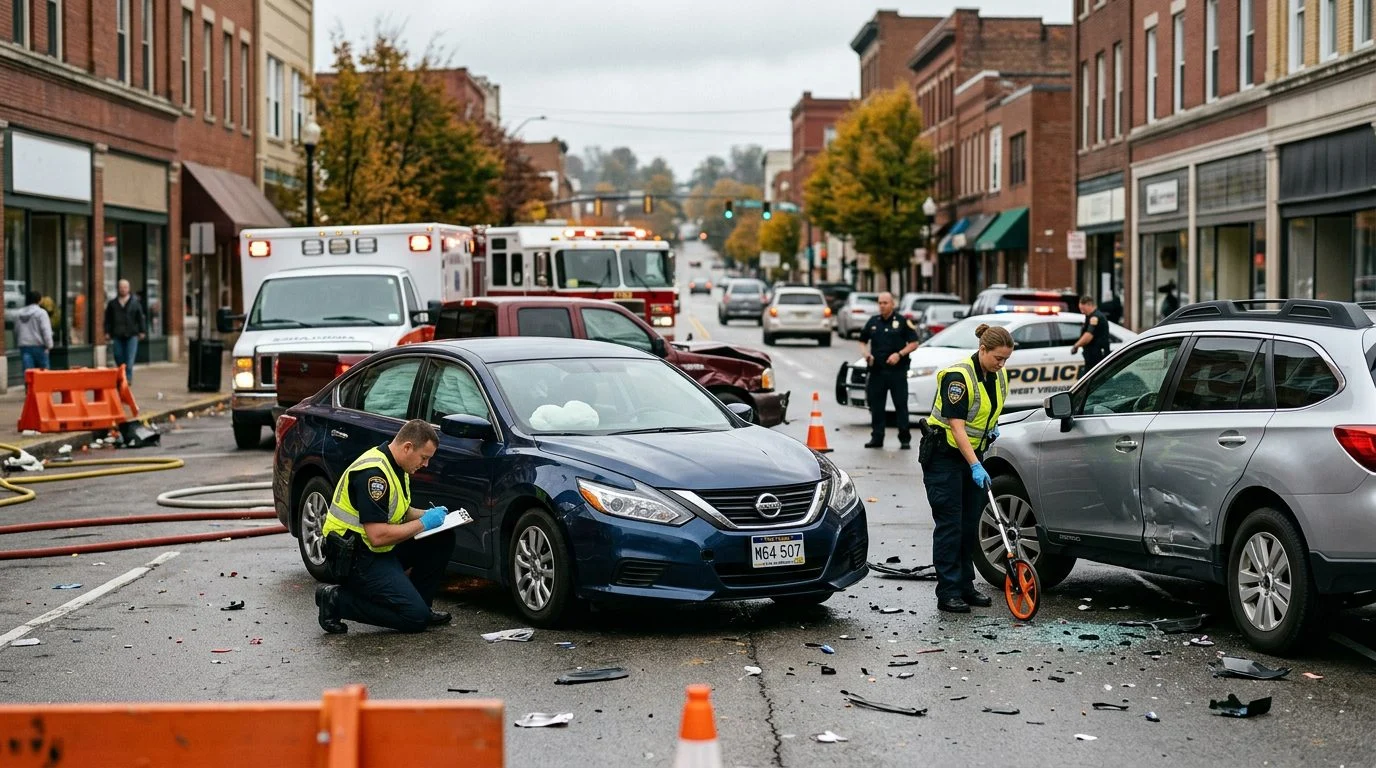
Car Accident Damages in West Virginia
What You Can Recover After a Car Crash
Understanding your rights to compensation for medical bills, lost wages, pain, and more.
Published October 01, 2026
Serious Car Accident Damages in West Virginia: What You Can Recover
When a serious car accident injures you, the financial and personal toll overwhelms fast. Medical bills pile up. You miss work. Your life changes. West Virginia law lets you recover compensation—called “damages”—for these losses. Understanding what damages mean, what categories exist, and how they’re calculated helps you know what to document and what your claim may be worth.

Not sure what your next step is?
Talk it through with our team — the first case review is free, confidential, and carries no obligation.
What Damages Mean in a Serious Car Accident Claim
Damages are the financial compensation you can seek when someone else’s negligence causes you harm. West Virginia recognizes two main categories: economic damages (measurable, documented costs) and non-economic damages (pain, suffering, and lifestyle impact). A third category, punitive damages, applies only in cases of extreme misconduct.
Knowing what’s recoverable helps you preserve evidence and understand your rights. You may be able to seek compensation for the losses the accident caused.
Economic Damages: Documented Financial Losses
Economic damages are costs you can prove with receipts, bills, and records. These include:
- Medical expenses: emergency care, hospitalization, surgery, ongoing treatment, rehabilitation, physical therapy, medications, and medical equipment (wheelchairs, braces, orthopedic devices, home modifications for accessibility).
- Future medical care: if your injuries require long-term or lifetime treatment, you can recover projected costs. A spinal cord injury may mean decades of medical care and equipment replacement.
- Lost wages: income you lost while unable to work during recovery.
- Lost earning capacity: if your injuries permanently reduce your ability to earn, you can recover the difference between what you would have earned and what you’ll now earn over your lifetime.
- Property damage: repair or replacement value of your vehicle and personal belongings damaged in the crash.
- Transportation costs: rideshare, rental cars, or mileage reimbursement to medical appointments during recovery.
Economic damages are calculated using medical records, hospital bills, pay stubs, tax returns, and expert testimony on future costs. Thorough documentation strengthens your claim significantly.
Non-Economic Damages: Pain, Suffering, and Life Impact
Non-economic damages compensate for harm without a simple price tag but that profoundly affects your life:
- Pain and suffering: physical pain during recovery and any chronic pain that continues long-term.
- Emotional distress: anxiety, depression, post-traumatic stress disorder (PTSD), or fear related to the accident or its ongoing effects.
- Loss of enjoyment of life: inability to participate in hobbies, sports, social activities, or family roles you had before the accident.
- Disfigurement or scarring: permanent visible injury affecting appearance or self-image.
- Loss of consortium: impact on your relationship with a spouse—loss of companionship, intimacy, and support.
These damages are harder to quantify because there’s no formula. Factors such as injury severity, recovery time, and medical evidence of your condition can affect how these damages are valued. In serious injury cases, non-economic damages often exceed economic damages because the human cost is so high.
Punitive Damages: When the At-Fault Driver’s Conduct Was Extreme
Punitive damages are meant to punish reckless or intentional misconduct, not just compensate you. West Virginia law allows punitive damages only when clear and convincing evidence shows the defendant acted with actual malice or a conscious, reckless and outrageous indifference to the health, safety and welfare of others (W. Va. Code § 55-7-29).
They are rare. Most car accidents involve ordinary negligence. Punitive damages require conduct so reckless or intentional that the court decides punishment is warranted. Even then, they’re not guaranteed—the judge or jury must find the conduct meets the legal threshold.
Damages in Catastrophic Injury Cases
Serious car accidents can cause traumatic brain injuries (TBI) and spinal cord injuries (SCI). These injuries change everything.
Traumatic brain injury can cause cognitive changes, memory loss, personality changes, reduced independence, and need for ongoing supervision or care. Victims may struggle with concentration, emotional regulation, or executive function—affecting their ability to work, manage finances, or live independently.
Spinal cord injury can result in paralysis, loss of sensation, and loss of bodily function. According to the National Spinal Cord Injury Statistical Center, individuals with spinal cord injuries often require lifelong medical care, specialized equipment, home modifications, and personal assistance with daily activities.
Damages in these cases are significantly higher because they reflect:
- Lifetime medical and personal care costs (often hundreds of thousands of dollars over a lifetime).
- Home modifications (wheelchair ramps, accessible bathrooms, specialized beds).
- Specialized equipment (wheelchairs, mobility devices, communication aids).
- Lost earning capacity (often total, if the injury prevents any work).
- Profound non-economic impact (loss of independence, relationships, and quality of life).
These injuries are why serious injury representation requires careful, thorough evaluation. The stakes are high, and the damages reflect the permanent change in a person’s life.
Have questions about what happened?
Ask our team directly. The first conversation is free, confidential, and there is no obligation to continue.
How Damages Are Calculated and Pursued
Here’s how the process typically works:
Step 1: Document all losses. Gather medical records, bills, pay stubs, receipts, photos of injuries and vehicle damage, and a journal of your symptoms and how the injury affects your daily life.
Step 2: Gather evidence of liability. Obtain the police report, witness statements, and consider accident reconstruction if liability is disputed.
Step 3: Obtain medical evaluation. Your doctor assesses injury severity, prognosis, and future care needs. Medical evidence is central to valuing your claim.
Step 4: Calculate economic damages. Add up all documented costs and project future expenses with expert help.
Step 5: Assess non-economic damages. Consider injury severity, your age, impact on daily life, and what comparable cases have been valued at.
Step 6: Demand or negotiate. Present the claim to the at-fault driver’s insurance company or pursue litigation if settlement isn’t reached.
Timeline: This process typically takes months to over a year, depending on injury complexity and whether settlement is reached quickly or litigation is necessary.
What You Need to Know About Insurance and Damage Limits
The at-fault driver’s liability insurance has a maximum payout; West Virginia’s minimum is $25,000 for bodily injury to or death of one person (W. Va. Code § 17D-4-2). If your damages exceed that limit, you have options:
- You may pursue the driver’s personal assets.
- Your own underinsured motorist coverage may help cover the gap if you have it.
- Your medical payments coverage can help with immediate expenses.
Understanding these limits helps set realistic expectations and identify all available sources of recovery.
Common Questions About Serious Car Accident Damages
Q: How much is my case worth?
It depends on injury severity, medical costs, lost income, and non-economic factors. Each case is unique.
Q: Can I recover damages if I was partially at fault?
Yes. West Virginia applies comparative negligence law, so you can recover even if partially at fault, as long as your fault is not greater than the combined fault of all others responsible for your damages. Your award is reduced by your percentage of fault.
Q: What if the other driver has no insurance?
Your uninsured motorist coverage may help cover your damages, depending on your policy. We can also pursue the driver directly.
Q: How long do I have to file a claim?
West Virginia generally allows two years from when the right to bring the action accrues, and exceptions may apply. Don’t wait—evidence and memories fade.
Q: Do I have to accept the insurance company’s first offer?
No. Initial offers are often low. We negotiate or litigate to pursue fair value.
Q: What if I’m still recovering—can I still file?
Yes. You can file before recovery is complete. Future damages are included in the claim.
Why Serious Car Accident Claims Require Legal Guidance
Insurance companies have adjusters trained to settle quickly and low. You need someone trained to value your claim fairly and protect your rights.
Calculating future costs is complex. Lifetime medical care, lost earning capacity, and ongoing treatment require expert analysis that insurance adjusters may undervalue or ignore.
Liability can be disputed. The other driver or their insurer may deny fault or claim you were partially responsible. Evidence and investigation matter—and so does knowing West Virginia’s comparative negligence law (W. Va. Code § 55-7-13c).
Documentation is critical. Missing medical records, pay stubs, or evidence can reduce your recovery. A lawyer ensures nothing is overlooked and that your claim is built on a solid foundation.
Negotiation and litigation require skill. Settling fairly or taking a case to trial requires careful preparation and knowledge of West Virginia law.

Want to know where you stand?
Tell us what happened and our team will walk you through the options available to you, at no cost.
What to Do Now
If you haven’t already, seek medical care. Your health comes first, and medical records are essential to your claim.
Document everything: keep receipts, medical records, photos of injuries and vehicle damage, a journal of symptoms and impact, and contact information for witnesses.
Don’t settle with insurance without legal review. Early settlement offers often don’t reflect the true value of serious injuries.
If a serious car accident has left you with medical bills, lost income, or injuries that changed your life, you have legal options. Contact us for a case review to discuss what happened and what your claim may be worth. There’s no obligation, and the sooner we understand your situation, the sooner we can advise you on your options.
Learn more about car accident claims and catastrophic injury cases to understand how the claims process works.
Types of Damages You May Recover
Economic Damages
Medical expenses, emergency care, ongoing treatment, rehabilitation, lost wages, and other out-of-pocket costs directly tied to the crash.
Non-Economic Damages
Compensation for pain and suffering, emotional distress, loss of enjoyment of life, and the impact the injury has on your daily activities.
Comparative Negligence in West Virginia
West Virginia law allows you to recover damages even if you were partially at fault for the crash, unless your fault is greater than the combined fault of all others responsible (W. Va. Code § 55-7-13c). Your recovery is reduced by your percentage of responsibility.
Every Case Is Unique
The value of your claim depends on the severity of your injuries, the costs of your medical care, your lost income, and other factors specific to what happened to you. There is no one-size-fits-all answer.
Why Choose Big Bubba for Your Car Accident Claim
Focused on Serious Injuries
We represent people with catastrophic injuries, traumatic brain injuries, spinal cord damage, and families in wrongful death cases—not minor fender-benders.
No Fees Unless There Is a Recovery
No attorney fee unless we win; clients remain responsible for case costs. You may still be responsible for court costs and case expenses.
Direct Access to Your Legal Team
When you call, you reach people who know your case and can answer your questions about what happened and what comes next.
We Listen to Your Story
We take time to understand how the crash has affected your life, your family, and your future—and we fight for fair compensation.
Ready to Discuss Your Case?
Related practice areas
- Car Accident Claims in West Virginia: What You Need to Know
- Commercial Vehicle Accidents in West Virginia: Your Rights