
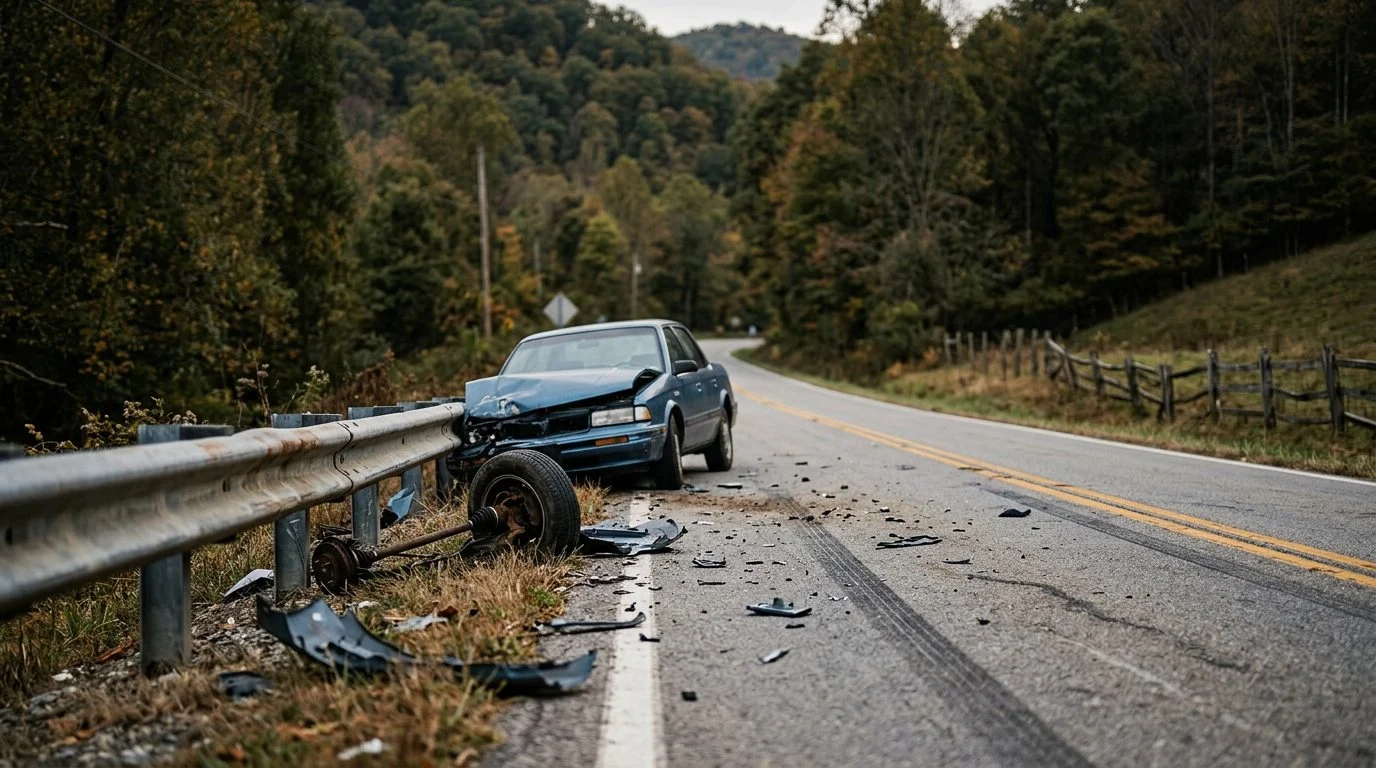
Car and Truck Accidents | West Virginia
Broken Bones After a Crash? Talk With Us About Your Case.
We represent people hurt in car and commercial truck crashes across West Virginia, including serious fractures and the injuries that can follow them.
Published November 6, 2026
What a Broken Bone After a Crash Means for Your Next Steps
If a broken bone came from a car or truck crash in West Virginia, your first steps are medical care, careful records, and knowing the time limits that may apply. This page is for people hurt in a crash and for family members helping an injured relative.
You may be reading this while you still hurt or wait for test results. That’s okay. You don’t need every answer before you act.
Serious crashes can cause other injuries too, and some take longer to show up. This guide covers common fractures, warning signs that need emergency care, how to protect your records, and how insurance contact usually works.
Big Bubba handles car accidents, truck accidents, commercial vehicle accidents, catastrophic injuries, traumatic brain injuries, spinal cord injuries, and wrongful death claims. We serve injury victims across West Virginia. When you’re ready, the firm can talk with you about your options.
Not sure what your next step is?
Talk it through with Big Bubba — the first case review is free, confidential, and carries no obligation.

Common Broken Bones in Car and Truck Crashes
Common fractures after a crash often involve the arms, wrists, legs, hips, ribs, and collarbone. Crashes can also break bones in the face and skull. The bone that breaks depends on where the body struck the car, the seat belt, the airbag, or the road.
Doctors often describe fractures as closed or open. A closed fracture means the bone does not break through the skin. An open fracture means the bone breaks through the skin, which raises the risk of infection and needs fast care.
Heavier vehicles can produce greater impact forces. A person hit by a loaded truck or a large commercial van may have injuries that aren’t visible at the scene. Hip and pelvic fractures, for example, can come with injuries that take a hospital to find.
Don’t assume a fracture is the only injury. Ask your doctor to check for other harm, even if the broken bone seems like the main problem.
When a Broken Bone Signals a More Serious Injury
Get emergency care right away if you notice signs of a brain or spinal injury. Warning signs include loss of consciousness, confusion, a severe headache, repeated vomiting, and trouble breathing.
Also watch for numbness or weakness in the arms or legs. Neck or back pain after impact needs prompt evaluation. Loss of bladder or bowel control is another reason to get help now.
Brain and spinal cord injuries may not show symptoms right away. Some people feel fairly well for hours or days. A person who seems fine should still be checked after a serious crash.
Some crashes cause catastrophic injuries, including serious brain and spinal cord damage. The firm handles catastrophic injury claims and can talk with you about whether your situation may fit that work.
Medical Care and Records After a Crash
At the emergency room, doctors usually examine the injury. They often order X-rays or CT scans to look for a fracture or head injury.
They then decide whether the bone can be splinted or needs surgery. Surgery, casting, rehabilitation, and physical therapy may be recommended, depending on the bone and the injury.
Your treating doctors are the best source for what recovery may look like for your specific injury. Healing times vary from person to person.
Keep these habits from the start:
- Go to every follow-up visit.
- Keep a log of symptoms, appointments, and medicines.
- Save all discharge papers and test results.
- Tell every provider exactly how the crash happened.
Documenting the Crash and Your Losses
Good evidence starts at the scene, and it can disappear fast. Gather the crash report number, photos of the vehicles and road, and names and phone numbers of witnesses. Note any dashcam or nearby traffic camera footage that may exist.
To request a crash report, contact the agency that responded. The Beckley Police Department’s crash report request page explains the process.
Record your losses as they happen. Keep medical bills, prescriptions, mileage to appointments, and letters from an employer about lost time. Write a short daily note about pain and the tasks you can’t do.
Truck crashes may involve more records. Federal rules generally require vehicle maintenance records to be kept for one year where the truck is housed or maintained, and for 6 months after the truck leaves the motor carrier’s control. Ask early for them to be preserved.
How a Broken Bone Claim Is Evaluated
A claim often looks at several categories of loss. Depending on the facts, a claim may seek the cost of medical treatment already received and expected later, income lost because of the injury, and noneconomic losses such as physical pain and emotional distress. In a qualifying commercial vehicle case against an employer defendant, W. Va. Code § 55-7-32(b) may limit noneconomic damages, subject to the insurance requirement in subsection (c) and the exceptions in subsection (d). Under W. Va. Code § 55-7-32(d), the section does not apply if the civil action involving a commercial motor vehicle arises from an incident for which an operator or driver is found to have done one of the things listed there. Most items on the list are conduct at the time of the incident, but one is refusing, following the incident, to submit to testing required under § 17E-1-15. The list includes operating a commercial motor vehicle with an alcohol concentration of .04 or more, in willful or wanton disregard for the safety of persons or property, loaded in excess of the maximum gross vehicle weight rating (unless legally operating under a permit), or while engaging in distracted driving. Which categories apply depends on the injury and the facts of the crash.
W. Va. Code § 55-2-12 generally sets a two-year limit for personal injury actions where no other limitation is otherwise prescribed. West Virginia generally allows two years to file, and exceptions may apply. Don’t wait to learn your deadline.
A claim may name the at-fault driver. In some truck crashes, an employer or vehicle owner may also be responsible. West Virginia’s commercial motor vehicle statute defines who may count as an employer defendant.
West Virginia uses comparative fault rules. Your own share of fault may reduce what you recover. It generally does not bar recovery unless your fault is greater than the combined fault of others. W. Va. Code § 55-7-13c reads: “(c) Any fault chargeable to the plaintiff shall not bar recovery by the plaintiff unless the plaintiff’s fault is greater than the combined fault of all other persons responsible for the total amount of damages, if any, to be awarded.”
Fault is generally decided through the crash report, physical evidence, and witness accounts, depending on the facts. It is not decided by assumption.
Not sure what your next step is?
Talk it through with Big Bubba — the first case review is free, confidential, and carries no obligation.
Talking to Insurers and Trucking Companies
Some insurers may ask you for a recorded statement early. Think before you answer. Keep notes of every call, letter, and conversation.
West Virginia law limits some early contact. Under W. Va. Code § 55-7-11a, no person may, within twenty days from the date of a personal injury while the injured person is either an inpatient in any hospital or partially or totally unable to engage in his or her usual trade, profession or occupation, negotiate or attempt to negotiate a settlement of the claim for that injury, obtain or attempt to obtain a partial or general release of liability from the injured person, or obtain or attempt to obtain a statement from the injured person for use in negotiating a settlement, except that a person acting for the injured person may obtain a statement upon the injured person’s express request. A settlement, release of liability or statement entered into, obtained or made in violation of this section may be disavowed by the injured person within one hundred eighty days from the date of the personal injury by executing a written statement of disavowal and forwarding a copy to the person who violated this section; if any consideration paid is repaid or returned to the person who paid it, the settlement, release or statement may not be admissible in evidence for any purpose in any court or other proceeding relating to the personal injury.
Some insurers may dispute a claim or how serious an injury is. Trucking companies may have their own adjusters and lawyers involved early. Forward adjuster requests to whoever is helping with your claim.
If you choose, the firm can handle communication with insurers and carriers for you.
Frequently Asked Questions
Should I see a doctor if I feel fine after a crash?
Yes. Symptoms of fractures, brain injuries, and spinal injuries can show up hours or days later.
Can a family member reach out for an injured relative?
Yes. A family member can contact the firm on the injured person’s behalf, and the firm can explain what it needs.
Does the firm handle broken bones after a serious crash in West Virginia?
The firm handles car, truck, and commercial vehicle crash claims, including catastrophic injuries, across West Virginia.
What if the other vehicle was a commercial truck?
Truck crashes may involve more parties and more records. The firm handles truck accident and commercial vehicle claims.
Where does the firm serve?
The firm serves injury victims across West Virginia, including Charleston, Huntington, Morgantown, Wheeling, Parkersburg, Beckley, Clarksburg, Fairmont, and Weirton.
If a Crash Left You With a Broken Bone
You may be reading this while recovering, worried about someone you love, or facing a hospital bill you didn’t expect. You don’t need every answer before you reach out.
If a broken bone came from a car, truck, or commercial vehicle crash in West Virginia, tell Big Bubba what happened. You can request a free case review so the firm can talk through your specific injury and the options that may apply.