
Bus Accident Injury Lawyer | Serving West Virginia
Hurt in a Bus Accident? Talk With a West Virginia Injury Firm That Listens
Big Bubba Injury Law represents people hurt in bus and commercial vehicle crashes, along with families who have lost a loved one. We serve injury victims across West Virginia.
Published October 26, 2026
If a bus crash hurt you or someone you love, a bus accident injury lawyer in West Virginia can review what happened and explain your options. Claims can involve the bus driver, the bus company, and sometimes other parties. Deadlines are short, so early review matters. Big Bubba Injury Law represents people seriously hurt in car and commercial vehicle crashes, along with families in wrongful death cases.
Who This Page Is For and What a Bus Accident Injury Claim Covers
A bus accident injury claim seeks compensation for physical injury or death caused by a bus. It can involve city transit buses, intercity and motorcoach buses, charter and tour buses, and school buses.
This page is for adults who were hurt as bus passengers, struck as pedestrians or cyclists, or who lost a family member in a bus crash. The firm handles both groups. Passenger claims cover harm inside the bus or while boarding or exiting. Pedestrian and cyclist claims cover people struck by a bus.
The firm focuses on serious harm: catastrophic injuries, traumatic brain injury, spinal cord injury, and wrongful death. We serve injury victims across all 55 West Virginia counties, including Charleston, Huntington, Morgantown, Wheeling, Martinsburg, Parkersburg, Beckley, Clarksburg, Fairmont, and Weirton.
If a bus crash left you or a loved one hurt, you may have a claim, and our team can talk it through with you in a free case review. Talk it through with Big Bubba — the first case review is free, confidential, and carries no obligation.

Common Ways Bus Crashes Injure Passengers and Pedestrians
Bus crashes injure people in a few common ways. Some involve only the bus, and others involve a second vehicle or a person on foot.
- Passengers get thrown during sudden stops, sharp turns, or rollovers.
- Riders fall while boarding or exiting.
- Broken seats, loose handrails, or unsecured baggage cause injuries.
- A bus strikes or gets struck by a car, truck, or motorcycle.
- Pedestrians get hit at crosswalks, near bus stops, or while getting on or off a bus.
Federal rules require that baggage and freight on a bus be stowed and secured to protect riders from falling or shifting items (federal bus safety rule). Common patterns include driver fatigue, distraction, speeding, and failure to yield. Each crash turns on its own facts.
Who May Be Legally Responsible After a Bus Crash
More than one party can be responsible after a bus crash, not only the driver.
- The driver may be responsible for speeding, distraction, impairment, or failure to yield.
- Maintenance contractors or vehicle owners may be responsible when brakes, steering, tires, doors, or restraints were not kept in proper condition.
- Parts manufacturers may be responsible when a defective part contributed to the crash.
The firm looks at each possible source of fault.
Injuries and Losses Bus Crash Claims Often Involve
Bus crash claims often involve brain injuries, spinal cord injuries, and broken bones. They also involve bills, lost income, and changes to daily life.
- Traumatic brain injury, from a concussion to more serious brain trauma.
- Spinal cord injury, including paralysis and long-term mobility limits.
- Broken bones, internal injuries, crush injuries, and burns.
- Economic losses, such as medical bills, future care, lost wages, and lost earning capacity.
- Non-economic losses, such as pain, suffering, emotional distress, and loss of enjoyment of life.
In a wrongful death case, West Virginia law lists the damages a verdict may include. These include sorrow, mental anguish, and solace, such as the companionship and guidance of the person who died. They also include lost income and services, care and hospital costs tied to the injury, and reasonable funeral expenses (W. Va. Code § 55-7-6).
See a doctor promptly after any head, neck, or back injury, even when symptoms seem mild.
Evidence That Matters Early in a Bus Accident Case
Some of the most useful evidence can disappear quickly. Gathering it early can help preserve important details about what happened.
- Medical records from the first emergency or urgent care visit, plus every follow-up.
- The police or crash report, the officers’ names, and any citations issued.
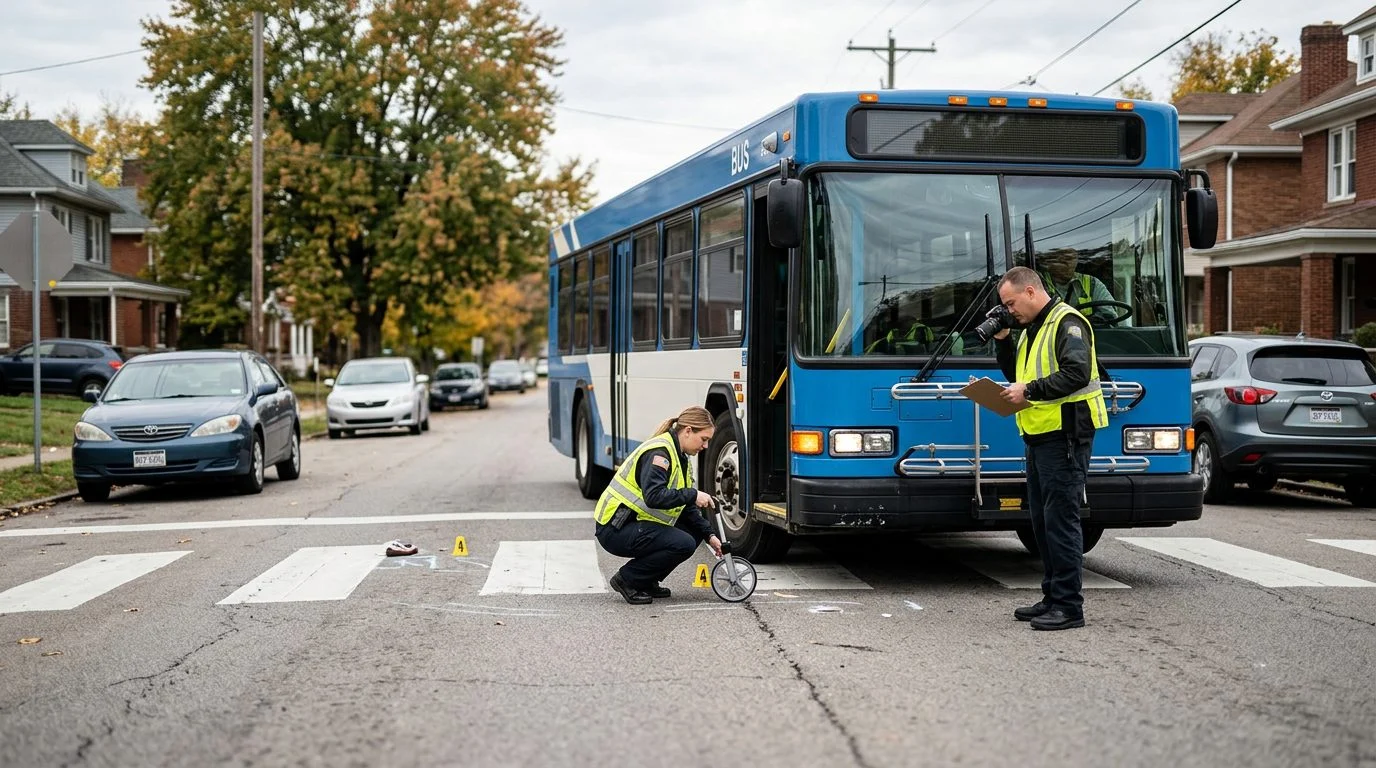
- Photos and video of the bus, the scene, traffic signals, crosswalks, and bus stops. Nearby camera footage can be overwritten.
- Witness names and contact details, including other passengers.
- Records the bus company controls, such as driver logs, maintenance files, dashcam video, and training records.
Federal hours rules limit how long a driver of a passenger-carrying vehicle can drive. Subject to the exceptions and exemptions listed in federal rules, a motor carrier may not allow or require a driver of a passenger-carrying commercial motor vehicle to drive more than 10 hours after 8 consecutive hours off duty, and the driver may not drive past that limit (federal driving-hour rule). After certain crashes on public roads, federal rules also require the employer to test surviving drivers for alcohol and controlled substances (post-accident testing rule).
Keep receipts, pay stubs, and a daily journal of symptoms. The firm can send a letter asking the carrier to preserve evidence.
How Long You Have to File a Bus Accident Claim in West Virginia
West Virginia generally allows two years to file a personal injury claim (W. Va. Code § 55-2-12). A wrongful death claim generally must be filed within two years after the death (W. Va. Code § 55-7-6).
- Personal injury: The general limit is two years after the right to bring the claim accrues (W. Va. Code § 55-2-12).
- Wrongful death: The estate’s personal representative must commence the action within two years after the death, subject to the provisions of section eighteen, article two, chapter fifty-five of the West Virginia Code (W. Va. Code § 55-7-6). W. Va. Code § 55-7-6 reads: “The provisions of this section shall not apply to actions brought for the death of any person occurring prior to July 1, 1988.”
- Government-run transit: Claims against a political subdivision generally must be brought within two years. The period can be tolled, or paused, if the political subdivision or its representative committed fraud or collusion by concealing or misrepresenting material facts about the injury (W. Va. Code § 29-12a-6).
Bring the crash date and any notices you received to your free case review. That helps the timing get checked promptly.
Not sure what your next step is?
Talk it through with Big Bubba — the first case review is free, confidential, and carries no obligation.
What to Expect: How a Bus Accident Case Moves Forward
A bus accident case usually moves through five steps. Each case moves at its own pace, and timing depends on the facts.
- Free case review. You describe what happened, who was involved, and what injuries or losses you have. The firm explains possible next steps.
- Preserving evidence. The firm sends preservation letters and requests records. Carriers and agencies control many records, so this step can take time.
- Investigation and medical documentation. The firm reviews the crash facts and organizes records of injuries and losses.
- Claim presentation. The firm presents the claim to the responsible parties and their insurers, then reviews each response.
- Lawsuit if needed. If the claim cannot be resolved fairly, the firm can file a lawsuit within the applicable deadlines.
Catastrophic injuries often need months of treatment before the full extent of losses is known.
Key Points for Injured Bus Crash Victims and Families
The firm’s work centers on catastrophic injuries, traumatic brain injury, spinal cord injury, and wrongful death. These serious claims are the core of the practice.
- Support staff. Our assistants and office staff help manage records requests, scheduling, and communication with families.
- Plain-language updates. The firm explains each step and what you can expect next.
- Free case review. The review is confidential, with no obligation to continue.
Common Questions About Bus Accident Injury Claims
Can I still have a claim if I was partly at fault?
West Virginia uses modified comparative fault (W. Va. Code § 55-7-13c). W. Va. Code § 55-7-13c reads: “(c) Any fault chargeable to the plaintiff shall not bar recovery by the plaintiff unless the plaintiff’s fault is greater than the combined fault of all other persons responsible for the total amount of damages, if any, to be awarded.”
Should I talk to the bus company’s insurance adjuster?
Be careful. For 20 days after an injury, no one may negotiate a settlement with you or ask you for a release if you are in the hospital or unable to work. One exception is that a person acting for and on behalf of the injured person may obtain a statement from you upon your express request (W. Va. Code § 55-7-11a).
Does a school bus or city bus claim work the same way?
Both can give rise to claims. Government-run systems can have different deadlines, so early review is important.
I was hit by a bus at a bus stop. Is that covered?
The firm reviews pedestrian cases, including those involving bus stops and crosswalks, to identify the responsible parties.
Can my family bring a claim if someone died?
Yes. Under state law, the personal representative brings the wrongful death action for the family (W. Va. Code § 55-7-6).
Understanding Bus Crash Claims in West Virginia
If a bus crash injured you or someone you love, act soon. Legal deadlines may apply, and evidence can disappear.
You may have a claim against the driver, the bus company, or another party. Our team can talk through what happened in your own words.