
Traumatic Brain Injury | West Virginia
Catastrophic Brain Injury Evidence: Showing What Your Injury Has Changed
A brain injury can be hard to see on the surface. Learn which records, tests, and everyday details help document a serious injury after a crash, and talk with the firm about your situation.
Published October 27, 2026
If someone you love was seriously hurt in a car or truck crash, you may be wondering what proof a claim would need. This guide explains the common catastrophic brain injury evidence used in West Virginia cases and how the pieces fit together. The firm handles car and truck crash claims, catastrophic injuries, and wrongful death matters, and this page covers the proof side in plain words.
What Makes a Brain Injury Catastrophic in a Legal Claim?
A catastrophic injury is a serious injury that lasts a long time or is permanent. It can limit work, self-care, and family life. For the broader picture, read our catastrophic injuries overview.
Brain injuries are hard to judge in the first hours. A person may seem stable at the scene and still develop swelling, memory trouble, or mood changes days or weeks later. Severity is usually judged by the medical picture over time, not by how someone looks on the day of the crash.
The Brain Injury Association of America discusses how moderate-to-severe brain injuries from vehicle crashes can differ in recovery one year after injury. That includes daily function, social life, and work. Those long-term effects are why the evidence has to look forward as well as back.
Spinal cord injuries also need time before doctors can fully describe what they mean for daily life. The same idea applies: the proof builds up over the course of care.
If someone you love is still recovering from a brain or spinal cord injury, you don't have to sort out the evidence alone, so reach out for a free case review. Talk it through with Big Bubba — the first case review is free, confidential, and carries no obligation.
What medical evidence, such as imaging, neuropsychological testing, and life care plans, is needed to prove a catastrophic brain or spinal cord injury?
Catastrophic brain injury evidence usually combines imaging of the brain or spinal cord, testing of thinking and memory, the records of treating physicians, and a written plan for future needs. No single test settles the question. Qualified professionals read these pieces together.
The strength of the evidence depends on how well the pieces line up. A scan that shows damage fits better with symptoms that began after the crash. It also fits better with records that show steady treatment. When the findings, symptoms, and history tell the same story, the picture is easier to follow.
Brain and spinal cord injuries both fall within this kind of proof. For a brain injury, the focus is often thinking, memory, and behavior. For a spinal cord injury, the focus is often movement, sensation, and how the body works below the injury. Each claim needs its own records, so the proof is built around the actual injury.
Imaging: How CT and MRI Scans Document Brain and Spinal Cord Injuries
CT and MRI scans are the main imaging tools used to show structural damage. They answer different questions, and doctors often use both over time.
A CT scan is commonly used early after a head injury. It can quickly show bleeding, swelling, or skull fractures. That early picture helps doctors decide on urgent care.
An MRI gives more detailed images of brain tissue and the spinal cord. Doctors may order it once the person is stable enough for the scan. It can show detail that a CT scan may not.
Imaging has limits. Some brain injuries do not appear clearly on standard scans. That is why imaging alone is rarely enough. Testing and medical records help show what a scan cannot. The VA Southern Arizona Health Care brain injury awareness page describes how traumatic brain injury can affect thinking, behavior, and daily functioning.
Neuropsychological Testing and Cognitive Evidence
Neuropsychological testing measures how well a person remembers, pays attention, processes information, uses language, and solves problems. Trained professionals give standard tasks. The results show how those abilities compare with what is expected.
Testing is often repeated over time. A first test may come soon after the injury. Later tests show whether function is changing. Baseline information from before the crash, such as school, work, or earlier medical records, can help show what changed.
Results are read alongside symptoms and daily life. Common symptoms include headaches, memory problems, mood changes, and fatigue. Family members and coworkers who knew the person before the crash can describe these changes. Their observations do not replace testing, but they add context that a test alone cannot give.
Life Care Plans and Long-Term Needs
A life care plan is a written projection of a person’s future needs. It can cover medical treatment, therapy, medications, equipment, home changes, and daily care. It looks ahead across the expected course of care.
Physicians, rehabilitation professionals, and care planners may prepare or contribute to the plan. Each item should trace back to the medical records. A plan built on those records is easier to explain than one built on guesses.
Plans can change as the person’s condition changes. A plan prepared early may be updated as treatment continues. That is a normal part of the process, and it is why the plan is tied to current records.
Medical Records, Treating Physicians, and Timing of Care
Medical records show how symptoms started and how treatment has progressed. Emergency room notes, hospital charts, imaging reports, rehabilitation notes, and follow-up visits work together. Each record adds a piece to the timeline.
Consistent follow-up care is commonly documented in these cases. Gaps in care can be questioned by the other side, so keeping scheduled appointments matters. Treating physicians’ observations carry weight alongside imaging and testing.
Timing matters too. Under W. Va. Code § 55-7-11a, for 20 days from the date of a personal injury, no person may negotiate or attempt to negotiate a settlement of the claim with an injured person who is an inpatient in any hospital or who is partially or totally unable to engage in his or her usual trade, profession or occupation. Keep this rule in mind if an insurer or another party reaches out early.
Keep copies of appointment summaries, medication lists, and symptom notes. Write down changes in memory, mood, sleep, and movement, with dates.
Not sure what your next step is?
Talk it through with Big Bubba — the first case review is free, confidential, and carries no obligation.
Crash Evidence That Supports the Medical Picture
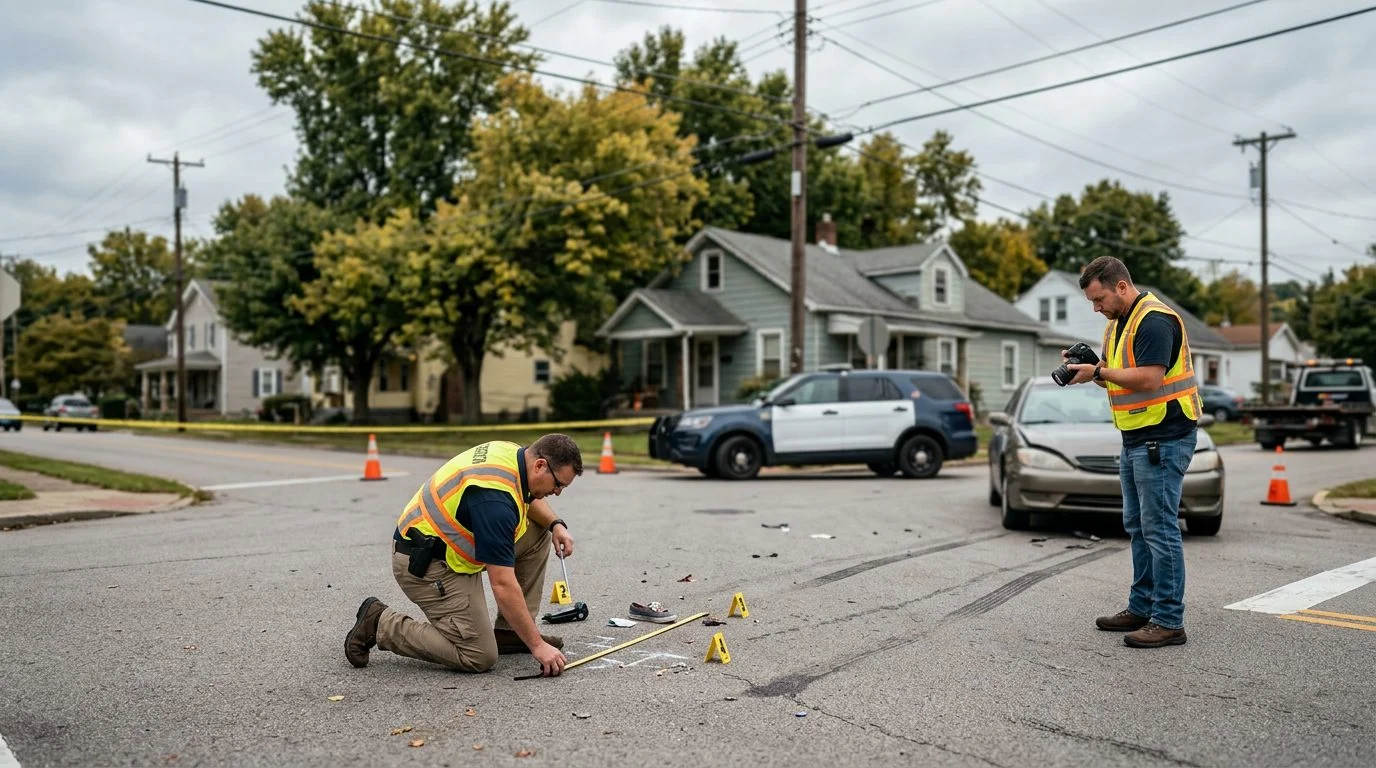
The crash itself helps connect the injury to the collision. Vehicle damage, the force of impact, and the sequence of events all matter. Photographs, witness names, and police reports can help show how the injury happened.
In truck cases, electronic logging device data can add to the picture. Under 49 C.F.R. § 395.26, a logging device automatically records items such as date, time, location, engine hours, vehicle miles, and driver identification. Under 49 C.F.R. § 395.30, a motor carrier must not alter or erase the original hours-of-service information. Learn more in our guide on truck black box driver logs after a crash.
Post-accident testing rules also set time limits. If an alcohol test is not given within two hours, the employer must record why. If it is not given within eight hours, the employer must stop trying.
Trucking companies may contact the injured person or family soon after a crash. Our page on trucking company calls after a crash explains what to know about those calls.
In underride crashes, a passenger vehicle strikes the rear of a trailer. The federal standard for rear impact guards at 49 C.F.R. § 571.224 states its purpose is to reduce deaths and serious injuries when light duty vehicles hit the rear of trailers and semitrailers with a GVWR of 4,536 kg or more. Head and spinal injuries from that impact pattern can be part of the proof. See truck underride crash cases in West Virginia for more.

Talking With the Firm About Your Situation
If you’re gathering this information for someone still in the hospital or in rehabilitation, you’re carrying a lot at once. Many families face the same decisions: collecting medical records, preserving crash details, and figuring out what the evidence could show. Those are hard choices to make while someone you love is recovering.
The firm handles car and truck accident claims, catastrophic injuries, traumatic brain injury, spinal cord injury, and wrongful death matters. We serve injury victims across West Virginia, including Charleston, Huntington, and Morgantown.
Does a CT scan show a brain injury?
A CT scan can show bleeding, swelling, and fractures. Some brain injuries do not appear clearly on standard scans, so other proof matters too.
What is neuropsychological testing?
It is a set of standard tasks that measure memory, attention, language, and problem-solving. Results are read alongside symptoms and daily life.
What is a life care plan?
It is a written projection of future medical, therapy, equipment, and daily-care needs. It is tied to the medical records.
If a loved one is still recovering from a serious brain or spinal cord injury, and you want to understand what proof will matter, reach out for a free case review. It is confidential and carries no obligation to continue. You can contact the firm to start that conversation.