
Catastrophic Injury Claims | Charleston, WV
Seriously Hurt? Understand the Catastrophic Injury Claim Process
We represent people injured in car and commercial truck crashes, people with brain and spinal cord injuries, and families in wrongful death cases across West Virginia.
Published November 4, 2026
What is the process for filing a personal injury claim for catastrophic injuries in Charleston?
A catastrophic injury claim generally moves through five stages: medical care and records, a review of who may be responsible, a formal claim to the insurer, negotiation, and a lawsuit if the claim cannot be resolved. Each stage builds on the one before it, so early steps matter.
The firm handles catastrophic injury claims for people in Charleston and across West Virginia. This guide walks through the catastrophic injury claim process in plain terms. It covers what counts as a serious injury, the first days after a crash, fault, insurance talks, lawsuits, and wrongful death claims.
Many families learn this process while also caring for someone who is hurt. It helps to know what is coming. Some readers are unsure whether their situation counts at all. The next section explains what the term usually covers. Every claim turns on its own facts, so no single path fits every case.
Not sure what your next step is?
Talk it through with Big Bubba — the first case review is free, confidential, and carries no obligation.
What counts as a catastrophic injury in a West Virginia claim?
A catastrophic injury is a serious injury that may cause lasting harm to a person’s health, work, and daily life. Traumatic brain injury and spinal cord injury are two examples.
These injuries often change how a person lives. Someone may struggle to return to a job, care for children, or handle simple tasks at home. Family members may take on new roles. The full picture can take time to understand, and long-term effects are not always clear early on.
Medical providers, not the claim itself, decide the diagnosis and the outlook for recovery. The claim relies on those records. That is why keeping every chart, test result, and therapy note matters. Gaps in treatment may make the story harder to tell, so follow the care plan and keep track of every visit.
What should happen first after a serious crash in Charleston?
In the first days after a serious crash, get medical care, keep records, and be careful about what you say to insurers. These steps protect the injured person’s health and the claim.
See a doctor even if the injuries seem minor. Some symptoms may not appear until days later, and early records help connect an injury to the crash. Keep every treatment record, bill, and prescription receipt in one place.
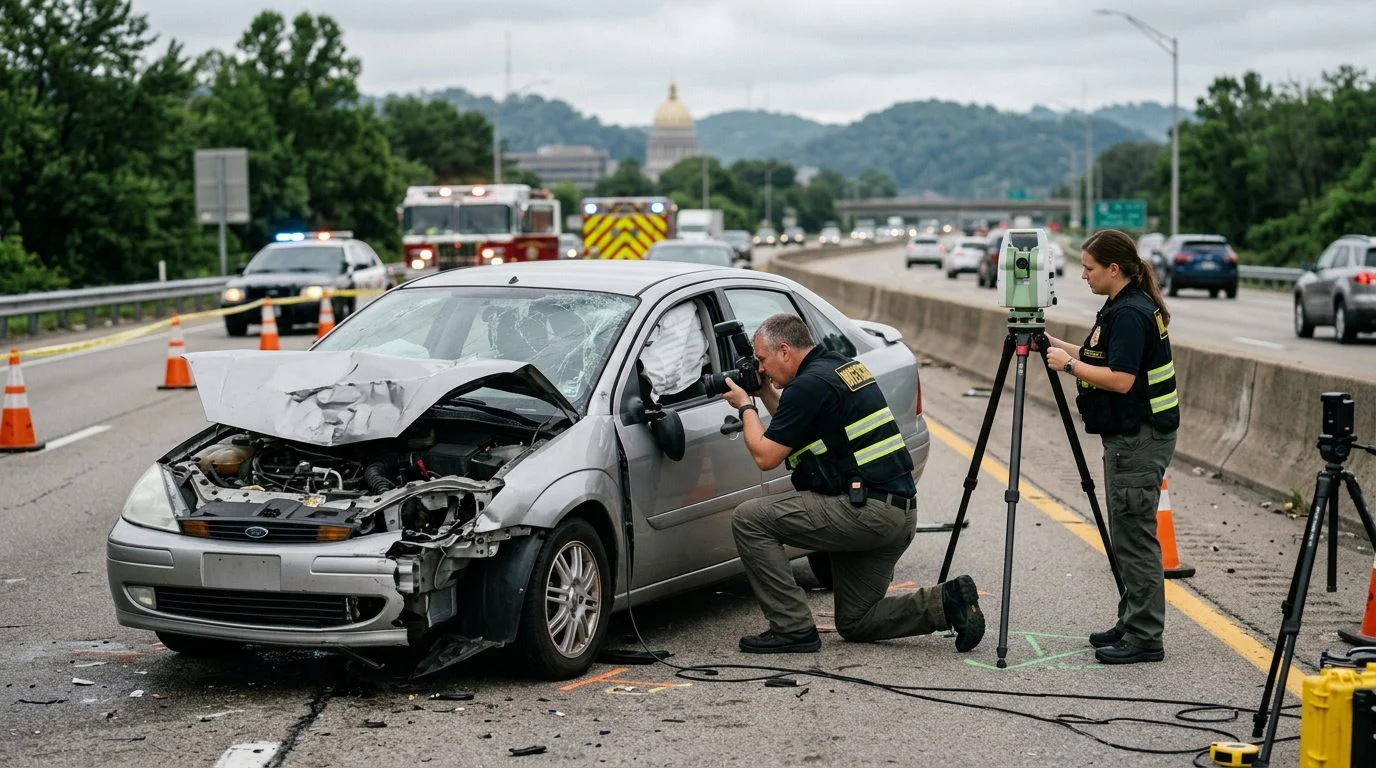
The investigating agency’s crash report is commonly requested and used to document the scene. Take photos of the vehicles, the road, and any visible injuries. Write down the names of witnesses. Keep records of vehicle and property damage. Start a daily log of symptoms and missed work.
Insurers may ask for a recorded statement soon after a crash. Some insurers may dispute a claim, and early statements may be used later. West Virginia law generally limits settlement talks and statements during the first twenty days after an injury, when the injured person is in the hospital or unable to work. W. Va. Code § 55-7-11a Talk with the firm before giving a detailed account.
How is fault established in a truck or commercial vehicle crash?
Fault is decided by looking at what each party did, and more than one party may share responsibility. A driver, a trucking company, a vehicle owner, or a maintenance provider may each be part of the picture.
West Virginia defines an employer defendant broadly for commercial vehicles. The term can include the vehicle’s owner, the driver’s employer, and any entity that leases or controls the vehicle or operator. W. Va. Code § 55-7-32
Commercial carriers keep records that may matter. Federal rules require drivers to record their duty status for each 24-hour period, 49 C.F.R. § 395.8 A carrier must keep a periodic inspection report for fourteen months, 49 C.F.R. § 396.21 Because retention periods are limited, asking for records early can matter.
The West Virginia Division of Motor Vehicles states that unsecured cargo can cause serious or catastrophic crashes. West Virginia Division of Motor Vehicles
West Virginia uses modified comparative fault. Under W. Va. Code § 55-7-13c, a plaintiff’s own fault does not bar recovery unless it is greater than the combined fault of all other responsible persons. If it is less, recovery is reduced in proportion to the plaintiff’s share of fault. If another driver was at fault, that driver’s share may matter. Some trucking companies may dispute responsibility or limit the records they release.
How do insurance claims and lawsuits work for catastrophic injuries?
A claim usually starts with a formal demand to the insurer. Negotiation follows. A lawsuit may follow if talks do not resolve the matter.
During negotiation, the injured person’s side presents the injuries, the medical records, and the losses. The insurer then responds. Some insurers may dispute the claim, the injuries, or how responsibility is divided.
West Virginia generally allows two years to file a personal injury action, and exceptions may apply. W. Va. Code § 55-2-12 That period runs from when the right to sue arises, so timing should be reviewed promptly.
If a lawsuit is filed, the complaint may state that the amount in controversy meets the minimum jurisdictional amount. It may not list a specific dollar figure for damages sought. Some cases resolve through mediation, and others go to trial. The length of each stage varies with the facts and the parties involved.
How does a wrongful death claim in West Virginia follow a different path?
A wrongful death claim is brought by a personal representative on behalf of the deceased person’s family and estate. The family generally does not file it alone.
Under W. Va. Code § 55-7-6, the action must be brought in the name of a duly appointed personal representative. It must be commenced within two years after the death, subject to the provisions of section eighteen, article two, chapter fifty-five. W. Va. Code § 55-7-6 reads: “The provisions of this section shall not apply to actions brought for the death of any person occurring prior to July 1, 1988.” The statute lists categories a jury may include in its verdict. These include sorrow, mental anguish, and solace; reasonably expected loss of income and of services, care, and assistance; expenses for care and hospitalization tied to the injury; and reasonable funeral expenses.
If the injured person dies before starting a case and the claim is not barred by the statute of limitations at the time of death, W. Va. Code § 55-7-8a may allow the personal representative to begin the action. It generally runs within the same period that would have applied had the person lived.
Evidence can differ from a standard injury case. Crash reports, medical records, and employment records may be relevant. Records about the loved one’s work and income can help show the loss the family is dealing with.
Not sure what your next step is?
Talk it through with Big Bubba — the first case review is free, confidential, and carries no obligation.

What to do next if a family member was catastrophically injured in Charleston
If a family member was catastrophically injured, you may be sitting by a hospital bed or waiting in a rehabilitation room with questions you never expected. Insurers may call. Decisions may feel urgent and unfamiliar.
Keep a simple folder with medical records, the crash report, insurer letters, and a list of who said what and when. Write down questions as they come up, so you can bring them to the firm.
Quick answers
How long do I have to file a personal injury lawsuit in West Virginia? West Virginia generally allows two years, and exceptions may apply.
If you are caring for someone hurt in a serious crash and the next steps feel unclear, you can request a free case review with the firm. Talk through what your family is facing, at a pace that works for you.