
West Virginia Injury Claims
Serious Injuries Deserve More Than a Go-It-Alone Claim
Catastrophic injuries, wrongful death, and crash claims involve deadlines, medical proof, and evidence that can be hard to manage alone. Learn what to consider and how the firm can help.
Published November 8, 2026
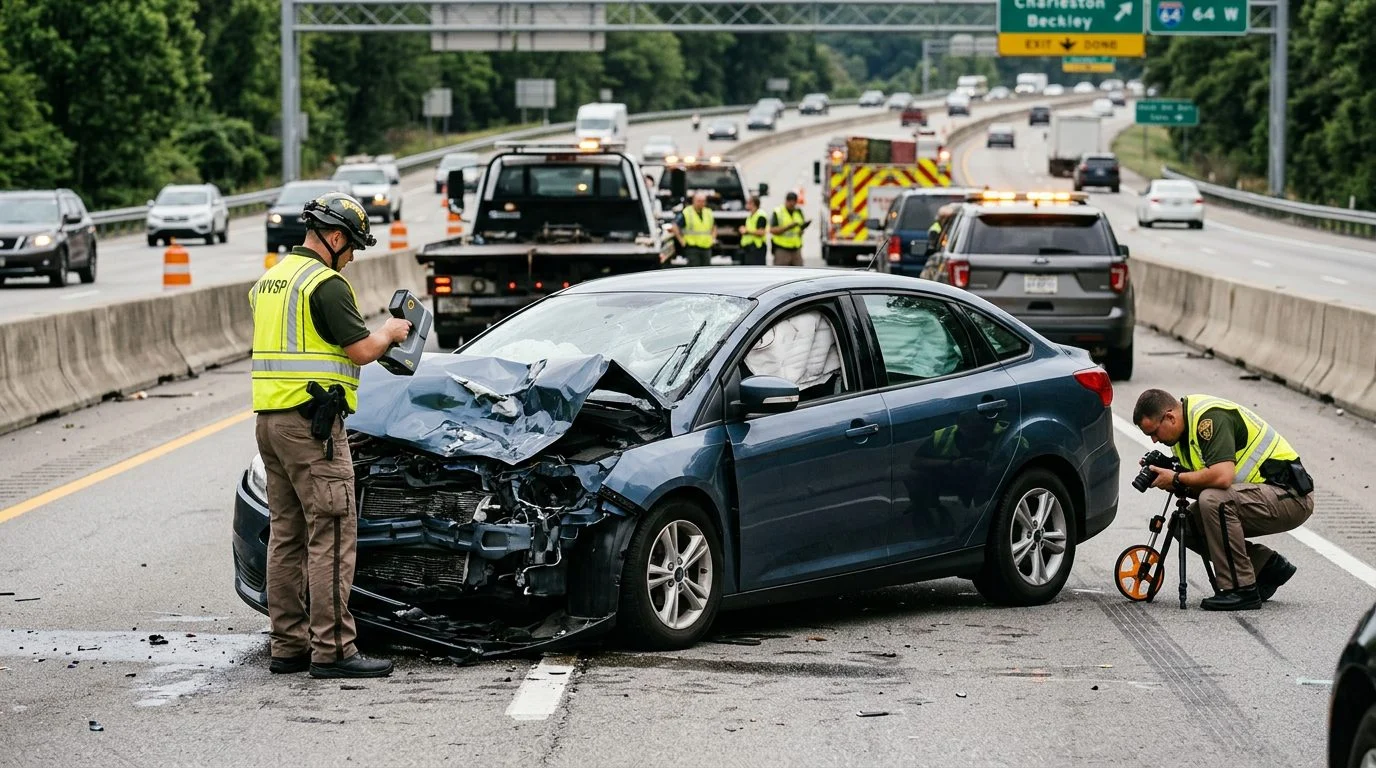
A catastrophic injury claim without representation means handling a serious crash case yourself, without a lawyer. Some people try it. The steps are complex, and small mistakes can cost real value. This page explains the main risks in plain language so you can weigh them.
What are the risks of pursuing a catastrophic injury claim without legal representation?
The main risks are missing a filing deadline, losing key evidence, accepting an offer before the full injury is known, and underestimating long-term needs. A person handling this kind of claim alone may also face insurers and trucking companies that have claims staff on their side. The risks look somewhat different for an injured person than for a family member bringing a wrongful death claim.
A catastrophic injury is a severe harm that changes a person’s life. Examples include a traumatic brain injury and a spinal cord injury. Our catastrophic injuries overview covers the injury types the firm handles. Each risk below has its own section, so you can review them one at a time.
If someone died in the crash, the rules change. Under W. Va. Code § 55-7-6, a wrongful death action must be brought by the personal representative. That is the person formally appointed to act for the deceased person’s estate. Family members often need to complete that appointment before they can file, which adds steps and time.
If you are weighing this for someone you love after a serious crash, you can reach out to the firm and request a free case review. Talk it through with Big Bubba — the first case review is free, confidential, and carries no obligation.

Why a catastrophic injury claim is harder to handle alone
It is harder to handle a catastrophic injury claim alone mainly because the medical picture can take a long time to become clear. Brain and spinal cord injuries can involve long treatment. Symptoms may change over months or even years, and early predictions may not hold.
Medical records come from many places. You may see an ambulance crew, a hospital, a rehabilitation center, doctors, therapists, and a pharmacy. Each one keeps its own file, and bills and reports often arrive at different times. Pulling these pieces together takes patience and a clear system.
A claim filed early may rest on incomplete information. That can matter later, because the other side may question what the records show. A guide from the Brain Injury Association of America describes how brain injury claims involve their own procedures and potential defendants. Those steps are easy to overlook without training in them.
Deadlines that can close a claim
West Virginia generally allows two years to file a personal injury lawsuit, and exceptions may apply. The general rule appears in W. Va. Code § 55-2-12. A missed date can end a claim, even when the injuries are serious.
Wrongful death follows its own clock. The statute says the action must be started within two years after the death (W. Va. Code § 55-7-6). W. Va. Code § 55-7-6 reads: “The provisions of this section shall not apply to actions brought for the death of any person occurring prior to July 1, 1988.” Exceptions may apply, so the dates deserve attention early, before treatment and paperwork take over.
Claims involving a government body follow different rules. Under W. Va. Code § 29-12a-6, an action against a political subdivision generally must be brought within two years. The clock may run from the injury or the date it was discovered or reasonably should have been discovered, whichever last occurs. That same statute says the complaint may not name a dollar amount for damages.
Evidence and records that are easy to lose
Crash evidence can disappear quickly. Scene photos, witness names, vehicle damage, and phone or dashcam video may be lost or overwritten. A police crash report is another key record, and copies may need to be requested.
Truck cases add federal record rules. Under 49 C.F.R. § 396.3, a motor carrier must keep inspection and maintenance records for one year. Those records must also be kept for six months after a vehicle leaves the carrier’s control. Drivers must record their duty status for each 24-hour period under 49 C.F.R. § 395.8. Those logs can show hours on the road, which may be relevant after a truck crash.
49 C.F.R. § 379.3 provides: Companies subject to this part shall retain records for the minimum retention periods provided in appendix A to this part. After the required retention periods, the records may be destroyed at the discretion of each company’s management. It shall be the obligation of the subject company to maintain records that adequately support financial and operational data required by the Secretary. The company may request a ruling from the Secretary on the retention of any record. The provisions of this part shall not be construed as excusing compliance with the lawful requirements of any other governmental body prescribing longer retention periods for any category of records. Cargo matters too. The West Virginia Division of Motor Vehicles warns that unsecured cargo can cause serious or catastrophic crashes.
Start with what you already have. Keep photos, medical papers, bills, and a written timeline of symptoms and treatment. A person going it alone may not know which records to request or how to ask for them.
Dealing with insurers and trucking companies on your own
Early talks with an insurer can carry legal weight, so it helps to know the timing rules first. Under W. Va. Code § 55-7-11a, for twenty days after a personal injury, no one may negotiate a settlement, seek a release, or take a statement for settlement purposes. This applies when the injured person is an inpatient or is partially or totally unable to engage in their usual trade, profession or occupation. The rule does not prohibit a person acting or intending to act for and on behalf of the injured person from obtaining a statement, oral or written, when the injured person expressly requests it. Under W. Va. Code § 55-7-11a, a settlement, release of liability, or statement obtained in violation of that section may be disavowed by the injured person within one hundred eighty days from the date of the personal injury by written statement of disavowal, with a copy forwarded to the person who violated that section. If any consideration paid is repaid or returned to the person who paid it at the time of forwarding, the settlement, release or statement may not be admissible in evidence in any court or other proceeding relating to the personal injury.
Some insurers may dispute a claim, question how an injury happened, or ask for a recorded statement early. Signing a release may end the right to seek more compensation for that injury. Read any paper carefully before you sign.
West Virginia uses a modified comparative fault rule. Under W. Va. Code § 55-7-13c, an injured person is generally barred from recovery only when their fault is greater than the combined fault of others. Insurers may argue fault in ways that affect the outcome, so the facts matter.
Trucking companies and their insurers may have claims staff and legal advisers working on a file. A person handling a claim alone may be facing trained people on the other side.
Valuing future care and long-term losses
Future care and lost work ability are often the hardest losses to document alone. A catastrophic injury may affect future medical needs, daily care, home changes, and the ability to work for years. These needs are hard to estimate without medical records and reports from providers.
A claim may include losses that were not visible at the time of the crash. They may be harder to document later, once records have been spread out over time.
Wrongful death damages cover different categories. Under W. Va. Code § 55-7-6, a verdict may include sorrow, mental anguish, and solace. It may also include reasonably expected loss of income and of services the deceased person provided, and reasonable funeral expenses. Who may be involved in a family’s claim can depend on the facts of each case.
Commercial vehicle cases can involve more than one party. The owner, the employer, and others who control a truck may be named, depending on how the crash happened.
Not sure what your next step is?
Talk it through with Big Bubba — the first case review is free, confidential, and carries no obligation.

Talking through what happened to you
If you’re still weighing your options, you don’t have to decide everything at once. You may be making this choice while caring for an injured family member, or while still recovering yourself. That is a lot to carry.
The firm handles car accident, truck accident, commercial vehicle, catastrophic injury, traumatic brain injury, spinal cord injury, and wrongful death claims across West Virginia. The firm offers a free case review, which is confidential and carries no obligation to continue.
Common questions
Can a person file a claim without a lawyer in West Virginia?
A person may file a claim alone. The deadline and evidence rules above make that path harder to manage.
How long does a family have to file a wrongful death claim?
West Virginia generally requires the action within two years after the death, and exceptions may apply (W. Va. Code § 55-7-6).
What should I keep right after a crash?
Keep photos, the crash report, medical papers, and bills. Write down symptoms and treatment dates while you still remember them.
If you are weighing this for someone you love after a serious crash, you can reach out to the firm and request a free case review.