
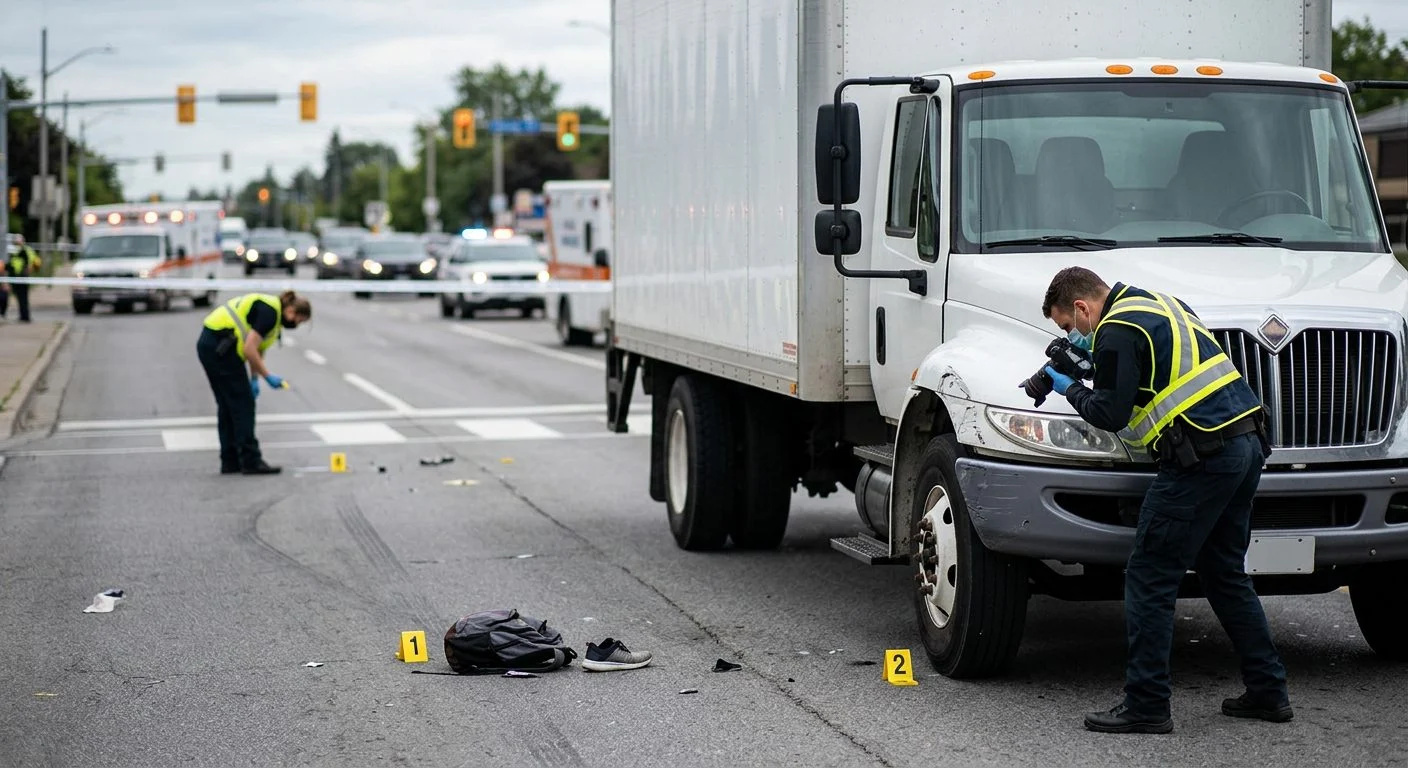
Catastrophic Injury Claims
When a Commercial Vehicle Crash Changes Everything
If you or a family member has suffered a life-altering injury in a collision with a large truck, delivery vehicle, or commercial motor vehicle in West Virginia, you have legal options. Big Bubba Injury Law handles catastrophic injury claims from commercial vehicle accidents.
Published October 08, 2026
Catastrophic Injury Claims from Commercial Vehicle Accidents: What You Need to Know
A catastrophic injury from a commercial vehicle accident is a permanent, life-altering injury caused by a collision with a large truck, delivery vehicle, commercial van, or other commercial motor vehicle—injuries like paralysis, severe brain damage, amputation, organ failure, or severe burns that fundamentally change how someone lives. If you or a family member has suffered such an injury in West Virginia, you may have a legal claim for damages covering medical care, lost income, ongoing assistance, and more. This guide explains what these claims involve, how they work, and what to expect.
Not sure what your next step is?
Talk it through with our team — the first case review is free, confidential, and carries no obligation.
What Is a Catastrophic Injury Claim from a Commercial Vehicle Accident?
A catastrophic injury claim arises when a collision with a commercial vehicle causes permanent disability or life-threatening injury to a person, and that injury results from someone’s negligence or violation of safety rules. These claims are different from routine car accident cases because commercial vehicles are far larger, move at higher speeds, and create vastly greater force on impact—and because commercial drivers and trucking companies are subject to strict federal safety regulations.
Who these claims are for: – The injured person facing permanent disability, ongoing medical care, lost work capacity, and changed quality of life – Family members who must provide care, manage finances, and adjust to the injury’s impact – Families in wrongful death cases where the collision was fatal
Why commercial vehicle accidents differ: – Large trucks often weigh 20–30 times as much as passenger vehicles, creating vastly greater force and injury severity – Commercial drivers are subject to federal hours-of-service limits, maintenance requirements, and safety regulations—violations strengthen your claim – Multiple liable parties may exist: the driver, the trucking company, the vehicle owner, the maintenance provider, and others – Commercial insurance policies are separate from personal auto insurance and often have higher limits – Catastrophic injuries require expert testimony on lifetime care costs, vocational loss, and quality-of-life impact
What These Claims Typically Cover
Catastrophic injury claims are designed to compensate for the full, long-term impact of the injury. Damages may include:
Medical expenses: – Emergency care, hospitalization, surgery, and intensive care – Rehabilitation and ongoing treatment – Adaptive equipment (wheelchairs, mobility aids, communication devices) – Home modifications (ramps, accessible bathrooms, specialized beds) – Nursing care and medical equipment rental
Lost income and earning capacity: – Wages lost during recovery and hospitalization – Future lost wages if the injury prevents return to work – Loss of earning potential if the person must change careers
Pain, suffering, and quality of life: – Compensation for physical pain and emotional trauma – Loss of enjoyment of life, relationships, and activities
Caregiver and personal care costs: – In-home nursing and personal care attendants – Household help and assistance with daily living – Long-term custodial care
Vocational rehabilitation: – Retraining for a different career if prior work is impossible – Job placement assistance and career counseling
Funeral and burial expenses (in wrongful death cases)
Types of Commercial Vehicles Involved in These Claims
Catastrophic injuries commonly result from collisions with: – Semi-trucks and tractor-trailers – Delivery trucks and box trucks – Commercial vans and shuttle vehicles – Dump trucks and construction vehicles – Tanker trucks carrying hazardous materials – Buses and passenger transport vehicles
Common Causes of Catastrophic Injuries in Commercial Vehicle Accidents
Understanding what caused the accident strengthens your claim. Common causes include:
- Driver fatigue and hours-of-service violations: Federal regulations limit driving time to 11 hours at a stretch, yet violations are common
- Speeding or unsafe speed for conditions: Larger vehicles require longer stopping distances
- Improper maintenance or mechanical failure: Federal law requires systematic inspection and maintenance of all commercial vehicles
- Overloaded or improperly secured cargo: Shifts weight and affects braking and control
- Distracted or impaired driving: Cell phone use, fatigue, alcohol, or drugs
- Failure to yield or traffic violations: Running lights, unsafe lane changes
- Jackknifing or rollover: Loss of control due to speed, poor road conditions, or driver error
- Inadequate braking or brake failure: Mechanical neglect or design defects
Have questions about what happened?
Ask our team directly. The first conversation is free, confidential, and there is no obligation to continue.
How the Claim Process Works
Catastrophic injury claims follow a structured process:
Step 1: Immediate medical care and documentation Seek emergency treatment immediately. Medical records, imaging, and expert assessments of injury severity become the foundation of your claim.
Step 2: Investigation We gather accident scene evidence, inspect the commercial vehicle, review driver records and maintenance logs, interview witnesses, and examine whether the driver or company violated federal safety regulations.
Step 3: Identifying liable parties Liability may extend beyond the driver to the trucking company (for negligent hiring, retention, or supervision), the vehicle owner, the maintenance provider, the cargo loader, or even the manufacturer if a defect was involved.
Step 4: Insurance claims and negotiation We notify the commercial insurance carrier, file a demand letter detailing damages, and negotiate a settlement. Commercial insurers handle catastrophic claims differently than personal auto insurers.
Step 5: Litigation if necessary If settlement cannot be reached, we file suit, conduct discovery (exchanging evidence), retain expert witnesses, and prepare for trial.
Timeline: Initial investigation typically takes 2–6 months. Settlement negotiation may take 3–12 months. If litigation is necessary, cases often resolve within 1–3 years, though complex cases may take longer.
Why These Claims Are Complex
Catastrophic injury claims from commercial vehicle accidents involve layers of complexity:
Multiple insurance policies and coverage issues Commercial liability, cargo insurance, umbrella policies, and uninsured/underinsured motorist coverage may all apply—and coverage limits may conflict.
Federal regulatory violations Federal motor carrier safety regulations require systematic inspection, repair, and maintenance of all commercial vehicles. Regulations also prohibit drivers from operating while fatigued or impaired. Violations of these rules strengthen your claim and may create additional liability.
Corporate liability theories The trucking company may be liable under respondeat superior (employer liability for employee negligence), negligent retention (keeping an employee the company knew or should have known was unfit), or negligent hiring (selecting an unsafe driver). A state-law negligent hiring claim against a broker is not blocked by federal law.
Severe damages requiring expert testimony Catastrophic injuries require vocational experts, life-care planners, and economists to calculate lifetime care costs, lost earning capacity, and quality-of-life impact.
West Virginia generally requires personal injury lawsuits to be filed within two years after the right to bring the claim accrues, and exceptions may apply. Missing this deadline may bar recovery, and exceptions may apply. In wrongful death cases, the action generally must be brought within two years after the decedent’s death, and exceptions may apply.
What to Expect in Your Free Case Review
When you reach out to Big Bubba Injury Law, we listen to what happened and assess your situation. In your free case review, we:
- Listen to your story and understand the extent of your injury
- Explain what your claim might cover and what the process involves
- Answer your questions about liability, insurance, and next steps
- Discuss whether we can help and what to do now
We handle catastrophic injury claims on a contingency basis—you pay no fee unless we recover for you. You are responsible for court costs and case expenses.
Questions People Often Ask
How long do catastrophic injury claims take to resolve? It depends on severity, the number of liable parties, and whether settlement is reached or litigation is necessary. Some settle within months; others take years. We’ll give you a realistic timeline based on your specific situation.
What if the commercial driver was an independent contractor? The trucking company may still be liable under vicarious liability or negligent hiring laws. We investigate all potential sources of recovery.
Will my case go to trial? Most catastrophic injury claims settle before trial, but we prepare every case as if it will. Your case will go to trial if a fair settlement cannot be reached.
What if I was partially at fault? West Virginia follows a modified comparative fault rule: you may recover even if partially at fault, unless your fault is greater than the combined fault of all other parties. Under W. Va. Code § 55-7-13c, each defendant’s liability for compensatory damages is generally several only and not joint, so each defendant is liable only for the amount of compensatory damages allocated to that defendant in direct proportion to that defendant’s percentage of fault, though joint liability may be imposed in some cases, such as where defendants consciously conspire to commit a tortious act or omission. We evaluate all facts carefully.
How much is my case worth? Every catastrophic injury is unique. Value depends on injury severity, age, earning capacity, medical prognosis, and other factors. We assess your case individually.
What are my costs and fees? We handle catastrophic injury claims on a contingency basis—you pay no fee unless we recover for you. You are responsible for court costs and case expenses. We discuss all costs upfront.
Want to know where you stand?
Tell us what happened and our team will walk you through the options available to you, at no cost.
Why Big Bubba Handles These Claims
We focus on catastrophic injuries and commercial vehicle accidents. We understand West Virginia law and the commercial vehicle industry. We investigate thoroughly—accident reconstruction, regulatory compliance, driver history, maintenance records. We work with medical and vocational experts to document lifetime impact and costs. We negotiate with large commercial insurers and are prepared to litigate. And we communicate clearly so you understand your case and your options.
If a commercial vehicle collision left you or a family member with a permanent, life-altering injury, you may have a claim—and you don’t have to navigate it alone. Reach out to tell Bubba what happened, and we’ll help you understand your options.