
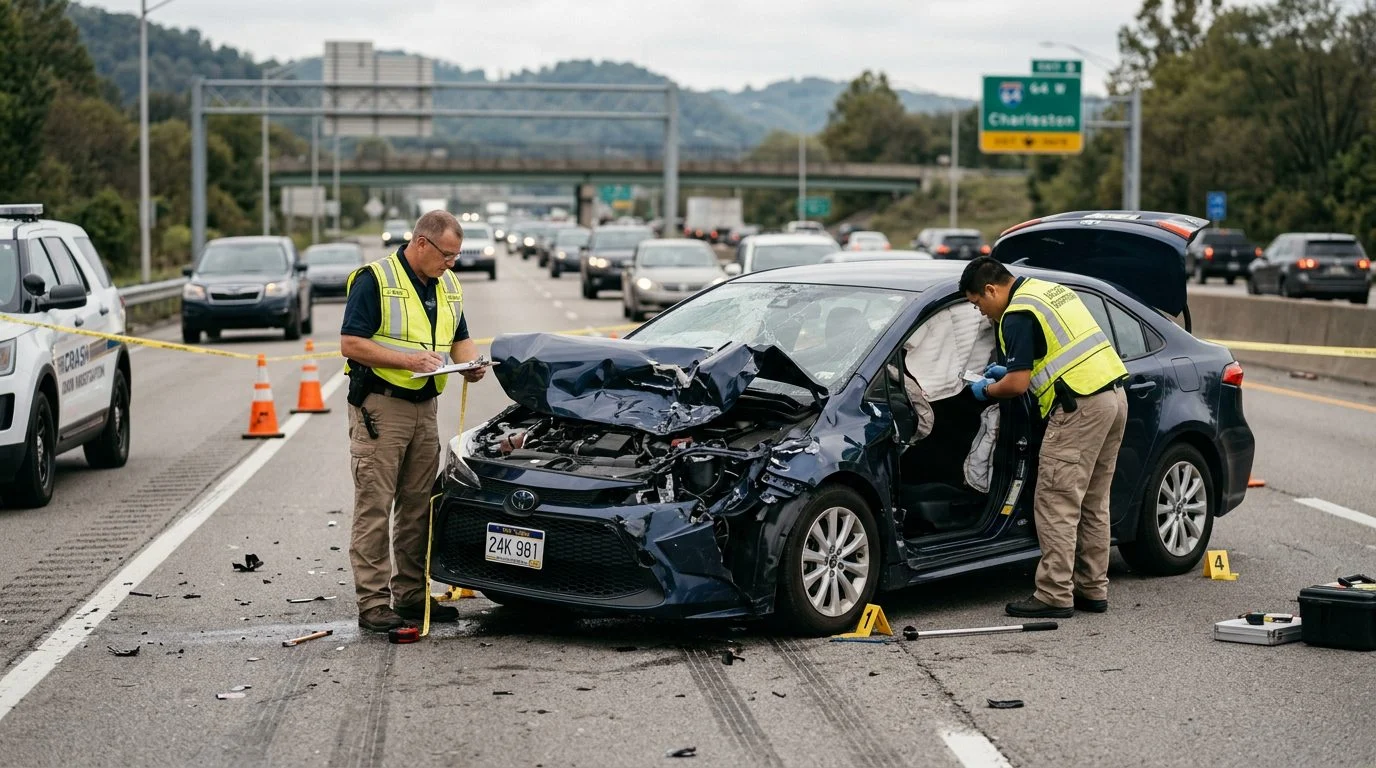
West Virginia Personal Injury Representation
Serious Injuries Need Careful, Focused Legal Attention
We represent people hurt in car and commercial truck crashes, people with catastrophic brain and spinal cord injuries, and families in wrongful death cases across West Virginia.
Published November 2, 2026
A catastrophic injury law firm helps people who were seriously hurt in a crash, and families who lost someone to one. We handle car accident, truck accident, and commercial vehicle claims across West Virginia. If you are facing one of these situations, you can reach out to us for a free case review.
What a Catastrophic Injury Claim Is and Who It Is For
A catastrophic injury claim is a personal injury claim for harm that lasts a long time or never fully heals. Catastrophic injuries often include paralysis, serious brain damage, and the loss of a limb. These injuries change how a person lives, works, and cares for family.
The injured person is the one who brings the claim. Family members often help manage it, especially when the injured person is in the hospital or cannot handle daily tasks. We help:
- Injured adults seeking answers about their own case
- Spouses handling bills, paperwork, and medical decisions
- Parents and adult children helping during recovery
- Other relatives stepping in while a loved one heals
We serve injury victims in Charleston, Huntington, Morgantown, Wheeling, Martinsburg, Parkersburg, Beckley, Clarksburg, Fairmont, and Weirton, and across the rest of West Virginia. For background on the full range of these injuries, read our catastrophic injuries overview.
If a loved one is still in the hospital after a truck crash, you may have a claim, and we can review what happened with you in a free case review. Talk it through with Big Bubba — the first case review is free, confidential, and carries no obligation.
Car, Truck, and Commercial Vehicle Crashes We Handle
We handle claims from passenger car and SUV crashes, commercial truck crashes, and crashes involving other commercial vehicles. Each type of crash raises its own questions about who was at fault and what evidence exists.
Truck and commercial vehicle cases often involve more than one party. The driver, the company that employs the driver, the vehicle owner, and sometimes a broker or cargo loader may each play a role. West Virginia’s commercial vehicle statute defines an “employer defendant” to include the vehicle owner, the operator’s employer, and any entity with legal control over the vehicle or driver (W. Va. Code § 55-7-32). Who may be liable depends on the facts.
Evidence in these cases can include police reports, photographs, vehicle data, and driver logs. Federal rules require drivers to keep accurate duty status records and bar false reports about them (49 C.F.R. § 395.8). Whether any particular record matters depends on the crash. Readers who want more detail can read about electronic logging device data in truck cases.
If another driver was at fault, the injured person may have a claim against that driver or the responsible company.
Brain, Spinal Cord, and Other Catastrophic Injuries
We handle traumatic brain injury and spinal cord injury claims. Each can change a person’s life in lasting ways.
A brain injury can affect memory, speech, mood, concentration, and the ability to work. Symptoms and recovery vary widely from person to person. These claims often involve procedures, parties, and compensation issues that can be complex.
A spinal cord injury can cause partial or complete paralysis. It can also require ongoing medical care, equipment, and changes at home. Some families need home modifications after a spinal cord injury.
Medical records, reports from treating doctors, and notes on daily care needs may all matter. They help show how an injury affects a person’s future. Claims may address medical treatment, rehabilitation, lost income, reduced earning ability, and home changes. Some insurers may dispute how serious an injury is or what future care will require. Clear, complete records help answer those questions.
Wrongful Death Claims for West Virginia Families
A wrongful death claim is brought after a person dies because of another party’s wrongful act, neglect, or default. West Virginia law generally allows this kind of action when the injured person could have sued had they lived (W. Va. Code § 55-7-5).
The claim is filed by the personal representative of the deceased person’s estate (W. Va. Code § 55-7-6). Surviving family members may share in any recovery. Those can include a spouse, children, parents, siblings, and others who depended on the person. The court or jury decides how any award is divided, and the specifics depend on the facts.
Damages in these cases may include sorrow and loss of companionship, lost income and services the person would have provided, care expenses before death, and funeral costs. West Virginia generally requires a wrongful death action to be filed within two years after the death, and exceptions may apply (W. Va. Code § 55-7-6). Families should not wait to ask questions.
Families facing a fatal crash can reach out to us for a free case review while they focus on their loved ones.
How We Work With Injured People and Families
We start by hearing what happened and reviewing the records that exist. Here is how the process usually begins:
- Step 1: Share the facts. Tell us where and when the crash happened, who was involved, and what medical care you have received.
- Step 2: Review the records. We look at police reports, medical records, and any vehicle or employment information available.
- Step 3: Identify who may be responsible. This may include another driver, a trucking company, or another party. Early information does not answer every question.
- Step 4: Communicate. We deal with insurers and other parties and keep the injured person and family informed at each step.
Cases can take time because medical recovery and records take time. Family members can help by keeping records, tracking appointments, and passing information along to us.
How We Approach These Cases
We are a catastrophic injury law firm that handles car accident, truck accident, commercial vehicle, catastrophic injury, traumatic brain injury, spinal cord injury, and wrongful death claims. We serve people seriously hurt across West Virginia and tailor our work to the injuries and family situation involved.
We focus on clear communication. You should know what we need from you and what happens next. Our support staff help manage records, scheduling, and messages, so families are not left guessing.
Deadlines and fault rules shape every case. Under W. Va. Code § 55-7-13a, recovery in a personal injury, property damage or wrongful death action shall be predicated on comparative fault, with each person’s liability allocated in direct proportion to that person’s percentage of fault. If the plaintiff’s fault is less than the combined fault of all other persons, the plaintiff’s recovery is reduced in proportion to that person’s share of fault (W. Va. Code § 55-7-13c). For a broader look at truck claims, see our truck accident overview.
Not sure what your next step is?
Talk it through with Big Bubba — the first case review is free, confidential, and carries no obligation.
Questions Families Ask Before They Reach Out
What makes an injury catastrophic?
Catastrophic injuries usually cause lasting harm, such as paralysis, serious brain injury, or loss of a limb. Whether an injury fits this description depends on the medical findings and the facts.
Can a family member start a claim for an injured adult?
A family member may be able to help manage a claim. Who can act depends on the facts and the injured person’s condition.
What should I gather after a serious crash?
Keep the police report number, photos, witness names, medical provider names, and insurance details if you have them.
What if an insurance adjuster contacts me?
Some insurers may dispute a claim, so be careful about recorded statements. Give the adjuster’s contact information to us.
What is a free case review?
A free case review is our first meeting with you. It is confidential and comes with no obligation to continue.
If a family member is still in the hospital after a truck crash, or your family is facing a fatal collision, tell us what happened. You can request a free case review with our team today.