
Catastrophic Injury Claims | West Virginia
When a Serious Injury Case Heads to Court, You Don't Have to Face It Alone
Big Bubba Injury Law represents people seriously hurt in car and truck crashes, and families in wrongful death cases, across West Virginia. Here is how the litigation process works and how the firm can help.
Published November 1, 2026
Catastrophic injury litigation is the court process for a serious injury claim that does not settle through insurance talks. In West Virginia, it means filing a lawsuit and proving what happened and how the injury changed a person’s life. Big Bubba Injury Law handles car accidents, truck accidents, commercial vehicle accidents, traumatic brain injury, spinal cord injury, and wrongful death. The firm serves injury victims and families across West Virginia, including Charleston, Huntington, Morgantown, Wheeling, Martinsburg, Parkersburg, Beckley, Clarksburg, Fairmont and Weirton. Here is how these cases move, one stage at a time.
What counts as a catastrophic injury in a West Virginia crash case?
A catastrophic injury is a serious harm that can change a person’s health, work, and daily life for a long time. Traumatic brain injury and spinal cord injury are two common examples in crash cases.
Other severe harm, such as major fractures, amputations, or organ damage, can also be catastrophic when the effects last. These injuries often need lifetime medical care, rehabilitation, and changes in how a person earns a living. That is why the case is usually larger and slower than a minor injury claim.
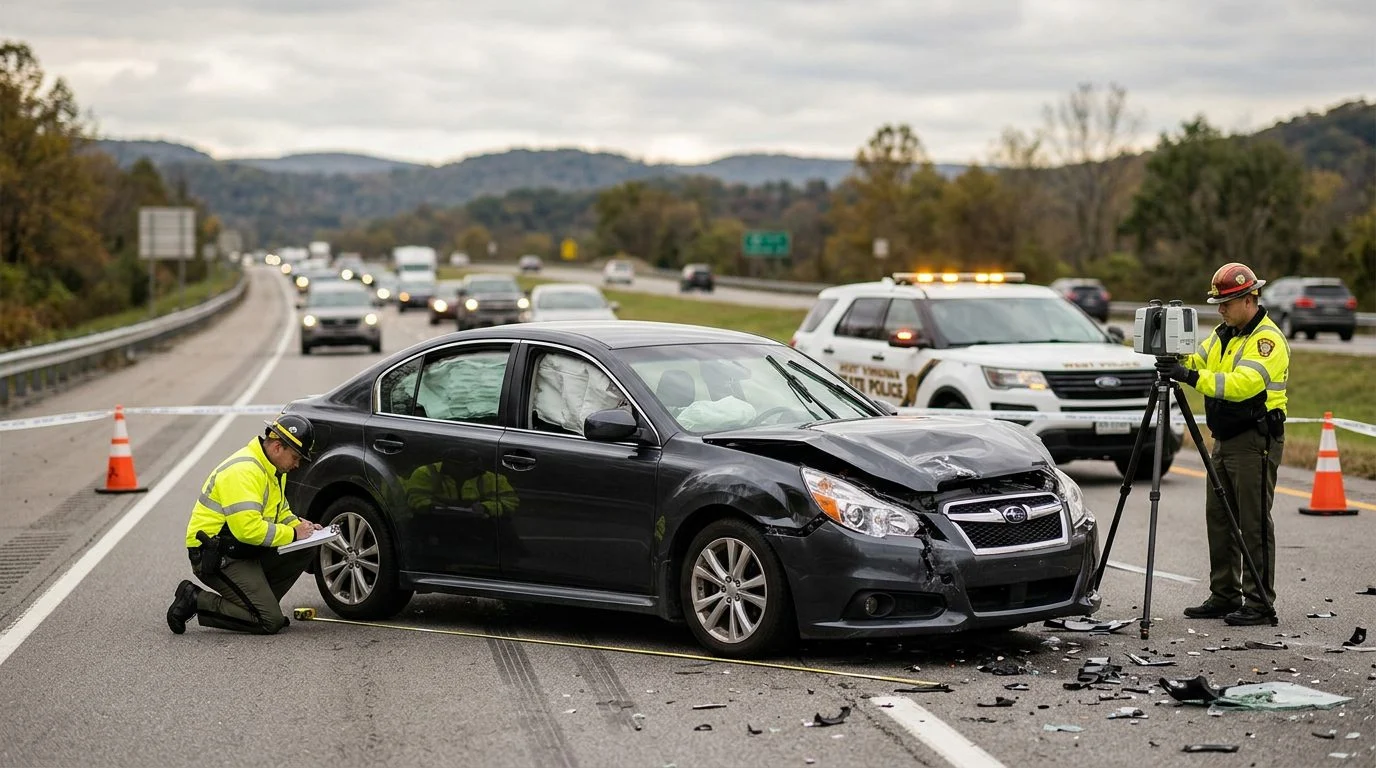
The firm handles car accidents, truck accidents, and other commercial vehicle accidents. A serious crash can cause a catastrophic injury even when the vehicle damage looks minor. Early medical records matter because they show the injury from the start.
Not sure what your next step is?
Talk it through with Big Bubba — the first case review is free, confidential, and carries no obligation.
Does an injury count as an illness?
No. A crash injury is sudden physical harm caused by an event. An illness usually develops slowly from a disease or condition.
The difference shapes the claim. A crash case focuses on the event, who caused it, and how the injury followed. An illness claim looks at how a condition developed over time, so the evidence is different.
Some problems that appear weeks after a crash can still be tied to the injury. Medical records should show when symptoms began and how they changed. A dated list of symptoms, appointments, and missed work helps show that path.
What does litigation mean in a personal injury lawsuit?
Litigation is the process of pursuing a legal claim through the court system. It starts when someone files a complaint (the document that opens a lawsuit) in court.
Most serious cases begin with a claim to an insurance company. Many claims settle without a lawsuit. If the claim cannot be resolved fairly, the injured person may file a lawsuit. In a wrongful death case, the action is brought by the personal representative of the deceased person’s estate.
A lawsuit does not automatically mean a trial. Many cases resolve through settlement talks or mediation, where a neutral helper works with both sides toward an agreement.
- Plaintiff: the injured person, or the personal representative for a deceased person’s estate.
- Defendant: the person or company the lawsuit names as at fault.
- Court: the West Virginia circuit court where the case is filed.
How does a serious crash case move through court, step by step?
A serious crash case usually moves through several stages, from early evidence to final resolution. Timelines vary from case to case.
- Early evidence. Gather the crash report, photos, medical records, witness names, and insurance details. Identify every party who may share fault.
- Insurance demand. Send a written claim to the insurers. The claim may settle here, or it may not.
- Complaint filed. The lawsuit is filed in the proper West Virginia circuit court and served on the defendants. A complaint cannot list a specific dollar amount for damages, under W. Va. Code § 55-7-25.
- Answer and early motions. The defendants respond and may challenge parts of the claim.
- Discovery. Both sides exchange information through written questions (interrogatories), document requests, and depositions (sworn testimony outside the courtroom). In catastrophic cases, this stage often takes the longest.
- Medical proof. Treatment records, testing, and provider opinions build over months. The full effects of a serious injury may take time to show.
- Settlement or trial. Mediation and settlement talks can happen at many points. If the case does not resolve, it goes to trial.
Why do truck and commercial vehicle cases involve more parties and records?
Truck and commercial vehicle cases usually involve more parties and more paperwork than a car case. A commercial truck crash can involve the driver, the trucking company, the truck owner, and others who leased or controlled the vehicle.
West Virginia law sets rules for employer defendants in commercial vehicle cases. That limit is not available to an employer without at least $3 million in commercial vehicle insurance for each occurrence. The statute also lists driver conduct, such as operating a commercial motor vehicle under the influence of any controlled substance, other drug, or inhalant substance, or in willful or wanton disregard for the safety of persons or property, at the time of the incident, that takes a case outside the limit when the operator or driver is found to have engaged in it.
Federal rules set how long key records must be kept, and some periods are short:
- Periodic vehicle inspection reports must be kept for fourteen months (49 C.F.R. § 396.21).
- Carriers must not alter or erase original electronic logging device hours-of-service data (49 C.F.R. § 395.30).
Cargo is another issue. The West Virginia DMV load safety guidance states that unsecured cargo can cause serious or catastrophic crashes. Because some records have short retention periods, written requests to preserve evidence should go out early.
Why are brain and spinal cord injury cases harder to prove?
These cases are often slower because symptoms may not show on a standard scan. Symptoms can also change over weeks and months.
A traumatic brain injury can cause memory trouble, mood changes, headaches, and fatigue. Those effects may not appear on a basic scan. A spinal cord injury may bring effects that show up or change over time.
Proof usually relies on:
- Consistent treatment records from the first visit onward
- Functional testing that measures daily abilities
- Testimony from treating providers
- Accounts from family and coworkers about everyday changes
The other side may point to gaps in treatment or earlier health conditions. Reviewing the records early helps the firm and the family understand what the file shows.
Not sure what your next step is?
Talk it through with Big Bubba — the first case review is free, confidential, and carries no obligation.
How does a wrongful death lawsuit work after a fatal crash?
A wrongful death lawsuit is brought by the personal representative of the deceased person’s estate. Under W. Va. Code § 55-7-6, the action must be brought in the name of a personal representative who has been duly appointed.
In a wrongful death case, the filing deadline generally runs two years from the death, not from the crash date, and exceptions may apply (W. Va. Code § 55-7-6). In some cases the death happens later than the crash, so the dates can differ. The statute has exceptions set out elsewhere in state law.
The jury’s verdict shall include, but may not be limited to, damages for sorrow, mental anguish, and solace. That can include companionship and guidance from the person who died. Damages may also cover compensation for reasonably expected loss of the decedent’s income and of services, protection, care and assistance the decedent provided, expenses for care, treatment and hospitalization of the decedent incident to the injury resulting in death, and reasonable funeral expenses.
Families are often grieving while handling paperwork. Gathering documents early can make those first weeks easier.

Where should you start if you are facing a serious crash case?
Start by gathering the records that show what happened and how the injury affects daily life. Then learn which filing deadlines apply.
West Virginia generally allows two years to file a personal injury lawsuit after the right to sue begins (W. Va. Code § 55-2-12). Early steps help protect the evidence while that period runs.
West Virginia also uses comparative fault. Recovery depends on each person’s share of fault, which is set as a percentage (W. Va. Code § 55-7-13a). The facts of the crash matter for that reason.
Useful items to gather include the crash report, medical records and bills, insurance letters, photos, and a short written timeline of what happened.
If you are researching this after a crash you did not choose, whether for yourself or someone you love, you do not have to work through the court steps alone. The firm can talk with you about your situation in a free case review.
Frequently asked questions
What is catastrophic injury litigation?
It is the court process for a serious injury claim that does not resolve through insurance talks. It can include filing a complaint, discovery, and trial.
Does every catastrophic injury case go to trial?
No. Many cases resolve through settlement talks or mediation.
How long do I have to file a West Virginia wrongful death lawsuit?
Generally, two years from the date of death under state law, subject to the provisions of section eighteen, article two, chapter fifty-five (W. Va. Code § 55-7-6). Under W. Va. Code § 55-7-6(d), every such wrongful death action shall be commenced within two years after the death of the deceased person, subject to section eighteen, article two, chapter fifty-five. The same subsection provides that the section does not apply to actions brought for the death of any person occurring prior to July 1, 1988. The deadline runs from the death, not always the crash.
Can a family file a wrongful death lawsuit on its own?
Not without an appointment. The action must be brought by the duly appointed personal representative of the person who died. Damages may be shared among the surviving spouse and children (including adopted children and stepchildren), brothers, sisters, parents, and any persons who were financially dependent on the person at the time of death or would otherwise be equitably entitled to share.
Related practice areas
- Catastrophic Injuries
- Can You Sue a Trucking Company After a Catastrophic Crash in West Virginia?
- Gap in Treatment Car Accident Claim West Virginia