
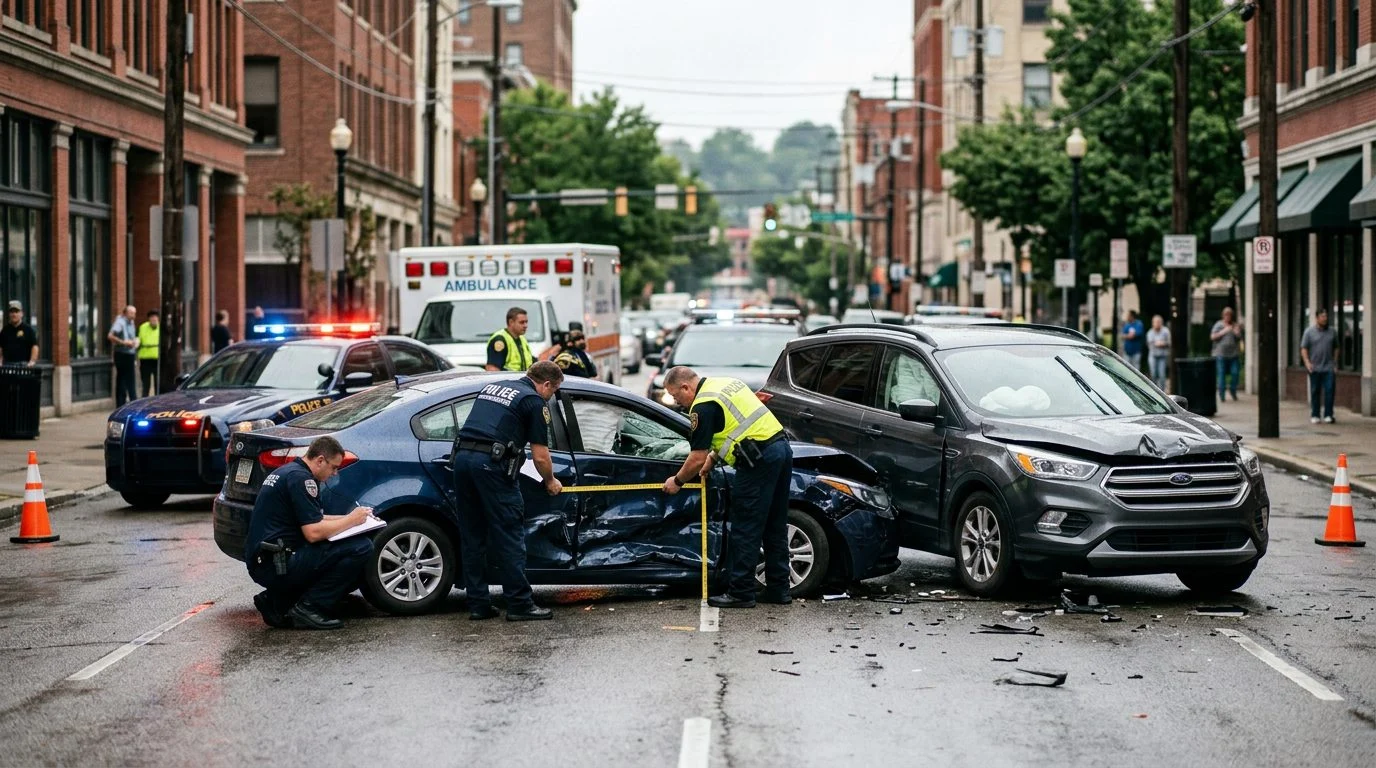
Car Accidents | West Virginia
Coma After a Car Accident: A West Virginia Claim Guide
When a crash leaves someone in a coma, families face medical, legal, and financial questions at once. Big Bubba Injury Law serves injury victims and families across West Virginia and can help you understand the next steps.
Published October 30, 2026
What a Coma After a Car Accident Means for a Legal Claim
A coma after a crash is usually treated as a catastrophic injury, and a family may be able to bring a claim. Whether one is available depends on how the crash happened, not only on the diagnosis.
A coma is a state of deep unconsciousness. The person cannot wake up or respond to the people around them. A coma usually points to serious brain trauma, and a crash can also cause a spinal cord injury that brings weakness, paralysis, or loss of feeling.
Crashes that cause a coma can involve a passenger car, a pickup, or a commercial truck. The type of vehicle and the way the crash happened shape the legal questions that follow.
Legal questions in these cases differ from those in a minor injury claim. The injured person often cannot speak for themselves, so family members usually ask the first questions. Those questions can wait for a free case review, but they should not be ignored, because some deadlines start on the date of the crash.
If your family is facing this while a loved one is in the hospital, you don't have to work out these questions alone. Request a free case review to talk through what the crash may mean for your claim. Talk it through with Big Bubba — the first case review is free, confidential, and carries no obligation.
Who Can Bring a Claim When a Loved One Is in a Coma
Someone with legal authority may need to act for them.
Families often mix up two separate questions:
- Who makes medical decisions for the injured person?
- Who has legal authority to act for them in a court case?
The family should confirm who holds that authority before anything is filed.
If the crash causes death, the claim changes. Under West Virginia’s wrongful death statute, the action is brought by the personal representative of the deceased person. That person must be duly appointed. Survivors, such as a spouse, children, or parents, may share in the damages under the statute’s distribution rules, but any amount recovered for funeral, hospital, and medical expenses must be spent by the personal representative.
If the injured person dies after the crash, the wrongful death statute applies, and the action is brought by the personal representative of the deceased person who has been duly appointed.
So a family may follow one path if the person survives and another if they die. The answer to who files depends on which claim applies.
Damages a Family May Be Able to Pursue
Damages cover the costs of the injury and the harm to daily life. For a living injured person, they fall into three groups.
Medical costs:
- Emergency transport, hospital care, and intensive care
- Surgery, rehabilitation, and medication
- Future care, such as ongoing therapy or long-term nursing support
Many coma cases use a life-care plan, which is a written estimate of future care costs. That is one reason the damages picture often builds over time.
Economic losses:
- Lost wages of the injured person
- Lost ability to earn income in the future
- Household services the injured person can no longer provide
Non-economic losses:
- Pain and suffering
- Loss of companionship and enjoyment of daily life
These losses are harder to measure than bills, so they are assessed differently.
For a wrongful death claim, the wrongful death statute lists the categories a verdict must address. These include sorrow, mental anguish, and solace, such as society and companionship. They also include lost income and services, care and hospital expenses from the injury, and reasonable funeral expenses.
Who Can Be Responsible in a West Virginia Crash
More than one person or company may share responsibility for a crash. Identifying each one early matters.
- Negligent drivers. Speeding raises crash risk and the chance of severe injury, according to the Insurance Institute for Highway Safety. Under § 55-7-13c, a driver whose impaired driving is a proximate cause of the damages is jointly and severally liable.
- Trucking companies. The commercial vehicle statute defines an employer defendant to include the vehicle’s owner, the driver’s employer, and any party with legal control over the truck or its operator.
- Vehicle or parts makers. A defect, such as a seatbelt or airbag failure, may have made the injury worse.
- Road and work zone parties. Poor road conditions or a work zone setup may have played a role.
West Virginia uses a modified comparative fault rule. Under § 55-7-13c, the injured person’s fault does not bar recovery unless it is greater than the combined fault of everyone else responsible. W. Va. Code § 55-7-13c reads: “(c) Any fault chargeable to the plaintiff shall not bar recovery by the plaintiff unless the plaintiff’s fault is greater than the combined fault of all other persons responsible for the total amount of damages, if any, to be awarded.” If it is less, the recovery is reduced by the injured person’s share.
West Virginia’s Two-Year Deadline and Why Timing Matters
West Virginia generally gives two years to file a personal injury lawsuit (W. Va. Code § 55-2-12). Wrongful death has its own two-year clock.
- Personal injury: Under § 55-2-12, a personal injury action generally must be brought within two years after the right to sue accrues. Deadlines for filing an injury claim are set by law, so it is wise to talk with the firm early.
- Wrongful death: Under § 55-7-6, the action must be commenced within two years after the death, subject to the provisions of section eighteen, article two, chapter fifty-five. W. Va. Code § 55-7-6 reads: “The provisions of this section shall not apply to actions brought for the death of any person occurring prior to July 1, 1988.” Under W. Va. Code § 55-7-6(d), a wrongful death action must be commenced within two years after the death of the deceased person, subject to the provisions of section eighteen, article two, chapter fifty-five. W. Va. Code § 55-7-6 reads: “The provisions of this section shall not apply to actions brought for the death of any person occurring prior to July 1, 1988.”
These two clocks start on different dates. Insurance talks are not a lawsuit, and a claim can be lost if no suit is filed in time.
West Virginia also has a rule for people under a legal disability when a claim begins, such as an infant or someone who is insane. Under § 55-2-15, the claim may be brought within the same number of years after the disability ends. W. Va. Code § 55-2-15 reads: “If any person to whom the right accrues to bring any personal action other than an action described in subsection (a) of this section, suit, or scire facias, or any bill to repeal a grant, shall be, at the time the same accrues.” It can never go beyond 20 years from the time the claim accrued. Whether a coma fits that rule depends on the facts, so the question should be reviewed promptly. This guide covers West Virginia law only, not Virginia or other states.
Evidence to Preserve and Steps to Take Early
Early evidence is the easiest to lose, so start collecting it right away.
- The police crash report number, the officer’s name and badge number, and any citations.
- EMS run sheets, hospital records, and imaging. Request copies as the injured person’s representative.
- Photos of the vehicles and the scene, and the names and contact details of witnesses.
- Vehicle event data and, for trucks, electronic logging device records, trip records, and driver qualification files.
- A log of medical bills, missed work, and care duties.
For commercial drivers, federal rules require certain drug and alcohol testing, and that can include post-accident testing. The FMCSA testing rules explain when tests are required.
Insurers also face limits early on. Under § 55-7-11a, for 20 days after a personal injury, no one may negotiate a settlement with an injured person who is in the hospital or unable to work. Families should not give recorded statements to insurers without guidance.
Not sure what your next step is?
Talk it through with Big Bubba — the first case review is free, confidential, and carries no obligation.
How a Claim Typically Moves Forward
Most claims move through five stages, from first review to resolution. Timelines vary, and catastrophic cases often take longer than minor injury claims.
- Free case review. The family shares the crash details, the injured person’s condition, and any documents. The review is confidential and carries no obligation to continue.
- Investigation and records. This includes reviewing medical records, gathering crash documents, and identifying insurance coverage. Crash reconstruction may be needed.
- Demand and negotiation. Some claims resolve through talks with insurers, and others do not.
- Filing suit. If talks do not resolve the claim, a lawsuit must be filed in the proper West Virginia court before the deadline. Discovery follows.
- Resolution. The claim may end in a settlement or a trial.
The family can ask questions at every stage. The injured person’s medical condition often shapes the timing.
What the Firm Does for Families in These Cases
The firm handles car accidents, truck and commercial vehicle accidents, catastrophic injuries, traumatic brain injury, spinal cord injury, and wrongful death claims.
We serve injury victims and families across West Virginia, including Charleston, Huntington, Morgantown, Wheeling, Martinsburg, Parkersburg, Beckley, Clarksburg, Fairmont, and Weirton, and all 55 counties.
The firm offers a free case review that is confidential, with no obligation to continue. The firm has support staff, including assistants and office staff, who help with the matter.
For a first conversation, bring the crash report number, hospital papers if you have them, any insurance letters, and a list of the injured person’s care needs. The firm will explain the next steps in plain language.

Frequently Asked Questions
Can the injured person’s claim move forward if they cannot speak?
The injured person owns the claim, and someone with legal authority may be able to act for them. Medical decision-making and legal authority are separate questions.
What is the difference between a personal injury claim and a wrongful death claim?
A personal injury claim covers the injured person’s own losses while they are alive.
How long does a family have to file a coma after car accident West Virginia claim?
West Virginia generally allows two years for personal injury, measured from when the right to bring the action accrued, and exceptions may apply (W. Va. Code § 55-2-12). A wrongful death action generally must be commenced within two years after the death (W. Va. Code § 55-7-6). W. Va. Code § 55-7-6 reads: “The provisions of this section shall not apply to actions brought for the death of any person occurring prior to July 1, 1988.”
Does a truck accident change who can be sued?
Yes, a trucking company, the truck’s owner, or another party with legal control over the truck may be a defendant. Federal and state records should be requested early.
Is there a limit on damages in a truck case?
West Virginia law limits noneconomic damages against some employer defendants in commercial vehicle cases, but the limit is set by statute, can change over time, and depends on conditions in the statute, including the employer’s commercial motor vehicle insurance (W. Va. Code § 55-7-32). The cap has exceptions, including certain impairment and insurance conditions, so the facts matter.
If your family is living this while a loved one is in the hospital, you don’t have to sort out these questions alone. Request a free case review to talk through what the crash may mean for your claim.
Related practice areas
- Brain Injury and Car Accident Claims Serving Monongalia County, WV