
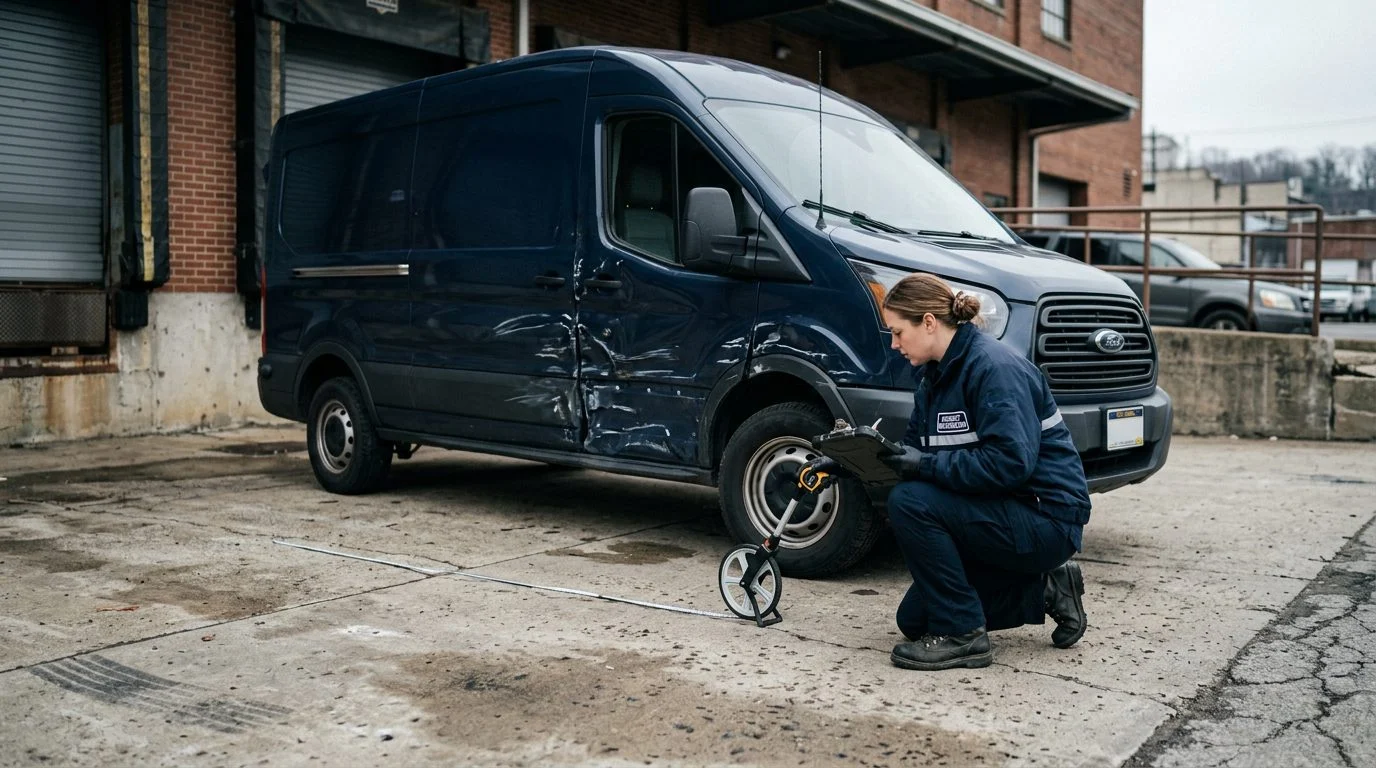
Commercial Van Crash Injuries | West Virginia
Hurt in a Commercial Van Crash? Tell Us What Happened.
Big Bubba is a personal injury firm that handles car, truck and commercial vehicle crash claims, catastrophic injuries, traumatic brain and spinal cord injuries, and wrongful death. We serve injury victims and families across West Virginia, including Charleston, Huntington, Morgantown, Wheeling, Martinsburg, Parkersburg, Beckley, Clarksburg, Fairmont and Weirton.
Published November 5, 2026
Commercial van crash injuries West Virginia families face can be complex. Company vans, contractor vans, delivery vans, and box trucks can be involved in crashes that cause serious harm. More than one person or company may be relevant to these claims. This guide explains how these crashes differ from ordinary car crashes, what injuries often follow, and how to request a free case review.
What a commercial van or work vehicle crash involves
A commercial van or work vehicle crash involves a van or truck used for business, not personal driving. This includes company-owned cargo and passenger vans, contractor and utility vans, delivery vans, and box trucks used to haul goods or equipment. The driver may have been working a route, running an errand for an employer, or carrying tools and materials. The vehicle may belong to the employer, a fleet operator, or a leasing company. That mix of drivers and companies is what sets these cases apart from a typical car crash. Who was driving, who owned the vehicle, and who controlled its schedule can all matter. Early facts about the trip, the load, and the company’s role help show what happened. This page is written for injured drivers and passengers, pedestrians and other motorists hit by a work vehicle, and family members after a fatal crash. A crash on a work trip can raise questions a personal car crash does not. That is why the details matter early.
If a company van or work vehicle hurt you or someone you love, you may have a claim worth reviewing. Request a free case review and talk through your next steps. Talk it through with Big Bubba — the first case review is free, confidential, and carries no obligation.
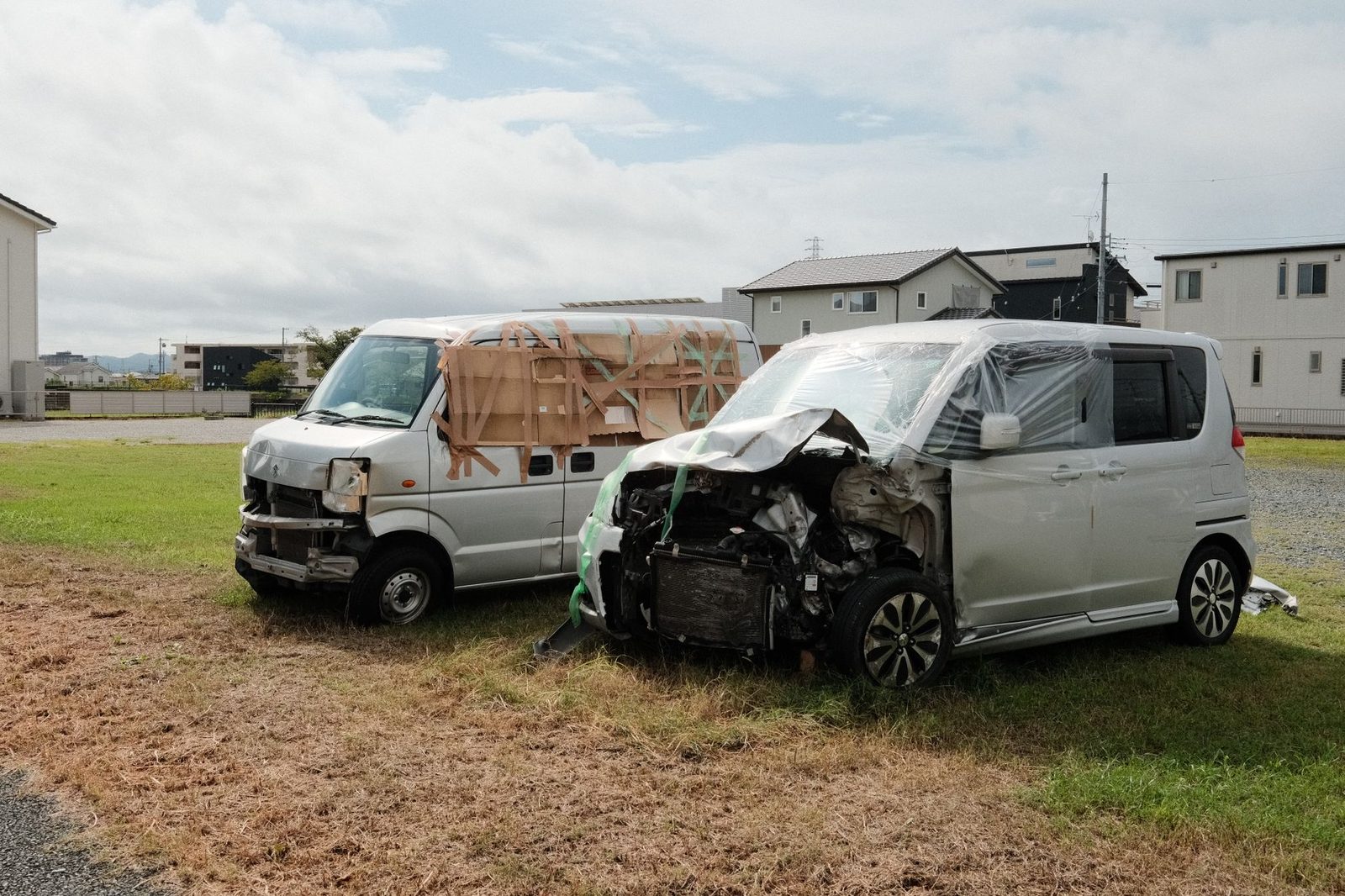
Injuries that often follow a heavy-vehicle impact
Vans and box trucks are heavy, and impacts from them can cause serious injuries. Commercial van crash injuries West Virginia drivers and passengers report often start with a sudden impact. Some injuries are obvious at the scene. Others may not show up for days.
Traumatic brain injury
A traumatic brain injury happens when a blow or sudden jolt damages the brain. Symptoms can be delayed. Headaches, confusion, memory trouble, dizziness, and changes in mood or sleep can all be signs. Anyone with these signs should get a medical evaluation.
Spinal cord injury
A spinal cord injury can affect movement, feeling, and bodily functions below the injury. How much it affects a person depends on where the injury is and how severe it is.
Other serious injuries
Fractures, internal injuries, crush injuries, and deep tissue damage can also occur. A treating doctor makes the diagnosis and explains each person’s outlook. Every medical picture is individual. Keep every medical record, bill, and work note from the start.
Who may share responsibility when a work vehicle is involved
More than one person or company may share responsibility in a work vehicle crash. The driver is one possible party. The employer, the vehicle owner, and a fleet or leasing company may also be relevant. W. Va. Code § 55-7-32 defines an employer defendant to include a commercial vehicle’s owner, its operator’s employer, and any entity with legal control over the vehicle or driver. That section, which limits noneconomic damages recoverable against an employer defendant in some cases, applies to commercial motor vehicles requiring a commercial driver’s license, but it does not cover a vehicle serving as a common carrier of passengers, a school bus, certain other commercial motor vehicles defined by law, or any other vehicle primarily engaged in transporting passengers, so the vehicle type may matter. Employer policies on driving hours, training, and vehicle checks may also be relevant. Federal rules generally require a motor carrier to require its drivers to report, and each driver to prepare a written report at the completion of each day’s work on each vehicle operated, except for intermodal equipment tendered by an intermodal equipment provider. A driver need not prepare a report if no defect or deficiency is discovered by or reported to the driver. Exceptions apply, including for a motor carrier operating only one commercial motor vehicle (49 C.F.R. § 396.11). A carrier must repair defects likely to affect safety before requiring a driver to operate the vehicle (49 C.F.R. § 396.11). West Virginia uses modified comparative fault. Under W. Va. Code § 55-7-13c, your fault generally does not bar recovery unless it is greater than the combined fault of others. If your fault is less than the combined fault of all other persons, your recovery is generally reduced in proportion to your degree of fault, and recovery is generally barred only if your fault is greater.
Evidence and insurance calls that often come early
Early action helps preserve evidence that may be relevant to your claim. Useful evidence can include crash and police reports, photos of the scene and vehicles, and dash camera or telematics data. GPS and dispatch records, driver logs, and maintenance and inspection reports may also matter. Federal rules let carriers keep records electronically if the records stay accurate and can be reproduced later (49 C.F.R. § 379.7). That is why a written request to preserve records may be sent early. Some insurers may dispute a claim. Company representatives may also call soon after a crash. West Virginia limits settlement talks in the first twenty days after an injury when the injured person is hospitalized or unable to work, and exceptions apply (W. Va. Code § 55-7-11a). Under W. Va. Code § 55-7-11a, a settlement, release of liability, or statement entered into, obtained, or made in violation of that section may be disavowed by the injured person at any time within one hundred eighty days from the date of the personal injury by executing a written statement of disavowal and forwarding a copy of it to the person violating that section, in which event the settlement, release, or statement may not be admissible in evidence for any purpose in any court or other proceeding relating to the personal injury, if any consideration paid is repaid or returned to the person who paid it. A recorded statement is your choice. Talking with the firm first is a reasonable step for many people. Keep a log of medical visits, missed work, and out-of-pocket losses. Share it when you reach out.
What to expect when you contact the firm
You start by asking for a free case review, which is confidential and carries no obligation to continue. The process usually follows these steps:
- You reach out by phone or through the firm’s online form and describe what happened.
- The firm reviews the crash facts, the injuries, and who may be responsible.
- If the firm takes the matter, it may send preservation requests and gather records and witness information.
- The firm may negotiate with insurers or prepare a lawsuit, and updates you as the case moves.
Timing depends on the injuries, the records, and the parties involved. West Virginia generally allows two years to file a personal injury claim, and exceptions may apply (W. Va. Code § 55-2-12). For a death, a wrongful death action generally must be commenced within two years after the death (W. Va. Code § 55-7-6). W. Va. Code § 55-7-6 reads: “The provisions of this section shall not apply to actions brought for the death of any person occurring prior to July 1, 1988.” Earlier contact gives more time to gather evidence.
Where the firm practices and what it handles
The firm represents people seriously hurt in car and commercial truck crashes, people with catastrophic brain and spinal cord injuries, and families in wrongful death cases. The firm handles car accidents, truck accidents, commercial vehicle accidents, catastrophic injuries, traumatic brain injury, spinal cord injury, and wrongful death claims. We serve injury victims across West Virginia, including Charleston, Huntington, Morgantown, Wheeling, Martinsburg, Parkersburg, Beckley, Clarksburg, Fairmont, and Weirton. Commercial van and box truck claims often involve a driver, a company, and an insurer at once. The firm’s work starts with sorting out which parties may be relevant. Our support staff handle records requests and scheduling. You can reach the firm by phone or in writing. Writing is useful when you want to share crash details at your own pace.
Not sure what your next step is?
Talk it through with Big Bubba — the first case review is free, confidential, and carries no obligation.

Common questions about commercial van crash claims
Here are short answers to common questions about these claims.
Can I make a claim if the van belonged to my employer?
Possibly. Who owned, controlled, and was driving the van all bear on who may be responsible.
What if the other driver was on a work van but not on the clock?
Whether the driver was acting for an employer at the time may be relevant. The crash report and company records may help answer it.
Do I have to give a recorded statement?
You don’t have to decide on the spot. Some insurers may ask, and speaking with the firm first is a reasonable step.
How long do I have to act?
West Virginia generally allows two years for a personal injury claim, and exceptions may apply. Contact the firm soon after the crash.
What if a family member died in a work van crash?
Under West Virginia law, a wrongful death claim is brought by a duly appointed personal representative for eligible family members. If a company van or work vehicle hurt you or someone you love, you may have a claim worth reviewing. Request a free case review through the contact page, and the firm can walk through the crash facts, injuries, and next steps with you.