
West Virginia Serious Injury Claims
Catastrophic Injury Lawsuit Timeline in West Virginia
Serious injury cases often take longer than simple claims. Here is what shapes the timeline and how to keep your case moving.
Published October 09, 2026
A catastrophic injury case in West Virginia usually takes longer than a simple claim. How long does catastrophic injury case take West Virginia? No one can promise an exact timeline, because the answer depends on four things. Those four things are how the injury heals, how insurers respond, the filing deadlines that apply, and how the court calendar moves. This page explains each stage in plain language. It also covers what you can do now to keep your records organized.
Why Catastrophic Injury Cases Take Longer Than Most Claims
The main reason is that the injury itself takes time to understand. Catastrophic injuries are serious harms that can change work, independence, and daily life for years. Traumatic brain injury and spinal cord injury are two common examples. The National Spinal Cord Injury Statistical Center estimates about 18,482 new traumatic spinal cord injury cases a year in the United States.
Doctors often cannot say how much function will return for months. Some brain injury symptoms appear or change weeks after a crash. Until the picture is clearer, the full value of a claim is hard to measure.
Crash claims also add steps. One collision can involve the other driver’s insurer, your own insurer, and, in a truck case, a trucking company’s insurer. Fault is often disputed. Under W. Va. Code § 55-7-13a, each person’s share of fault is set as a percentage. Sorting out those percentages takes time.
So no one can give a fixed number of months or years. Every case depends on its own medical and factual details.

Not sure what your next step is?
Talk it through with our team — the first case review is free, confidential, and carries no obligation.
Medical Recovery and Maximum Medical Improvement
Maximum medical improvement, or MMI, is the point when a doctor judges that your condition is unlikely to change much with more treatment. Reaching MMI does not mean you are fully recovered. It means the medical picture has settled enough to measure what lasting effects remain.
Many catastrophic injury claims wait for MMI, or for a reasonable estimate of future care, before the claim’s value can be assessed. A settlement reached too early may leave out future medical bills, therapy, and lost work.
Rehabilitation, surgeries, and neuropsychological testing can all extend the timeline. Some families also work with planners who prepare a life care plan. That is a written estimate of future medical and daily-care needs, and it takes weeks or months to prepare.
Keep your treatment records and follow your doctors’ advice. Gaps in care give an insurer a reason to question how serious the injury was. Write down any missed appointment and the reason for it.
West Virginia Deadlines That Set the Clock
West Virginia generally allows two years to file a personal injury lawsuit. Under W. Va. Code § 55-2-12, a personal injury action must be brought within two years after the right to bring it has accrued. In many crash cases, that point is close to the date of the crash.
Wrongful death has its own rule. Under W. Va. Code § 55-7-6, a wrongful death action must be started within two years after the death. The personal representative of the deceased person’s estate brings the action.
Other situations follow different timing. Under W. Va. Code § 29-12a-6, claims against a political subdivision, such as a city or county, generally must be brought within two years. A discovery rule can apply there. For a person who was a minor when the right accrued, W. Va. Code § 55-2-15 can extend the period, but never beyond 20 years from when the right accrues.
Missing a deadline can end a claim. Don’t wait until treatment is finished to learn which dates apply to you.
The Insurance Claim Stage
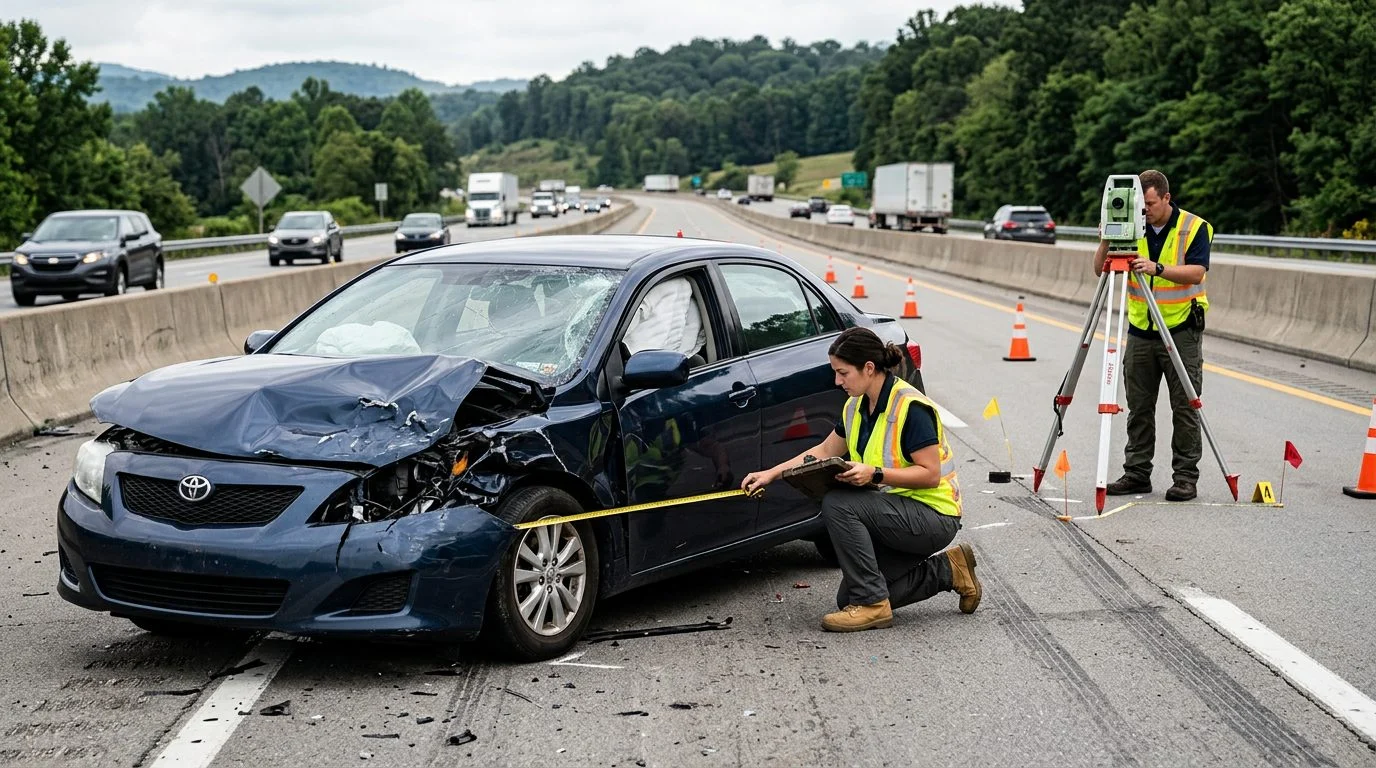
The insurance claim stage starts when the crash is reported. It often runs while treatment continues. Early on, the work is gathering records. These include the crash report, photos, medical bills, pay stubs, and witness information.
Commercial truck and commercial vehicle cases add layers. The trucking company may have its own insurer, and federal rules govern driver logs. That short window is why early written requests for those records matter.
Timing rules also limit early contact. Under W. Va. Code § 55-7-11a, for 20 days after an injury, while you are a hospital inpatient or unable to work, no one may negotiate a settlement with you, seek a release of liability, or ask for a statement to use in settlement. You can disavow a settlement made in violation of that rule at any time within one hundred eighty days from the date of the personal injury.
Insurers may also request recorded statements or medical exams. Those requests add time. An offer made before MMI may not reflect the full scope of the injury.
Have questions about what happened?
Ask our team directly. The first conversation is free, confidential, and there is no obligation to continue.
When a Case Moves Into a Lawsuit
A case moves into a lawsuit when a fair resolution cannot be reached through negotiation and a deadline is approaching. Under W. Va. Code § 55-7-25, the complaint may not list a specific dollar amount of damages in a personal injury or wrongful death action. It can state that the amount in controversy meets the court’s minimum.
After filing, the defense responds and may file early motions that narrow or challenge the claims. A defendant that wants to blame someone not in the lawsuit must give notice no later than one hundred eighty days after service of process, under W. Va. Code § 55-7-13d.
Discovery is the fact-gathering stage. It includes written questions, document requests, and depositions, which are sworn interviews taken outside the courtroom. Witnesses can include drivers, employers, treating doctors, and doctors who review the injury for each side.
Court calendars and the number of parties both affect how long each step takes. Each added party can add another round of questions and paperwork.
Mediation, Settlement, and Trial Timing
Many West Virginia injury cases resolve through negotiation or mediation before trial. That is not a prediction for any one case. Mediation brings in a neutral person to help both sides talk through the claim.
A settlement usually requires documentation of your losses. It also requires a plan to resolve medical liens from providers and health insurers, and a written agreement. Each step takes time.
Multiple defendants change the math. Under W. Va. Code § 55-7-13c, each defendant’s liability is generally several only. When more than one party is involved, the people on the other side may each have their own position, which can mean more parties need to reach agreement.
Trial is usually the longest path. It depends on the court’s schedule, the complexity of the injuries, and how much evidence must be developed first.
Factors That Can Lengthen or Shorten the Timeline
Disputed fault, several at-fault parties, and ongoing treatment add the most time. Other slow-downs include an unclear prognosis, missing records, and insurers who need more documents. Catastrophic cases often involve several of these at once.
Some factors help a case move more steadily. These include clear liability, complete medical records, organized bills and wage records, and early reporting of the crash to insurers. Each one answers a question before someone has to ask it.
Fault percentages matter. Under W. Va. Code § 55-7-13c, your fault does not bar recovery unless it is greater than the combined fault of everyone else responsible. If it is less, your recovery is reduced in proportion to your share.
A shorter timeline is not always better. Settling before the full extent of a catastrophic injury is known can leave future needs unaddressed.

Want to know where you stand?
Tell us what happened and our team will walk you through the options available to you, at no cost.
Practical Steps to Keep a Catastrophic Injury Claim Organized
Start a dated folder now. Include medical records, bills, pay stubs, photos, and the crash report.
- Write down symptoms, limits, and daily changes as they happen. Memory can fade over a long recovery.
- Don’t give recorded statements or sign insurer forms until you understand what they say.
- Keep a running list of every provider, appointment, and medication.
- If you are reading this for a loved one, you can help by gathering these same records. With the person’s permission, write down what they say about pain, memory, and daily tasks.
Common Questions
How long does a West Virginia personal injury lawsuit take? There is no fixed answer. The timeline depends on medical recovery, the insurance process, and the court’s schedule.
What is the deadline for a wrongful death lawsuit in West Virginia? Under West Virginia law, it generally must be filed within two years after the death (W. Va. Code § 55-7-6).
Can I settle before my injuries are fully known? You can, but an offer made before maximum medical improvement may not reflect the full scope of the injury.
If you are weighing whether to pursue a claim after a crash, or after a brain or spinal cord injury in your family, a free case review with Big Bubba Injury Law is a good next step. We serve injury victims and families across West Virginia, including Charleston, Huntington, Morgantown, Wheeling, Martinsburg, Parkersburg, Beckley, Clarksburg, Fairmont, and Weirton. Request your free case review.