
Wrongful Death and Fatal Crashes · West Virginia
Losing a Passenger in a Crash Changes Your Family Overnight
Big Bubba helps West Virginia families who have lost a loved one in a car or commercial truck crash. You can reach out to the firm to talk through your questions.
How We Can Help
Free
First case review, confidential, with no obligation to continue
West Virginia
We serve families across the state
Published November 6, 2026
A passenger killed in a crash can leave a family dealing with grief, funeral plans, and hard questions all at once. This guide explains how wrongful death claims work in West Virginia, who may bring one, and what to do early. If you are looking for a passenger killed in crash lawyer West Virginia families can contact, the firm handles these claims for families of passengers in car, truck, and commercial vehicle crashes.
What a Wrongful Death Claim Is and Who It Is For
A wrongful death claim is a civil lawsuit brought after a person dies because of another party’s wrongful act, neglect, or default. Under W. Va. Code § 55-7-5, the responsible person or company may be liable for damages in that situation.
This is a civil matter. It is separate from any criminal case. A criminal case asks whether a law was broken and what penalty follows. A civil claim asks who is responsible for the losses the death caused. The two can move on different timelines.
This page is written for the people left behind. Many readers are a spouse, a parent, an adult child, or another close family member. You may be planning a funeral, waiting on a police report, and trying to understand what happened. You do not need every answer before you ask a question.
If your family lost a passenger in a crash, you do not have to face the questions alone, and the firm is ready to hear what happened. Talk it through with Big Bubba — the first case review is free, confidential, and carries no obligation.
Who May Bring the Claim in West Virginia
West Virginia law generally requires a wrongful death action to be brought in the name of the deceased person’s personal representative. A personal representative is the person legally appointed to handle the estate. That person must be duly appointed. Under W. Va. Code § 55-7-6, the personal representative recovers the amount awarded and distributes it as the law directs.
The statute also names who may share in the recovery. These include the surviving spouse and children, including adopted children and stepchildren, along with brothers, sisters, and parents. It also covers people who were financially dependent upon the deceased at the time of death or who would otherwise be equitably entitled to share. The jury, or the court in a case tried without a jury, may direct how the damages are split.
Who fits into each group depends on the family and the facts. Some families have a clear answer. Others need help sorting out the relationships and the estate.
You do not need to be the personal representative to ask questions. A family member can talk with the firm about the crash, the paperwork, and what the estate may need.
Why a Passenger’s Claim Can Be Different From a Driver’s
A passenger’s claim can reach more than one party. How the crash happened shapes who those parties are.
A passenger may ride with a friend or relative who was driving. In that case, the driver’s insurance may be relevant, but the claim does not always end with that one driver. A passenger in a rideshare or shared vehicle may face different insurance rules. A passenger on a commercial bus or van may have claims involving the operator, the company, or others tied to the trip.
West Virginia uses shared fault. Under W. Va. Code § 55-7-13c, each defendant’s share of compensatory damages generally matches its percentage of fault. A plaintiff’s own fault does not bar recovery unless it is greater than the combined fault of everyone else. Otherwise, recovery is reduced in proportion to that fault.
If another driver was at fault, that driver’s insurance and any responsible company may be relevant. Fault is decided from the facts, not from who a family first blames. The firm reviews the crash circumstances during a free case review.
Crashes Involving Trucks and Commercial Vehicles
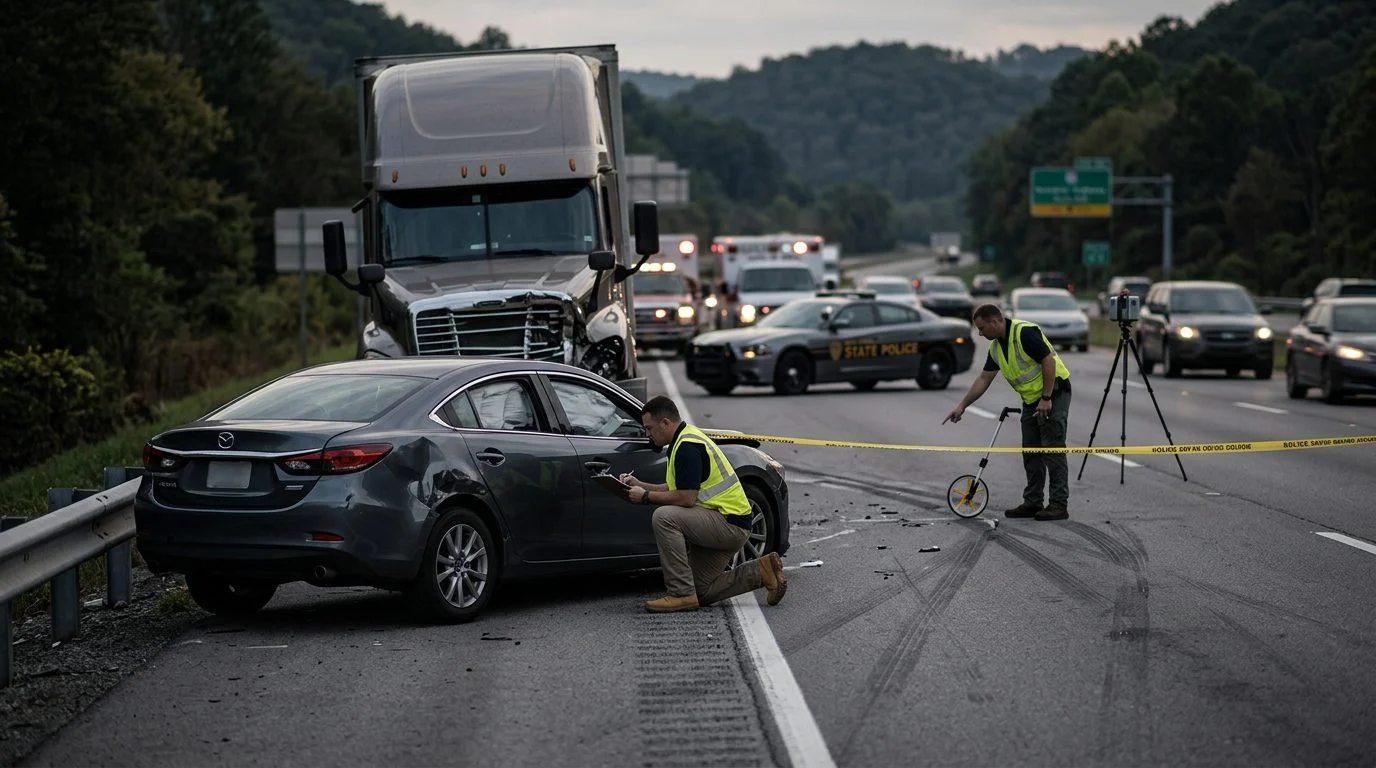
Crashes involving commercial trucks and buses often involve more than one responsible party. These may include a driver, a motor carrier, a vehicle owner, or another company tied to the trip.
Federal rules set testing steps for many of these crashes. After a fatal crash involving a commercial motor vehicle on a public road, the employer must test surviving drivers who were performing safety-sensitive work for alcohol and controlled substances. See 49 C.F.R. § 382.303. The rule sets time limits. If an alcohol test is not given within two hours, the employer must record why. The employer must stop trying after eight hours. For controlled substances, the cutoff is 32 hours.
Driver duty records matter too. Under 49 C.F.R. § 395.8, a motor carrier, except a private motor carrier of passengers (nonbusiness), must require drivers to record their duty status for each 24-hour period.
Some trucking companies and insurers may dispute a claim. Early requests for records such as driver logs, maintenance records, and dispatch messages can help. Whether those records are available depends on the case.
What a Wrongful Death Claim Can Cover
West Virginia wrongful death law addresses several kinds of loss. As described in W. Va. Code § 55-7-6, the verdict may include damages for:
- Sorrow, mental anguish, and solace, which may include companionship, comfort, guidance, and advice from the deceased.
- Reasonably expected loss of the deceased’s income.
- Reasonably expected loss of services, protection, care, and assistance the deceased provided.
- Medical and hospital care linked to the injury that caused the death.
- Reasonable funeral expenses.
Who shares in the damages can depend on the family relationship or on other circumstances, because the jury may direct how the damages are distributed to the surviving spouse and children, including adopted children and stepchildren, brothers, sisters, parents and any persons who were financially dependent upon the decedent at the time of his or her death or would otherwise be equitably entitled to share in such distribution. Some families have losses in several areas. Others have losses in only one or two. The firm can explain how each category applies to your family during a free case review.
Many families first think of medical bills. The law can also reach the everyday role the person played in the family. The exact wording matters, so the firm reviews it with each family.
Deadlines and Evidence Families Should Know About
West Virginia generally allows two years from the date of death to file a wrongful death action, and exceptions may apply. See W. Va. Code § 55-7-6. Ask about the timing early.
Evidence is a separate clock. Police reports, vehicle data, photographs, witness contact details, and medical records can be lost or changed over time. Families can request a crash report from the investigating agency, and each agency sets its own procedure. For example, the Beckley Police Department lists a $20 copy fee for crash reports.
Federal rules also set retention periods. A motor carrier must keep a periodic vehicle inspection report for fourteen months from the report date. See 49 C.F.R. § 396.21. Some records may be gone before a family asks for them.
Families can help by keeping the deceased’s personal belongings, phone records, and receipts from the trip in one safe place.
Not sure what your next step is?
Talk it through with Big Bubba — the first case review is free, confidential, and carries no obligation.
How the Process Typically Begins
The first step is a free case review, a confidential meeting with no obligation to continue. It gives the firm a chance to hear what happened. It also gives your family a chance to ask questions.
Bring what you have. Helpful items include:
- The crash date and crash location.
- The police report number, if you have it.
- The names of the vehicles and companies involved, if known.
- Medical records and funeral records.
- Any photos, texts, or notes about the trip.
Missing items are fine. The firm can help you figure out what to request.
After the review, the firm can explain possible paths. These may include settlement discussions or a lawsuit. Each path has its own steps and pace, and the firm can walk through them as they apply to your case.
Questions Families Often Ask
Can a family file if the driver was a relative?
It depends on the facts, the insurance rules, and the relationships involved. A free case review can give your family a direct answer.
Does the claim have to wait for the criminal case?
The two are separate matters. Their timing can differ, so ask about both.
What if we don’t know who was at fault yet?
If another driver was at fault, the investigation may identify that driver and any responsible company. Early records help clarify fault.
Who receives the money?
West Virginia law lets the jury or court direct how damages are shared among eligible survivors. The firm can explain how that applies during a free case review.
Understanding Your Family’s Situation
If your family has lost a passenger in a crash, you are likely dealing with grief and a long list of questions. You do not have to sort them out alone. Each claim is different, so to have your situation reviewed, request a free case review. You can also share what happened in your own words, at your own pace.