
West Virginia Pedestrian Injury Claims
Serious Pedestrian Injuries Deserve a Thorough Response
The firm represents people seriously hurt when a vehicle struck them as they walked, including catastrophic brain and spinal cord injuries, and families in wrongful death cases across West Virginia.
Published November 6, 2026
Looking for a pedestrian catastrophic injury lawyer West Virginia families can reach? This page explains what these claims involve. If another party’s negligence caused a vehicle to strike you on foot, you may have a claim. Serious injuries and deaths raise the stakes, and deadlines matter. The firm handles pedestrian claims, catastrophic injury cases, and wrongful death claims across West Virginia.
What a Pedestrian Catastrophic Injury Claim Covers
A pedestrian catastrophic injury claim is brought by a person struck by a vehicle on foot whose injuries are long-term, life-changing, or fatal. The firm handles these claims when a passenger vehicle or commercial truck is involved. Pedestrian claims can look simple from a distance. In practice, they often involve several parties, records, and insurers.
This page is written for:
- An injured pedestrian
- A spouse or parent acting for an injured pedestrian
- Surviving family members after a fatal crash
A claim can cover several kinds of loss:
- Medical care now and in the future
- Lost income and lost ability to work
- Long-term care, equipment, and help at home
- Loss of family support, companionship, and guidance
The firm reviews each claim based on its own facts, including who was involved and how the injuries have changed daily life.
If a vehicle struck you on foot and left you with a serious injury, you may have a claim, so reach out for a free case review. Talk it through with Big Bubba — the first case review is free, confidential, and carries no obligation.
How Pedestrians Are Struck in West Virginia
Most pedestrian crashes happen where people and vehicles share space. Crosswalks, parking lots, road shoulders, rural highways, and driveways are common settings.
Drivers may fail to yield, turn into a pedestrian’s path, or back up without looking. Distraction and impairment may also play a role. Commercial trucks add their own risks during turns, backing, and loading. A large truck’s blind spots can make a person on foot hard to see.
Night crashes deserve attention. Low light, dark clothing, and roads without sidewalks can make a pedestrian harder to see.
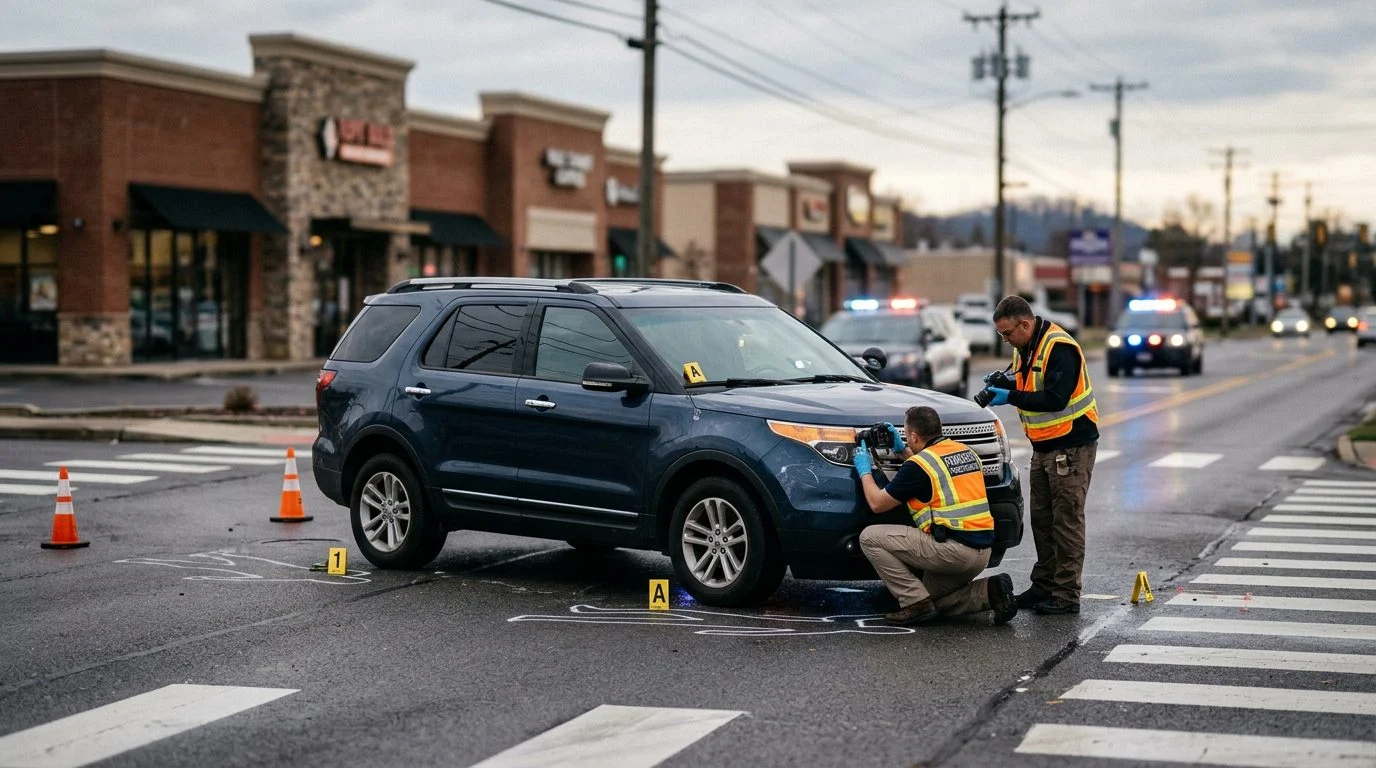
Unsecured cargo is another concern. The West Virginia Division of Motor Vehicles says unsecured vehicle cargo can cause serious or catastrophic crashes. An investigation usually looks at the scene, the vehicle, and the roadway at the time of the crash.
Catastrophic Injuries After a Pedestrian Crash
Catastrophic injuries are serious harms that can affect a person’s health, work, and family life for a long time. The effects are often not clear right away.
Traumatic Brain Injury
Brain injuries may not show their full effects at first. Memory, speech, mood, and focus can change over time. Follow-up testing and treatment records often become central to the claim.
Spinal Cord Injury
A spinal cord injury may be complete or incomplete. Medical records describe which function remains and which has been lost. Those records shape the long-term care picture.
Early treatment records often describe how the injury happened. Those records can matter when the claim is reviewed.
Other Serious Injuries
Crush injuries, amputations, pelvic and leg fractures, and internal organ injuries can happen in a pedestrian crash. Some may need repeated surgeries. Others may need rehabilitation, mobility equipment, or changes to a home.
Who May Be Responsible for a Pedestrian Crash
The driver is usually the first party considered. Other parties may also be responsible, depending on the facts. These can include:
- A trucking company or employer whose vehicle or driver was involved
- A vehicle owner who allowed the driver to use the vehicle
- A party responsible for a dangerous roadway or site condition
West Virginia uses modified comparative fault. Under W. Va. Code § 55-7-13c, your own fault generally does not bar recovery unless it is greater than the combined fault of everyone else. If it is less, your recovery is reduced by your share.
In some commercial vehicle cases, a cap on certain noneconomic damages may apply under W. Va. Code § 55-7-32. The statute lists exceptions, including impairment and hours-of-operation violations. Some insurers may dispute fault or how serious the injuries are.
How the Firm Handles a Pedestrian Case
The firm starts with a free case review, then builds the claim step by step.
- Free case review. A confidential talk about the crash, the injuries, and the papers you already have. There is no obligation to continue.
- Evidence. Requests for the police report, scene photos, vehicle details, and any camera footage. Early on, the firm works to keep crash evidence from being lost.
- Medical records. Gathering hospital, rehabilitation, and treating provider records, so the injuries and care are documented.
- Claim development. Identifying responsible parties and their insurers, then presenting the claim with supporting records.
- Resolution. Negotiation and, if needed, a lawsuit in the proper West Virginia court. Timing changes with the facts, the injuries, and the parties.
We serve injury victims in Charleston, Huntington, Morgantown, Wheeling, Martinsburg, Parkersburg, Beckley, Clarksburg, Fairmont, Weirton, and across West Virginia.
Steps to Take Now and Information to Gather
Get medical care right away and keep every appointment. Records of injuries and treatment are central to a claim. Write things down while memory is fresh.
- Request the crash report from the investigating agency. Some agencies charge a copy fee.
- Note the date, time, location, weather, and vehicle details, plus any witness names and phone numbers.
- Save photos of injuries, the scene, and damaged property or clothing.
- Keep a simple log of symptoms, appointments, and missed work.
- Before giving a recorded statement or signing a release, talk with the firm. Under W. Va. Code § 55-7-11a, settlement talks with an injured person are generally restricted for 20 days while they are hospitalized or unable to work. Under W. Va. Code § 55-7-11a, an injured person may disavow a settlement, release of liability or statement obtained in violation of that section within one hundred eighty days from the date of the personal injury. To do so, the person signs a written statement of disavowal and forwards a copy to the person who violated the section. The settlement, release or statement then may not be admissible in evidence in any court or other proceeding relating to the injury, if any payment received for it has been repaid or returned when the copy is forwarded.
- If a loved one died, keep the death certificate, funeral bills, and records of their income and role at home.
Not sure what your next step is?
Talk it through with Big Bubba — the first case review is free, confidential, and carries no obligation.
Questions About Pedestrian Catastrophic Injury Claims
Most pedestrian questions come down to fault, timing, and who may bring the claim.
Can I still have a claim if I was partly at fault?
Generally, yes, if your share of fault is not greater than everyone else’s combined. Your recovery is reduced by your share of fault (W. Va. Code § 55-7-13c).
How long do I have to file?
West Virginia generally allows two years to file a personal injury claim, and exceptions may apply (W. Va. Code § 55-2-12). A wrongful death action generally must be filed within two years after the death, and exceptions may apply (W. Va. Code § 55-7-6).
Does a pedestrian claim have to go to court?
Many claims are resolved through negotiation. Some need a lawsuit, and the insurer’s position and the facts guide that choice.
What if the driver was a commercial truck driver?
Truck claims may involve more parties and records, such as driver logs and company policies. After a fatal crash, federal rules generally require the employer to test for alcohol and drugs each surviving driver who was performing safety-sensitive functions with respect to the vehicle (49 C.F.R. § 382.303).
Can family members bring a claim after a fatal crash?
In West Virginia, a wrongful death action is generally brought by the deceased person’s personal representative. Damages may cover sorrow, mental anguish, and solace; compensation for reasonably expected loss of the decedent’s income and of services, protection, care and assistance; expenses for care, treatment and hospitalization; and reasonable funeral expenses (W. Va. Code § 55-7-6).
What to Know After a Pedestrian Crash
If a vehicle struck you or someone you love on foot, and the injuries changed daily life or led to a death, you may have a claim worth reviewing now. Waiting can use up time you may need to gather evidence. Tell us what happened, and we will walk through the crash details, medical records, and deadlines with you. Contact the firm online to request a free case review.