
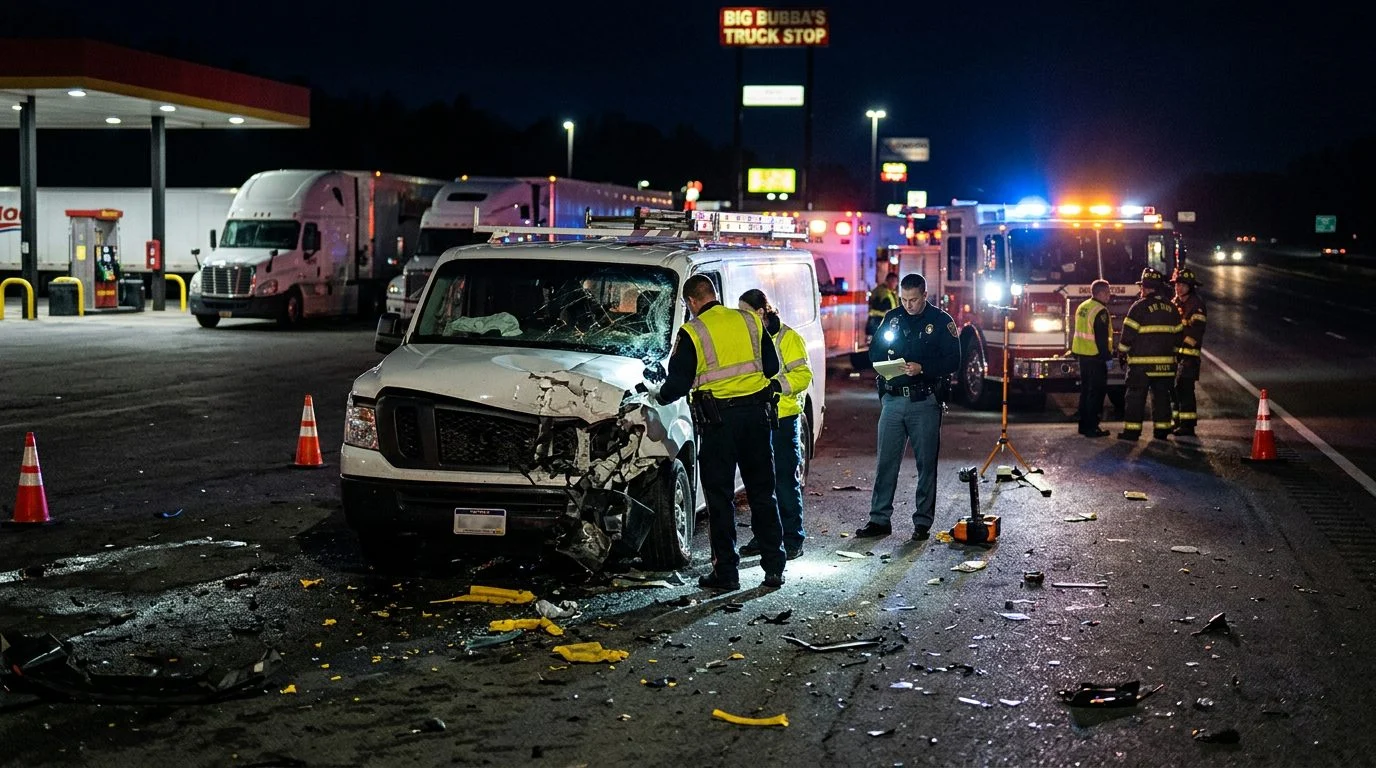
Work Van Crashes | West Virginia
Hurt in a Work Van Crash? Talk With a West Virginia Injury Firm
Big Bubba Injury Law represents people seriously injured in car and commercial vehicle crashes, including work vans, and families in wrongful death cases across West Virginia. We serve injury victims statewide.
Published October 23, 2026
Work van crash injury lawyer West Virginia searches often start with one question: who can be held responsible? The driver is only one possible answer. The employer that owns or controls the vehicle, a repair shop, a cargo company, or another driver may also share fault. Big Bubba Injury Law represents people seriously hurt in car and commercial truck crashes, people with catastrophic brain and spinal cord injuries, and families in wrongful death cases. We serve injury victims across West Virginia, including Charleston, Huntington, Morgantown, Wheeling, Martinsburg, Parkersburg, Beckley, Clarksburg, Fairmont, and Weirton.
What Counts as a Work Van or Company Vehicle Crash
W. Va. Code § 55-7-32 defines “employer defendant” to include the owner of a commercial motor vehicle, the employer of its operator, and any other person or entity that owns, leases, rents, or holds or exercises legal control over the vehicle or its operator. The statute caps noneconomic damages against an employer defendant in a personal injury or wrongful death action involving the operation of a commercial motor vehicle requiring a commercial driver’s license, and it excludes vehicles serving as common carriers of passengers, commercial motor vehicles as defined in §17E-1-3(7)(C), school buses, and other vehicles primarily engaged in transporting passengers (W. Va. Code § 55-7-32).
Crashes do not only happen during the workday. A crash may happen on a work errand, on a commute in a company vehicle, or on a personal trip when the employer allows use. The people hurt are often other drivers, passengers, pedestrians, cyclists, and workers riding in the vehicle. We handle car accidents, truck accidents, and commercial vehicle accidents, including serious brain injury, spinal cord injury, and wrongful death cases.
If a work van or company vehicle crash left you or someone you love seriously hurt, you may have a claim worth reviewing. Reach out for a free case review. Talk it through with Big Bubba — the first case review is free, confidential, and carries no obligation.
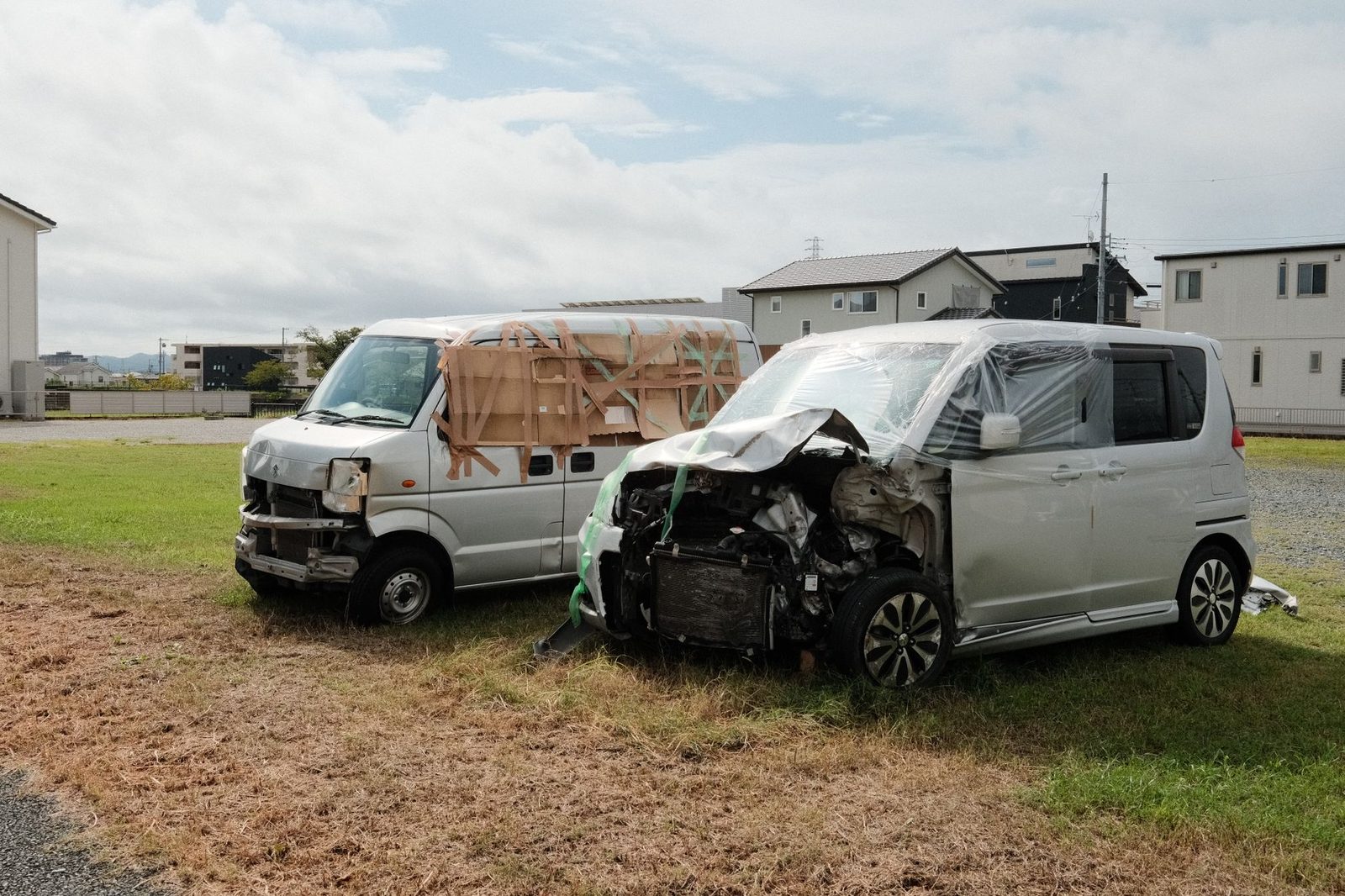
Who Can Be Held Responsible
Several parties can share responsibility for one crash. West Virginia assigns each party a percentage of fault.
- The driver, for distracted driving, fatigue, speeding, or impairment.
- The employer or company that owns, leases, rents, or directs the vehicle.
- Maintenance shops that serviced brakes, tires, steering, or lights.
- Cargo handlers whose loads shifted or blocked the driver’s view. The West Virginia Division of Motor Vehicles notes that unsecured cargo can cause serious or catastrophic crashes.
- Parts makers, when a defect contributed to the crash.
- Other drivers whose conduct also added to the harm.
Under West Virginia’s comparative fault rule, you can still recover if you share some fault. Your recovery is reduced by your percentage of fault. It is barred only if your fault is greater than the combined fault of everyone else responsible (W. Va. Code § 55-7-13c).
Employer Liability: Vicarious and Direct Claims
An employer can answer for a worker’s negligence on the job. It can also face claims for its own decisions. West Virginia law allows an employer to be held liable for the share of fault assigned to a worker acting as its agent or servant (W. Va. Code § 55-7-13d).
Direct claims look at what the company itself did or failed to do.
Other claims, such as negligent training or supervision, may also apply. Examples that often matter include skipped maintenance, delivery schedules that pushed drivers to rush, and ignored complaints or prior violations. Whether the driver was on the job is central. Dispatch logs, work records, and witness statements usually answer that question.
Workers’ Compensation and Claims Against Other Parties
When a worker is hurt on the job, workers’ compensation may be part of the picture. Another party may still be liable. Workers’ compensation is a separate system, so this section focuses on claims against outside parties. Those parties can include the at-fault driver in another vehicle, a parts maker, or a maintenance contractor.
A claim against an outside party is separate from workers’ compensation. Tell the firm about any benefits you have applied for or received. Report the crash accurately to your employer and any insurer. Early, accurate reports help prevent conflicting records later.
Evidence That Matters Early
Evidence in a company vehicle case can disappear quickly. Preserve the vehicle and its onboard data before it is repaired or sold. Keep dash camera footage, photos, and witness names. Key records to ask about include:
- Driver qualification files. Each motor carrier keeps one for each driver it employs.
- Duty status records. Carriers generally are required to use electronic logging devices to record driver duty status, but 49 C.F.R. § 395.8(a)(1) allows manual duty-status records in listed cases, such as vehicles manufactured before model year 2000. No driver or carrier may make a false report about duty status (49 C.F.R. § 395.8).
- Carriers keep driver vehicle inspection reports, repair certifications, and certifications of the driver’s review for three months from the date the written report was prepared, but the rule does not apply to a carrier operating only one commercial motor vehicle, driveaway-towaway operations, or private nonbusiness passenger carriers (49 C.F.R. § 396.11).
- A controlled substances test not given within 32 hours must be documented (49 C.F.R. § 382.303).
Timing matters with insurers, too. For 20 days after an injury, a person may not negotiate or attempt to negotiate a settlement of the claim, or obtain or attempt to obtain a release of liability or a statement, from a hurt person who is an inpatient in any hospital or is partially or totally unable to engage in his or her usual trade, profession or occupation. Talk with the firm before giving a recorded statement or signing a release.
Catastrophic Injuries and Wrongful Death
Catastrophic injury and wrongful death claims need careful documentation from the start. A brain injury can affect memory, mood, work, and daily life. A spinal cord injury can change how a person moves and manages everyday tasks. Medical records from the first day forward help show these effects.
In civil actions for personal injury or wrongful death involving the operation of a commercial motor vehicle that requires a commercial driver’s license, the compensatory damages for noneconomic loss that each person injured or killed can recover from an employer defendant are limited to $5 million for each occurrence. Beginning January 1, 2026, and each year after, that limit increases to account for inflation by an amount equal to the Consumer Price Index, not to exceed 150 percent of the original amount. The limit is not available to an employer defendant that lacks commercial motor vehicle insurance of at least $3 million in the aggregate for each occurrence covering the personal injury at issue. It also does not apply in situations the statute lists, such as when a driver is found to have operated the commercial vehicle with an alcohol concentration of .04 or more (W. Va. Code § 55-7-32). It also does not apply in certain listed situations, such as impairment or willful disregard for safety. The cap applies only to causes of action arising after July 1, 2024.
A wrongful death action is brought by the deceased person’s personal representative (W. Va. Code § 55-7-6). It must start within two years after the death, subject to the provisions of section eighteen, article two, chapter fifty-five (W. Va. Code § 55-7-6). W. Va. Code § 55-7-6 reads: “The provisions of this section shall not apply to actions brought for the death of any person occurring prior to July 1, 1988.” Damages can include sorrow, mental anguish, and loss of companionship. They can also include lost income, lost household services, care and treatment expenses, and reasonable funeral expenses.
Not sure what your next step is?
Talk it through with Big Bubba — the first case review is free, confidential, and carries no obligation.
What to Expect: From Free Case Review to Filing
The process starts with a free case review, then moves to records, parties, and negotiation. The typical steps are:
- Reach out. Describe the crash, the vehicle, and your injuries. The firm offers a free case review that is confidential and carries no obligation to continue. You can tell Bubba what happened to begin.
- Gather records. The crash report, vehicle records, and employer documents are reviewed.
- Identify every responsible party. This includes the insurance that may apply.
- Negotiate, then file if needed. If insurers do not resolve the claim, it may move to a West Virginia court.
- Resolve the case. Timing depends on the facts, the injuries, and how the defendants respond.
West Virginia’s general deadline for personal injury claims is two years (W. Va. Code § 55-2-12). Wrongful death claims have their own two-year limit from the date of death. Missing a deadline can end important rights.

Frequently Asked Questions
Can I still recover if I was partly at fault?
Possibly. West Virginia reduces recovery by your share of fault. It bars recovery only if your fault is greater than everyone else’s combined (W. Va. Code § 55-7-13c).
Can the company be sued if the driver was working?
Possibly. West Virginia can hold an employer liable for fault assigned to a worker acting as its agent or servant (W. Va. Code § 55-7-13d).
Can I bring a claim if I was hurt in a company vehicle?
Possibly.
Who can file a wrongful death claim in West Virginia?
The deceased person’s personal representative files it, and the action is generally required to be commenced within two years after the death, subject to the provisions of section eighteen, article two, chapter fifty-five, so exceptions may apply (W. Va. Code § 55-7-6).
What if I’m not sure who was at fault?
That is common. A free case review can help sort out the crash report, the records, and the witness information.
Does the firm handle truck and commercial vehicle crashes?
Yes. The firm handles truck accidents and commercial vehicle accidents across West Virginia.
Does the firm serve people outside Charleston?
Yes. We serve injury victims across West Virginia, including Huntington, Morgantown, Wheeling, Martinsburg, Parkersburg, Beckley, Clarksburg, Fairmont, and Weirton.