
Wrongful Death | West Virginia
Wrongful Death Weeks After a Crash: What West Virginia Families Need to Know
A death that happens weeks after a crash can still be part of a wrongful death claim. Big Bubba Injury Law helps families across West Virginia understand their options.
Published October 26, 2026
The Short Answer: A Later Death Can Still Support a Claim
Yes, in many cases a death that happens weeks after a crash can still support a wrongful death claim in West Virginia. The death does not have to happen at the scene. What matters is whether injuries from the crash caused the death.
Many families ask, can I file wrongful death if someone died weeks after a crash West Virginia? The answer depends on the facts of each case. The crash, the injuries, the treatment, and the cause of death all have to fit together.
This page explains how West Virginia law connects a crash to a later death. It covers the timeline, the records that show the link, how complications are weighed, and what families can preserve now. It ends with how a free case review works.
If a family member died weeks after a crash in West Virginia, you don't have to sort out the medical records alone; reach out to request a free case review. Talk it through with Big Bubba — the first case review is free, confidential, and carries no obligation.

How West Virginia Law Connects a Crash to a Death
West Virginia law allows a civil case when a death results from a wrongful act, neglect, or default that would have entitled the injured party to maintain an action to recover damages. The person or company that would have been liable had death not occurred can be sued. W. Va. Code § 55-7-5 sets out that rule.
The case is brought by the deceased person’s personal representative, the person formally appointed to handle the estate. W. Va. Code § 55-7-6 says the action must be brought in that person’s name. Families usually work through the personal representative when they start the case.
Think of the link as a chain. The crash must cause the injuries. The injuries must cause the death. Other health problems may also be part of the picture, so the records must show how they fit with the crash injuries. This idea, called causation (proof that one event caused another), sits at the center of these cases.
Wrongful death questions often involve more than where the death occurred. It is whether the crash set in motion the injuries that led to the death.
Why the Time Between the Crash and the Death Matters
A longer gap between the crash and the death does not by itself end a claim. The timeline is one piece of the picture, not the whole answer.
Serious crash injuries can lead to death after a period of hospital care, rehabilitation, or long-term treatment. Traumatic brain injury and spinal cord injury are two examples. A person may improve, decline, and then die weeks later. Medical staff record each change, and those records show the path from crash to death.
Many families worry the time gap will be used against them. The medical timeline is what gets examined. Doctors’ notes, test results, and dates of change show whether the crash injuries were still driving the decline.
West Virginia law also addresses this path. If the injured person had already started a case and then died, the case does not simply end. Under W. Va. Code § 55-7-8, the action may be revived in the name of the personal representative. A separate claim for damages between the injury and the death may be brought in the same proceeding, where not otherwise provided for in sections five and six of this article.
What Proof Links a Later Death to the Crash
The strongest proof usually starts with records from the day of the crash. Emergency department charts, trauma notes, and early imaging show the original injuries. Surgical notes and discharge summaries show how doctors treated them.
Treating-provider notes matter just as much. They describe how the injuries changed over the following days and weeks. A note that links a complication back to a crash injury can be important.
The death certificate lists a cause of death. If there was an autopsy or a medical examiner review, that report adds detail. Together, these documents show what doctors concluded caused the death.
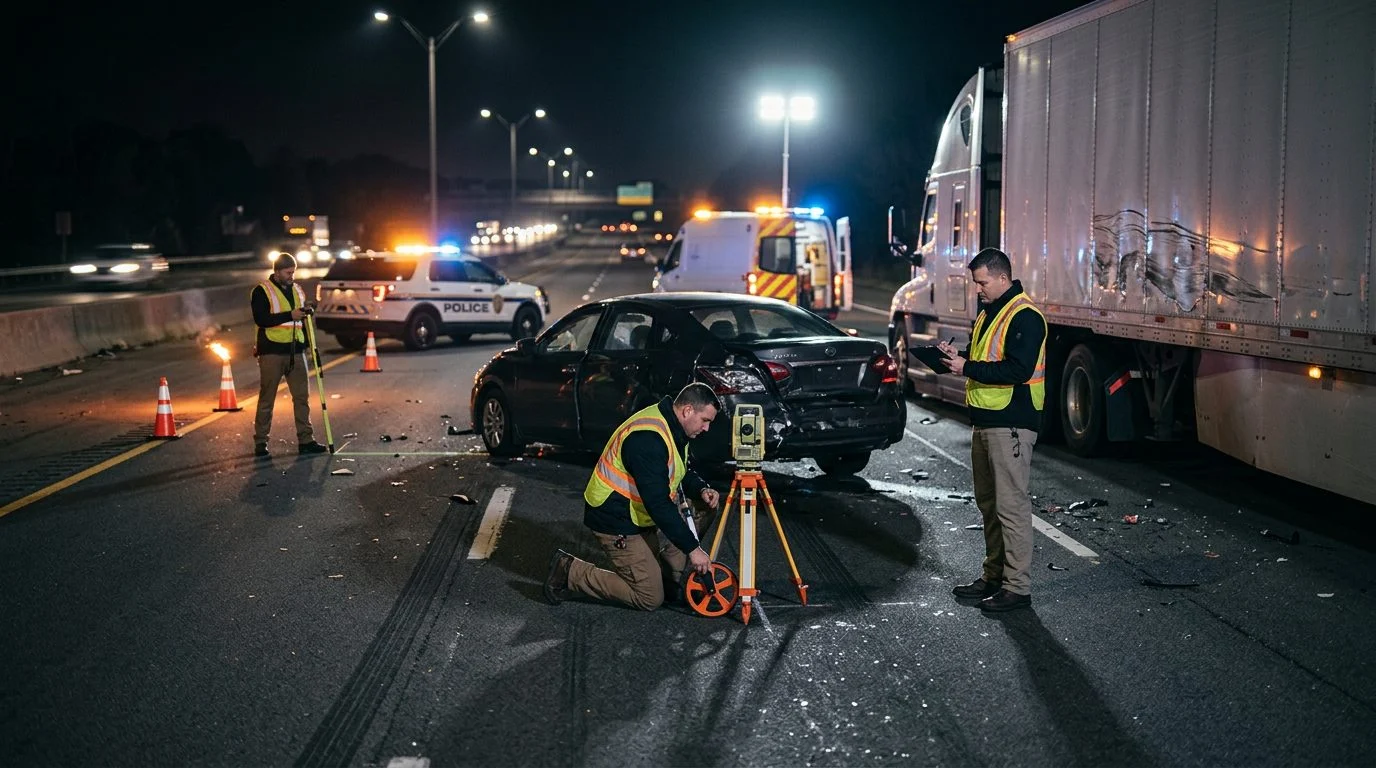
The crash report, photographs, and witness statements help tie the injuries to the collision itself. Unsecured vehicle cargo can cause serious or catastrophic crashes and injuries. That matters in truck cases where load problems are part of the story.
A free case review can start with these records. The firm can review medical records and identify what else may be needed to examine the link between the crash and the death.
When Complications and Other Medical Events Come Into Play
Some deaths after a crash involve complications that develop during treatment. Examples include infections, blood clots, and pneumonia. Families often ask whether a complication means the crash no longer matters.
The better question is how the complication relates to the original injuries. A complication that grew out of crash injuries or treatment may still be part of the same chain. A complication with a separate cause may need to be looked at differently.
Medical events can have more than one cause. A person may have had a health condition before the crash, or develop a new problem during recovery. The records should show how each event connects to the injuries and the treatment.
Families can help by writing down what doctors said about each change and when they said it. Those notes can give the reviewer a clearer timeline.
What a Wrongful Death Claim Can Include
West Virginia law lists the kinds of damages a jury may award. Under W. Va. Code § 55-7-6, the verdict shall include, but may not be limited to, sorrow, mental anguish, and solace. That can include society, companionship, comfort, guidance, kindly offices, and advice of the decedent.
The statute also allows compensation for reasonably expected loss of the decedent’s income. It covers the loss of services, protection, care, and assistance the decedent provided. It also includes expenses for the decedent’s care, treatment, and hospitalization from the injury, and reasonable funeral expenses.
The jury must set out separately the amounts for funeral, hospital, medical, and other expenses. That separate listing is part of the same statute.
Which categories apply varies from family to family. No amount or range is promised here.
Also, under W. Va. Code § 55-7-25, for complaints filed on or after July 1, 2008, a complaint in a personal injury or wrongful death action may not state a specific dollar figure for damages. It may state that the amount in controversy meets the minimum jurisdictional amount.
Not sure what your next step is?
Talk it through with Big Bubba — the first case review is free, confidential, and carries no obligation.
Steps Families Can Take Now to Protect the Evidence
Time matters for both the records and the filing deadline. Under W. Va. Code § 55-7-6, a wrongful death action must be commenced within two years after the death, subject to other provisions of law. W. Va. Code § 55-7-6 reads: “The provisions of this section shall not apply to actions brought for the death of any person occurring prior to July 1, 1988.” Early steps keep records complete and dates clear.
Start with these steps:
- Ask the hospital or treating facilities for complete copies of records. That includes the emergency chart, imaging, surgical notes, and the discharge summary.
- Keep a folder of crash documents. Include the crash report number, photos, and letters from any insurer.
- Keep bills and records of losses. That means medical bills, funeral bills, and wages or household support the family lost.
- Write a dated timeline of the injured person’s condition. Note what doctors said and when.
- Note the names of treating providers and any case or investigation numbers.
When no claim was filed before the injured person’s death, West Virginia Code § 55-7-8a lets the personal representative bring a claim for injuries to the person that did not result in death, but only if the applicable statute of limitations had not already run out at the time of death. Under W. Va. Code § 55-7-8a, the action must be started within the same period that would have applied had the person not died.
How a Free Case Review Starts With the Records
A free case review is a confidential conversation about the crash, the medical timeline, the death, and the records the family already has. Families bring what they have, even if it is incomplete.
Helpful items include medical records, the crash report, bills, and a written timeline. The firm can explain what those records show at that stage. It can also explain what more may be needed to examine the link between the crash and the death.
We serve families across West Virginia, including Charleston, Huntington, Morgantown, Wheeling, Martinsburg, Parkersburg, Beckley, Clarksburg, Fairmont, and Weirton.
Talking Through Your Family’s Situation
If your family member was hurt in a car or truck crash in West Virginia, spent time in treatment, and later died, you may be left with stacks of records and bills. You may also have a hard question about what comes next. To learn more about the serious injuries behind many of these cases, read our catastrophic injuries overview.
Common Questions
Who files a wrongful death claim in West Virginia?
The personal representative of the deceased person files it, under W. Va. Code § 55-7-6.
If you are asking whether a claim is still possible after your loved one died weeks after the crash, reach out to request a free case review at our contact page. Bring the medical records, the crash report, and your timeline so the firm can start with what the records show.