
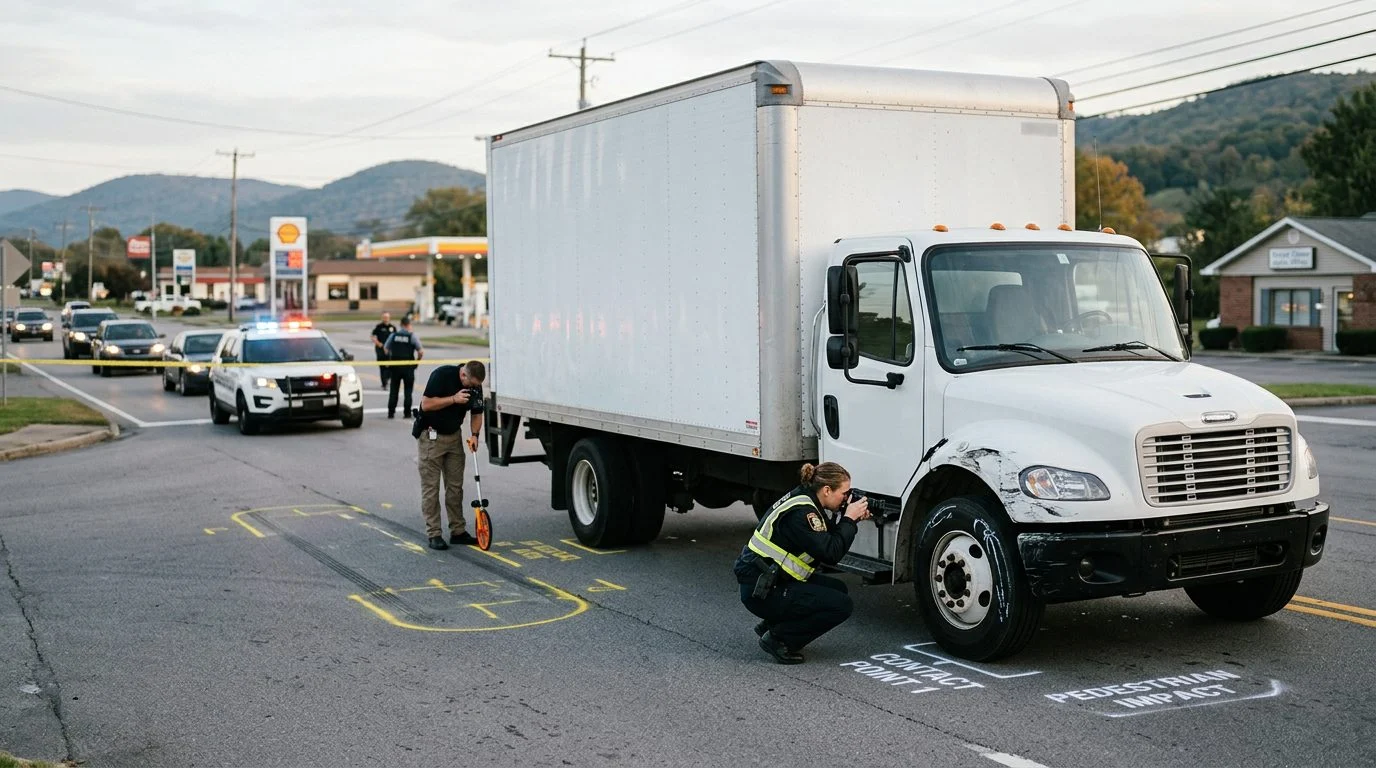
Commercial Vehicle Accidents
Serious Injuries From Commercial Vehicle Crashes
If a truck, delivery vehicle, or commercial rig was involved in a crash that injured you, you may want a firm that takes the stakes seriously. We serve injury victims across West Virginia.
Published October 07, 2026
Commercial Vehicle Accident Injuries: Broken Bones, Brain Injury & Spinal Cord Damage
Commercial vehicle accident injuries can be serious, and their severity generally depends on the facts of each case. When a passenger vehicle collides with an 18-wheeler, delivery truck, or other large commercial vehicle, the size difference may generally contribute to serious harm, depending on the facts of each case. We help West Virginia injury victims learn what happened, how responsibility may be assessed depending on the facts of each case, and how to pursue compensation.
Not sure what your next step is?
Talk it through with our team — the first case review is free, confidential, and carries no obligation.
What Are Commercial Vehicle Accident Injuries?
Commercial vehicle accident injuries are wounds sustained when struck by or involved in a collision with commercial trucks, delivery vehicles, tractor-trailers, and other large commercial vehicles used for business purposes. These injuries can range from moderate to catastrophic, and their outcomes depend on the facts of each case and the individual.
When a commercial vehicle strikes a passenger car, the outcome can be serious, and it depends on the facts of each case.
Why Commercial Vehicle Accidents Cause More Severe Injuries
Weight and force differences can be significant in these crashes. Large trucks generally weigh considerably more than passenger vehicles, which can create a significant force disparity in a collision, depending on the facts of each crash. When they collide, the smaller vehicle may absorb a larger share of the energy, depending on the facts of each crash.
Other factors amplify injury severity:
- Blind spots: Commercial drivers may have large no-see zones on all sides, depending on the vehicle and the facts of each case. A passenger vehicle positioned in one of these no-see zones may not be visible to the driver.
- Stopping distance: Large trucks generally require a longer distance to stop than cars at highway speeds. A driver traveling at 60 mph may not be able to stop before impact.
- Driver fatigue: Long hours behind the wheel can leave truck drivers tired, and a fatigued driver may react slowly or lose focus.
- Underride accidents: Smaller vehicles can slide under the trailer, which may cause serious roof crush and severe injuries.
Broken Bones from Commercial Vehicle Collisions
Commercial vehicle accidents can cause multiple fractures, including compound fractures (bone breaks through skin) or comminuted fractures (bone shatters into pieces).
Recovery from multiple fractures can involve immobilization, surgery, and physical therapy, and the timeline varies with the facts of each case and the individual. Some fractures may lead to lasting weakness, chronic pain, or reduced mobility. A femur fracture can leave a victim unable to walk without assistance.
Traumatic Brain Injury (TBI) from Truck Accidents
Traumatic brain injury can generally occur when the head strikes the vehicle interior, sudden deceleration can cause the brain to move inside the skull, or debris can penetrate the skull, depending on the facts of each case.
Mild TBI (concussion) may cause headache, dizziness, confusion, and sensitivity to light or noise, depending on the individual. Symptoms may resolve in weeks or persist for months or years.
Moderate to severe TBI may cause loss of consciousness, memory loss, cognitive impairment, personality changes, difficulty with speech or movement, and seizures, depending on the individual and the facts of the injury. A victim may not recognize family members, struggle to speak, or lose the ability to work.
Long-term effects may include post-concussion syndrome, chronic headaches, depression, anxiety, and difficulty returning to work or school, depending on the individual. Some TBI effects are invisible—a person may look fine but struggle with memory, attention, or emotional regulation.
Diagnosis may involve CT scans, MRIs, and neuropsychological testing, depending on the individual and the injury. Some injuries are not immediately apparent. Medical documentation may be relevant to showing injury and damages, depending on the facts of each case.
Spinal Cord Injuries from Commercial Vehicle Accidents
A spinal cord injury occurs when impact or crushing force damages nerve fibers in the spinal cord. Spinal cord injury is classified by level (cervical, thoracic, lumbar, or sacral) and by completeness—complete injuries result in total loss of function below the injury site, while incomplete injuries allow some sensation or movement.
Tetraplegia (quadriplegia) generally results from injury to the cervical spine and can cause loss of function in all four limbs and torso, depending on the injury. A victim may lose the ability to breathe without a ventilator.
Paraplegia generally results from thoracic or lower spine injury and can cause loss of function in the legs and lower body. A victim may lose the ability to walk but may retain upper-body function.
Immediate effects may include paralysis, loss of sensation, loss of bowel and bladder control, chronic pain, and difficulty breathing (if the injury is high cervical), depending on the individual.
Ongoing care may include a wheelchair, home modifications, attendant care, medical equipment, and therapy, depending on the facts of each case and the individual.
Have questions about what happened?
Ask our team directly. The first conversation is free, confidential, and there is no obligation to continue.
Other Serious Injuries in Commercial Vehicle Accidents
- Internal bleeding and organ damage: liver, spleen, kidneys. May not be immediately obvious, and in some cases may be life-threatening, depending on the facts of each case.
- Crush syndrome: prolonged compression of muscle tissue can release toxins into the bloodstream, which in some cases may contribute to kidney failure or death, depending on the individual and the facts of each case.
- Burn injuries: from fuel leaks, electrical fires, or vehicle fires; may require specialized burn care and skin grafting, depending on the severity of the injury.
- Amputations: limbs so severely damaged they must be surgically removed.
- Facial and disfiguring injuries: may require reconstructive surgery and ongoing psychological support, depending on the severity of the injury and the facts of each case.
Immediate Steps After a Commercial Vehicle Accident Injury
- Seek emergency medical care: call 911; do not refuse transport even if you feel okay. Some injuries appear hours or days later.
- Report the accident to police: obtain a police report number. This is evidence.
- Document the scene: photos of vehicle damage, road conditions, traffic signs, and debris (if safe to do so).
- Get witness information: names, phone numbers, and addresses of anyone who saw the accident.
- Preserve medical records: keep all doctor visits, test results, prescriptions, and therapy notes.
- Do not discuss fault or settle with the commercial vehicle’s insurance company without legal advice.
How Big Bubba Handles Commercial Vehicle Accident Injury Claims
We investigate thoroughly. We obtain the police report, accident scene photos, vehicle inspection reports, and driver records. We work with your doctors to build a complete medical record and review the full extent of your injuries.
Depending on the facts of each case, responsibility may rest with the driver, the trucking company, the vehicle owner, a maintenance contractor, or a manufacturer. We assess medical expenses, lost wages, future care costs, pain and suffering, and other losses.
We negotiate with insurance companies and defendants to pursue fair compensation. If a fair settlement is not reached, we are prepared to take your case to trial.
We serve injury victims across West Virginia, including Charleston, Huntington, Morgantown, Wheeling, Martinsburg, Parkersburg, Beckley, Clarksburg, Fairmont, and Weirton.
Why Commercial Vehicle Injury Cases Are Complex
Commercial vehicle accident cases can involve multiple potentially responsible parties, depending on the facts of each case. The driver, the trucking company, the vehicle owner, the shipper, the maintenance provider, or the manufacturer may all share liability.
Commercial drivers and trucking companies are subject to federal safety rules. Violations of federal safety rules may be relevant to a negligence claim, depending on the facts of each case. Commercial vehicles may carry different insurance coverage than passenger vehicles, and more than one insurance policy may apply, depending on the facts of each case.
Serious injury cases may involve medical testimony to explain causation and long-term impact, depending on the facts of each case. The damages available in serious cases depend on the facts of each case. Calculations must be thorough and accurate.
Trucking companies and insurers may retain legal teams and investigators, and how a claim is handled depends on the facts of each case.
Want to know where you stand?
Tell us what happened and our team will walk you through the options available to you, at no cost.
Frequently Asked Questions
How long do I have to file a claim?
West Virginia law generally gives you two years from when your right to bring the action accrues to file a lawsuit for personal injuries, though exceptions may apply depending on the facts of your case. Because evidence and witness availability can change over time, it is generally wise to act promptly.
What if I was partially at fault?
West Virginia follows a modified comparative fault rule: generally, an injured person can recover even if partially at fault, unless their fault is greater than the combined fault of all other parties. Your award is generally reduced by your percentage of fault, and exceptions may apply depending on the facts of each case.
What if the commercial vehicle driver was an independent contractor?
Depending on the facts of each case, a trucking company may be liable under theories such as vicarious liability or negligent hiring and retention. We review the parties that may be responsible for your injuries, depending on the facts of your case.
How much is my case worth?
Every case is unique. Factors include the severity of injury, age, occupation, medical expenses, and lost earning capacity. We evaluate your specific situation during a free case review.
Do I need a lawyer?
Commercial vehicle accident cases involve complex liability, federal regulations, and substantial damages. An attorney protects your rights and handles the legal process on your behalf.
What if the injured person cannot communicate?
We can work with family members, guardians, and medical professionals to understand the injury and pursue the claim on behalf of the injured person.
Related practice areas
- Commercial Vehicle Accidents in West Virginia: Your Rights & Next Steps
- Catastrophic Injuries West Virginia | Big Bubba