
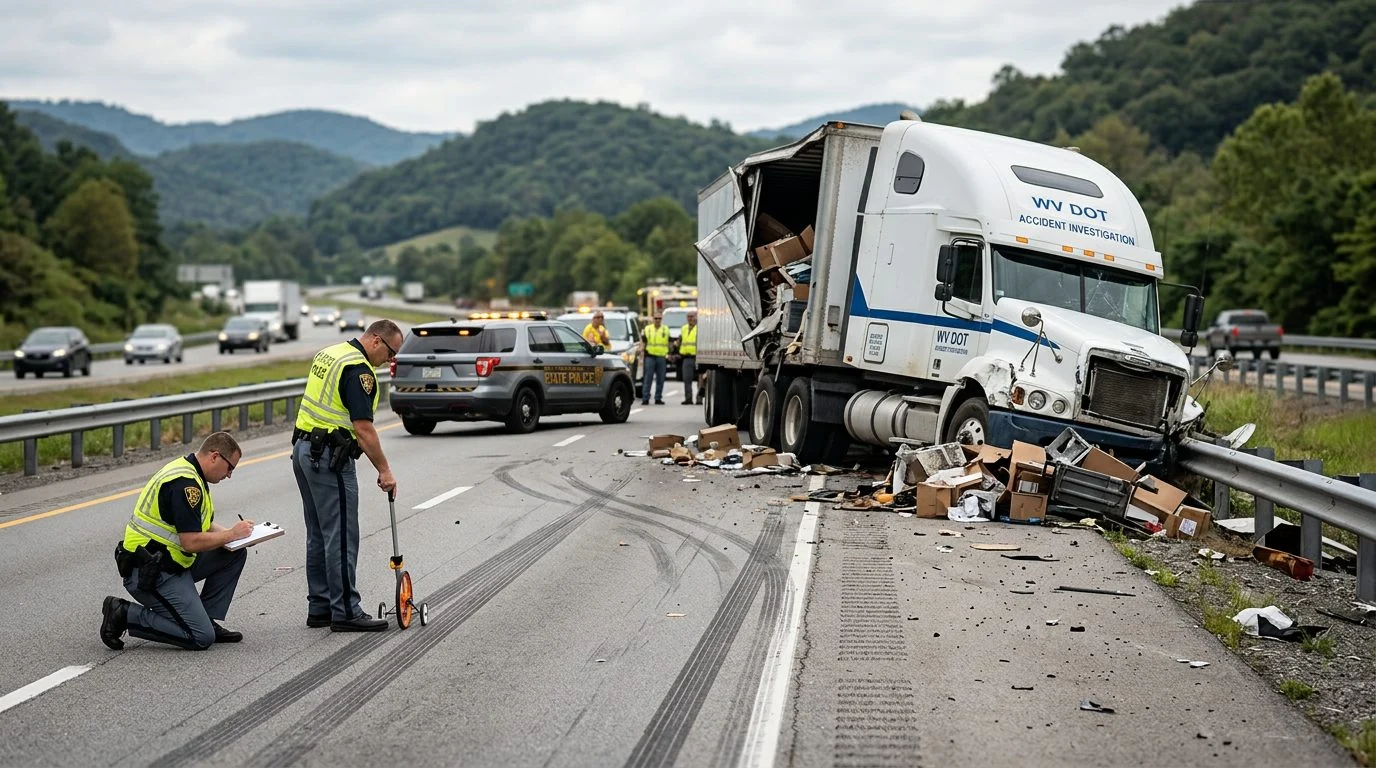
Commercial vehicle accidents | Serving West Virginia
Commercial Vehicle Accident Settlements in West Virginia: A Plain-Language Guide
How claims arising from truck and commercial vehicle crashes generally work, what may be relevant early on, and how to request a free case review with Big Bubba Injury Law.
Where we serve
55
West Virginia counties we serve
7
Areas of personal injury law we handle
Published October 11, 2026
A commercial vehicle accident settlement in West Virginia is generally a negotiated agreement that resolves an injury or wrongful death claim without a trial. Some claims resolve through settlement, while others move into a lawsuit, depending on the facts. This guide explains how these claims generally work so you can decide what to do next.
What a Commercial Vehicle Accident Settlement Is and Who It Is For
A settlement is an agreement. The injured person, or the personal representative for a person who died, accepts payment to resolve the claim. Generally, a final settlement ends the claim without a trial.
For this page, a commercial vehicle is a vehicle used in business. Common examples include:
- Tractor-trailers and semi trucks
- Box trucks and delivery trucks
- Work vans and other vehicles used for a business purpose
- Buses and other commercial vehicles
Some state and federal laws use their own definitions of “commercial motor vehicle” for particular purposes. Those definitions may not include every vehicle used in business. Whether a particular vehicle fits a given definition depends on the facts.
People who may have a claim include injured drivers, passengers, pedestrians, and cyclists. In wrongful death cases, families’ interests are generally pursued through the personal representative of the deceased person’s estate, as explained below. No two commercial vehicle claims are generally alike, so a settlement is not a fixed product.

Not sure what your next step is?
Talk it through with our team — the first case review is free, confidential, and carries no obligation.
What a Settlement Can Cover
The scope depends on the facts. Losses often discussed in these claims include:
- Past and future medical bills
- Lost wages and reduced ability to earn income
- Pain, suffering, and loss of enjoyment of life
- Property damage, such as a vehicle or personal belongings
Catastrophic injuries, such as traumatic brain injury and spinal cord injury, may involve ongoing medical care and changes in daily life. How these losses are documented, and how far they reach, depends on the medical facts of each case.
Wrongful death claims follow a different path. Generally, a wrongful death action is brought by the personal representative of the deceased person’s estate (W. Va. Code § 55-7-6). Damages may include sorrow, mental anguish, and solace, along with certain lost income, services, medical expenses, and reasonable funeral expenses. The personal representative may also generally settle the claim, subject to court approval (W. Va. Code § 55-7-7).
No general dollar figure can be stated for any claim. Value depends on the injuries, evidence, and circumstances of each case. A complaint also generally may not state a specific dollar amount of damages, and exceptions may apply depending on the facts (W. Va. Code § 55-7-25).
Factors That Generally Affect How a Claim Is Resolved
Several factors generally shape how a claim is resolved. The facts of each crash decide how much each one matters.
- Medical documentation. Records, treatment history, and opinions from medical providers may be relevant, depending on the facts.
- Crash evidence. Police reports, photos, vehicle data, driver logs, and witness statements may be potentially relevant.
- How fault may be weighed: Under West Virginia’s modified comparative fault rule, a person whose own fault is greater than the combined fault of all others generally may not recover. A person found less at fault may have damages reduced by their own percentage of fault, and exceptions may apply depending on the facts (W. Va. Code § 55-7-13c).
- Who may be liable. A trucking company may face claims for its own conduct, depending on the facts. These opinions arose in other settings, not trucking cases, and are cited only for the general theories. Whether liability applies depends on the facts of each case.
- Multiple parties. Generally, a release of one party does not bar a claim against another party for the same harm, but any amount paid for the release may be credited against the remaining claim (W. Va. Code § 55-7-12). The result can depend on the release’s terms, and exceptions may apply depending on the facts.
- Insurance. Under W. Va. Code § 33-6-31, motor vehicle liability policies issued or delivered in West Virginia generally must include uninsured motorist coverage, and policies may also include underinsured motorist coverage. The coverage that applies depends on the policies involved.
- Filing deadlines. Generally, a personal injury action must be brought within two years after the right to bring it accrues, though exceptions may apply (W. Va. Code § 55-2-12). Exceptions may apply.
How the Settlement Process Generally Works
A claim generally moves through several stages. The order and length depend on the facts.
- Initial review. We talk through the crash, your injuries, and the paperwork you have.
- Investigation. We may request the police report, medical records, and vehicle information. Early requests may help preserve evidence that could be relevant.
- Medical documentation. Treatment records may show how the injuries are developing over time, depending on the facts.
- Demand and negotiation. A written demand package may be sent to the insurers involved, who may respond with their positions.
- Review of any offer. Any offer is reviewed against the facts and documented losses. You decide whether to accept.
- Litigation if needed. If a fair resolution is not reached, a lawsuit may be filed. Not every claim goes to trial.
Early contact has limits. Generally, West Virginia law restricts when a person whose interests are or may become adverse to the injured person may negotiate a settlement or obtain a release or statement in the period shortly after an accident (W. Va. Code § 55-7-11a). The specific time period and conditions are set out in the statute, and exceptions may apply depending on the facts.
Have questions about what happened?
Ask our team directly. The first conversation is free, confidential, and there is no obligation to continue.
How Long Resolution May Take
Timing is variable, and it depends on the facts of each case. No general timeline can be stated for a commercial vehicle settlement.
Several factors may affect timing:
- Ongoing medical treatment, since the full extent of injuries may not be known early
- The number of parties and insurers involved
- Disagreements over fault or the extent of losses
- Whether a lawsuit becomes necessary
We do not predict a timeline for any individual claim. We can discuss how timing may apply once we know the facts of your situation.
How Big Bubba Injury Law Handles Commercial Vehicle Claims
Big Bubba Injury Law represents people seriously hurt in car and commercial truck crashes, people with catastrophic brain and spinal cord injuries, and families in wrongful death cases. We serve injury victims across West Virginia, including Charleston, Huntington, Morgantown, Wheeling, Martinsburg, Parkersburg, Beckley, Clarksburg, Fairmont, and Weirton, and throughout all 55 counties.
Representation generally involves:
- Looking into how the crash happened
- Organizing medical and financial records
- Communicating with insurers and other parties on your behalf
- Explaining your options at each step so you can decide
Frequently Asked Questions
What happens if a car is hit by a commercial vehicle?
Generally, the person who was hurt may have claims against any party who may be responsible, depending on the facts. The police report and medical records may be relevant early on.
Do commercial truck accident cases go to trial?
Some claims resolve through negotiation, depending on the facts. Some proceed to a lawsuit and may go to trial, depending on the facts.
How much is a commercial vehicle accident settlement in West Virginia worth?
No general value can be stated. Value depends on the injuries, evidence, and circumstances of each case, and we do not predict amounts.
Can I still have a claim if I was partly at fault?
Generally, West Virginia follows a modified comparative fault rule, meaning a person’s own percentage of fault may affect whether, and how much, they can recover, though exceptions may apply depending on the facts (W. Va. Code § 55-7-13c).
Should I talk to an insurance company before deciding what to do?
That is a personal decision. A case review can help you see your options before you decide what to say.
Want to know where you stand?
Tell us what happened and our team will walk you through the options available to you, at no cost.
Related practice areas
- Commercial Vehicle Accidents in West Virginia: Your Rights & Next Steps
- Commercial Vehicle Accident Injuries: Broken Bones, Brain Injury, and Spinal Cord Damage
- Spinal Cord Injury from a Commercial Vehicle Accident in West Virginia
- Can I Sue a Truck Company for a Commercial Vehicle Accident?
- Common Injuries from Commercial Truck Accidents
- Spinal Cord Injury From a Commercial Vehicle Crash in West Virginia
- Wrongful Death from a Commercial Truck Accident in West Virginia