
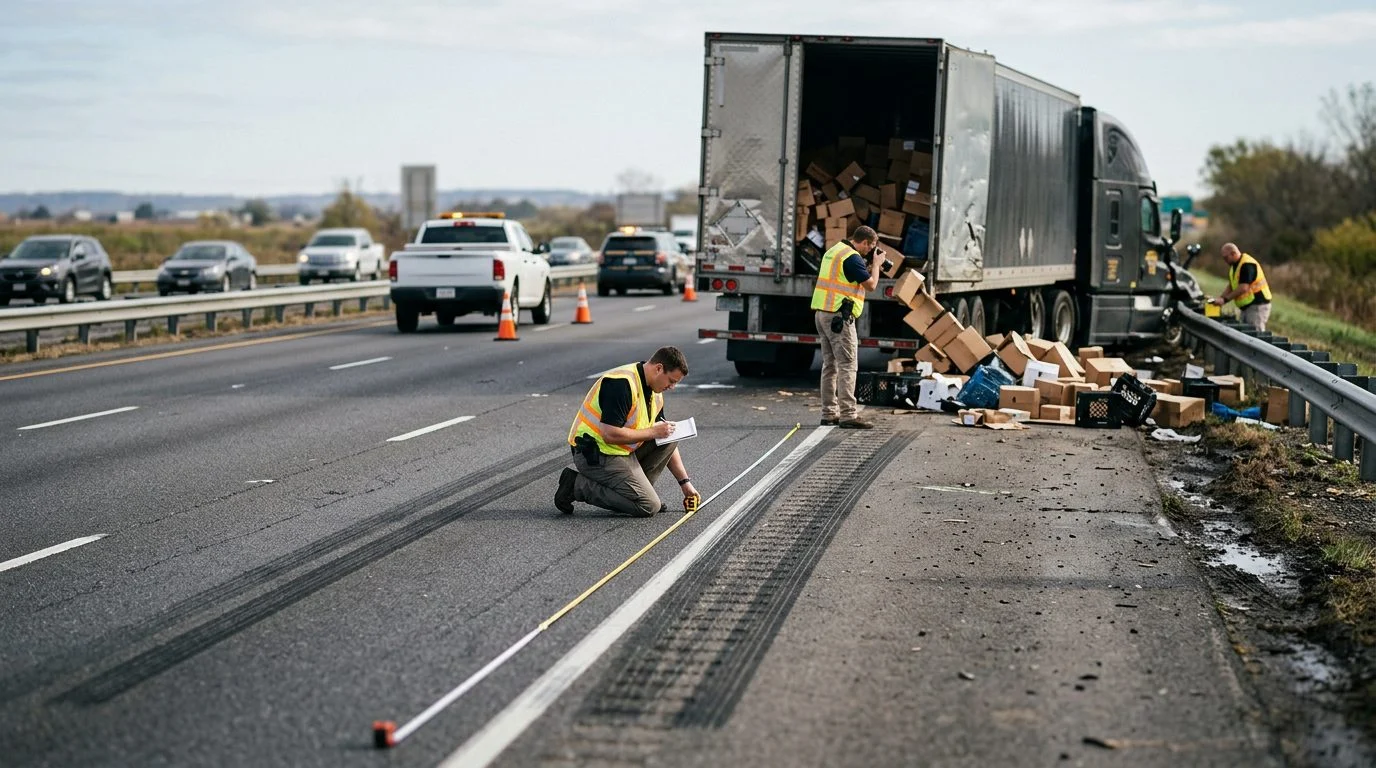
Commercial Vehicle Accidents
Commercial Vehicle Accident Insurance: What You Need to Know
After a crash involving a commercial truck or vehicle, understanding your insurance rights and next steps matters. We're here to help.
Published October 08, 2026
Does an Accident in a Commercial Vehicle Affect Insurance?
Yes—a commercial vehicle accident typically affects the business’s commercial insurance policy, and it may also involve your personal insurance depending on the circumstances. The process is often complex because multiple insurance policies may be involved, and liability determination can be disputed between insurers.

If you're injured in a commercial vehicle accident, you may have a claim against the commercial policy. Talk it through with our team — the first case review is free, confidential, and carries no obligation.
How Commercial Vehicle Accidents Affect Insurance
When an accident happens in a commercial vehicle, the business or employer usually carries a commercial auto insurance policy that covers the vehicle and its operation. This policy may differ from personal auto insurance in coverage limits, liability rules, and how claims are handled, depending on the policy terms and the facts of the accident.
The vehicle’s owner—typically the business—is usually the primary policyholder. When an employee is driving the vehicle for work, the employer’s commercial policy is usually the first to respond to a claim. Your personal auto insurance generally may not cover accidents in commercial vehicles, although coverage such as uninsured or underinsured motorist or medical payments coverage may apply depending on the policy and the facts.
However, the situation becomes more complex when multiple parties are involved. If you’re injured in a commercial vehicle accident, you may have a claim against the commercial policy. If the driver was at fault, their personal insurance may also be involved. Depending on the facts, insurance companies may dispute which policy should pay, which could delay a claim.
Commercial Insurance vs. Personal Insurance
Commercial auto policies and personal auto policies serve different purposes and carry different limits. A commercial policy covers vehicles used for business purposes and typically provides higher liability limits than personal policies. Commercial trucks are typically covered by liability insurance, and the way coverage works in a truck crash can differ from an ordinary car accident.
Personal auto insurance is designed for private vehicle use. Depending on the policy and the facts, it may not extend to commercial vehicles or work-related accidents, and other personal coverage, such as UM/UIM or medical payments, may apply. If you’re hurt in a crash involving a commercial truck or commercial vehicle, the truck owner’s commercial insurance, rather than your personal policy, may be relevant if a claim arises from the crash, depending on the facts of your situation.
When a crash involves a commercial driver, both the driver and the company they work for may be part of the claim. Depending on the facts, the employer’s commercial policy may be the primary source of coverage. Depending on the facts of each case, an employer may be liable even if the employee was also at fault.
How Liability Is Determined in Commercial Vehicle Accidents
After a commercial vehicle accident, insurance companies investigate to determine who was at fault. This investigation can be important because fault may affect which insurance policy pays and how much, depending on the facts.
Insurance adjusters look at police reports, witness statements, vehicle damage, and the circumstances of the accident. They assess whether the driver was following traffic laws, whether the vehicle was properly maintained, and whether the employer had any role in causing the accident.
West Virginia follows a modified comparative fault rule. Generally, damages may be reduced in proportion to an injured person’s own percentage of fault. Under this rule, you may still be able to recover even if you were partially at fault, but generally only if your fault is not greater than the combined fault of all other parties, and exceptions may apply depending on the facts. How much a person can recover can be affected by their own share of the fault, which is compared against the combined fault of everyone else involved.
If you've been injured, you may have claims against multiple policies. Talk it through with our team — the first case review is free, confidential, and carries no obligation.
Multiple Insurance Policies and Coverage Disputes
Commercial vehicle accidents often involve more than one insurance policy, which complicates the claims process. The commercial policy, the driver’s personal policy, and third-party policies may all be relevant. Insurance companies sometimes dispute which policy should pay first, a practice called “coverage disputes.”
When multiple insurers are involved, claims can be delayed while the insurers negotiate. One insurer may argue that another insurer’s policy is primary. Policy limits may be insufficient to cover all damages, leaving injured parties with uncovered losses.
Understanding which policies may apply to your accident can be important, depending on the facts. If you’ve been injured, you may have claims against multiple policies. An attorney can help review which policies may apply to your accident and discuss possible claims against each one, depending on the facts.
What Happens If a Commercial Truck Hits You
If you’re hurt in a crash with a commercial truck, the truck owner’s commercial insurance may be relevant if a claim arises, depending on the facts of the crash. Coverage limits on a commercial policy may differ from those on a personal policy, depending on the policies involved, which may affect the coverage available for your injuries and damages.
Depending on the facts, an investigation may focus on the truck driver’s actions and the company’s safety practices. Insurance adjusters may examine:
- Whether the driver was following traffic laws
- Whether the vehicle was properly maintained
- Whether the driver was fatigued or impaired
- Whether the company had adequate safety policies
- Whether the driver had proper training and qualifications
You may have a claim for medical expenses, lost wages, pain and suffering, and other damages. The amount depends on the severity of your injuries, the clarity of liability, and the policy limits available.
What Not to Tell the Insurance Company
After an accident, be careful what you say to insurance adjusters. Statements you make to insurance adjusters may be used in a claim dispute, depending on the facts.
- Do not admit fault, even if you feel responsible. Let the investigation determine who was at fault.
- Do not speculate about what happened or what injuries might develop. Stick to the facts you directly observed.
- Do not agree to a quick settlement without understanding the full extent of your injuries. Some injuries develop over time.
- Do not sign documents without reading them carefully or having them reviewed by an attorney.
- Do stick to the facts: what you saw, heard, and experienced. Be honest but measured.
Statements you make to an insurance company about fault, the severity of your injuries, or whether you need further treatment may be relevant to how the insurer responds, depending on the facts of your situation.
When to Reach Out About Your Commercial Vehicle Accident
If you’ve been injured in a commercial vehicle accident, the insurance process can be confusing and slow. Insurance companies may minimize your claim, dispute liability, or delay payment while they investigate coverage disputes.
Understanding your rights and the coverage available to you is important. Who let a particular driver use a vehicle, and what they knew about that driver, can sometimes matter in sorting out a crash. This means you may have claims not just against the driver but also against the employer or vehicle owner.
If you’ve been seriously injured—with traumatic brain injury, spinal cord damage, or other catastrophic injuries—the stakes are even higher. Your claim may involve substantial damages, multiple policies, and complex liability questions.

Not sure what your next step is?
Talk it through with our team — the first case review is free, confidential, and carries no obligation.
Frequently Asked Questions
How long do commercial vehicle accidents stay on your record?
Commercial vehicle accidents typically appear on the business’s driving record and insurance history for three to five years, though the exact duration varies by insurer and state. Insurance companies use this history to assess risk and set rates.
What is the statute of limitations for filing a claim after a commercial vehicle accident in West Virginia?
In West Virginia, a personal injury claim generally must be filed within two years after the right to bring the claim accrues. Exceptions and tolling rules may change that deadline, so the timing for your claim depends on its facts.
Can an employee’s personal auto insurance cover an accident in a company vehicle?
Generally, no. Personal auto insurance does not cover accidents in commercial vehicles. The employer’s commercial policy is responsible. However, if the employee was using the vehicle for personal purposes against company policy, coverage may be disputed.
Who is liable in a commercial vehicle accident?
Liability depends on the facts. The driver may be liable for their own negligence. The employer may be liable under respondeat superior (employer liability for employee negligence) or for negligent hiring, retention, or supervision. Multiple parties may share liability.
What if the commercial vehicle driver was impaired or violating hours-of-service rules?
W. Va. Code § 55-7-32 defines key terms that can matter in a crash involving a commercial motor vehicle, including what counts as a “commercial motor vehicle” and who can be an “employer defendant” such as the owner of the vehicle or the employer of its operator.
Related practice areas
- Commercial Vehicle Accidents in West Virginia: Your Rights & Next Steps
- Commercial Vehicle Accident Injuries: Broken Bones, Brain Injury & Spinal Cord Damage