
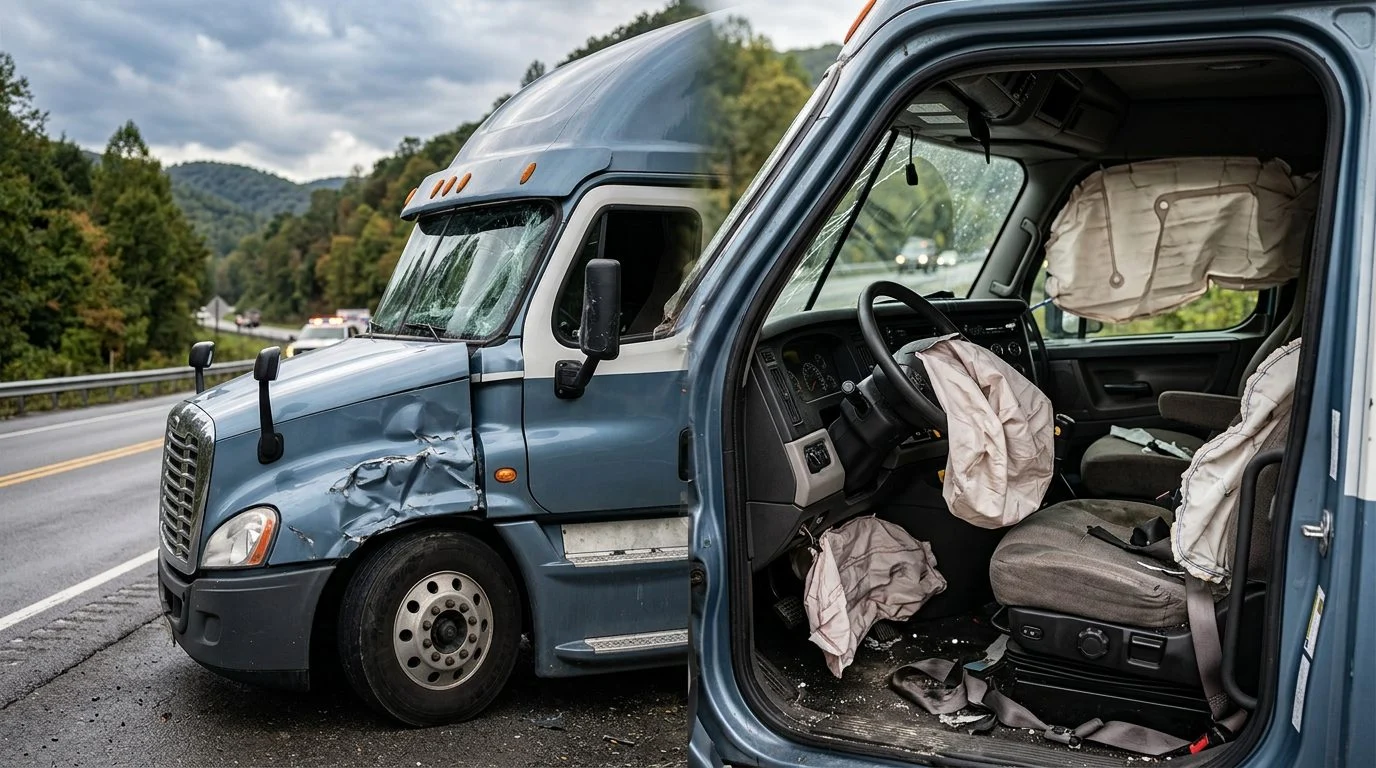
Truck Crash Guidance · West Virginia
Federal Trucking Safety Rules in a West Virginia Crash
Federal trucking safety rules generally apply to many commercial trucks and buses, with exceptions. Learn how they may matter after a crash, then tell us what happened in a free case review.
How we can help after a truck crash
Reviewing which rules may apply
Whether federal trucking rules apply generally depends on the truck, the route, and what it was carrying. We look at those facts with you.
Focused on serious injuries
We handle car and commercial truck crashes, catastrophic brain and spinal cord injuries, and wrongful death cases for families across West Virginia.
Clear next steps
You can reach out to us to start a free case review and talk through what happened, at your pace.
Serving communities statewide
We serve injury victims in Charleston, Huntington, Morgantown, Wheeling, Beckley, Clarksburg, and throughout West Virginia.
Published October 12, 2026
Not sure what your next step is?
Talk it through with our team — the first case review is free, confidential, and carries no obligation.
Short Answer: Federal Trucking Rules Generally Apply, With Exceptions
Federal trucking safety rules generally apply to commercial trucks and buses that move property or passengers in interstate commerce, meaning across state lines. Some trucks that operate within one state may also be covered, depending on what they carry and how they operate. Exceptions may apply, so the answer for any one truck depends on its facts.
People hurt in a truck crash may want to know about this early on. People hurt in a truck crash, and families of someone killed, want to know whether a driver’s logbook or a truck’s repair history could matter. Those records only matter if federal rules reach the trip in the first place.
Coverage is a different question from fault. Asking whether a rule applies does not mean anyone broke it. Whether a rule was broken, and whether that played a role in a crash, are separate questions. They turn on the evidence in each case.

What the Federal Motor Carrier Safety Regulations Are
The Federal Motor Carrier Safety Administration (FMCSA), a federal agency, administers these rules. According to this federal regulation, the rules in its subchapter are applicable to all employers, employees, and commercial motor vehicles that transport property or passengers in interstate commerce.
These rules generally cover several areas. They include driver qualification, hours of service, and vehicle inspection and maintenance. Under this federal statute, the Secretary of Transportation may prescribe requirements for the qualifications and maximum hours of service of employees of, and the safety of operation and equipment of, a motor carrier.
Knowing the topics helps you ask better questions. It does not tell you what happened on a given day. Each topic may or may not apply to a specific truck, depending on the facts.
Interstate Versus Intrastate Trucks on West Virginia Roads
Federal rules generally apply to trucks moving property or passengers in interstate commerce. This federal regulation states that the rules in its subchapter are applicable to all employers, employees, and commercial motor vehicles that transport property or passengers in interstate commerce.
Some intrastate carriers may also be covered. For example, certain parts of the federal subchapter generally apply to carriers that haul hazardous materials within one state. The same section also lists exceptions. These include operations by a state or political subdivision, fire trucks and rescue vehicles on emergency runs, and certain vehicles built to carry 9 to 15 passengers.
Federal law also limits some state rules on a carrier’s price, route, or service. This federal statute provides that paragraph (1) of its subsection (a) shall not restrict the safety regulatory authority of a State with respect to motor vehicles. West Virginia has its own commercial vehicle laws too. How they reach a particular trip depends on the facts, and the vehicle weight, cargo, and carrier type can all matter.
Have questions about what happened?
Ask our team directly. The first conversation is free, confidential, and there is no obligation to continue.
How Federal Rules May Be Relevant After a Crash
Certain trucking records may be relevant after a crash, depending on the facts. These records are not proof of fault on their own. They are evidence that may help explain what happened.
Under this federal regulation, motor carriers are generally required to keep a qualification file on each driver they employ, although exceptions may apply. Duty status records, which track a driver’s hours, are also covered by federal rules. This federal regulation states that no driver or motor carrier may make a false report in connection with a duty status.
Drivers generally must write a report on each vehicle’s defects that could affect safety. Under this federal regulation, every motor carrier shall maintain the driver vehicle inspection report, the certification of repairs, and the certification of the driver’s review for three months from the date the written report was prepared. Exceptions apply, including for a carrier that operates only one commercial vehicle.
A missing or incomplete record does not, by itself, prove that a rule was broken. A record that looks compliant does not rule out other causes either.
Which Parties May Be Involved Under Federal and State Rules
Several parties may be involved in a truck crash. These can include the driver, the carrier, the vehicle owner, and others. Who may be legally responsible generally depends on the facts and the relationships between the parties.
West Virginia’s commercial vehicle statute uses the term “employer defendant.” It can include the vehicle’s owner, the operator’s employer, and a person with legal control of the vehicle (W. Va. Code § 55-7-32). That statute also lists circumstances, such as operating beyond applicable hours-of-operation rules, in which it generally does not apply.
Under West Virginia law, each defendant’s liability for damages is generally several, not joint. That means each is generally liable for its own share of fault. Exceptions exist, such as for defendants who conspire to commit a wrongful act (W. Va. Code § 55-7-13c).
Whether insurance applies depends on the policy terms and the facts of each case.
Why Timing and Deadlines Matter in These Cases
In West Virginia, a personal injury action generally must be brought within two years after the right to sue accrues. Exceptions may apply depending on the facts (W. Va. Code § 55-2-12).
A wrongful death action generally must be commenced within two years after the death. That section also refers to other provisions that can affect the period. Exceptions may apply (W. Va. Code § 55-7-6). That same section says a wrongful death action is generally brought by the deceased person’s personal representative.
Records can be time-sensitive too. Because some inspection reports need to be kept for only three months, the timing of a records request can matter. Missing a deadline may affect your ability to bring a claim. Exceptions may apply, so don’t assume any timing rule covers your situation. How long a case takes is also variable and depends on the facts.
Want to know where you stand?
Tell us what happened and our team will walk you through the options available to you, at no cost.
Next Steps for Understanding Your Situation
Federal trucking rules generally apply to many commercial trucks. Whether they apply to a West Virginia crash depends on the facts of the trip, the vehicle, and the carrier. Our commercial vehicle accident guide explains the broader process. We serve injury victims across all 55 West Virginia counties.
Do federal trucking safety rules apply to every truck crash in West Virginia?
Not always. They generally apply to trucks in interstate commerce, and some intrastate trucks may also be covered. Exceptions may apply.
Does a rule violation automatically mean a driver is at fault?
Generally, whether a violation has any bearing on fault depends on the facts of each crash, and exceptions may apply.
Are trucking records always available after a crash?
Not always. Some records have required retention periods, and exceptions may apply. Because some records may be kept only for limited periods, timing may matter depending on the facts.
Related practice areas
- Ligament Tears From a Commercial Vehicle Crash: Symptoms, Treatment and Claims in West Virginia
- Who Pays the Medical Bills After a Commercial Vehicle Crash in West Virginia?