
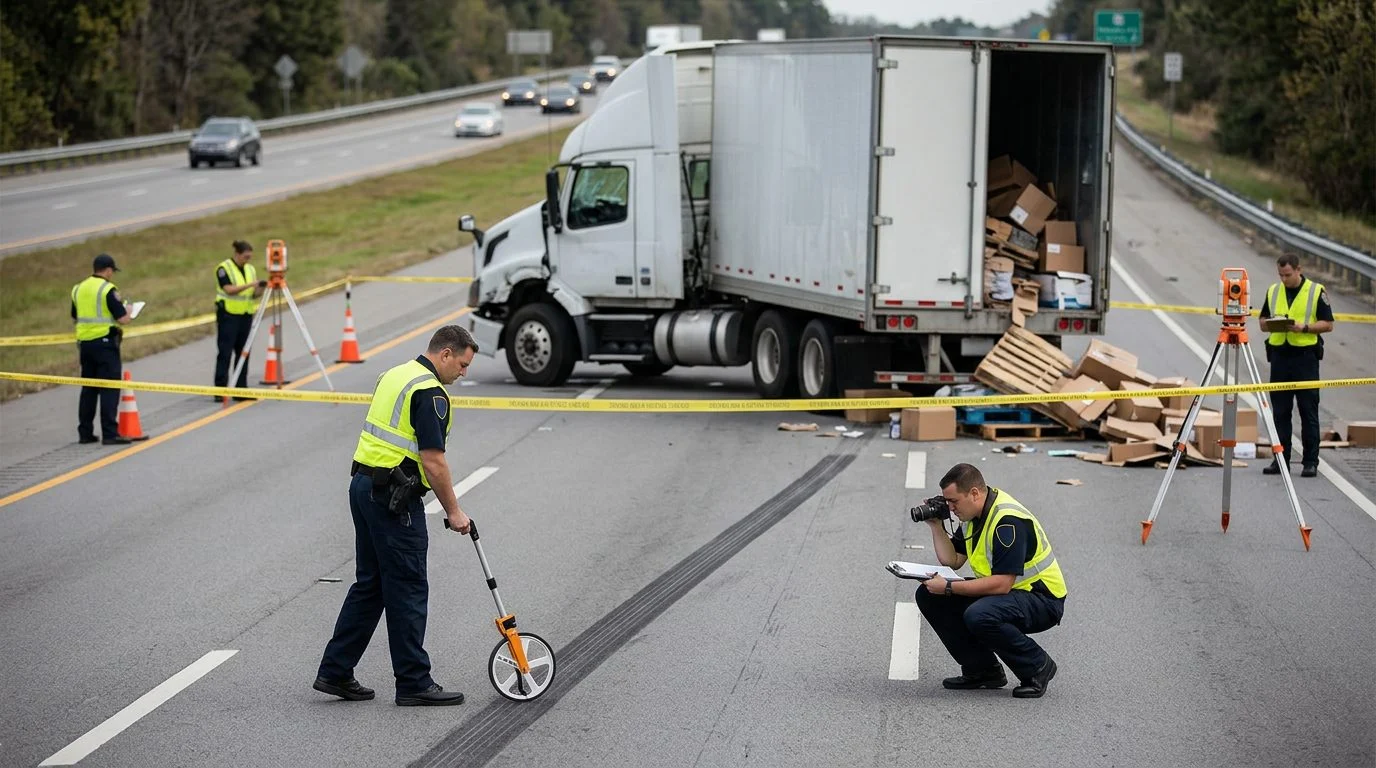
Commercial Vehicle Accidents
What to Do After a Commercial Vehicle Accident
Immediate steps to protect your health, your claim, and your legal rights after a crash with a truck or commercial rig.
Published October 02, 2026
What to Do After a Commercial Vehicle Accident
If you’ve just been hit by a commercial vehicle—a semi-truck, delivery truck, or other large commercial rig—your immediate priority is safety and getting medical help. The steps you take in the first hours can affect your health, your insurance claim, and your legal rights. Here’s what to do, step by step.
If you've been hit by a commercial vehicle and are dealing with injuries, property damage, or uncertainty about what comes next, you can reach out to us. Talk it through with our team — the first case review is free, confidential, and carries no obligation.
Your Safety Comes First
The moment after impact, focus on staying alive and preventing further harm. If your vehicle is operable and you can safely move it out of traffic, do so. Turn on your hazard lights right away so other drivers see you. If you cannot move your vehicle, stay inside with your seatbelt fastened until emergency responders arrive. Do not approach the commercial vehicle or its driver if you feel unsafe—stay in your car and wait for police.
Call 911 and Report the Accident
Call emergency services immediately, even if injuries seem minor at first. Tell the dispatcher your exact location, the number of vehicles involved, and whether anyone is injured. Request police to the scene; a police report creates an official record of what happened and is critical evidence later. Stay on the line with the dispatcher if instructed to do so, and follow their guidance.
Seek Medical Care—Even If You Feel Okay
This step is crucial. Tell the paramedics or emergency responders about all pain, numbness, tingling, or unusual sensations you feel. Many injuries from commercial vehicle collisions—especially traumatic brain injuries and spinal cord injuries—don’t show symptoms immediately. They can develop hours or even days after the crash. Get a medical evaluation at the hospital or urgent care, and keep all records. Follow up with your primary care doctor and tell them about the accident. Documentation now protects your health and your claim later.
Document Everything at the Scene
Take photos and videos of vehicle damage, road conditions, traffic signals, and the overall scene from multiple angles. Photograph the commercial vehicle’s license plate, company name, and any visible markings or logos. Note the time of day, weather conditions, and lighting. If you can safely do so, record the position of all vehicles involved. These images are evidence and will help investigators and your insurance company understand what happened.
Exchange Information With the Commercial Vehicle Driver
Get the driver’s full name, phone number, and home address. Ask for their driver’s license number and take a photo of it if you can. Record the commercial vehicle’s license plate, make, model, and year. Ask for the name and contact information of the trucking company or employer—this is essential because the company, not just the driver, may be liable. Request the company’s insurance details and policy number.
Not sure what your next step is?
Talk it through with our team — the first case review is free, confidential, and carries no obligation.
Gather Witness Information
If anyone nearby saw the accident, ask for their name and phone number. Note what they saw and ask if they would be willing to speak with police or your attorney later. Don’t pressure witnesses; simply record their willingness to help. Witness statements often become critical evidence in commercial vehicle accident claims.
What Not to Say to the Insurance Company
Do not admit fault or apologize for the accident, even if you think you might have contributed. Do not speculate about how the accident happened or what you could have done differently. Do not agree to a recorded statement without thinking it through first—you can always speak with someone you trust before doing so. Do not sign any documents or settlement offers before you understand what you are signing. Stick to the facts: the date, time, location, and what you observed.
Preserve Evidence and Keep Records
Save all medical bills, prescriptions, and treatment records. Keep receipts for any expenses related to the accident—rental car, transportation, medications, time off work. Do not repair or discard damaged personal property without taking photos first. Request a copy of the police report once it becomes available; it’s usually free or costs a small fee. Write down your own account of the accident while details are fresh in your mind.
How a Commercial Vehicle Accident Differs From a Car Accident
Commercial vehicles are subject to federal safety regulations and maintenance requirements that do not apply to personal vehicles. Commercial drivers must comply with hours-of-service rules that limit driving time, and they are required to maintain logbooks and vehicle inspection records. Trucking companies carry commercial liability insurance policies, which operate under different rules and coverage limits than personal auto insurance.
Critically, multiple parties may generally be liable in a commercial vehicle accident, depending on the facts, and these can include the driver, the trucking company, the vehicle owner, and sometimes the cargo loader or shipper. This complexity can generally mean the investigation and evidence preservation are more involved, depending on the facts. Commercial vehicle accidents also often result in more severe injuries because of the size and weight of the vehicle—the impact forces are greater, and injuries like traumatic brain injury and spinal cord injury are more common.
How Long Does a Commercial Vehicle Accident Stay on Your Record?
A police report documents the crash, and the investigating agency can tell you how to request a copy. Whether a crash affects your insurance rates can depend on how fault is determined. Insurance rate outcomes vary, and your insurer or agent can explain how a particular crash may be handled under your policy.
Have questions about what happened?
Ask our team directly. The first conversation is free, confidential, and there is no obligation to continue.
What Happens Next: Insurance and Legal Considerations
The commercial vehicle’s insurance company will likely contact you; you are not required to give a recorded statement without thinking it through first. Notify your own insurance company, but let them know you are gathering information before making a full claim. If you suffered serious injuries, catastrophic injury, or permanent damage, legal representation may protect your rights and help you understand what you are entitled to. Settlement timelines vary, and rushing into an agreement before understanding the full extent of your injuries can leave you without coverage for future medical needs.
FAQ
Should I talk to the trucking company’s insurance company?
You can provide basic facts (date, time, location), but you are not required to give a recorded statement or detailed account without legal advice.
What if I feel fine but develop pain days later?
This is common with commercial vehicle accidents. Seek medical care immediately and report the accident to your doctor. Medical records documenting the link between the crash and your symptoms are important.
How do I get a copy of the police report?
Contact the police department that responded to the scene. Reports are usually available within a few days and cost little or nothing.
What should I do if the commercial vehicle driver or company contacts me?
Be polite but brief. Provide only basic facts and avoid discussing fault or your injuries in detail.
Can I be held liable if a commercial vehicle hit me?
Liability depends on the facts of the accident. An attorney can evaluate your specific situation.
If you’ve been hit by a commercial vehicle and are dealing with injuries, property damage, or uncertainty about what comes next, you can reach out to us. We can help you understand your options and what may be possible for your case.
Seek Medical Attention First
Even if you feel okay, get checked by a doctor right away. Some injuries—especially head and spinal injuries—may not show symptoms immediately. A medical record created on the day of the crash is critical evidence.
Steps to Take at the Scene and After
At the Scene
Move to safety if possible. Call 911. Turn on hazard lights. Stay in your vehicle if traffic is heavy. Get the driver's name, phone number, address, and insurance information. Note the vehicle's license plate, make, model, and company name. Take photos of the damage, the scene, and road conditions. Get contact information from any witnesses.
Report the Accident
File a police report if one hasn't been made. Notify your own insurance company promptly. Do not admit fault or sign anything except for police and medical personnel. Keep all documents—police reports, medical records, repair estimates, photos, and correspondence.
Preserve Evidence
Do not repair or discard your vehicle immediately. Request the police report. Ask your doctor to document all injuries and treatment. Keep a record of all expenses: medical bills, lost wages, rental car costs, and other accident-related costs.
Contact a Lawyer
Commercial vehicle accidents often involve serious injuries and complex liability. Call Big Bubba as soon as possible. An early conversation can help protect your rights and preserve evidence. There is no fee unless there is a recovery, and you are responsible for court costs and case expenses.
Why You Need Legal Help After a Commercial Crash
Commercial Drivers and Companies Have Legal Teams
Trucking companies and commercial operators have insurance adjusters and lawyers working to minimize what they pay. You need someone in your corner from day one.
Evidence Disappears Quickly
Vehicles are repaired or scrapped. Witnesses move away. Dashcam footage is deleted. A lawyer knows how to preserve and obtain the evidence that proves what happened.
Deadlines Matter
Generally, time limits apply to filing claims and lawsuits, and exceptions may apply depending on the facts, so acting promptly is important.
Serious Injuries Require Serious Representation
Catastrophic injuries—traumatic brain injury, spinal cord damage, permanent disability—demand thorough investigation and skilled negotiation.
You Don't Have to Handle This Alone
Related practice areas
- Commercial Vehicle Accidents in West Virginia: Your Rights & Next Steps
- Signs of Brain Trauma After a Car Accident