

Car Accident Head Injury Claims · West Virginia
Head Injured in a Car Crash? Know What Comes Next
A plain-language map of the claim process, from medical care through the final decision, and how to bring your questions to a team that handles serious injury cases.
Published November 15, 2026
Hit your head in a car crash and wondering what the claim process looks like? In short, a car accident head injury claim moves in stages. Medical care comes first. Then come crash records, insurer contact, proof of losses, a demand, and a lawsuit only if talks do not resolve the claim.
This guide walks through those stages in order. For each one, you’ll see who acts, what it needs, and what usually comes next. The steps are typical, not a fixed schedule. The firm serves injury victims across West Virginia, so the state’s rules shape the path described here.
Before You Start: What a Head Injury Claim Usually Looks Like
A head injury claim is a request for compensation from the at-fault driver’s insurer. A lawsuit may follow if that request does not resolve the matter. The medical picture drives most of the decisions that come after.
Head injuries range from mild to severe. A concussion is a form of traumatic brain injury, and medical research notes that concussions may have serious short- and long-term effects. A contusion is a bruise on the brain. More serious brain injuries may change how a person thinks, speaks, moves, or feels.
Because the medical picture shapes the claim, the steps below start with care. Treat this list as a map, not a timetable. The order and length of each stage depend on the facts of your crash and your recovery.
Not sure what your next step is?
Talk it through with Big Bubba — the first case review is free, confidential, and carries no obligation.
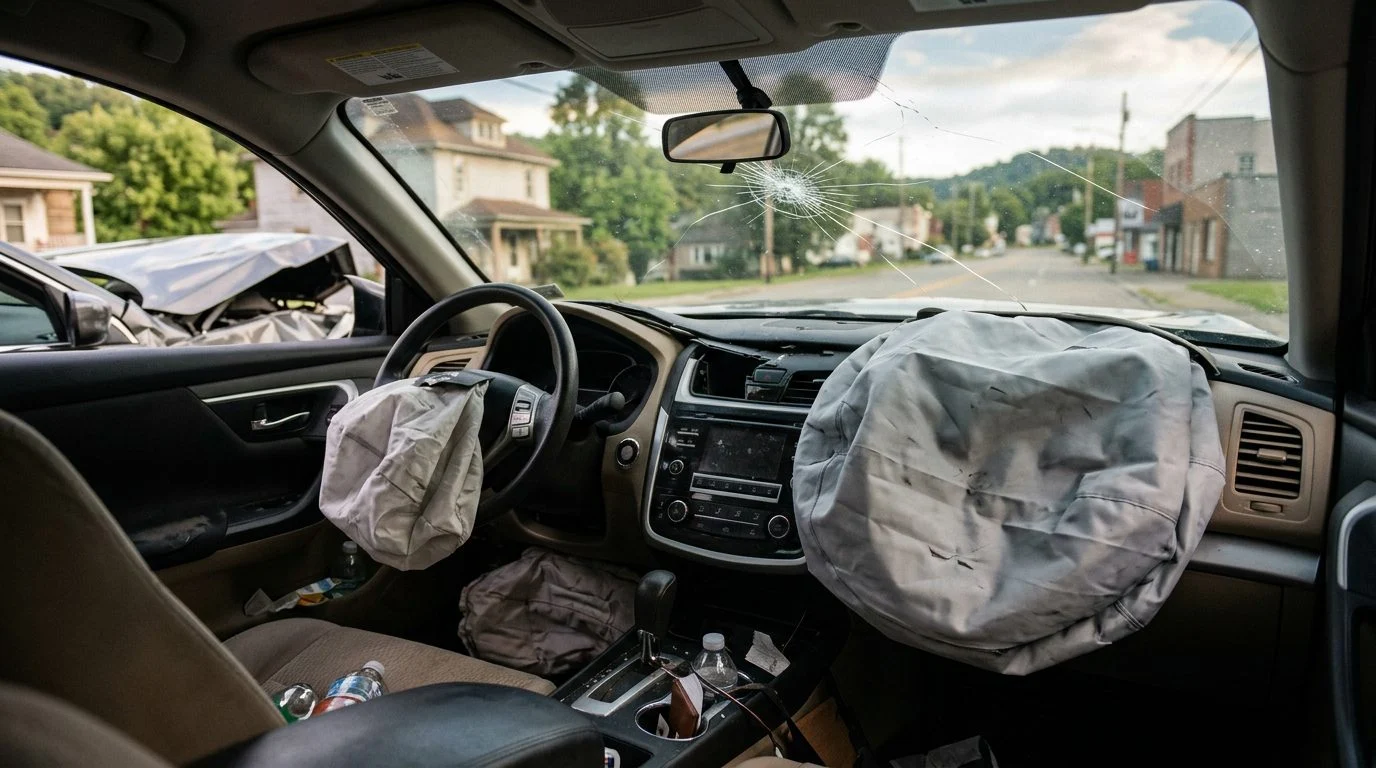
Step 1: Get Medical Evaluation and Treatment After the Crash
The first step is a medical evaluation, even if you feel fine at the scene. West Virginia law requires a driver in a crash with injuries to help an injured person get care, if that driver is physically able (W. Va. Code § 17c-4-3).
Who acts: the injured person, with emergency responders, the emergency room or urgent care, and later a primary care doctor or neurologist. What it needs: a prompt exam, imaging when a provider orders it, and a written record of every symptom you report.
Some head injury symptoms may appear hours or days after a crash. Headaches, dizziness, memory trouble, trouble concentrating, and mood changes are examples. Tell your provider about every symptom, even small ones, and about changes you notice later.
What comes next: the diagnosis and treatment plan become the medical foundation of the claim. If a provider refers you for therapy or another doctor, keep those visits. Each record adds to the picture of your injury.
Step 2: Document the Crash and the Scene
Documenting the crash means getting the police report number, the other driver’s details, and photos while the scene is still visible. Start as soon as you safely can.
Who acts: you, your family, and the investigating police agency. What it needs: the other driver’s name, a valid phone number, the year, make, model and last four digits of the vehicle identification number of the vehicle they are driving, and proof of insurance, including the insured’s name, the insurer’s name and contact information, and the policy number. It also needs photos of the vehicles and roadway, and names of any witnesses. Write these details down while your memory is fresh.
An officer who investigates a crash on a public street or highway that results in bodily injury, death, or total property damage to an apparent extent of $1,000 or more must prepare a report within 24 hours after completing the investigation (W. Va. Code § 17c-4-7). Within 24 hours of a motor vehicle crash, the officer must also provide owner, operator, and insurance information to each of the other involved parties and their insurance agents on request, at no cost. Ask the investigating agency for a copy once the report is ready.
Fault depends on the facts. The report may be relevant to how the crash happened, but it does not settle fault by itself. What comes next: the report and your own notes become part of the file that the firm and the insurer review.
Step 3: Insurance Contact and How It Works When You Were Not at Fault
When you were not at fault, the claim usually goes to the other driver’s liability insurer. Your own policy may also have coverage, depending on its terms.
Who acts: you, the at-fault driver’s insurer, and your own insurer where it applies. What it needs: the claim number, the adjuster’s name, and your policy details. Keep notes of every call, including the date, the time, and what was said.
Some insurers may dispute a claim or ask for a recorded statement early on. You don’t have to answer every question on the spot. Understand what you are agreeing to before you speak with an adjuster.
Under W. Va. Code § 55-7-13a, recovery in a personal injury or wrongful death claim is generally based on principles of comparative fault, with liability allocated to each person who proximately caused the damages, including the injured person, in proportion to that person’s percentage of fault. Under W. Va. Code § 55-7-13c, a person who brings a claim generally cannot recover only if their own fault is greater than the combined fault of everyone else responsible. If it is less, the recovery is reduced by their share of fault. Partial fault does not automatically end a claim.
What comes next: the insurer opens a claim file and may ask for medical authorizations and records.
Step 4: Keep Medical Records and Follow the Treatment Plan
Following your treatment plan and keeping every record protects the medical proof of your claim. Records matter as much as the care itself.
Who acts: you and your treating providers. The firm requests records once a claim is opened. What it needs: follow-up visits, imaging and test results, prescriptions, therapy notes, and referrals.
Gaps in treatment may be questioned by an insurer. If you miss a visit, reschedule it and tell your provider why. Ask for copies of your records as you go, and keep your own list of appointments.
Provider records, not memory alone, are generally the main proof of injury and treatment. Notes written close to the crash can be especially useful, because they show what you reported at the time. What comes next: the records feed the medical side of the demand. Keep them together in one folder, on paper or digital.
Step 5: Gather Proof of Losses
Proof of losses shows what the crash took from you in bills, lost work, and daily life. Gather it as you go rather than all at once.
Who acts: you, family members, and the firm’s staff who help organize the file. What it needs: medical bills, records of lost wages, and a letter from your employer about missed work or limits on your duties. Pay stubs or tax records that show your income before the crash are also useful.
Keep a symptom journal. Write down headaches, memory lapses, trouble reading or looking at screens, sleep changes, and tasks you could not finish. A journal may help show how the injury affects work and home life. It also shows patterns over time.
Family members can help here. A spouse or friend may notice changes you miss. What comes next: the losses are sorted into a file that supports the demand. Keep copies of everything.
Not sure what your next step is?
Talk it through with Big Bubba — the first case review is free, confidential, and carries no obligation.
Step 6: Case Review and Intake With the Firm
The firm’s first step with you is a free case review, offered as a first meeting with no obligation to continue. It is the point where the firm learns your side of the story.
Who acts: you, and the firm’s attorneys and staff. What it needs: the crash details, the names of your medical providers, insurance information for both sides, and any employment or income records. Bring what you have, even if it is incomplete.
During the review, the firm looks at the facts, the injury documentation, and the insurance picture. Those pieces show what the claim may involve. The review does not decide the claim, and no result is promised at this stage.
Describe the crash in your own words. Say where you were, what happened, and what your symptoms are today. The sequence of events matters. What comes next: if you choose to move forward, the firm starts organizing the file and requesting records.
Step 7: Demand Package and Negotiations
A demand package is the written request for compensation. It lays out your injury, your proof, and how the crash happened.
Who acts: the firm prepares the demand, and the insurer reviews it and responds. What it needs: a demand letter, medical records and bills, proof of losses, and a summary of the crash facts.
Timing matters early on. A settlement, release or statement obtained in violation of W. Va. Code § 55-7-11a during the twenty days after a personal injury, while the injured person is an inpatient or partially or totally unable to engage in his or her usual trade, profession or occupation, may be disavowed by the injured person at any time within one hundred eighty days from the date of the personal injury, by executing a written statement of disavowal and forwarding a copy to the person who violated the section, and any consideration paid must be repaid or returned to the person who paid it at the time the copy is forwarded.
Negotiations may include several rounds, requests for more records, and counteroffers. The length of this stage varies with the insurer and the facts. What comes next: a settlement by agreement, or a decision to file a lawsuit if the insurer will not resolve the claim.
Step 8: Filing a Lawsuit When Talks Do Not Resolve the Claim
A lawsuit is filed when talks do not resolve the claim and the deadline is near. Deadlines are the reason to check timing early.
Who acts: the firm files the complaint in the appropriate West Virginia court, and the other side responds. West Virginia generally allows two years to bring a personal injury action, and exceptions may apply (W. Va. Code § 55-2-12). The clock generally starts when the right to sue arises.
After filing, discovery usually follows. Discovery is the exchange of records and sworn questions between the parties. Depositions, mediation, and trial may come later. The timing depends on the court and the facts.
Some claims resolve before trial, and others do not. A trial is not the usual path for every claim. What comes next depends on how the case develops.
When a Head Injury Claim Involves a Death or a Spinal Injury
If a crash leads to death, the claim may become a wrongful death action with its own steps and deadline. The steps differ from a personal injury claim.
In a wrongful death action, the personal representative of the person who died brings the case (W. Va. Code § 55-7-6). West Virginia generally allows two years from the date of death, and exceptions may apply. Damages may include sorrow, mental anguish, and solace, along with reasonably expected loss of income and services, care and hospital expenses, and reasonable funeral expenses.
Spinal cord injuries follow a different medical path. MedlinePlus notes that a spinal cord injury may cause permanent paralysis or loss of function and sensation below the injury site. These claims may need more detailed medical records and proof of losses. They can run alongside a head injury claim.
If either situation applies to you, the firm’s wrongful death and spinal cord injury information covers those steps in more detail.
Why the Steps and Timing Vary
Timing varies because the injury, the fault question, the number of insurers, and the medical course each change how the stages move.
Severity matters. A mild concussion may move differently from a brain injury that needs long treatment. Fault may be clear, or it may be disputed. Some crashes involve several vehicles, a commercial driver, or more than one insurer. Each of these can add time.
No two claims follow the same timeline. This guide describes common stages, not a schedule. A claim may skip some stages or repeat others.
Keep records from the first day. They support every stage, from the first exam to the final resolution.
Not sure what your next step is?
Talk it through with Big Bubba — the first case review is free, confidential, and carries no obligation.

Understanding a Head Injury From a Crash
If headaches, memory trouble, or insurer calls are still weighing on you after a car crash, you don’t have to sort out the steps alone. The firm can review what happened and explain what your claim may involve. Request a free case review to talk through your head injury and your next move.