
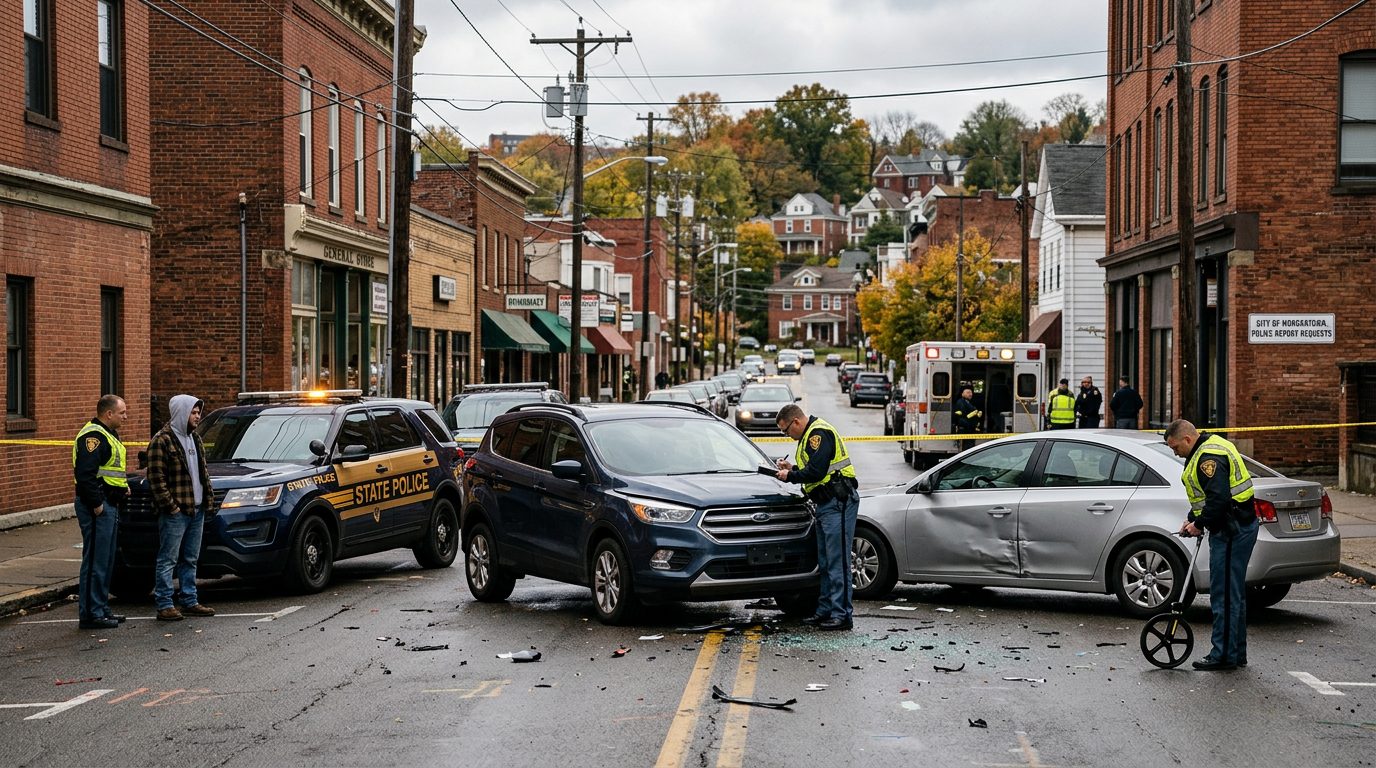
West Virginia Car Accidents
Get Your Crash Report Without the Runaround
A clear, step-by-step path to the official record of your crash, and a plain-language explanation of what it shows.
Published November 18, 2026
Your crash is still fresh, and now someone wants the police report. An insurer may ask for it, or you may simply want to see what the officer wrote.
To get a West Virginia car accident police report, contact the agency that responded to the crash, give it the details of the crash, and follow its request process. This walkthrough covers each step, what the report shows, and the mistakes that send requests back.
What a West Virginia Car Accident Police Report Is
A car accident police report is the official written record an officer prepares after investigating a crash on the public streets or highways of West Virginia that results in bodily injury to, or death of, any person, or total property damage to an apparent extent of $1,000 or more.
The report collects the basic facts. It lists the date, time, and location, the drivers and passengers, the vehicles, and the insurance information for each vehicle. It also includes the officer’s narrative, a written account of what the officer saw and learned, and a diagram showing how the vehicles were positioned and moved.
West Virginia sets rules for these reports. Under W. Va. Code § 17c-4-7, an officer who, in the regular course of duty, investigates a crash occurring on the public streets or highways of this state involving bodily injury, death, or total property damage of $1,000 or more must prepare a report. The officer must do this within 24 hours after finishing the investigation.
People ask for these reports for many reasons. An insurance claim may call for one. A family may want the official account to compare with medical records. A driver may simply want to check the facts while memory is still clear.
Not sure what your next step is?
Talk it through with Big Bubba — the first case review is free, confidential, and carries no obligation.
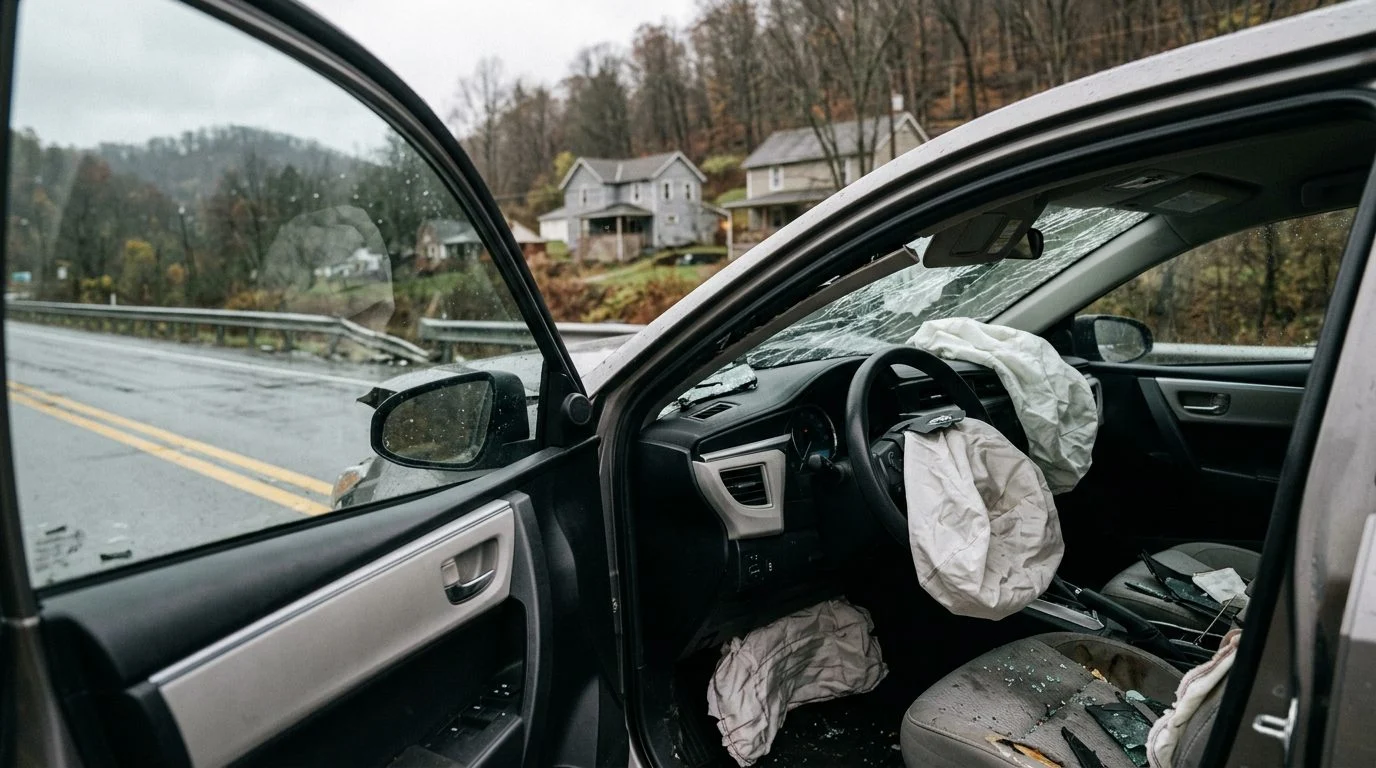
Gather the Details You Need Before You Request the Report
Before you make a request, gather the crash date, the time, the exact location, and the names of everyone involved.
Start with the basics. Write down the crash date and the approximate time. Then note the location, including the road name, mile marker, or nearest intersection. A mile marker helps on an interstate. A nearby cross street helps in town.
Next, look for a report number. If the officer gave you a card, receipt, or number at the scene, keep it. A number helps the agency find the record quickly.
Then list everyone involved. Include full names, addresses, and phone numbers for the drivers, passengers, and vehicle owners. Write down each vehicle’s year, make, model, and license plate. Note the insurance company and policy number if you have them.
Officers must share this exchange information when asked. Under W. Va. Code § 17c-4-7, the investigating officer must give owner, operator, and insurance information to the involved parties within 24 hours, at no cost.
If a commercial truck was involved, also note the company name shown on the truck and its plate number. Federal rules require motor carriers to keep an accident register for three years, as summarized in the FMCSR Part 390 summary.
Identify the Agency That Investigated the Crash
The agency that responded to the crash keeps the report, so that agency is the one to ask.
In West Virginia, that may be the State Police, a county sheriff’s office, or a municipal police department. After a crash, reporting steps may be part of the process, and what applies can depend on the facts of your case. Under W. Va. Code § 17c-4-6, a driver in a crash causing injury, death, or $1,000 or more in property damage must immediately, by the quickest means of communication, notify the local police if the crash happened inside a municipality. Otherwise, the driver must notify the county sheriff or the nearest State Police office.
The crash location is the best clue. A crash inside city limits may involve city police. A crash on a county road may involve the sheriff. A crash on an interstate may involve the State Police.
Check the scene paperwork first. The officer’s card, an exchange-of-information form, or the report number often names the agency. Then confirm that agency’s current request process before you send anything. Agencies differ in how they accept requests and what they need.
Step-by-Step: How to Submit Your Request
To submit your request, confirm the agency’s method, send the identifying details, and keep a record of what you sent.
- Confirm the method. Check the agency’s website or call to learn whether it takes requests in person, by mail, or online.
- Prepare the details. Use the date, location, report number, and names from your list.
- Complete the form or write a letter. Include your name, return address, phone number, and a plain description of the crash. Sign it.
- Pay any copy fee the agency lists. Ask how it accepts payment. One county sheriff’s Monongalia County Sheriff FAQ covers vehicle accident reporting.
- Keep copies. Note the date you sent the request. Follow up if you have not heard back within the time the agency gives.
Timing also matters. If the officer cannot complete the investigation within 10 days of the crash, the officer must submit a preliminary report of the crash to the Division of Highways on the 10th day after the crash. The final report is due within 24 hours after the investigation is complete, under W. Va. Code § 17c-4-7.
Reading the Crash Report Form Section by Section
Read the report in order, and check each section against what you remember and what your scene paperwork shows.
- Header. Check the report number, date, time, and location. A wrong date or road name is the first thing to fix.
- Parties and vehicles. Confirm each person’s name, address, and contact details. Check plate numbers, vehicle types, and owner names.
- Insurance. Verify the insurer and policy information for each vehicle. Compare it with the insurance card you were given.
- Injuries and occupants. Review how the officer recorded injuries, where each person sat, and whether anyone was taken for care.
- Narrative. Read the officer’s written account closely. It is often the most detailed part of the report.
- Diagram. Study the sketch of positions and movements. Check that lanes, directions, and points of impact match what you recall.
- Codes. Look up any numbers or codes in the agency’s key before you draw conclusions from them.
The format matters, too. Under W. Va. Code § 17c-4-9, a crash report must give enough detail to show the cause, the conditions then existing, and the persons and vehicles involved.
Who Can Request a Copy and What to Bring
Agencies generally release reports to the people involved in the crash, their insurers, and certain authorized representatives, under the agency’s own rules.
Ask the agency who may receive a copy and whether any limits apply. Rules can differ from one agency to another, so the agency is the best source for its own policy.
Bring proof of who you are. An agency may ask for a government-issued photo ID. It may also ask for proof of your connection to the crash, such as your name on the report or a letter from your insurer.
Can someone else request the report for me?
Often, a person with a connection to the crash can make the request, subject to the agency’s rules. Ask the agency what proof it needs for a representative.
If a death occurred, the family’s role may be different. Ask the agency how it handles requests from a family member in that role.
Not sure what your next step is?
Talk it through with Big Bubba — the first case review is free, confidential, and carries no obligation.
Common Mistakes That Cause a Request to Be Returned
Most returned requests have a missing or wrong detail, so check each item before you send it.
- Wrong date, road name, or missing report number. The agency may not be able to find the record.
- No signature, ID copy, or payment. Agencies may need these items before they process a request.
- Sending the request to the wrong agency. A crash handled by city police will not be in a county sheriff’s file.
- Expecting the report the same day. The officer has 24 hours after finishing the investigation, and a longer investigation may require a preliminary report first.
- Waiting too long. Requesting early helps you check the facts while details are fresh.
- Vague descriptions. Describe the crash plainly: where it happened, when, and which vehicles were involved.
What the Report Can and Cannot Show
The report records what the officer saw, what people told the officer, and the officer’s conclusions at the scene.
Those conclusions are not the final word. The report is one piece of evidence. Insurers and courts look at fault using other evidence, too.
Under W. Va. Code § 55-7-13a, West Virginia uses comparative fault. Fault is measured as a percentage, and recovery is reduced in proportion to each person’s share of fault.
West Virginia is generally treated as a fault-based state for car accident claims. That is why the report is usually read alongside photos, witness statements, and medical records.
Reports can contain errors or leave things out. Compare the narrative and diagram with your memory and any photos from the scene.
Does a police report decide who was at fault?
A police report does not, by itself, settle fault. It is one source, and it is weighed with other evidence.
How to Ask for a Correction to the Report
To ask for a correction, put the request in writing to the agency that prepared the report, and point to the exact entry that is wrong.
- Identify the report. Include the report number, the date of the crash, and the agency name.
- Name the section. Say which entry is wrong, such as a street name, a plate number, or a seat position.
- State the correct fact. Explain what the report says, what happened, and why the correction matters.
- Attach support. Photos, a witness statement, or repair estimates can show the correct fact.
- Keep copies and track the response. The agency may handle a fix through a supplement or an amended entry.
A correction request asks the agency to fix factual errors. It does not promise that the officer’s conclusions will change.
Timing Matters After a Crash With a Serious Injury
West Virginia generally allows two years to bring a personal injury claim, so request the report early while details are fresh (W. Va. Code § 55-2-12).
Under W. Va. Code § 55-2-12, a personal action for personal injuries must generally be brought within two years after the right to bring it has accrued. Exceptions may apply, so review the facts early.
For a death, W. Va. Code § 55-7-6 says a wrongful death action must be commenced within two years after the death. W. Va. Code § 55-7-6 reads: “The provisions of this section shall not apply to actions brought for the death of any person occurring prior to July 1, 1988.” That rule is subject to other provisions of the code.
Brain and spinal cord injuries can take time to evaluate. Medical records may still be arriving when the police report does. Keep both sets of papers together. The firm’s pages on traumatic brain injury and spinal cord injury cover those claims in more depth.
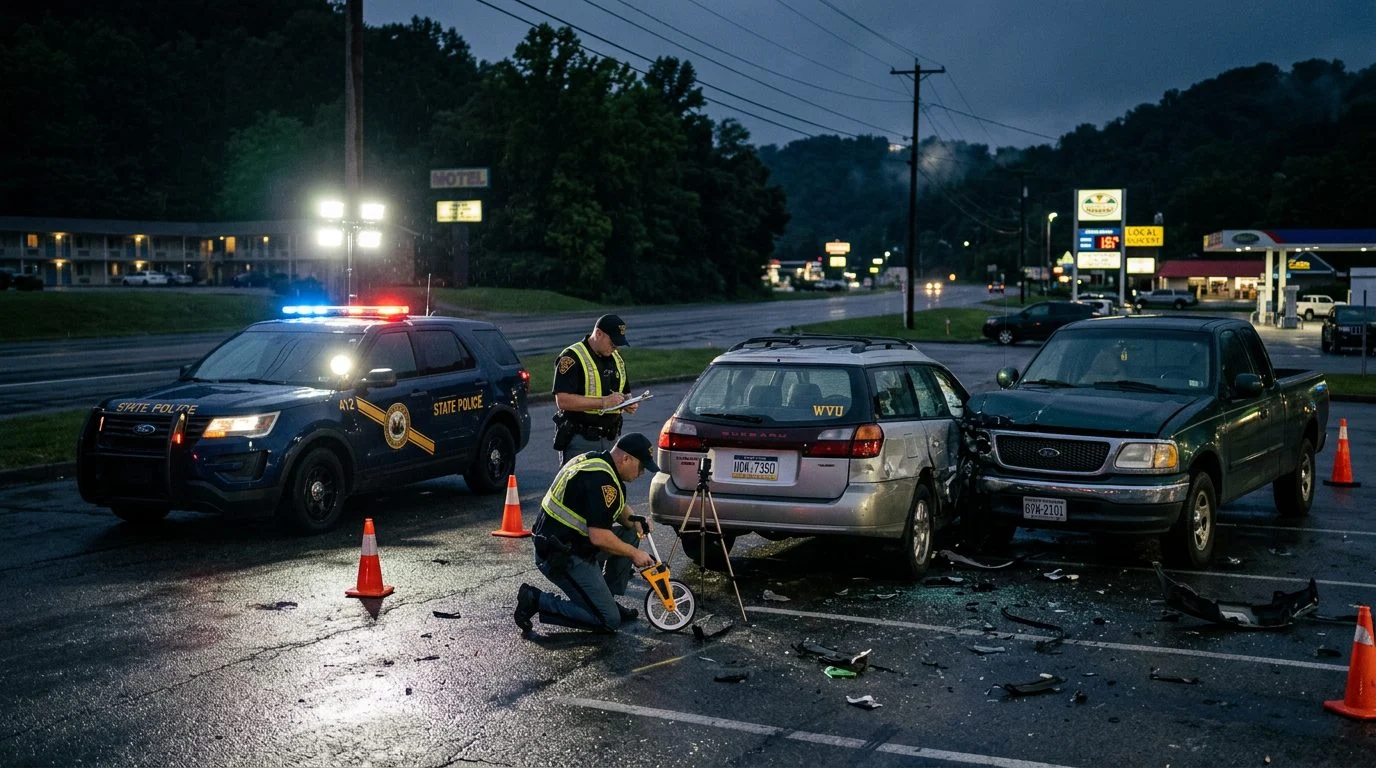
Reach Out to the Firm About Your Crash Report
A crash report is often one piece of a hard season. If you are recovering from a brain or spinal injury and the paperwork is hard to read, or your family is facing a wrongful death, you do not have to sort it out alone.
Big Bubba Injury Law handles car and truck accident claims, commercial vehicle crashes, catastrophic injuries, brain and spinal cord injuries, and wrongful death. We serve injury victims and families across West Virginia.
Request a free case review to talk through your report, the crash, and the questions that remain.