
West Virginia Injury Claims
Who Is Responsible for a Company Van Crash in West Virginia
A plain-language guide for West Virginia families dealing with a crash involving a company vehicle, from the person behind the wheel to the business that sent them out.
Published November 20, 2026
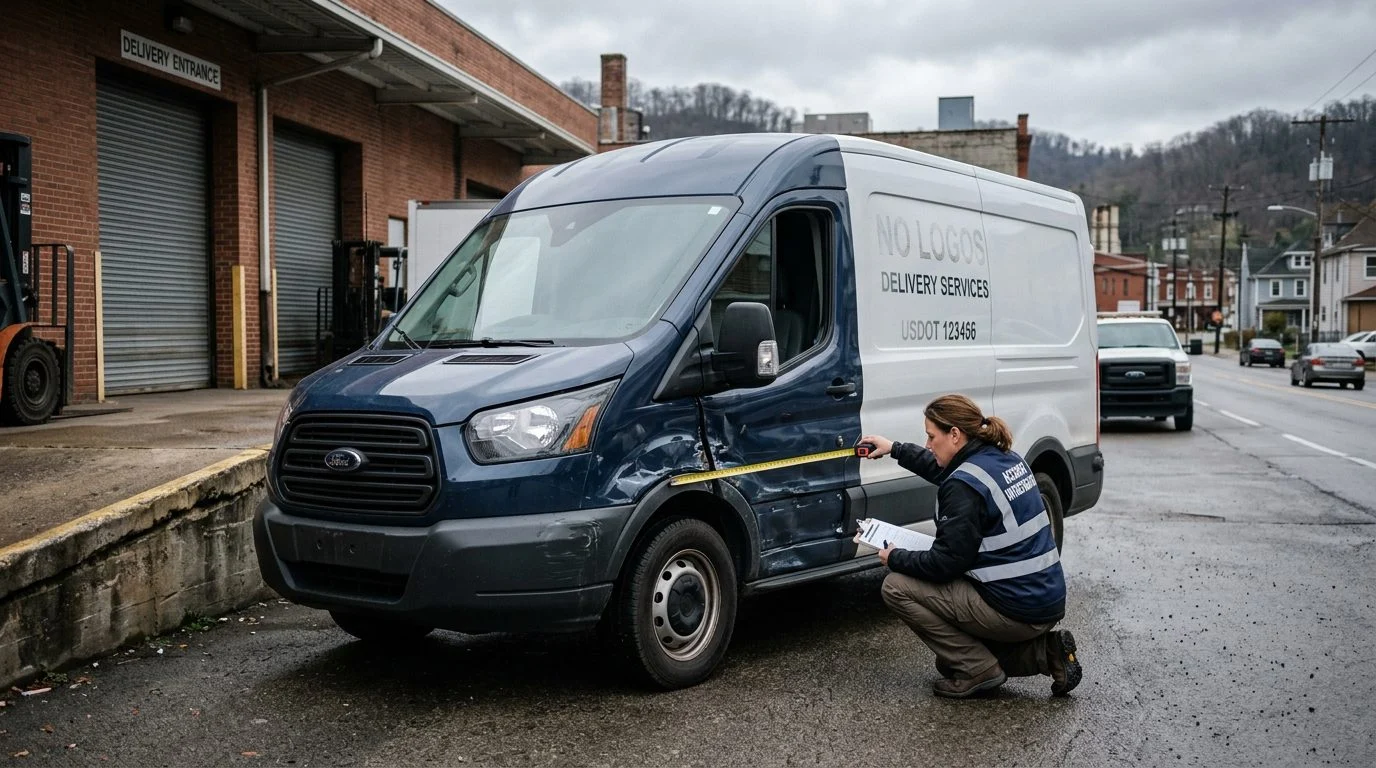
If a company van hit you, or someone you love, you may be asking who is responsible when a company van causes a crash in West Virginia. Often the driver, the employer, and the vehicle owner are all worth considering. Which of them may be responsible depends on the facts of the crash.
Injured people and family members often face the crash and the hard questions at the same time.
What Happens When a Company Van Is Involved in a Crash
A company van crash usually raises more questions than a crash between two private cars. The van may be a delivery van, a work van, or a passenger van used for a business. Each type can bring different parties into the picture.
The first questions often shape everything that follows. Who was driving? Who owns the van, and who leases or controls it? Was the driver doing the company’s work at the time? Those answers show which people or businesses may have a role in a claim.
Some vans fall outside the rules that apply to larger commercial vehicles. West Virginia’s commercial vehicle liability statute excludes vehicles primarily used to carry passengers, so the van’s use can matter. The definitions are set out in W. Va. Code § 55-7-32.
If you are still sorting out your injuries, keep in mind that some brain injuries may not cause clear symptoms right away. Tell us what you noticed after the crash, even if it seemed minor at first.
If a company van was part of your crash, you don't have to work out who may be responsible on your own. Reach out to us for a free case review. Talk it through with Big Bubba — the first case review is free, confidential, and carries no obligation.

Who May Be Liable When a Company Van Causes a Crash
The driver, the employer, and the vehicle owner are the parties most often considered first. Other people or businesses may also be considered in some cases.
The driver may be liable for their own careless driving. Examples include distraction, speeding, or failing to yield the right of way.
For certain commercial motor vehicles, West Virginia law uses a broad definition of “employer defendant” (W. Va. Code § 55-7-32). It can include the owner of the vehicle, the employer of the person driving it, and anyone who holds legal control over the vehicle or the driver.
Other parties may come into the picture. These can include a company that leases or rents the van, a maintenance contractor whose work may have failed, or a business that loaded or secured cargo in a way that contributed to the crash. A vehicle maker or parts supplier may be considered if a defect is alleged. That usually takes separate evidence.
Legal Theories That May Apply to a Company Van Crash
Vicarious liability means an employer may answer for an employee’s careless driving while doing the employer’s work.
Direct claims focus on what the company itself did or failed to do.
Federal hours-of-service rules limit how long commercial drivers may drive and require rest breaks. The FMCSA hours-of-service summary explains those limits. Records showing whether a driver followed them can be relevant.
These theories can be pursued together. Which ones fit a given crash turns on the evidence.
Chain Reactions and Sideswipe Crashes: Who Pays
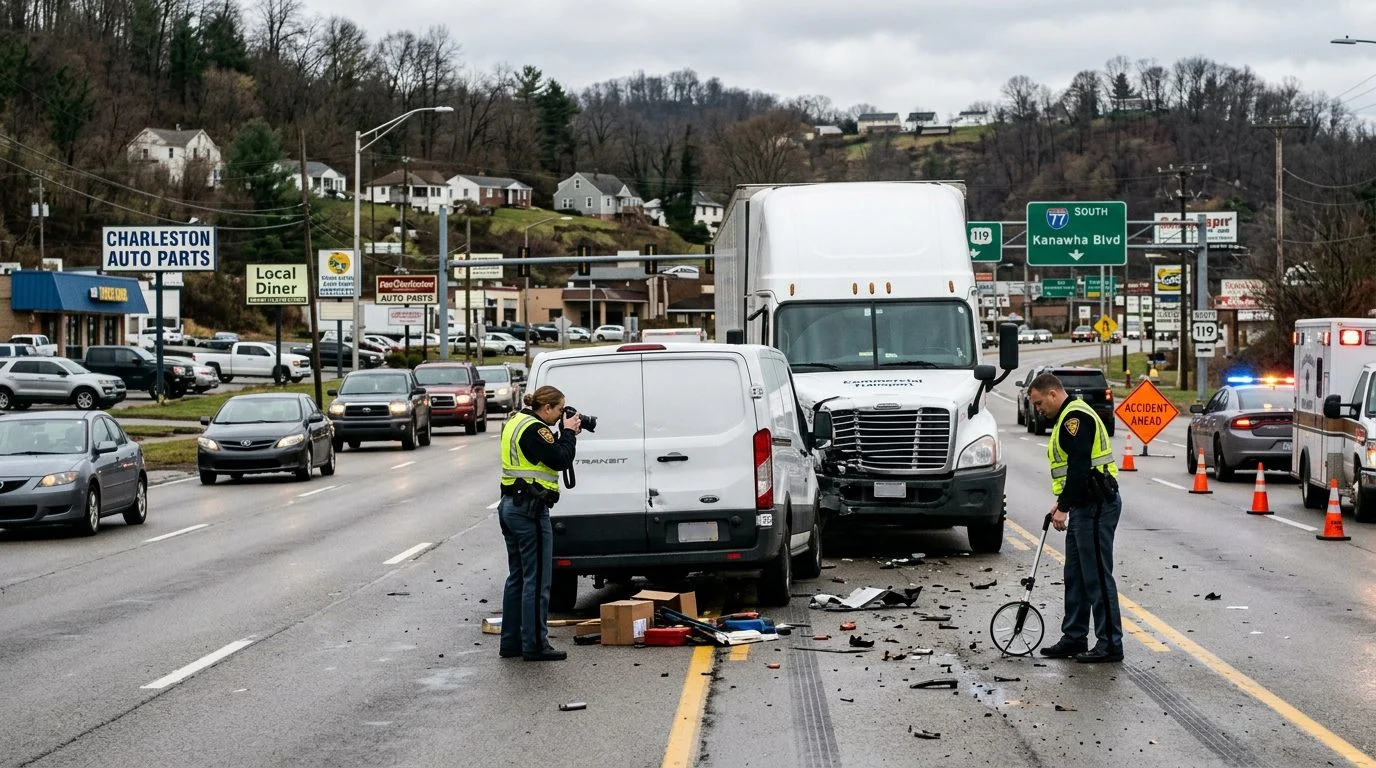
In a chain reaction or a sideswipe, more than one driver may share fault. Fault is not always placed on a single driver.
Under W. Va. Code § 55-7-13c, each defendant generally pays only its own share of fault. Your own fault does not bar recovery unless it is greater than the combined fault of everyone else responsible. W. Va. Code § 55-7-13c reads: “(c) Any fault chargeable to the plaintiff shall not bar recovery by the plaintiff unless the plaintiff’s fault is greater than the combined fault of all other persons responsible for the total amount of damages, if any, to be awarded.” If it is smaller, your recovery is reduced in proportion to your share.
In a sideswipe, a driver who changed lanes without checking may be considered at fault. Other facts can change that picture, such as where each vehicle was positioned or whether a third driver made the move necessary.
Defendants may also point to other people who contributed. Under W. Va. Code § 55-7-13d, fault of a nonparty shall be considered if the plaintiff entered into a settlement agreement with the nonparty or if a defending party gives notice no later than one hundred eighty days after service of process upon said defendant that a nonparty was wholly or partially at fault. The section also states that it does not eliminate or diminish any defenses or immunities that existed as of its effective date, except as expressly noted in it, and that the court generally instructs the jury on the percentage of fault for each party and nonparty unless all parties agree otherwise.
Police reports and witness statements often carry weight in these disputes. Writing down what you saw and heard, soon after the crash, helps keep the details clear.
Evidence That May Matter in a Company Van Crash Claim
The crash report is often the first document to request. Under W. Va. Code § 17c-4-7, an investigating officer prepares a report for a crash that causes bodily injury or death, or total property damage of $1,000 or more. The officer must also provide owner, operator, and insurance information, on request, to each of the other involved parties within 24 hours of the crash, at no cost.
Getting a copy of a report may carry an agency fee. The Beckley Police crash report page lists a $20 copy fee for crash reports. Other agencies may set their own fees.
Company records may matter too. Under 49 C.F.R. § 391.51, a motor carrier must keep a driver qualification file for each driver. Under 49 C.F.R. § 382.303, employers must test surviving drivers for alcohol and controlled substances after certain crashes.
Photos, dashcam video, GPS or telematics data, maintenance records, and driver logs may all be relevant. Companies may hold records that never appear in the public crash report. Evidence can be lost over time, so raising it early matters. Keep your own records of medical visits, missed work, and messages about the crash.
Time Limits and Damages Victims May Recover
West Virginia generally allows two years to file a personal injury claim, and exceptions may apply. The general rule for personal injury actions appears in W. Va. Code § 55-2-12.
Wrongful death has its own rules. Under W. Va. Code § 55-7-6, the action is brought by the deceased person’s personal representative. It generally must be started within two years after the death. Exceptions may apply, so checking the deadline early is wise.
A wrongful death verdict shall include, but may not be limited to, damages for sorrow, mental anguish, and loss of companionship. The verdict also shall include, but may not be limited to, damages for lost income and services, medical and hospital expenses tied to the injury, and reasonable funeral expenses. Injury claims may include medical bills, lost wages, and pain and suffering.
Not sure what your next step is?
Talk it through with Big Bubba — the first case review is free, confidential, and carries no obligation.
Where to Go From Here If You Were Hurt or Lost a Family Member
If a company van may have caused your injury or a loss in your family, the next step is understanding who may be responsible. You don’t have to answer every question at once.
You may be dealing with pain, grief, medical appointments, and calls about the crash all at the same time. That is a heavy load. Start by gathering the crash report, the names of the drivers and companies involved, and your own notes.
If a company van was part of your crash, the firm offers a free case review with no obligation to continue. We serve people across West Virginia, and we can talk through who may be responsible in your situation. Contact us for a free case review.