
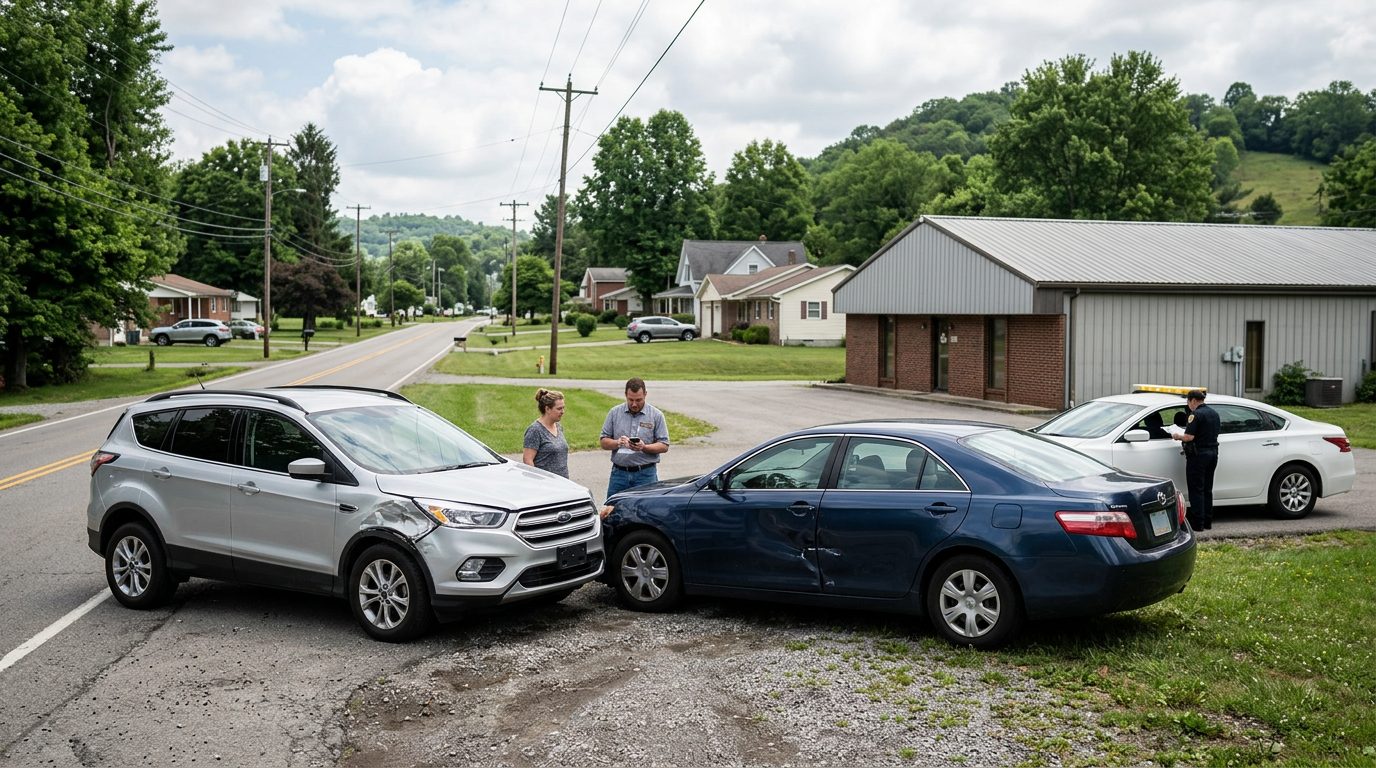
West Virginia Crash Claims
Does Your Insurer Decide Who Is at Fault?
An adjuster's early conclusion is not the final word. Here is how fault is usually looked at after a crash, and where to start if you have questions.
Published November 18, 2026
If an insurance company tells you the crash was your fault, it can feel like the question is already settled. It usually is not.
An insurer’s fault decision is its own claim position. It shapes how a claim is handled, but a court or an agreed settlement is what generally settles who is legally responsible.
Does Insurance Determine Who Is at Fault?
Not by itself. An insurer’s view of fault is a claim-handling position, not a court ruling.
When a claim comes in, the insurer decides whether to pay, deny, or dispute it. It also decides whether to blame its own policyholder. Those choices matter in practice. They can slow down payment and shape the offer you receive. They are still one company’s position.
In West Virginia, fault is handled under comparative fault. Under W. Va. Code § 55-7-13a, recovery is based on each person’s percentage of fault. Those percentages must total either zero or one hundred percent. How fault is allocated is set out in W. Va. Code § 55-7-13c.
The stakes are higher when injuries are serious. A traumatic brain injury or spinal cord injury can require long medical care. An early fault position can shape how those losses are presented. Some insurers may dispute a claim, and that dispute can start long before any lawsuit.
Not sure what your next step is?
Talk it through with Big Bubba — the first case review is free, confidential, and carries no obligation.
What an Insurance Adjuster Does When Fault Is Questioned
An adjuster reviews the claim and decides how the insurer will respond.
The adjuster may collect the police report, photos, repair estimates, and statements from drivers and witnesses. Some adjusters assign a percentage of fault. That percentage can change when new information arrives, such as video or a witness who comes forward.
Do not treat an early opinion as final. Ask the insurer what evidence it relied on for its position. A clear answer helps you judge whether the position fits the facts.
If you believe an insurer handled a claim unfairly, know the limits of your options. A third-party claimant may not bring a private lawsuit for an unfair claims settlement practice. The sole remedy is an administrative complaint with the Commissioner, filed as soon as practicable and no later than one year after the alleged unfair practice is discovered, under W. Va. Code § 33-11-4a. Consumers can learn about complaints through the West Virginia Insurance Commissioner.
For a broader look at serious crash claims, read our traumatic brain injury accident guide.
Why the Police Report Is Important but Not the Final Word
A police crash report is often an early record of what happened. It does not decide fault on its own.
Under W. Va. Code § 17C-4-7, the investigating officer must prepare a report within 24 hours after completing the investigation. This applies to crashes occurring on the public streets or highways of this state that result in bodily injury, death, or total property damage to an apparent extent of $1,000 or more. The same section requires the officer, upon request, to provide the owner, operator, and insurance information to each of the other involved parties within 24 hours of the crash, at no cost.
The report format is meant to show the cause, the conditions at the time, and the persons and vehicles involved, under W. Va. Code § 17C-4-9.
A report has limits. The officer may not have seen the crash itself. The report may rely on what drivers and witnesses said at the scene. It can also contain errors. If it does, you may need other evidence to correct it. You can learn how to get a copy of a crash report.
How Fault Is Actually Established: Traffic Laws, Evidence, and Witnesses
Right-of-way, speed, lane use, and signal rules are common points of dispute. Whether a driver broke those duties depends on the facts.
Evidence that may be relevant includes:
- Photos and video of the vehicles and the road
- Vehicle damage patterns and where the vehicles came to rest
- Skid marks and debris on the road
- Traffic camera or dashcam footage
- Vehicle event data
- Witness accounts
In some cases, accident reconstruction professionals analyze the physical evidence to estimate how the crash happened. Whether that helps depends on the facts.
Evidence can be lost over time. Video may be overwritten, and vehicles may be repaired or salvaged. Acting early to save what exists may matter.
How West Virginia’s Comparative Fault Rules Can Matter
Under W. Va. Code § 55-7-13c, fault chargeable to the injured person does not bar recovery unless that person’s fault is greater than the combined fault of all other persons responsible for the damages. If it is less, the recovery is reduced in proportion to the injured person’s degree of fault.
Under W. Va. Code § 55-7-13c, fault charged to the injured person does not bar recovery unless that person’s fault is greater than the combined fault of everyone else responsible. If it is less, recovery is reduced in proportion to that person’s degree of fault.
Under W. Va. Code § 55-7-13a, liability is allocated by percentage. Each person’s share is set in direct proportion to that person’s fault.
Fault can be divided among several drivers. How that split is decided can change the outcome, depending on the facts.
Keep two questions apart. The insurer’s percentage is a claim position. The legal standard is what a court applies. The two can point in different directions, and an insurer’s number does not replace the legal test.
Common Fault Questions, Including Rear-End Crashes
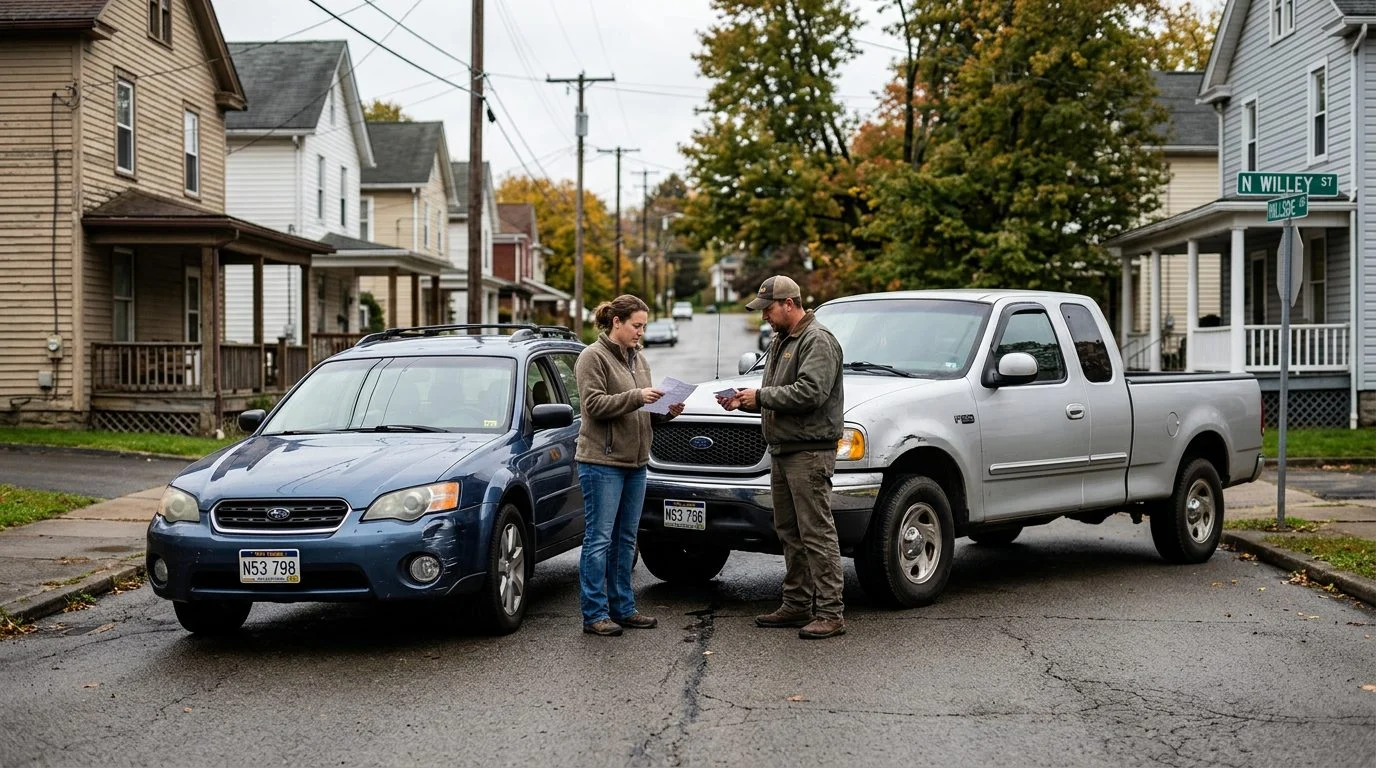
Rear-end and intersection fault questions often turn on small details, so the answer may depend on the facts.
Who Is at Fault When a Car Hits the Back of Yours?
The answer may depend on the facts. Investigators may look at following distance, sudden stops, lane changes, brake lights, and whether a driver was distracted.
Who Is at Fault in Left-Turn or Intersection Crashes?
These may depend on who had the right-of-way, the signal, and the speed and timing of each vehicle. Lane-change collisions may turn on whether a signal was used and whether the lane was clear.
A reader’s own actions can also be examined. Speed, distraction, and signal use may be part of how fault is reviewed on both sides.
Medical records can matter too. Your care history may be part of how a claim is evaluated. See why timing of medical care can matter after a crash.
Not sure what your next step is?
Talk it through with Big Bubba — the first case review is free, confidential, and carries no obligation.
Why You Should Be Careful About Admitting Fault
Be careful about what you say about fault at the scene and in writing. Insurers may use those words later.
A short apology can be read in different ways. Stick to facts you know, such as what you saw, what the signal showed, and where each vehicle was. Avoid guessing about speed or distance.
Should I Give a Recorded Statement to an Insurer?
Recorded statements can be used later in a claim, so think before you give one. Under W. Va. Code § 55-7-11a, for 20 days after an injury, a person generally may not seek a statement for settlement purposes while the injured person is a hospital inpatient or partially or totally unable to do their usual trade, profession or occupation. An exception applies when the injured person expressly asks, and only for a person acting or intending to act for and on behalf of the injured person.
Under W. Va. Code § 55-7-11a, any settlement, release of liability or statement entered into, obtained or made in violation of that section may be disavowed by the injured person at any time within one hundred eighty days from the date of the personal injury, by executing a written statement of disavowal and forwarding a copy of the same to the person violating this section; the settlement, release or statement then may not be admissible in evidence for any purpose in any court or other proceeding relating to the personal injury, if any consideration paid is repaid or returned to the person who paid it.
Write a simple record as soon as practical. Include the date, time, weather, location, what was said, and the names of any witnesses. Your memory is clearest right after the crash.
Paying for Damages Yourself or Going Through Insurance
A claim may run through the at-fault driver’s liability coverage, your own coverage, or both. The right path depends on the policies and facts involved.
Is It Better to Pay for Damages or Go Through Insurance?
That depends on the policies and facts, so review the choice before paying or signing anything.
Paying another person’s losses out of pocket can affect what happens later. A signed release matters too. Under W. Va. Code § 55-7-12, a release with one joint tortfeasor generally does not bar a claim against another.
Your own policy may matter as well.
If an Insurer Has Already Named You or Someone You Love at Fault
An insurer’s fault position is not automatically final, and you can ask what evidence it used.
If a family member is still recovering from a brain or spinal cord injury, a letter or phone call that blames them can be hard to read. Many people feel pressure to answer quickly. You do not have to answer every question on the spot.
Keep the big picture in mind. An insurer’s position is a claim position. Traffic rules, physical evidence, witness accounts, and West Virginia’s comparative fault rules shape the legal picture (W. Va. Code § 55-7-13c). Early decisions about statements and records can affect a claim, so slow down and write things down.
We handle car accident, truck accident, and wrongful death claims for people across West Virginia, and we serve Charleston, Huntington, Morgantown, Wheeling, and communities throughout the state. If that letter is in front of you now, you can request a free case review with the firm, or tell Bubba what happened so the facts of your crash can be reviewed.