
West Virginia Injury Guide
How an MRI Fits Into a West Virginia Injury Claim
Imaging is one piece of a larger medical picture. Here is how to think about tests, symptoms, and records if you were hurt in a crash.
Published November 15, 2026
You were hurt in a crash, and now someone has mentioned an MRI. You may be asking whether that scan could increase your settlement.
Short answer: no. An MRI does not set or raise a settlement amount on its own. It is one medical record that may be relevant to an injury claim.
Short answer: an MRI is evidence, not a settlement amount
An MRI is a medical record, not a price tag. It can show whether an injury is present. It does not put a dollar value on that injury.
Insurers and courts look at the whole file. That file usually includes the crash facts, your symptoms from the start, your doctor’s notes, and the treatment you received. The key question is whether the records show a real injury and connect it to the crash.
West Virginia also limits what an injury complaint can say about money. Under W. Va. Code § 55-7-25, a personal injury or wrongful death complaint may not include a specific dollar figure for damages sought. That rule applies to complaints filed on or after July 1, 2008.
Your treating doctor makes every decision about whether you need imaging. A scan is a medical decision first and a legal question second.
Not sure what your next step is?
Talk it through with Big Bubba — the first case review is free, confidential, and carries no obligation.
What an MRI is and how it differs from a CT scan
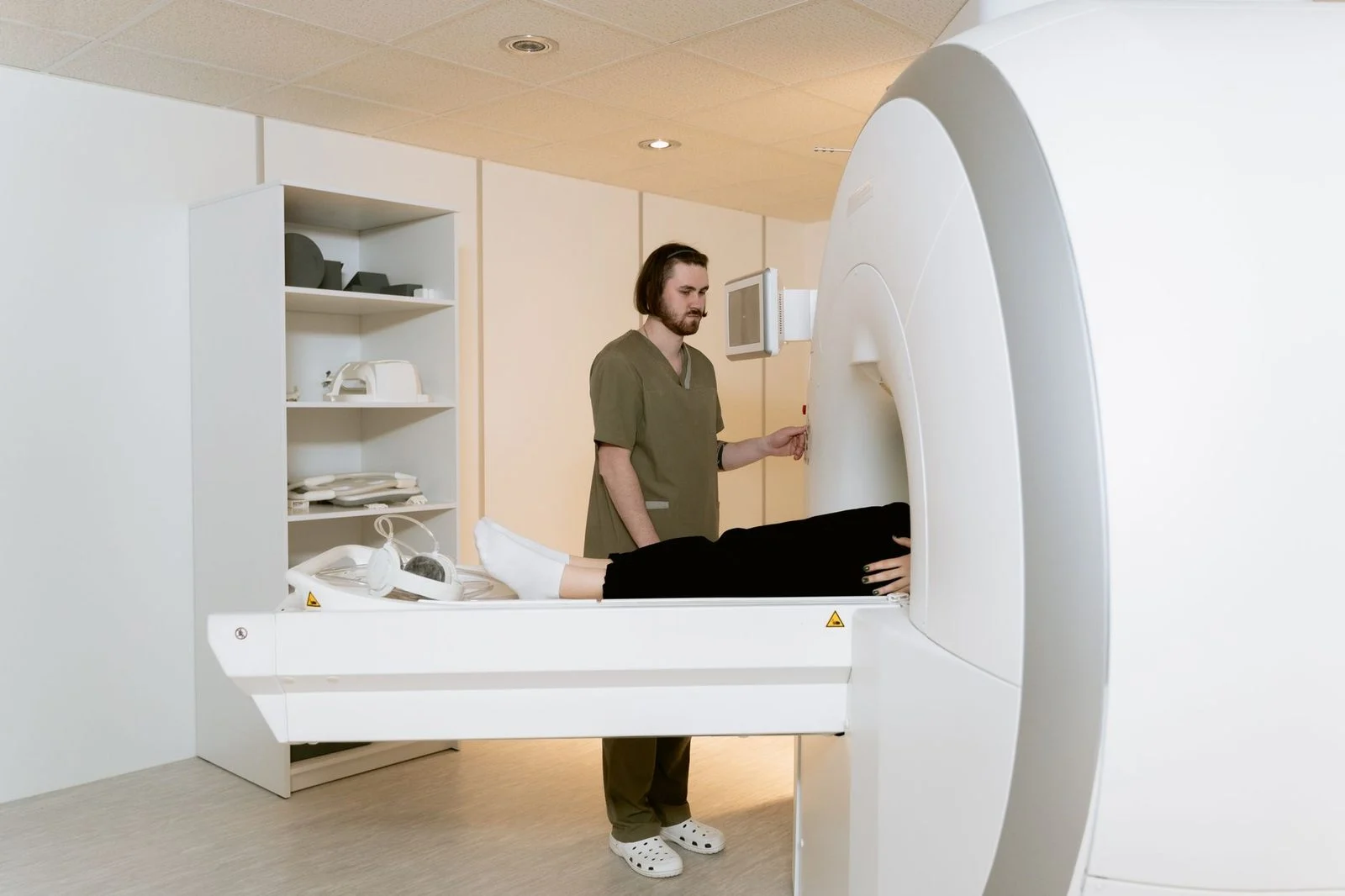
An MRI uses a strong magnet and radio waves to make detailed pictures of soft tissue, the brain, and the spinal cord. It does not use X-rays. An MRI usually takes longer than a CT scan, and you lie still inside a machine.
A CT scan uses X-rays taken from many angles to build cross-sectional images. It is usually faster. Emergency teams often use it first to look for fractures and bleeding.
The two tests show different things. Ordering an MRI after a CT scan does not mean the CT was wrong. Doctors often choose each test based on symptoms, timing, and what they need to see.
A test result is only as useful as the medical question behind it. The report describes what the scan showed. Your doctor explains what it means for you.
What an MRI can show after a crash
An MRI can show some injuries that other tests may not. That is one reason doctors order it after a head or spine injury, especially when symptoms continue.
Brain and head injuries. MRI may show changes that a CT scan did not. A normal CT does not rule out every brain injury. Your doctor decides what the findings mean.
Spinal cord and nerve injuries. MRI is commonly used to view the spinal cord, discs, and nerve roots. A disc finding is a medical observation. A doctor must connect it to the crash.
Soft tissue injuries. Ligaments, muscles, and discs may show changes on MRI. Some of these changes do not show on X-ray. Some findings may have been there before the crash, so doctors compare them with your history.
A finding is a medical observation. Whether it connects to the crash is a separate question. Doctors answer it using your full record.
Why a normal CT scan does not end the question
A normal CT scan does not always mean there was no brain or soft tissue injury. CT may not show every type of injury.
Symptoms can continue after a normal CT. Headaches, dizziness, neck pain, or numbness may lead a doctor to order more testing, including an MRI. That decision belongs to your doctor, based on your exam.
Test results and symptoms vary from person to person. A scan cannot be read the same way for every crash victim. The firm’s page on normal CT scans after a car accident brain injury in West Virginia covers this in more detail.
Tell your doctor about every symptom, even ones that seem minor. A clear medical history is part of the full record.
How imaging and treatment records can affect an injury claim
Insurers and courts generally look at the full medical record. That includes imaging, symptoms, and whether treatment stayed consistent over time.
A gap in treatment may be raised by the other side. Some insurers may dispute a claim because of a delay in care. Clear, timely records that describe your symptoms and the crash may be relevant to how a claim is evaluated.
Fault matters too. West Virginia uses modified comparative fault, which is a shared-fault rule (W. Va. Code § 55-7-13c).
Timing of early contact also matters. For 20 days after an injury, a person may not negotiate a settlement with an injured person who is in the hospital or unable to work. The same rule limits getting a statement for settlement use, but a person acting for and on behalf of the injured person may obtain one upon the injured person’s express request. Under W. Va. Code § 55-7-11a, an injured person may disavow a settlement, release or statement obtained in violation of that section within one hundred eighty days from the date of the personal injury, and the section’s conditions and limits apply.
Common questions about MRI after a car accident
Is an MRI worth it after a car accident?
Whether to get one is a medical decision for your treating doctor. It is based on your symptoms and exam findings. A claim usually turns on the full medical record, not one test.
Can a brain injury be real if the scan looks normal?
Yes, some brain injuries do not show on standard imaging. Your symptoms, your medical evaluation, and your records all matter.
Should I tell the insurance company about every test?
Talk with your treating doctor about your care first. Questions about what to share with an insurer are fact-specific.
Can I sue an insurer that handles my claim unfairly?
West Virginia does not allow a third-party claimant to bring a private lawsuit for an unfair claims settlement practice. Under W. Va. Code § 33-11-4a, the sole remedy is an administrative complaint with the Insurance Commissioner, filed as soon as practicable and no later than one year after the unfair practice is discovered. The state’s consumer services page covers complaints about claim delays or denials, and it does not give legal advice.
Not sure what your next step is?
Talk it through with Big Bubba — the first case review is free, confidential, and carries no obligation.
Where a scan fits in your situation
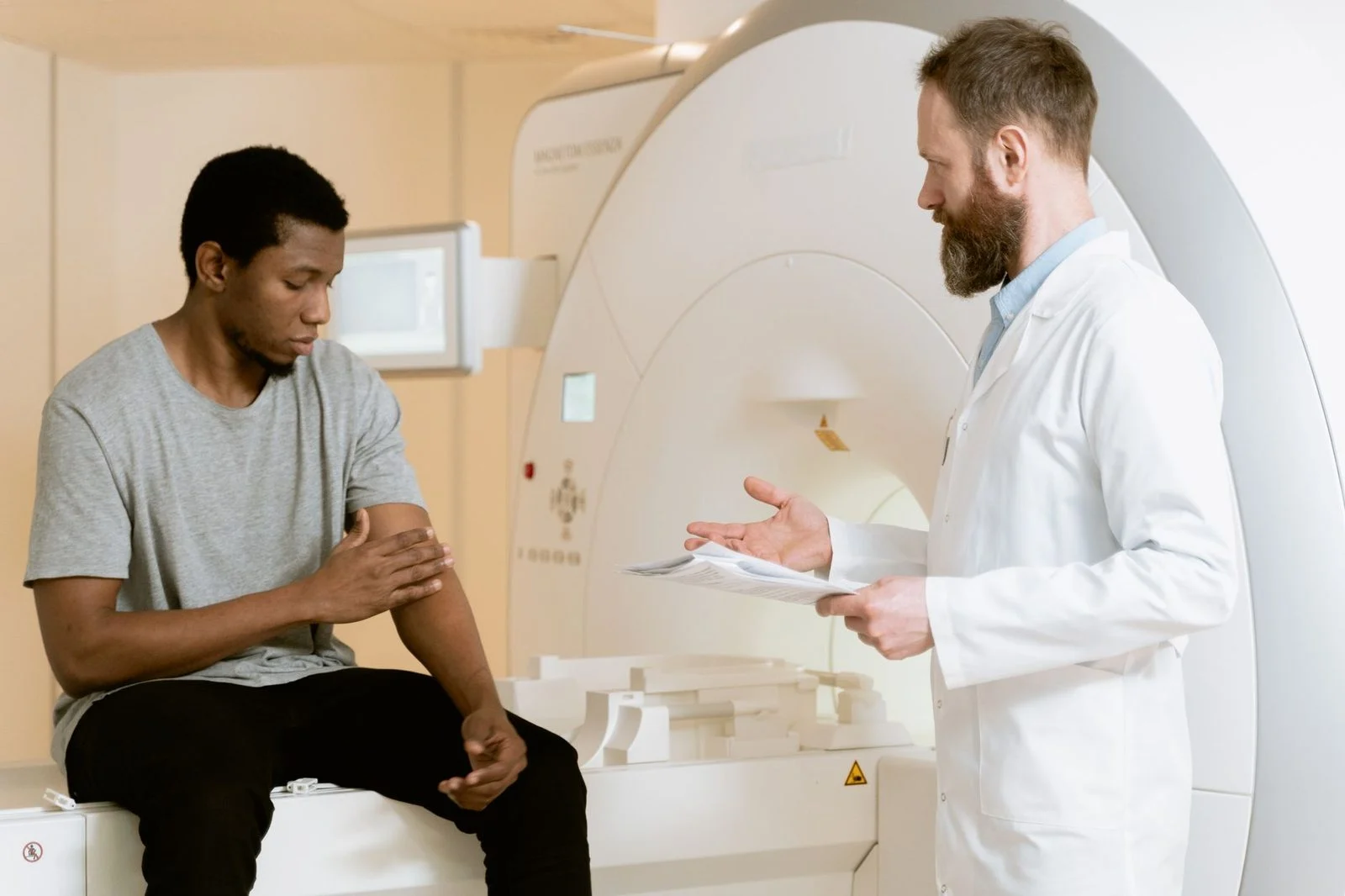
You may be waiting on imaging results right now. You may be watching a family member recover from a head or spine injury, or trying to make sense of a scan someone mentioned after a crash. That is a hard place to be.
The question in front of you is whether your results, your medical records, and the crash details fit together in a way that deserves a closer look.
The firm handles car, truck, and commercial vehicle crash claims. It also handles catastrophic injury and wrongful death cases, and it serves injury victims across West Virginia.
If you’re in that spot, the firm offers a free case review, which is confidential. You can reach out to the firm to talk through your records and the facts of your crash.