
West Virginia Crash Reports
Getting Your West Virginia Crash Report
Find the right agency, gather the details you will need, and get help from our team if your crash has left you with questions.
Published November 18, 2026
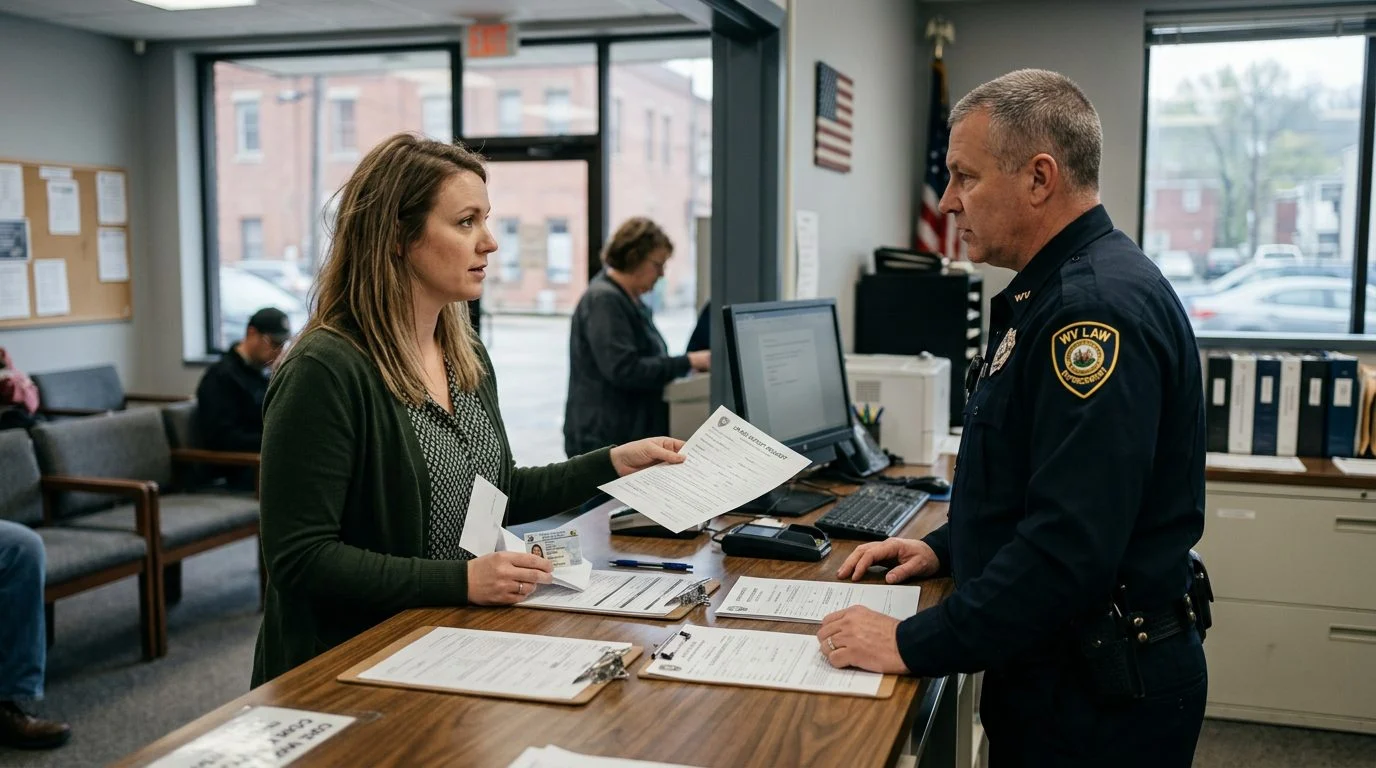
A crash can leave you with a lot of questions, and the police report is often one of the first things people need. To get a copy of a West Virginia crash report, ask the agency that responded to the scene. That is usually the State Police, a city police department, or the county sheriff’s office.
This guide walks through which agency to contact, what to have ready, how the request usually works, and what to check once you have the report.
What a West Virginia Crash Report Is and Why People Request One
A crash report is the official record an investigating officer writes after a motor vehicle crash on the public streets or highways of West Virginia that results in bodily injury to, or death of, any person or total property damage to an apparent extent of $1,000 or more. It usually lists the date, the location, the drivers and vehicles involved, and what the officer observed at the scene.
West Virginia law requires a report in certain crashes. Under W. Va. Code § 17c-4-7, an officer who investigates a crash in the regular course of duty on the public streets or highways of this state must prepare a report when a crash causes bodily injury or death, or total property damage to an apparent extent of $1,000 or more. The report is due within 24 hours after the investigation is complete. If the investigation cannot be completed within 10 days of the crash, a preliminary report is due to the Division of Highways on the 10th day after the crash.
People ask for a copy for many reasons. They want to confirm the basic facts while memories are fresh, or they need it for an insurance claim. Either way, the report is a starting point.
It is not the whole story. State law says the report form must give enough detail to show the cause of the crash, the conditions at the time, and the people and vehicles involved, as set out in § 17c-4-9. Still, a report may leave out details that witnesses, photos, or medical records capture.
If a crash left you or someone you love hurt, the report is only one part of it, and we can help you talk through what comes next. Talk it through with Big Bubba — the first case review is free, confidential, and carries no obligation.
Finding Out Which Agency Has the Report
The agency that responded to the scene usually holds the report. That is most often the West Virginia State Police, a municipal police department, or a county sheriff’s office.
Location helps narrow it down. Under § 17c-4-6, a driver in a crash resulting in injury to or death of any person or total property damage to an apparent extent of $1,000 or more must immediately notify the local police if the crash happens inside a municipality. Otherwise, the notice goes to the county sheriff or the nearest State Police office.
A crash on a city street usually points to city police. A crash on a rural road or an interstate outside city limits usually points to the State Police or the sheriff. These are general patterns, and every crash is different.
If you’re not sure which agency handled the call, phone the agency you think responded. Staff can confirm whether they hold the report or point you to the right office.
Commercial vehicle crashes deserve extra care. A truck or bus crash may generate records with more than one agency, so ask each one what it holds.
What to Have Ready Before You Request a Copy
Gather the basic facts of the crash before you call or visit. Accurate details help records staff find the right file.
Have these details ready:
- The date and approximate time of the crash.
- The exact location, such as the road name, nearest intersection, or mile marker.
- The names of the drivers and other people involved.
- Any report or incident number the officer gave you at the scene.
Keep the information you exchanged at the scene, too. Under § 17c-4-3, a driver in a crash resulting in injury to or death of any person or damage to any vehicle must, if physically able to do so, give the other party a name, a valid telephone number, the year, make, model and last four digits of the vehicle identification number, and proof of security and financial responsibility required by section three, article two-a, and section two, article four, chapter seventeen-d of this code.
If you received an officer’s name or badge number, write it down. Those details can help staff locate the record.
How to Request the Report from the Agency
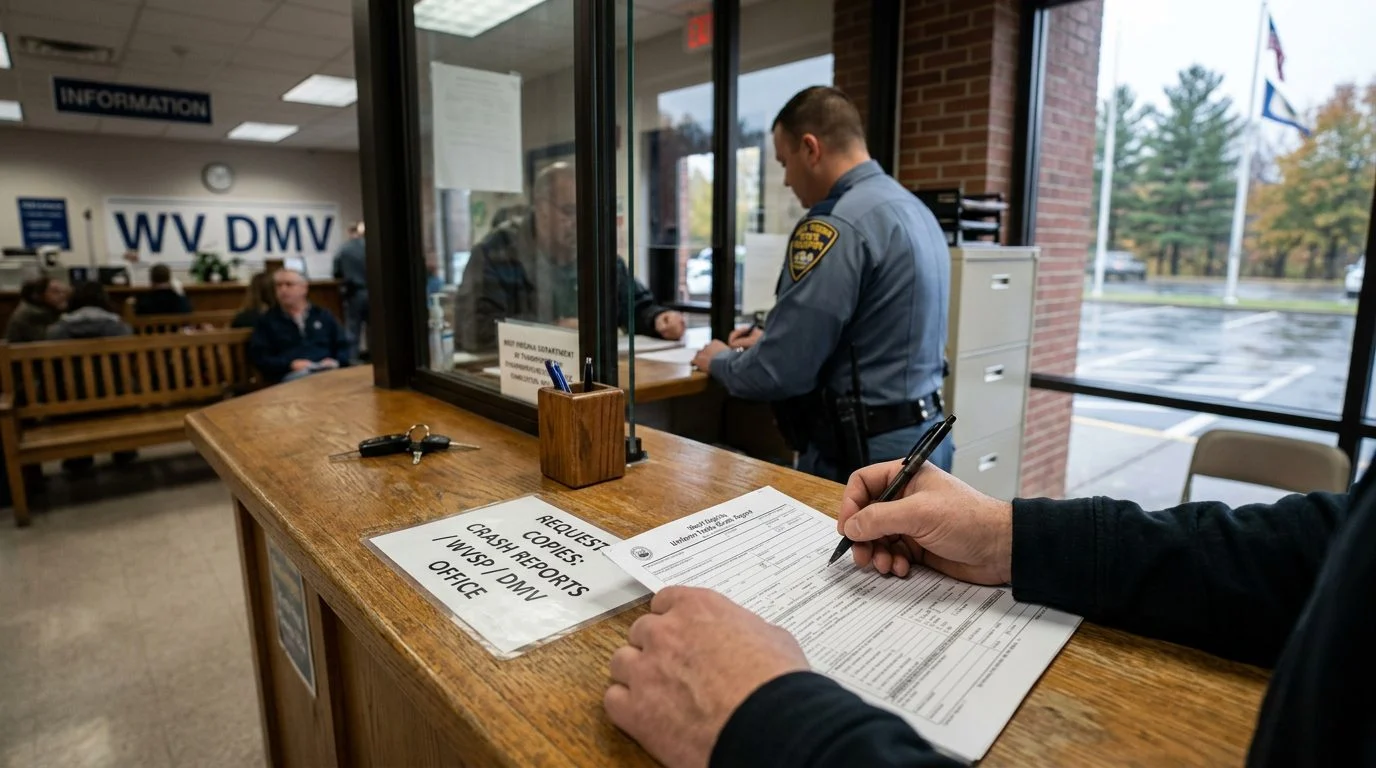
Most agencies take requests in person, by mail, by phone, or through an online option, but each agency sets its own process.
The Monongalia County Sheriff’s office publishes a Monongalia County Sheriff FAQ that explains the identifying information it asks for and how online retrieval works.
The Beckley Police Department’s crash report request page lists a $20 copy fee, the required payment, and when reports become available.
Requests for records are often directed to the agency that holds them, and a clear description of the records you are seeking can help the request. Copying fees may apply, as described on the West Virginia public records page.
Ask about the agency’s forms before you visit, since some want a written request. Processing time varies by agency and by how complete the report is when you ask. Ask staff for an estimate when you submit.
Write down the date you asked, the report number, and the name of the staff member you spoke with. That record makes follow-up simpler if the report takes time.
Who Can Request a Copy and What Families Should Know
People involved in a crash can usually request the report, and often their insurance representatives can too.
The Parkersburg Police Department’s Parkersburg Police Department FAQs describe how crash participants and insurance representatives can request a copy. Each agency sets its own release rules, so confirm them before you go.
After a death, the process can be harder to sort out. A surviving relative may need to show a family connection or legal authority to get the report. Ask the agency which documents its staff needs.
Wrongful death claims in West Virginia are brought by the personal representative of the deceased person’s estate, under § 55-7-6. That statute generally requires the action within two years after the death, and exceptions may apply. W. Va. Code § 55-7-6 reads: “The provisions of this section shall not apply to actions brought for the death of any person occurring prior to July 1, 1988.”
Deadlines are easy to lose track of during a funeral and paperwork. Keep the report request and any important dates in one place.
Reviewing the Report and Deciding on Next Steps
Check the report for accuracy as soon as you receive it. Look at names, vehicle details, the road and location, the scene description, and any witnesses or citations listed. Mistakes in those details are easier to fix early.
If something is wrong, contact the agency that wrote the report. Ask how to add information or request a correction, and write down what you remember while it is still clear.
Some insurers may dispute a claim, and an inaccurate report can make that harder to handle.
Remember that a report is one source among several. Medical records, photos, and witness information often matter too, especially after a brain or spinal cord injury.
We serve injury victims across West Virginia, including people in Charleston, Huntington, Morgantown, Wheeling, Martinsburg, Parkersburg, Beckley, Clarksburg, Fairmont, and Weirton.
If you’re holding this report after a serious injury or a death, and you’re unsure what it means for you, you don’t have to work through it alone. You can reach out to the firm to ask about a Request a free case review, and we can go over the report with you in plain terms.