
Wrongful Death | West Virginia
Losing a Loved One in a West Virginia Crash? Take It One Step at a Time
Practical guidance for families in the first days, from a firm that handles wrongful death and serious crash cases across West Virginia.
Published November 17, 2026
Losing a family member in a car crash is a shock, and the first days can feel impossible to manage. If a family member died in a car accident in West Virginia, the first steps are to confirm the death, get the police crash report, and protect any evidence. A wrongful death claim is generally brought by the personal representative of the person who died. We serve families across West Virginia, and this guide walks through each step in plain terms.
What to Do in the First Hours After You Learn of the Death
In the first hours, the most useful step is making sure people are cared for. The paperwork can wait a day or two.
Confirm the death through a reliable source. This is usually the hospital, the investigating law enforcement agency, or the county coroner. Ask one person in the family to be the point of contact for officials, so calls don’t land on several people at once.
Coroners have their own reporting duties. Under W. Va. Code § 17C-4-11, a coroner reports traffic crash deaths to the Division of Highways each month.
Next, tell close relatives in a planned order. If children or others depend on the person who died, decide now who will look after them. Ask a trusted friend or relative to handle meals, phone calls, and travel.
Take breaks. Shock makes small tasks feel large, and it’s normal to forget names or dates. Grief can also show up as trouble concentrating. Keep one notebook or folder for names, phone numbers, and case or reference numbers. Date each entry, because you’ll need these details later.
If you are still sorting out your family member's crash and the steps ahead, you can reach out to the firm for a free case review. Talk it through with Big Bubba — the first case review is free, confidential, and carries no obligation.
Get the Police Crash Report and Ask Who Responded
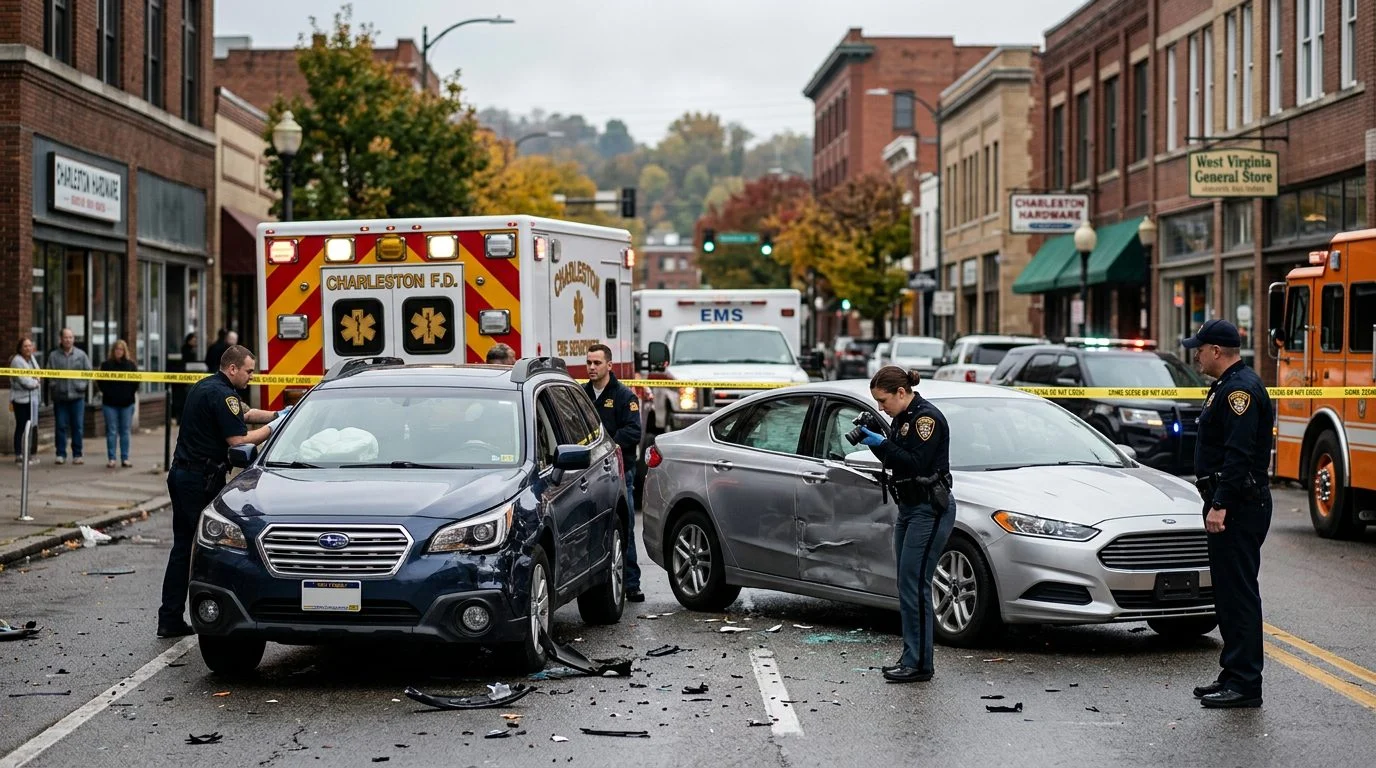
A police crash report is the official written record of a crash. It’s often the first document a family sees.
Under W. Va. Code § 17C-4-7, an officer who investigates a motor vehicle crash on public streets or highways resulting in bodily injury, death, or total property damage to an apparent extent of $1,000 or more must prepare a report within 24 hours after finishing the investigation. Under W. Va. Code § 17C-4-7, within 24 hours of a crash, the officer must give owner, operator, and insurance information for all involved parties to each of the other involved parties and to each party’s respective insurance agents, on request, at no cost, whether or not the accident report has been completed.
If the investigation can’t be finished within 10 days, a preliminary report goes to the Division of Highways on the 10th day after the crash.
A crash report should give enough detail to show the cause, the conditions at the time, and the people and vehicles involved. W. Va. Code § 17C-4-9 describes that requirement.
Treat the report as a starting point, not the final word. Investigators may update their findings as the work continues. Ask the agency for the report or case number, the investigating officer’s name, and how to request a copy. Ask how long processing takes, since timing varies by agency.
Preserve Evidence Before It Disappears
Evidence from a fatal crash can be moved, repaired, or lost, so ask early who holds it.
Evidence that often matters includes the vehicle, photos and video from the scene, names of witnesses, phone records, and medical and coroner records. Each item may help explain how the crash happened and what injuries occurred.
Vehicles are often moved to a tow yard or storage lot. Ask who has custody of the vehicle, whether it can be kept in place, and whether anyone plans to repair or sell it. Write down the answers and the names of the people you speak with.
Keep copies of bills, funeral receipts, pay records, and anything that shows the financial and personal effect of the loss. These records can help show what the family lost. Your own notes about what you saw or heard, written while memory is fresh, may also be useful.
Be careful with social media. Posts about the crash, the other driver, or the case can be seen by insurers and others. It’s safer to keep those thoughts private for now.
Handling Calls From Insurers and Other Drivers
You don’t have to answer an insurer’s questions on the day they call.
Calls can come from your own insurer, the other driver’s insurer, or an adjuster for a company. Some insurers may dispute a claim, so it helps to write down who called, when, and what was said. Your own insurer may also have questions. Ask what they need from you and in what form.
You can ask callers to direct future contact to you or to the person handling the family’s affairs. It’s reasonable to say you need time before you answer more questions.
Be cautious about recorded statements in the early days of grief. Ask questions before you agree to anything.
A settlement offer is a decision point. Under W. Va. Code § 55-7-7, the personal representative may compromise a wrongful death damages claim before or after a lawsuit is filed. The statute provides: “Upon approval of the compromise, the court shall apportion and distribute such damages, or the compromise agreed upon, after making provisions for those expenditures, if any, specified in subdivision (2), subsection (c), section six of this article, in the same manner as in the cases tried without a jury.” (W. Va. Code § 55-7-7) Ask questions about any written offer before anything is signed.
Who May Bring a Wrongful Death Claim in West Virginia
In West Virginia, a wrongful death claim is generally brought by and in the name of the personal representative of the person who died. Ask whether a personal representative has been appointed or whether one still needs to be.
Under W. Va. Code § 55-7-6, the personal representative must be duly appointed.
The law lists the kinds of damages a verdict may include. These include sorrow, mental anguish, and loss of companionship, reasonably expected loss of income, and reasonable funeral expenses.
Who may be liable depends on how the crash happened. Under W. Va. Code § 55-7-5, a person or company that would have been liable if the person had lived can be sued for damages.
In commercial crashes, federal rules may also apply. The Federal Motor Carrier Safety Administration explains that drug and alcohol testing rules for commercial drivers can include testing after some crashes.
A wrongful death claim is separate from an injury claim. If the person who died had started an injury claim, W. Va. Code § 55-7-8 explains how that action may continue through the personal representative.
Deadlines to Keep in Mind Under West Virginia Law
West Virginia generally allows two years to file a wrongful death action, measured from the death (W. Va. Code § 55-7-6).
Under W. Va. Code § 55-7-6, the action must be commenced within two years after the death, subject to other sections of the code. W. Va. Code § 55-7-6 reads: “The provisions of this section shall not apply to actions brought for the death of any person occurring prior to July 1, 1988.” Exceptions may apply, so write down the date of death early.
Claims against a government body follow a separate rule.
A claim against a private driver, a company, and a government entity may each have different steps. Knowing which applies early can prevent surprises.
Deadlines like these are easy to lose track of during the early weeks of grief, which is why writing them down matters. Keep the dates in the same folder as the crash report, so everything stays in one place. Missing a deadline can affect a family’s ability to file.
Not sure what your next step is?
Talk it through with Big Bubba — the first case review is free, confidential, and carries no obligation.
Understanding Your Free Case Review
If you are still gathering answers, you don’t need every document before you ask questions.
If you are in this position, you may be waiting on a crash report, fielding insurer calls, and trying to decide what comes next. That is a lot to hold at once, and you don’t have to sort it out alone.
When you reach out, it helps to have the crash date, the location, the crash report number if you have one, and the names you wrote down. You don’t need everything complete to begin. Keep your notebook close, since every name and date you recorded now will make the next conversation easier.
We serve families across West Virginia, and the firm offers a free case review, which is confidential and carries no obligation to continue. If you want to talk through your family member’s crash and the steps ahead, reach out to the firm to request a free case review.