
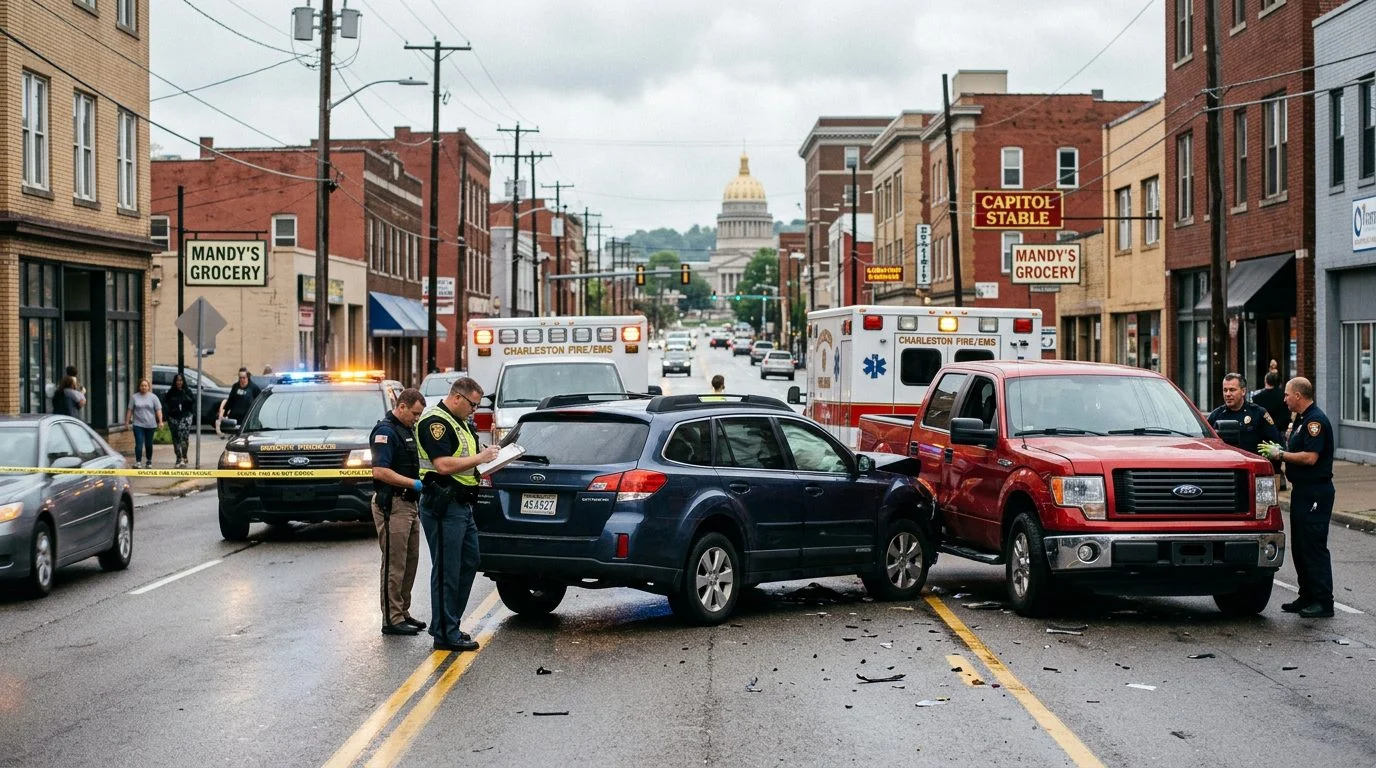
Car Accident Claims | West Virginia
What Shapes a Car Accident Lawsuit in West Virginia?
Fault, evidence, and state comparison rules all play a part. Here is how they fit together, and how to take the next step.
Published November 11, 2026
If you were hurt in a car or truck crash, or you’re helping a family member through one, you probably want a plain answer. Winning a car accident lawsuit is possible, but how hard it is depends on the facts, the evidence, and the laws that apply.
In short, the injured person generally has to show that another driver’s carelessness caused real losses. West Virginia’s comparative fault rules can reduce a claim, and in some cases bar it, when the injured person shares the blame. Serious injuries and commercial truck crashes add more records and more parties.
What winning a car accident lawsuit usually means
Winning usually means reaching a fair resolution of the claim, either through a settlement or a court judgment. Most claims never reach a courtroom trial. Many end in negotiation after both sides exchange records and positions.
A lawsuit is a legal claim asking a court to address harm caused by someone else’s carelessness. Knowing what that claim has to show helps you ask better questions.
“Winning” means different things to different people. For one injured person, it may mean medical bills and lost wages are addressed. For a family, it may mean a resolution that covers funeral bills and the loss of a loved one. What a fair result looks like depends on the facts of each case, the evidence, and the laws that apply. Nobody can predict that result before those facts are reviewed.
If a crash changed your family's life, you don't have to sort out the legal questions alone. Reach out to talk through your situation. Talk it through with Big Bubba — the first case review is free, confidential, and carries no obligation.

What a car accident plaintiff generally must prove
- Safe driving. Every driver shares the road with others, and how each driver behaves can affect them.
- Unsafe driving. Driving that may be questioned after a crash includes speeding, running a red light, or driving while distracted or impaired.
- Causation. The injured person generally must link that carelessness to the harm. The crash and the injuries need a clear connection in the records.
- Losses. Injury claims often rely on documentation of losses, such as medical bills, lost income, and pain and suffering.
Fault in West Virginia is measured in percentages. Under W. Va. Code § 55-7-13a, recovery in a personal injury or wrongful death case is based on comparative fault. Each person’s share of fault is allocated in direct proportion to that person’s percentage of fault.
Why some car accident cases are harder to win
The hardest car accident cases usually involve disputed fault, gaps in the evidence, or questions about earlier health problems. Each of these can change how a claim is viewed.
- Disputed fault. Each driver may blame the other, and the available evidence may point in more than one direction.
- Evidence gaps. A delay in reporting the crash, missing photographs, or incomplete police paperwork can make fault harder to show.
- Pre-existing conditions. Old injuries or conditions may make it harder to separate prior problems from harm caused by the crash.
West Virginia’s comparative fault statute, W. Va. Code § 55-7-13a, describes comparative fault as the degree to which a person’s fault was a proximate cause of an injury, expressed as a percentage, and allocates liability in direct proportion to each person’s percentage of fault. Under W. Va. Code § 55-7-13c, a plaintiff’s fault does not bar recovery unless it is greater than the combined fault of all other persons responsible. Otherwise, the recovery is reduced in proportion to the plaintiff’s degree of fault. Exceptions may apply, so the details of each crash matter.
Why a claim may or may not become a lawsuit
Many injury claims start with an insurance company. Whether a lawsuit becomes necessary depends on how that claim is handled.
Some insurers may dispute a claim, deny responsibility, or ask for more information before discussing a resolution. Under W. Va. Code § 33-11-4a, a third-party claimant generally cannot bring a private lawsuit over an unfair claims settlement practice. The statute points to an administrative complaint with the Insurance Commissioner instead.
Filing an insurance claim is not the same as filing a lawsuit. A lawsuit is a court case with its own rules and deadlines. West Virginia generally allows two years to file a personal injury action under W. Va. Code § 55-2-12, measured from when the right to sue arose. Exceptions may apply, so timing should be reviewed early.
How serious injuries and commercial truck crashes change the picture
Serious injuries and truck crashes usually add more medical records, more parties, and more federal rules to a case. Each one can shape how fault and damages are proven.
Research on traumatic brain injury notes that effects may last a long time, may not show up right away, and can be hard to diagnose when the injury is mild. Detailed medical records from the start matter. The Reeve Foundation spinal cord injury fact sheet explains that car accidents can cause spinal cord injury and that the injury’s level and severity affect function. These claims may need long-term medical documentation.
Commercial vehicle crashes may involve more than the driver. Under W. Va. Code § 55-7-32, an “employer defendant” can include the owner of a commercial motor vehicle, the operator’s employer, and others who hold legal control over the vehicle. The statute also limits certain noneconomic damages in some cases, and it lists circumstances where that limit does not apply. West Virginia case law generally holds an employer answerable for an employee’s negligent act within the scope of employment, as in Zirkle v. Winkler.
Trucking records may matter to proof of fault. Federal rules generally require motor carriers to require each driver to record the driver’s duty status for each 24-hour period, except for a private motor carrier of passengers (nonbusiness), as set out in 49 CFR § 395.8. Federal rules may also require drug and alcohol testing after a commercial vehicle crash, according to the FMCSA testing requirements.
What affects how a car accident claim is valued
A claim’s value depends on several connected factors. Each one is weighed against the facts of the specific crash.
- Injuries and treatment. The type and severity of the injuries, and the medical care needed to address them, are central.
- Documented financial losses. Lost wages and a reduced ability to work need records to support them.
- Effect on daily life. How the injury changes everyday activities, family life, and quality of life can be part of the claim.
- Evidence of fault. How clearly the evidence supports the claim may be relevant, depending on the facts.
None of these factors can predict a result on its own. How much weight each one carries depends on the details of the case and the laws that apply.
Not sure what your next step is?
Talk it through with Big Bubba — the first case review is free, confidential, and carries no obligation.

Bringing your situation to a free case review
If you’re trying to understand a crash you didn’t choose, you don’t have to work through the legal side alone. Many people reading about this are doing it for a family member who can’t manage the paperwork right now.
Before a conversation, gather what you can. Useful items include the crash report number, medical records, photographs, insurance letters, and the names of any witnesses. Write down what you remember while it’s still fresh.
Big Bubba Injury Law handles car accident, truck accident, commercial vehicle, catastrophic injury, traumatic brain injury, spinal cord injury, and wrongful death claims in West Virginia. We serve injury victims across the state, including Charleston, Huntington, and Beckley. If you want to talk through your crash and whether a free case review makes sense, reach out to the firm.