
West Virginia Crash Claims
Hurt in a Crash? Know What to Report, and When
After a serious collision, the paperwork and phone calls can pile up fast. Here is a clear, plain-language guide to the steps that may apply to you.
Published November 15, 2026
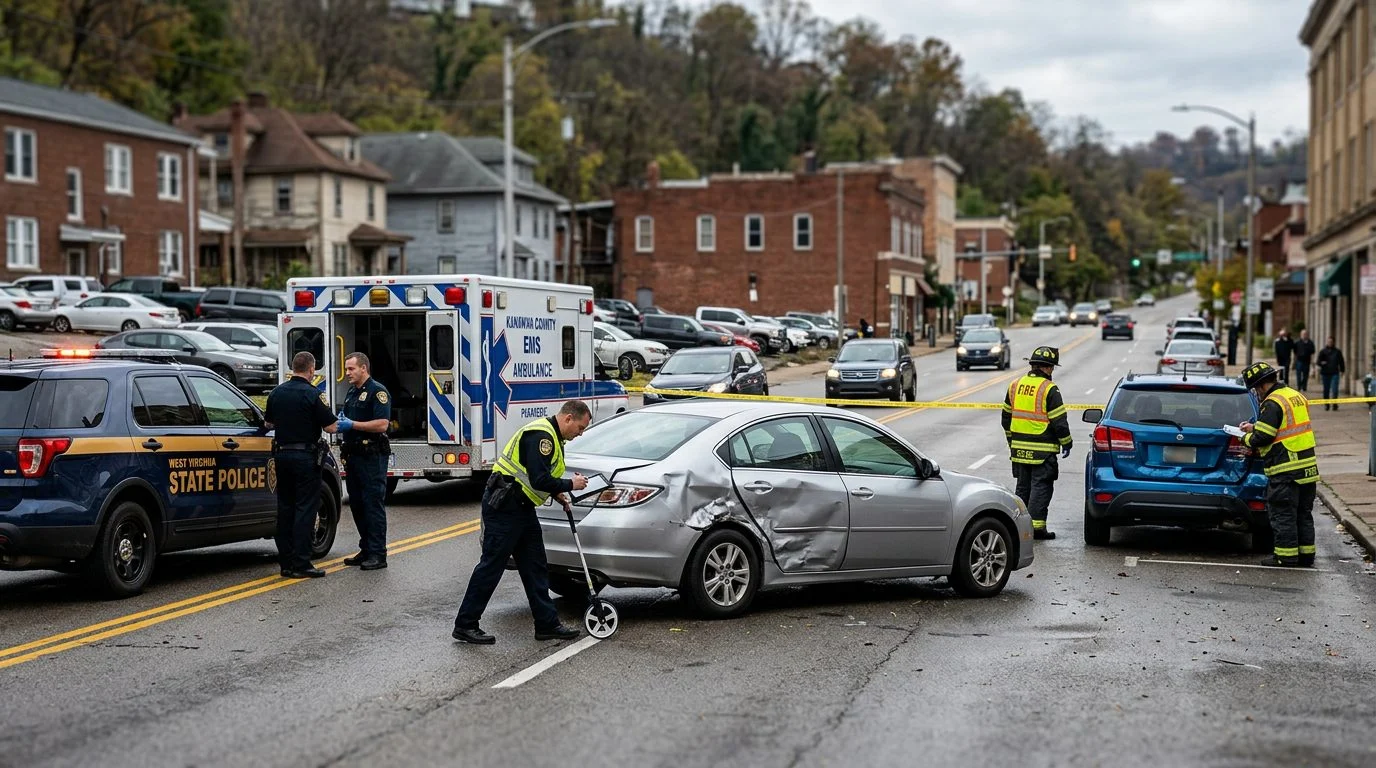
Being in a crash is hard enough. Then someone asks, “Did you report it?” and the rules start to blur. So how long after an accident must it be reported in West Virginia? The first duty is immediate.
The driver must notify law enforcement right away when a crash causes injury or death, or total property damage of $1,000 or more. Other steps run on different clocks, including the officer’s written report, your insurer’s notice rules, and the deadline for filing a claim in court. This page walks through each one.
Quick answer: the deadline depends on who you are reporting to
The answer depends on who needs the report. Police notice is immediate. The officer’s crash report, your insurer, and the lawsuit deadline each follow their own schedule.
Many people hear a single number, such as 24 hours or 10 days, and assume it covers everything. It doesn’t. Each duty has a different trigger and a different recipient, so it helps to sort them out one at a time.
Timing matters beyond paperwork. Early reports create a record while details are fresh. That record may include the time, the location, the people involved, and whether a police report exists. Later, those facts may be relevant to how a claim is proven, depending on the facts.
If hospital visits and insurance calls have left you unsure which deadlines apply to your crash, you don't have to sort them out alone. We can talk through your situation in a free case review. Talk it through with Big Bubba — the first case review is free, confidential, and carries no obligation.

Reporting to police at the scene
West Virginia requires the driver to notify law enforcement immediately after a crash that causes injury or death, or total property damage of $1,000 or more. The driver must use the quickest means of communication. § 17c-4-6
If a crash results in injury to or death of any person, or total property damage to an apparent extent of $1,000 or more, and occurs inside a city or town, the notice goes to the local police department. Otherwise, for a crash resulting in injury to or death of any person, or total property damage to an apparent extent of $1,000 or more, the notice goes to the county sheriff or the nearest West Virginia State Police office.
§ 17c-4-3 If physically able, a driver in a crash causing injury, death, or damage to an attended vehicle must give the other people involved their name, a valid phone number, the vehicle’s year, make, model and last four VIN digits, and proof of insurance. Giving this information to an officer who is investigating or providing assistance at the scene may also satisfy the duty.
§ 17c-4-8 If the driver is physically incapable of making an immediate notification of a crash, another occupant capable of making notification must make or cause it to be made. § 17c-4-10
A common mistake is waiting. Someone feels shaken, assumes the damage is small, and decides to call later. Symptoms of an injury may show up hours or days later, so a same-day record helps keep the facts clear.
The written crash report and the 10-day question
The 10-day number belongs to the investigating officer, not to you. Under § 17c-4-7, the officer must submit the written or electronic crash report within 24 hours after finishing the investigation.
If the officer cannot finish the investigation within 10 days, a preliminary report is due on the 10th day after the crash. That is the rule people are usually thinking of when they search for “10 days.”
§ 17c-4-9 Ask the investigating agency for the report number so you can track it.
Notifying your insurance company
Your own policy sets the timing for notice to your insurer. Read the notice language early, because policies differ.
Some insurers may ask for a recorded statement. You can ask for time to review what happened before you answer. Keep notes of every call, including the date, the person’s name, and what was said.
If the at-fault driver cannot be identified, West Virginia’s uninsured motorist statute sets conditions. Uninsured-motorist claims may carry notice requirements under the policy and the statute, so it is worth reviewing those terms early. § 33-6-31 These conditions may apply to your situation, depending on the facts and your policy.
The West Virginia Division of Motor Vehicles publishes consumer information on mandatory auto insurance and proof of coverage. DMV consumer insurance information That page can help you understand what coverage the law requires.
The statute of limitations is a separate deadline
Reporting is not the same as filing a lawsuit. A lawsuit has its own clock, called the statute of limitations. It is a time limit set by law for bringing a claim in court.
West Virginia generally allows two years to bring a personal injury action, and exceptions may apply. § 55-2-12 That same section gives two years for claims for damage to property.
Wrongful death claims follow a different statute. A wrongful death action generally must be commenced within two years after the death, subject to other provisions of the code. § 55-7-6 The action is brought by the personal representative of the deceased person’s estate. The clock may run from the death, not the crash, so don’t assume the two deadlines match.
Whether reporting steps affect a claim’s timing depends on the facts of each case. A smooth police report or insurance claim does not mean there is more time to file.

When a brain or spinal injury makes reporting harder
A serious head or spine injury can make reporting difficult. Family members often end up making the calls, gathering the papers, and speaking with the insurer.
A brain injury may affect memory and attention, so details of the crash can be hard to recall. Some symptoms may appear or change over time. A spinal injury may limit what a person can do in the first days after a crash.
Families often find these steps useful:
- Write down the date, time, and location of the crash.
- Record the other driver’s name, plate number, and insurer, if known.
- Note the names and contact details of any witnesses.
- Ask the injured person what they remember, and write their words down as they say them.
- Keep the police report number and any insurance claim numbers in one place.
These notes don’t replace the official reports. They can help you answer questions later, when the details are harder to reconstruct.
If you are juggling hospital visits, insurance calls, and a crash report that still needs attention, you don’t have to sort out every deadline alone. Request a free case review to talk through which reporting steps and time limits may apply to your crash.
Related practice areas
- Traumatic Brain Injury from Car and Truck Accidents in West Virginia
- How to Get a Crash Report After a Car Accident in West Virginia
- What to Do If You Broke a Bone in a Car Accident in West Virginia
- West Virginia Death Certificate After a Fatal Car Accident