
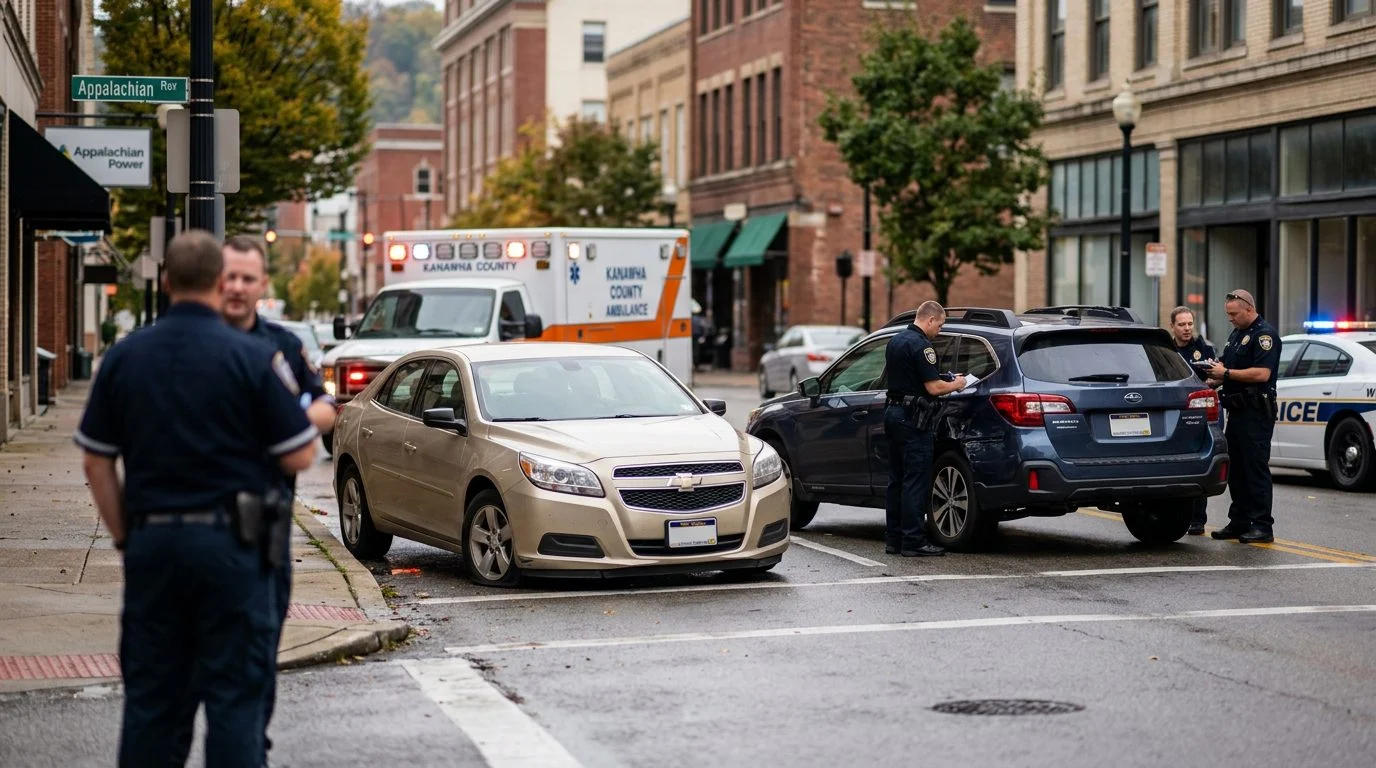
Car accident injuries across West Virginia
Hurt in a Crash? Get Checked Sooner, Not Later.
We represent people injured in car and commercial truck crashes, people with serious brain and spinal cord injuries, and families in wrongful death cases throughout West Virginia.
Published November 21, 2026
Your neck feels stiff, your head aches, and you keep asking whether you need to see a doctor. That question is worth answering early.
There is no single number of days that fits every crash. The practical goal is a prompt medical check after any collision that may have caused an injury, even if you feel fine. This page explains why symptoms can wait, which signs need urgent care, and how timing can matter if you later pursue a claim in West Virginia.
The short answer: there is no single number of days
No single day count applies to every car accident. The real goal is a medical evaluation soon after any crash that may have caused injury or possible injury.
Many people feel fine at the scene and still get hurt. Adrenaline, shock, and the stress of the moment can mask pain. Waiting to see how you feel is not a reliable plan, because some injuries take hours or days to show up.
If you have pain, dizziness, headache, or any other symptom, get evaluated the same day when you can. An emergency room, an urgent care clinic, or your own doctor can all do this. Don’t wait for a symptom to get worse before you act.
If you’re worried about a relative who was in the crash, the same advice applies. Ask them directly how they feel. If the answer includes any new complaint, help them get checked. Someone who is sore, confused, or unusually tired should not be told to sleep it off.
If someone you love was sore or dizzy after a collision and hasn't been checked yet, we're glad to talk through what happened whenever you're ready. Talk it through with Big Bubba — the first case review is free, confidential, and carries no obligation.

Why symptoms can appear hours or days later
Some injuries don’t produce obvious signs right away. Soft tissue injuries to the neck and back, and some head injuries, can take time to become noticeable.
Your body releases stress hormones after a crash. Those hormones can dull pain for a while. Once the adrenaline wears off, stiffness, soreness, or headache may appear. A concussion can also feel mild at first and change over the following days.
Delayed symptoms often include neck or back stiffness, headaches, dizziness, numbness or tingling in the arms or legs, sleep changes, and trouble concentrating. These signs may point to an injury that needs care. For a closer look at each one, read our guide on delayed symptoms after a car accident.
A medical visit also creates a record. The record shows what the provider found and when. That timeline can help the doctor, and it can help anyone reviewing the case later.
Warning signs that need care right away
Some symptoms call for emergency care or a 911 call, not a later appointment. Don’t wait on these.
Get emergency help right away if you notice any of the following after a crash:
- Loss of consciousness, even briefly
- Confusion, or trouble staying awake
- A headache that keeps getting worse
- Repeated vomiting
- A seizure
- Slurred speech
- Weakness or numbness in the arms or legs
- Loss of bladder or bowel control
- Chest pain or trouble breathing
These signs can point to a serious brain or spinal cord injury. A spinal cord injury may not look serious at first, so prompt evaluation matters.
If the person was hit on the head, they should not drive themselves anywhere. Follow the instructions of emergency medical personnel, and let them decide whether a hospital visit is needed. Keep the person with someone who can watch for changes.
The goal is simple: get checked quickly, and let trained medical staff make the call.
When to see a doctor even if you feel fine
Feeling fine at the scene does not always mean you were not hurt. Minor soreness can still reflect an injury, and some problems are not visible from the outside.
A car that still drives is not proof that its occupants were uninjured. Seat belts, airbags, doors, and steering wheels can cause harm even in lower-speed impacts. Anyone who struck a body part against something inside the vehicle should be evaluated.
Consider a visit if any of these apply:
- Any impact to the head, neck, or back
- Being thrown against a seat belt, airbag, or door
- Waking up sore the next morning
- Any new symptom that appears after the first day
Keep a simple written log. Note the date, the symptom, how bad it was, and what made it better or worse. Bring this log to your doctor. A written record is easier to share than memory, especially when you are sore and tired.
How gaps in treatment can affect an injury claim
A long gap between the crash and the first medical visit can raise questions. The same is true for a gap between follow-up appointments.
Gaps raise questions because they make it harder to link an injury to the crash. Some insurers may dispute a claim when treatment gaps appear. Records from prompt care may help show when symptoms began and how they changed.
A gap is one factor among many. The whole picture includes the crash, the medical records, the symptoms, and the timing. Other evidence may also be relevant, depending on the facts. That can include the crash report, witness statements, and photos.
Practical steps help. Attend recommended follow-up visits. Tell every provider about all symptoms, including ones that seem minor. If you can’t make an appointment, reschedule it and keep the next one. Each step creates a clearer record of your recovery.
Crash situations that call for evaluation: deer strikes and winter roads
Deer strikes and winter weather crashes can cause injuries that are easy to miss at first. Both are common concerns on West Virginia roads.
A deer strike can be sudden and forceful. The impact can come through the windshield, the airbag, or the steering wheel. Even a car that stays on the road can hide head or internal injuries. For details on these crashes, read our guide on deer collisions in West Virginia.
Winter crashes on ice or snow can involve several vehicles. Emergency response may take longer on rural roads. That delay can make the first medical visit harder to reach, so plan ahead. Know where the nearest urgent care is, and don’t assume a rural crash is minor.
Road conditions also shape how crashes happen. For road-specific details, see our winter weather crash guide.
Not sure what your next step is?
Talk it through with Big Bubba — the first case review is free, confidential, and carries no obligation.
What to tell your doctor and what to keep
Tell your doctor how the crash happened and about every symptom you have. Include the ones that seem unrelated.
Describe where you were seated, which way the vehicle was hit, and what part of your body struck something. These details help the provider think about possible injuries. Mention any gap in your memory of the crash, even a small one.
Keep these items in one folder or on your phone:
- Discharge papers and visit summaries
- Prescriptions and imaging copies
- Photos of the vehicles, the scene, and your injuries
- The other driver’s name, insurance details, and license information
- Names and contact details of any witnesses
- Your symptom log, plus bills, receipts, and records of missed work
West Virginia gives patients a way to request their own medical records. Medical records can be an important part of understanding an injury claim, and you can ask your health care providers how to request copies of yours. Make your request early, and keep a copy of what you send.
How late can you file a claim, and who may be at fault?
West Virginia generally allows two years to file a personal injury lawsuit, and exceptions may apply (W. Va. Code § 55-2-12). Waiting can put that right at risk.
The deadline comes from W. Va. Code § 55-2-12. It covers personal actions for injuries to a person. Getting medical care and meeting a filing deadline are separate questions. Care does not replace a timely claim, and a timely claim does not replace care.
West Virginia uses comparative fault. Under W. Va. Code § 55-7-13a, each person’s liability is allocated in direct proportion to that person’s percentage of fault. If another driver was at fault, that driver may bear a share of responsibility. Fault is usually sorted out through the crash report, witness statements, photos, and physical evidence.
Drivers must act quickly after a crash. Under W. Va. Code § 17C-4-6, a driver in a crash resulting in injury to or death of any person, or total property damage to an apparent extent of $1,000 or more, must immediately notify the local police if the crash is within a municipality, otherwise the county sheriff or the nearest State Police office. Under W. Va. Code § 17C-4-7, for a crash on a public street or highway resulting in bodily injury, death, or total property damage to an apparent extent of $1,000 or more, the investigating officer must prepare a report within 24 hours after completing the investigation.
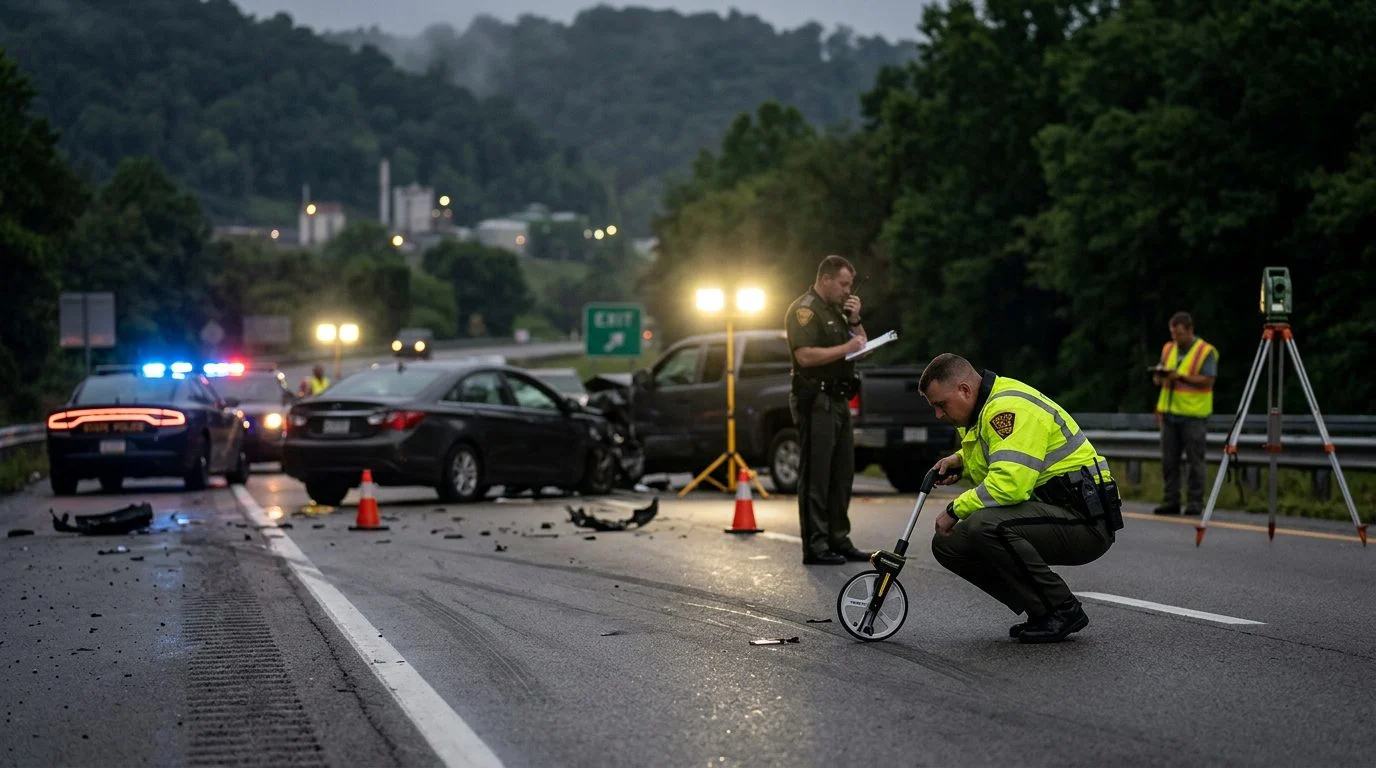
Understanding the claim process after a serious injury
If a family member was sore or dizzy after a collision and hasn’t been checked yet, you may be unsure how urgent it is. You may also be worried about the crash itself and what comes next.
The firm handles car accident, truck accident, commercial vehicle, traumatic brain injury, spinal cord injury, and wrongful death matters. We serve injury victims across West Virginia, including Charleston, Huntington, Morgantown, Wheeling, Martinsburg, Parkersburg, Beckley, Clarksburg, Fairmont, and Weirton.
If you want to talk through what happened, in your own words and at your own pace, request a free case review. The firm can listen first and answer your questions from there.