
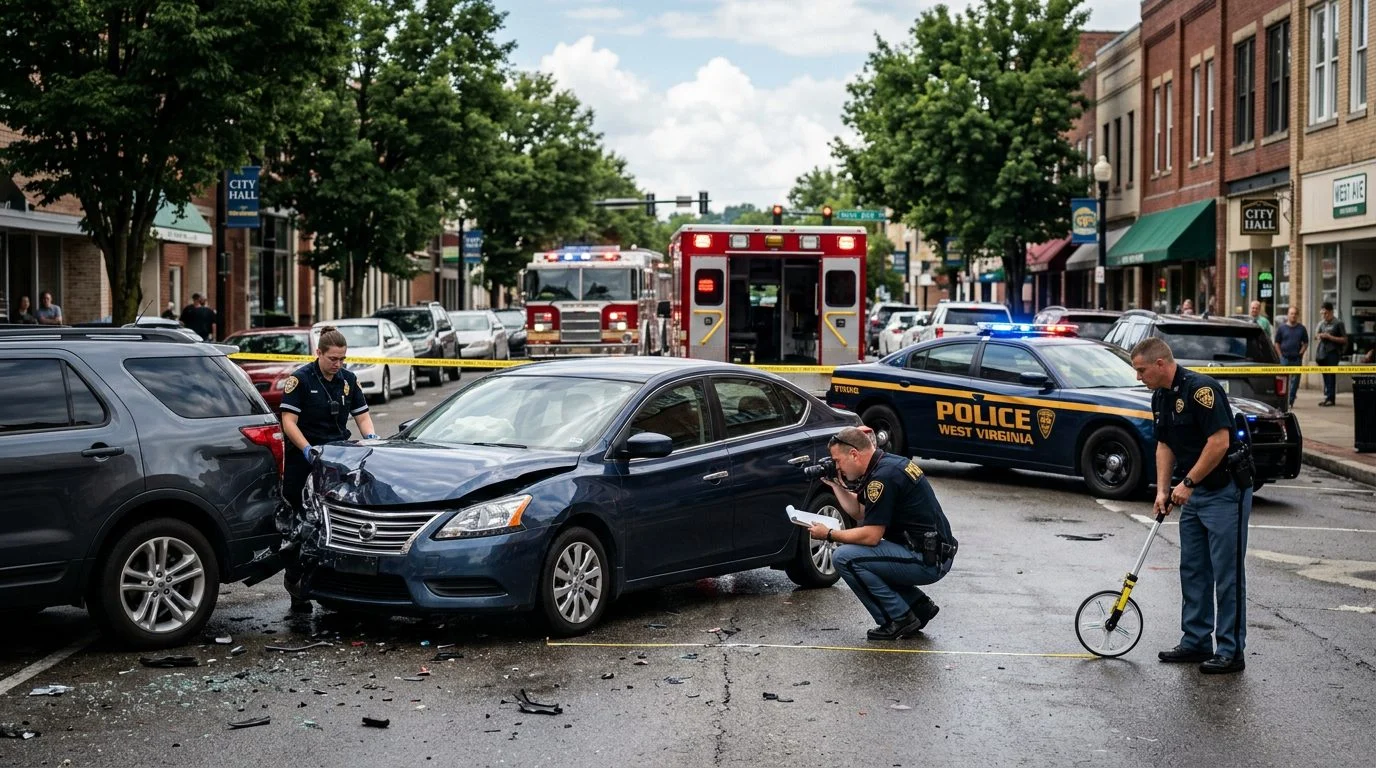
Multi-Vehicle Car Accidents · West Virginia
Hurt in a Multi-Car Crash? We Can Help You Sort Out What Happened
We represent people injured in chain-reaction and multi-vehicle collisions across West Virginia, including families in wrongful death cases. Our team can help you understand your options.
Published November 6, 2026
A multi-vehicle car accident claim asks who failed to use reasonable care and how that added to each impact. The firm handles these claims for people across West Virginia, along with truck, commercial vehicle, catastrophic injury, and wrongful death matters.
Crashes with three or more vehicles are harder than two-car wrecks. Each impact can have its own cause, and each driver’s role may matter. This page explains how these claims work, what evidence tends to matter, and what to expect.
What a Multi-Vehicle Car Accident Claim Is
A multi-vehicle car accident claim is a personal injury or wrongful death claim that arises from a crash involving three or more vehicles. Two-car claims often turn on a single collision. Multi-vehicle claims usually involve a timeline of several impacts, and that timeline is what makes them harder to sort out.
A pileup happens when several vehicles hit each other in one event, often in heavy traffic or poor visibility. A chain-reaction crash happens when one impact sets off others, so a driver may be struck by a car that was itself pushed into them.
Drivers and passengers may bring a claim for their own injuries. When a crash causes a death, the family may bring a wrongful death claim instead. The core question in both is negligence, which means failing to use reasonable care.
Not sure what your next step is?
Talk it through with Big Bubba — the first case review is free, confidential, and carries no obligation.
Who May Be Responsible When Several Vehicles Are Involved
More than one driver may share responsibility in a chain-reaction crash. A following driver who did not brake in time may be responsible for a later impact. The driver who caused the first collision may also be responsible for the impacts that followed, depending on the facts.
If a commercial truck or company vehicle was in the chain, its owner or employer may be a party too, depending on the facts.
If another driver was at fault, the injured person’s claim may be reduced by their own share of fault. Under W. Va. Code § 55-7-13c, your own fault generally does not bar recovery unless it exceeds the combined fault of everyone else responsible. If your fault is less, your recovery is reduced by your share.
The same statute generally makes each defendant liable only for their own share of fault. It also provides that a driver whose driving under the influence of alcohol, a controlled substance, or another drug was a proximate cause of the damages shall be jointly and severally liable.
Fault can also be assigned to people who are not named in the suit. Under W. Va. Code § 55-7-13d, a defending party may give notice no later than one hundred eighty days after service of process upon said defendant that a nonparty was wholly or partially at fault.
How the Sequence of Impacts Is Proven
The order of impacts is usually proven with the police crash report, physical evidence, and vehicle data, taken together. Each piece should line up with the others.
You can request the police crash report from the investigating agency. It can show the location, the vehicles involved, and the officer’s notes. Photos of the scene and vehicles help show where each car came to rest and where each impact landed.
Video may matter. Dashcam footage, traffic camera footage, and nearby business video may show who moved first. Some footage is overwritten on a regular cycle, so requests should go out early.
Event data recorders in many newer vehicles may store speed, braking, and impact data for a short period. Phone records may be relevant where distraction is in question. Witness statements can fill gaps in the timeline.
When the sequence is disputed, an accident reconstruction may show how the impacts happened, depending on the facts. Commercial vehicles add another layer. The FMCSA post-accident testing rules set federal requirements for drug and alcohol testing of commercial drivers after certain crashes. Evidence can disappear over time, so early preservation matters.
Injuries and Losses Often Seen in Chain-Reaction Crashes
Chain-reaction crashes can cause serious injuries, including traumatic brain injury and spinal cord injury, sometimes from more than one impact. Some injuries do not show their full effects right away.
A brain injury may cause headaches, confusion, memory trouble, or mood changes that appear hours or days after a crash. A medical evaluation after any significant impact is worth getting. Spinal cord injuries can affect movement, feeling, and daily tasks, and their full effects may take time to document.
Broken bones, soft tissue injuries, and repeated impacts may also be part of the medical picture. A claim may address medical care, lost income and earning capacity, property damage, and pain and suffering, depending on the facts.
When a crash causes a death, the claim is brought by the personal representative of the deceased person. Under W. Va. Code § 55-7-6, the verdict shall include, but may not be limited to, damages for sorrow, mental anguish, and solace; reasonably expected loss of income of the decedent and of services, protection, care and assistance provided by the decedent; expenses for care, treatment and hospitalization of the decedent incident to the injury resulting in death; and reasonable funeral expenses. Such an action generally must be commenced within two years after the death, and exceptions may apply.
How a Multi-Vehicle Crash Claim Typically Proceeds
A claim usually moves through five steps, from a first review to negotiation or a lawsuit.
- Free case review. The firm offers a free case review that is confidential and carries no obligation to continue. We go over the crash, your injuries, and the records you already have.
- Evidence preservation. Requests go out for the crash report, photos, footage, and vehicle data before it is lost.
- Identifying each party. We look at each insurer and each party whose conduct may have contributed to the chain of impacts.
- Documenting injuries. Medical records and billing records help show what the crash caused.
- Negotiation or litigation. The claim goes to the insurers. Some insurers may dispute a claim, so a lawsuit remains possible if a fair resolution is not reached.
Early contact has limits.
Settling with one driver does not automatically release the others. Under W. Va. Code § 55-7-12, a release of one joint tort-feasor does not bar an action against another for the same cause of action. West Virginia generally allows two years to file a personal injury lawsuit, and exceptions may apply, under W. Va. Code § 55-2-12.
Why Work With This Firm on a Multi-Vehicle Crash
The firm handles multi-vehicle car accident claims across West Virginia, including cases with several insurers and several parties. Chain-reaction claims often involve more than one insurer at once. The firm can help organize those claims, track each party’s role, and keep the evidence and deadlines in one place.
Federal law does not automatically shield every party in a truck chain.
We serve Charleston, Huntington, Morgantown, Wheeling, Martinsburg, Parkersburg, Beckley, Clarksburg, Fairmont, and Weirton, along with the rest of West Virginia. We explain each step in plain language, so you know what is happening and why. The firm also handles catastrophic injury, traumatic brain injury, spinal cord injury, and wrongful death claims.
Not sure what your next step is?
Talk it through with Big Bubba — the first case review is free, confidential, and carries no obligation.

Questions About Multi-Vehicle Crash Claims in West Virginia
Most questions come down to fault, evidence, and time limits.
Can I still have a claim if I was partly at fault?
West Virginia generally allows recovery unless your fault is greater than the combined fault of everyone else responsible (W. Va. Code § 55-7-13c). If it is less, your recovery is reduced by your share.
Who can I file against when several drivers hit me?
Each party whose negligence may have contributed to your injuries can be a potential defendant, depending on the facts.
How long do I have to file?
West Virginia generally allows two years for a personal injury claim, and exceptions may apply. A wrongful death claim generally must be commenced within two years after the death, under W. Va. Code § 55-7-6.
Can a trucking company be sued after a chain-reaction crash?
A trucking company or employer may be a party, depending on the facts. West Virginia law also limits some noneconomic damages against certain employer defendants in commercial vehicle cases, and exceptions apply under W. Va. Code § 55-7-32.
If a chain-reaction crash on a West Virginia road left you hurt, or you lost a family member in one, tell Big Bubba what happened. Visit the contact page to request a free case review of the crash, your injuries, and the records you already have.