
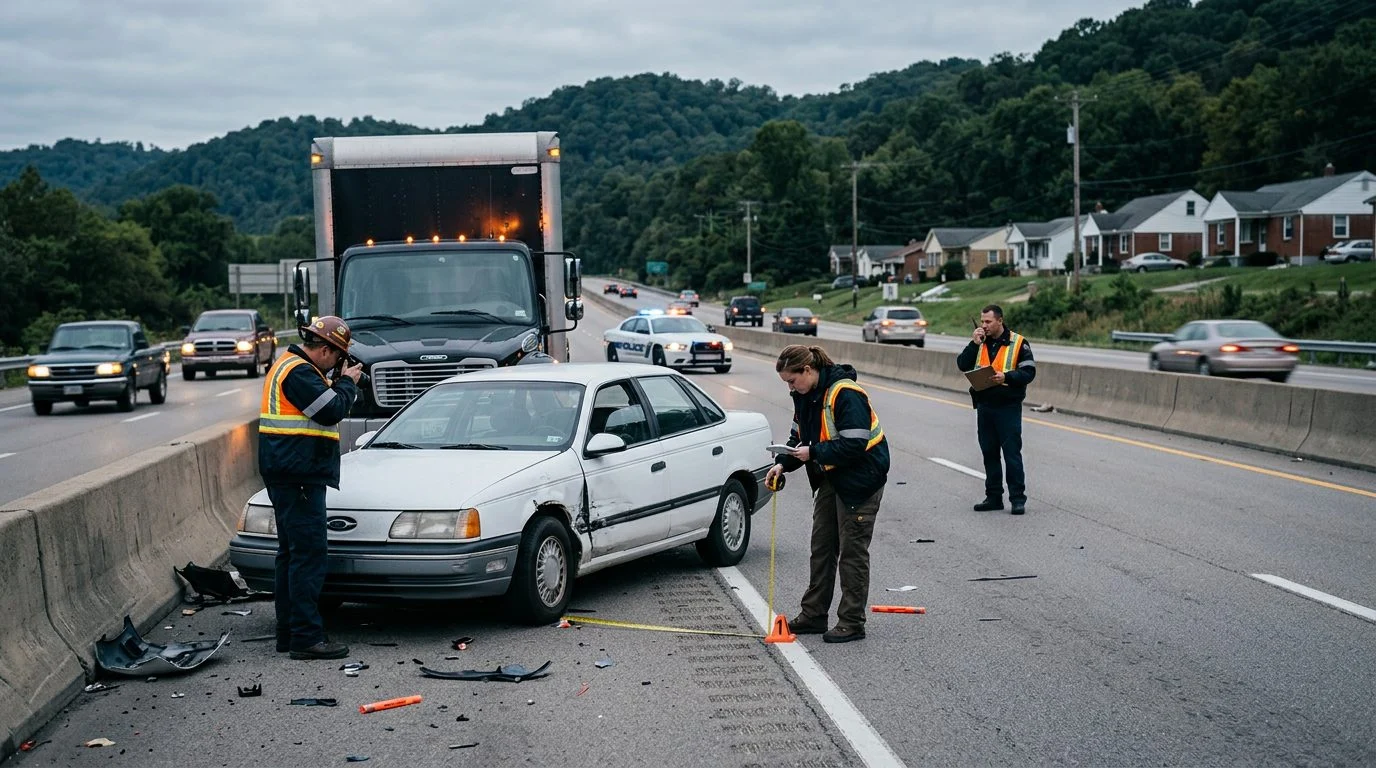
West Virginia car and truck accident injuries
Numbness After a Crash? Get It Checked and Know Your Options
Tingling, weakness, or a limb that feels wrong after a collision deserves prompt medical attention. Our firm represents injured West Virginians and their families.
Published November 21, 2026
You were in a crash, and now a hand feels asleep or your fingers tingle. Or someone you love says part of their body doesn’t feel right. Numbness after a car accident can point to a nerve or spinal injury in the neck or back. It should be checked by a medical provider, not assumed to be simple soreness.
This page explains which symptoms can go with neck and back injuries, which warning signs need fast care, and how these details may relate to an injury claim. Only a medical provider can find the cause of your symptoms.
Why Numbness After a Crash Deserves Attention
Numbness after a crash is a symptom to take seriously, not something to write off as bruising. Your neck and back hold the spinal cord and the nerves that run out to your arms, hands, legs, and feet. A hard jolt can stretch, pinch, or bruise those tissues.
Soreness usually feels like stiffness or aching. Numbness means nerve signals are being disrupted. That can mean a nerve is irritated, compressed, or injured. A medical provider has to sort out which one applies.
Some damage shows up right away. Other symptoms build over days as swelling and stiffness set in. Neither timing settles the question by itself.
You can’t measure numbness at home the way you check a bruise. A neurological exam, and imaging when a provider considers it appropriate, can help. Getting evaluated is the safest next step.
If you want to talk through what happened and what it could mean for a claim, our firm can help. Talk it through with Big Bubba — the first case review is free, confidential, and carries no obligation.

Common Symptoms Linked to Neck and Back Injuries
Tingling, pins and needles, or numbness that spreads into the shoulder, arm, or hand is a common pattern after a neck injury. The nerves that leave the neck travel down the arms and into the hands. When one is irritated, the feeling can show up in the fingers or forearm.
The pattern can shift after a lower-back injury. Numbness or tingling may run into the buttock, thigh, leg, or foot. It may affect one side or both sides.
Timing helps a provider evaluate the cause. Some people notice symptoms right after the crash. Others notice them hours or days later. Write down when you first felt it and whether it has changed.
Weakness is a symptom to report right away. So is a change in grip strength or trouble keeping your balance. These signs can point to a problem that needs prompt evaluation.
Whiplash Versus Nerve or Spinal Injury
Whiplash is a neck injury caused by a sudden back-and-forth movement of the head. Its common signs are neck pain, stiffness, reduced neck motion, and headaches. Some people also have trouble concentrating.
Whiplash often does not cause numbness. Numbness, tingling, or weakness in the arms or legs points more toward a nerve or spinal problem. A nerve can be irritated by swelling or by a damaged disc. Those causes don’t always show up on the surface.
Whiplash and a nerve or spinal injury can happen together. A single symptom doesn’t settle which one is present. A provider has to examine you and decide.
Don’t assume a sore neck is only whiplash if the symptoms go beyond stiffness. Get the new symptoms checked.
Warning Signs That Call for Prompt Medical Attention
Numbness that spreads, gets worse, or comes with weakness needs prompt medical care. The same is true for numbness in both arms or both legs.
Seek care quickly if you notice any of these signs:
- Numbness or tingling that is spreading or getting worse
- Weakness in an arm, hand, leg, or foot
- Trouble walking or keeping your balance
- Loss of bladder or bowel control
- Severe neck or back pain
The VA’s spinal cord injury guidance says a possible spinal injury after a car accident needs immediate emergency medical care and a call to 911. Don’t wait for symptoms to become severe.
West Virginia law also requires a driver in a crash that causes injury, if able, to give reasonable help. That includes arranging transport to a physician when treatment is apparently necessary or when the injured person requests it, under W. Va. Code § 17c-4-3.
Tell the provider when the numbness started, where it is, and what the crash involved.
How Doctors Evaluate Numbness and What Recovery May Look Like
A medical provider usually starts with your account of the crash and a neurological exam. That exam tests strength, reflexes, sensation, and coordination. Imaging such as X-rays, CT scans, or MRI may follow when a provider considers it appropriate.
Recovery varies from person to person. Some symptoms may improve with treatment and time. Others may last longer. A provider who has examined you can describe what to expect for your specific injury.
Follow-up visits help providers track whether numbness is changing. Keep every appointment. Keep a simple symptom log with the date, the location, what it feels like, and what makes it better or worse.
A West Virginia study of traumatic spinal cord injury covers injury types, prognosis, and rehabilitation in the state. Broad findings may not match any one person’s situation.
How Numbness Can Relate to an Injury Claim
Medical records of numbness and its timing may be relevant to an injury claim, depending on the facts. Those records show what you reported, when, and what the provider found. Clear, consistent reporting matters.
West Virginia generally allows two years to file a personal injury claim, and exceptions may apply. See W. Va. Code § 55-2-12. Waiting too long can cost you the claim.
West Virginia also uses comparative fault. Under W. Va. Code § 55-7-13c, recovery is generally reduced in proportion to the injured person’s own fault. A claim may be barred only if that person’s fault is greater than the combined fault of others.
Some insurers may dispute how an injury connects to a crash. That is one reason prompt medical documentation matters.
Crash reports can also help. Under W. Va. Code § 17c-4-7, the investigating officer must prepare a crash report within 24 hours after completing an investigation of a crash involving bodily injury.
For related reading, see our pages on traumatic brain injury after a car accident, passing out after a car accident, and how long to file a claim in West Virginia.
Not sure what your next step is?
Talk it through with Big Bubba — the first case review is free, confidential, and carries no obligation.

If Numbness Started After Your Crash
If numbness started after your crash, you don’t have to sort out the medical and legal questions alone. Maybe you have tingling in your hand after a rear-end collision. Maybe you’re a parent or spouse watching someone who can’t describe what they feel.
Start with a medical evaluation, and keep your records. If you want to talk through what happened and what it could mean for a claim, our firm can help. We handle car accident, truck accident, and catastrophic injury claims, and we serve injury victims across West Virginia.
If numbness started after your crash, reach out for a free case review. Tell Bubba what happened and we will talk through your next steps.