
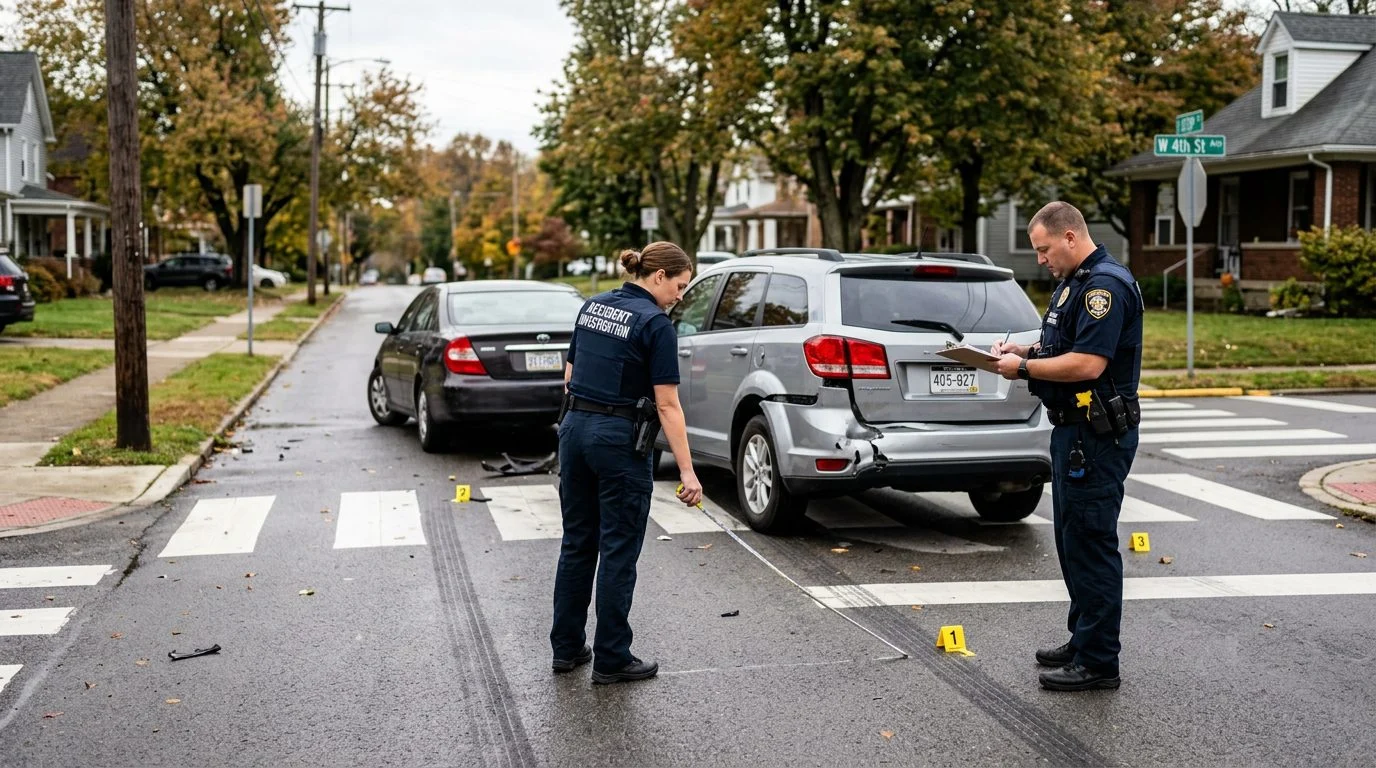
Rear End Collisions | West Virginia
Rear End Collision Brain Injury Claims in West Virginia
Big Bubba Injury Law represents people with serious brain injuries from rear end crashes across West Virginia. Tell us what happened, and we will explain your options in plain language.
Published October 27, 2026
A rear end collision brain injury can happen even when your head never strikes anything. If another driver’s negligence caused your injury, you may have a claim for damages under West Virginia law. This guide explains how these injuries happen, which warning signs to watch for, and the rules that shape a claim. Big Bubba Injury Law represents people seriously hurt in car and commercial truck crashes, and it serves injury victims across West Virginia, including Charleston, Huntington, Morgantown, Wheeling, Martinsburg, Parkersburg, Beckley, Clarksburg, Fairmont and Weirton.
What a Rear End Collision Brain Injury Claim Covers
A rear end collision brain injury claim is a personal injury claim against the driver who caused a rear impact that injured the brain. The injury is often called a traumatic brain injury (TBI). It can range from a mild concussion to a severe, lasting injury.
Drivers and passengers can both bring these claims.
A claim asks the at-fault party to pay for losses tied to the injury. The details depend on the crash, the medical picture and the insurance involved. The firm handles car accidents, truck and commercial vehicle accidents, catastrophic injuries, traumatic brain injury, spinal cord injury and wrongful death claims.
If someone you love has changed since a rear end crash, you do not have to work out the next steps alone. Tell the firm what happened in a free case review. Talk it through with Big Bubba — the first case review is free, confidential, and carries no obligation.

How a Rear-End Impact Can Injure the Brain
A rear-end impact can injure the brain even when a seatbelt holds the body in place. The head snaps forward and back quickly. The brain can move inside the skull and strike its inner walls.
Medical guidance from the Brain Trauma Foundation guidelines covers how traumatic brain injuries occur, how severe they can be and what they can lead to.
What is a secondary traumatic brain injury?
A secondary injury is damage that develops after the first impact. Swelling, bleeding or reduced blood flow can build over the hours or days after a crash. That is why a person may not notice the injury right away.
What is the most common injury in a rear-end collision?
Neck and back soft tissue injuries are common in rear-end crashes. They often happen alongside head injuries, so a doctor should check both.
A concussion is a form of mild traumatic brain injury, and it is still a brain injury. Read more about mild traumatic brain injury after a car accident. Symptoms that last can point to post-concussion syndrome. Older adults can show different symptoms and recovery timelines, as covered in older adult brain injury guidance.
Early Warning Signs That May Not Show Up Right Away
Brain injury symptoms can start hours, days or even weeks after a crash. Many people feel shaken but fine at the scene. Shock and adrenaline can mask symptoms for a while.
Watch for these signs:
- Headaches that keep coming back
- Dizziness or balance problems
- Nausea
- Confusion or trouble thinking clearly
- Memory gaps
- Sensitivity to light or noise
- Sleep changes
- Irritability, mood swings or trouble concentrating
Practical steps help. Get a medical evaluation promptly. Tell every provider about the crash and every symptom, including small ones. Keep a written symptom log with dates, and follow treatment instructions closely.
If someone you love seems different since a crash, you do not have to sort it out alone. Big Bubba Injury Law offers a free case review to talk through the next steps.
What a Claim May Include and How Damages Are Measured
A claim may seek compensation for losses tied to the crash and the injury. Those losses depend on the facts of your case. A claim may address:
- Past and future medical care
- Rehabilitation and therapy
- Medication
- Lost wages and reduced ability to earn
- Bills you paid yourself
- Pain, suffering and loss of enjoyment of life
Brain injury losses are harder to see than a broken bone. Documentation matters. Records from doctors, imaging results, testing reports, employer records and a detailed symptom history all help show the full picture.
The value of a claim depends on the crash facts, the injury, the treatment and the insurance available. No one can predict the outcome in advance. Recovery often comes from the at-fault driver’s liability insurance. The firm can walk through those coverage questions in a free case review.
How to Pursue a Rear End Brain Injury Claim in West Virginia
Start with medical care, then protect your claim. Prompt treatment and clear records help build a strong file from the start.
- Get medical care and keep every record.
- Report the crash and note the police report number.
- Save evidence: photos, vehicle damage and witness names.
- Track missed work and every bill.
- Think carefully before giving any recorded statement to an insurer.
- Get advice before accepting any settlement.
West Virginia generally allows two years from when the right to bring a personal injury claim arises, under W. Va. Code § 55-2-12. Some situations have different deadlines, so an early review matters.
West Virginia uses modified comparative fault (shared fault). Under W. Va. Code § 55-7-13c, your fault does not bar recovery unless it is greater than the combined fault of everyone else responsible. W. Va. Code § 55-7-13c reads: “(c) Any fault chargeable to the plaintiff shall not bar recovery by the plaintiff unless the plaintiff’s fault is greater than the combined fault of all other persons responsible for the total amount of damages, if any, to be awarded.” If it is less, your recovery is reduced in proportion to your share of fault.
Timing rules also matter. Under W. Va. Code § 55-7-11a, a settlement, release of liability or statement obtained in violation of that section may be disavowed by the injured person within one hundred eighty days from the date of the personal injury, by signing a written statement of disavowal and sending a copy to the person who violated the section; if any money was paid for a settlement or release, it must be repaid or returned when the disavowal is sent.
A typical claim moves through investigation, medical treatment, a demand and negotiation, and filing suit if needed. Timelines vary by case.
Key Steps After a Rear End Collision Claim
Big Bubba Injury Law represents people seriously hurt in car and commercial truck crashes, people with catastrophic brain and spinal cord injuries, and families in wrongful death cases across West Virginia.
The first step is a free case review. It is confidential and carries no obligation to continue.
The firm listens to the full account of the crash and the symptoms. It explains the claim process in plain language and keeps you informed as the case moves.
Crashes on rural and mountain roads can raise different documentation questions. Those details matter from the very start of a claim.
Not sure what your next step is?
Talk it through with Big Bubba — the first case review is free, confidential, and carries no obligation.

Frequently Asked Questions About Rear End Collision Brain Injury Claims
Can a rear end collision cause a brain injury with no head wound?
Yes. A brain injury can occur without any visible head wound, and symptoms may appear later.
How soon should I see a doctor after a rear end crash?
As soon as possible, even if symptoms seem mild. Early medical records support your care and any claim.
Do I have to talk to the other driver’s insurance adjuster?
Insurers may ask for a statement.
Can family members bring a claim for a loved one?
A legal representative may be able to act, depending on the facts. The firm can explain how this works in a free case review.
Can Social Security help if a brain injury keeps me from working?
Read the Social Security Administration’s disability page for eligibility details.
If you are caring for someone who has headaches, memory gaps or a changed personality after a rear end crash, you may feel unsure what comes next. You can tell Big Bubba Injury Law what happened, in your own words and at your own pace.