
West Virginia Car and Truck Crash Claims
Rear-End Crash? Get Clear Answers on Fault in West Virginia
Plain-language guidance for drivers and families dealing with a rear-end collision, from the first insurance call to the questions that come up next.
Published November 18, 2026
You were rear-ended, and now you want to know who will be blamed. Your car may be damaged, you may be sore, and an insurance adjuster may already be calling.
In many rear-end crashes, the driver who hit from behind is held responsible first. That is a starting point, not a final answer. We serve injury victims across West Virginia, including Charleston, Huntington, and Morgantown. This page explains how fault is decided in a rear-end collision in West Virginia.
The Short Answer: The Following Driver Is Often the One Held Responsible
The driver who strikes the car ahead is the usual starting point. W. Va. Code § 17c-14-15 requires drivers to use due care and not to use devices in ways that distract them from safe driving.
It does not settle every case. Exceptions may apply, and the facts of each crash decide the final answer.
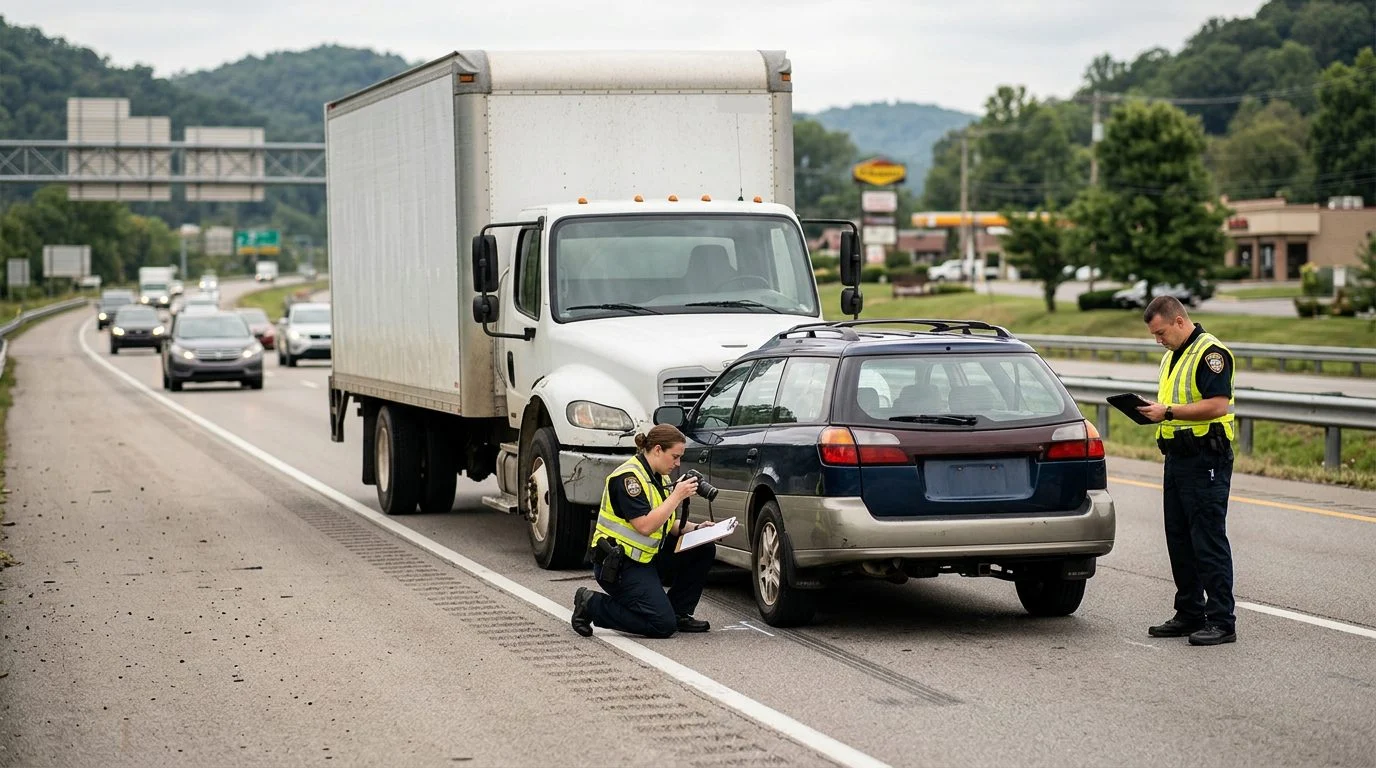
The rear driver is not always the one at fault. Consider a front car that stopped without warning, or one that backed into the other car. In those crashes, the driver in front may carry much of the blame. The scene, driver statements, and physical evidence help sort out what happened.
If you were rear-ended and are not sure who may be responsible for your injuries, you can reach out to the firm for a free case review of your situation. Talk it through with Big Bubba — the first case review is free, confidential, and carries no obligation.
How West Virginia’s Comparative Fault Rule Can Divide Responsibility
West Virginia uses a modified comparative fault system, so responsibility can be split among several people. Under W. Va. Code § 55-7-13a, recovery in injury and wrongful death claims follows each person’s percentage of fault.
Your own fault does not always stop a claim. Under W. Va. Code § 55-7-13c, your fault generally does not bar recovery unless it is greater than the combined fault of everyone else responsible. If your share is smaller, your recovery is reduced in proportion to your share.
Insurers and courts may look at each driver’s speed, braking, following distance, and attention. Two drivers can tell very different stories. The physical evidence helps show which account fits the facts.
Situations That Can Change Who Is at Fault
Several situations can move fault away from the rear driver, or spread it across more drivers.
- Sudden stops. A front driver who brakes hard without brake lights or a signal may share responsibility if the stop was unexpected or unsafe.
- Lane changes and close merges. A driver who cuts into a lane just ahead of another car may be a factor in the crash.
- Chain collisions. In a multi-car crash, the first, middle, and last drivers may each have a different role.
- Equipment, weather, and distraction. Brake defects, bad weather, and distracted driving may be relevant, depending on the facts.
When several people share fault, a defendant may name a nonparty who also contributed. Under W. Va. Code § 55-7-13d, a defending party may give notice, no later than one hundred eighty days after service of process, that a nonparty was wholly or partially at fault. A nonparty’s share reduces recovery in all instances where the nonparty is assessed a percentage of fault.
If another driver was at fault, you may have claims against that driver. Some insurers may dispute the claim or how fault is divided.
Evidence That Can Help Show Who Was at Fault
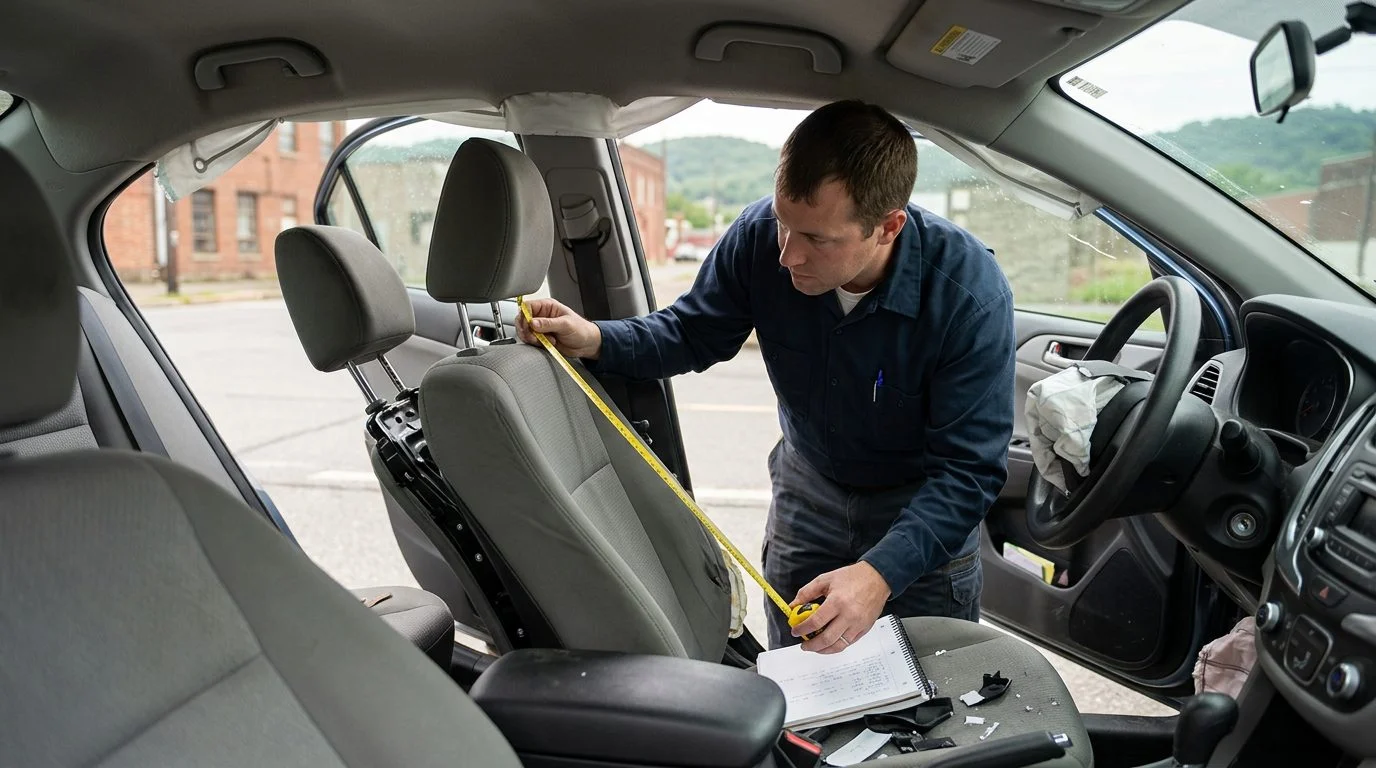
Early evidence matters most. The police report, photos, and witness information can all help show how the crash happened.
Under W. Va. Code § 17c-4-7, the investigating officer must prepare a crash report within 24 hours after finishing the investigation of a crash resulting in bodily injury to, or death of, any person or total property damage to an apparent extent of $1,000 or more.
Other evidence may also be relevant:
- Photos and video of vehicle damage, the road, skid marks, traffic signals, and weather.
- Dash camera footage, nearby business or traffic cameras, and witness statements, which may show braking, lane position, and speed.
- Vehicle data and maintenance records, which may matter where brakes or other equipment are in question.
- Medical records, which document your injuries and how they connect to the crash.
Keep your own notes, too. Write down what you remember, and save photos you took on the day of the crash.
Rear-End Crashes Involving Commercial Trucks and Vehicles
A rear-end crash with a commercial truck can involve federal driving-time and brake rules. It can also involve the trucking company.
Under 49 C.F.R. § 395.3, a driver of a property-carrying commercial motor vehicle may not drive without first taking 10 consecutive hours off duty. Driving time is limited to 11 hours within a 14-hour period.
Brakes on a motor vehicle must at all times be capable of operating, subject to listed exceptions. See 49 C.F.R. § 393.48. Brakes on a motor vehicle must at all times be capable of operating, subject to listed exceptions. See 49 C.F.R. § 393.48. Under 49 C.F.R. § 390.11, the text states: “Whenever in part 325 of subchapter A or in this subchapter a duty is prescribed for a driver or a prohibition is imposed upon the driver, it shall be the duty of the motor carrier to require observance of such duty or prohibition.” See 49 C.F.R. § 390.11.
West Virginia’s commercial vehicle statute defines an “employer defendant” to include the vehicle’s owner, the operator’s employer, and any entity holding legal control over the vehicle or driver. See W. Va. Code § 55-7-32. Truck records can be detailed and may need to be requested promptly. We handle truck accident claims, and you can read more on our truck accident claims page.

Insurance, Injuries, and Next Steps After a Rear-End Crash
Your first steps should protect your health, then your evidence and your insurance claim. The state’s DMV consumer insurance information explains West Virginia’s auto insurance requirements and proof of coverage.
If you are in the hospital or cannot work, state law limits settlement talks during the first twenty days after an injury. A settlement, release or statement obtained in violation of W. Va. Code § 55-7-11a may be disavowed by the injured person at any time within one hundred eighty days from the date of the personal injury by executing a written statement of disavowal and forwarding a copy of it to the person violating the section; if any consideration paid for it has been repaid or returned to the person who paid it at the time of forwarding, the settlement, release or statement may not be admissible in evidence for any purpose in any court or other proceeding relating to the personal injury. See W. Va. Code § 55-7-11a.
An early offer is not a final answer. You can take time to review it before deciding anything.
Head and spinal cord injuries may not show all their symptoms right away. Prompt medical evaluation is commonly advised after any crash. You can learn more about traumatic brain injury and spinal cord injury on our site.